#xeon
#xeon
[ follow ]
#ai-infrastructure #arm #ai #intel #data-centers #cloud-computing #enterprise-computing #amd #gaming-performance






fromTechzine Global
1 day agoIGEL OS can now run AI models locally on endpoints
AI Armor provides dynamic runtime security and relies on a central policy engine in the Universal Management Suite (UMS) to meet compliance requirements, ensuring that organizations can manage their security effectively.
DevOps
Data science
fromTechRepublic
1 month agoInside the Gas Engine Strategy Powering AI's Next Wave
Gas reciprocating engines are emerging as a critical power solution for AI data centers, with manufacturers like Caterpillar securing multi-gigawatt orders to meet demand that exceeds grid and turbine capacity.
Tech industry
fromTheregister
2 weeks agoA closer look at Nvidia's Groq-powered LPX rack systems
Nvidia acquired Groq for $20 billion primarily to accelerate time-to-market for SRAM-heavy inference chips rather than develop the technology independently, enabling faster token generation for AI reasoning workloads.
#intel-processors
Tech industry
fromThe Verge
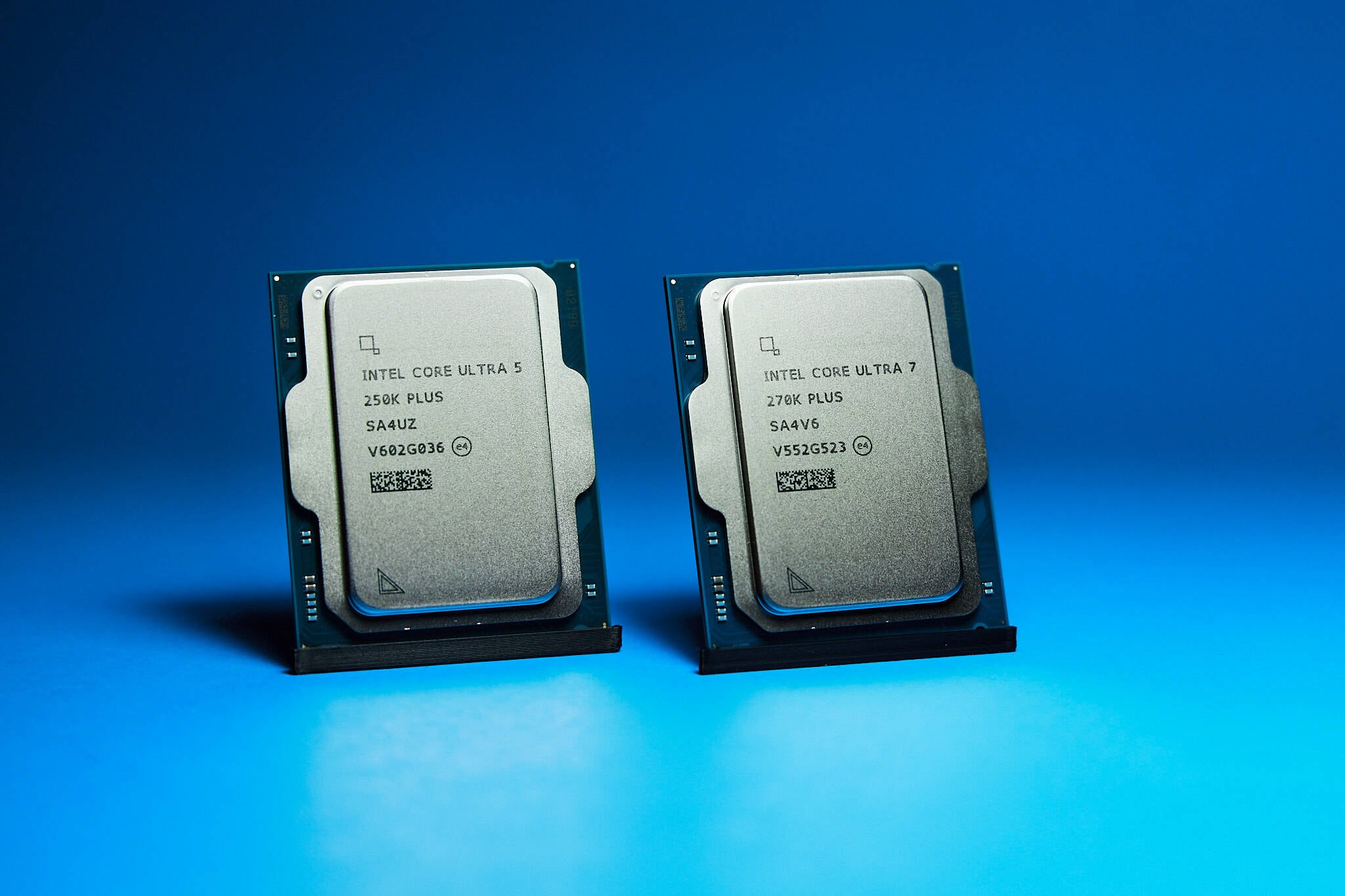
3 weeks agoIntel announces Core Ultra 270K Plus and 250K Plus, its 'fastest gaming desktop processors ever'
Intel launches Core Ultra 7 270K Plus and 250K Plus processors on March 26th, claiming superior gaming performance over previous flagship chips with competitive pricing and strong multithreaded capabilities.
fromTechzine Global
3 days agoIGEL introduces reference architectures for secure cloud desktops
"For healthcare, government, and contact center environments, reducing risk at the endpoint is essential. By aligning IGEL's immutable endpoint OS and Adaptive Secure Desktop™ with Windows 365 and Microsoft Azure Virtual Desktop, these reference architectures give organizations clear guidance for delivering secured and resilient digital workspaces."
DevOps
#neoclouds

DevOps
fromComputerWeekly.com
2 weeks agoDo neoclouds mean a world where anything is possible? | Computer Weekly
Neoclouds are emerging GPU-as-a-service providers gaining investment and market attention as alternatives to dominant hyperscalers, filling real demand for AI and large language model training infrastructure.

DevOps
fromComputerWeekly.com
2 weeks agoDo neoclouds mean a world where anything is possible? | Computer Weekly
Neoclouds are emerging GPU-as-a-service providers gaining investment and market attention as alternatives to dominant hyperscalers, filling real demand for AI and large language model training infrastructure.
DevOps
fromLondon Business News | Londonlovesbusiness.com
2 weeks agoSigns it's time to move to dedicated server hosting - London Business News | Londonlovesbusiness.com
Dedicated server hosting becomes necessary when traffic surges cause performance degradation, complex database operations require absolute resource isolation, and security demands exceed virtual environment capabilities.
fromTechzine Global
2 weeks agoNetApp launches EF50 and EF80 for AI and HPC workloads
As businesses contend with ever-increasing data volumes and performance-intensive applications such as AI model training, AI inferencing and high-performance computing, they need infrastructure that delivers speed, scalability and efficiency without added complexity.
DevOps
fromTheregister
1 month agoAMD's edgiest Epycs get a Zen 5 boost with 84-core Sorano
Sorano will be available with up to 84 Zen 5 cores - up from 64 on Siena - in a power envelope of just 225 watts. AMD isn't ready to spill all the beans on its latest Epyc just yet, but based on core count alone, we surmise the chip will either feature six density-optimized Zen 5c chiplets with 14 of 16 cores enabled or 12 of the frequency-optimized Zen 5 variety with one of the eight cores fused off.
Artificial intelligence
fromTechzine Global
2 months agoDAWN supercomputer gets upgrade and swaps Intel for AMD
The British government is investing heavily in the national computing infrastructure. With an additional investment of approximately $49 million, the DAWN supercomputer at the University of Cambridge is being expanded. This is according to Neowin. This expansion will increase the total computing power of the system by a factor of six. The aim is to enable researchers and technology companies to compete more effectively with players from the United States and China.
UK politics
DevOps
fromTechzine Global
3 weeks agoEverpure brings ActiveCluster to file environments
Everpure expands its Enterprise Data Cloud platform with ActiveCluster for file environments, enabling seamless data movement between systems while maintaining availability and protecting unstructured data critical for AI applications.
fromTheregister
1 month agoIntel greets memory apocalypse with Xeon workstation CPUs
The Xeon 600 lineup spans the gamut between 12 and 86 performance cores (no cut-down efficiency cores here), with support for between four and eight channels of DDR5 and 80 to 128 lanes of PCIe 5.0 connectivity. Compared to its aging W-3500-series chips, Intel is claiming a 9 percent uplift in single threaded workloads and up to 61 percent higher performance in multithreaded jobs, thanks in no small part to an additional 22 processor cores this generation.
Tech industry
fromTheregister
1 month agoAWS adds nested virtualization option for handful for EC2
Nested virtualization involves running a hypervisor inside another hypervisor. It is not an entirely bonkers idea because it offers the chance to create a test or simulation environment for the collection of linked VMs that makes up many enterprise IT setups. The technique can also be useful in production for containerised workloads, which often see tools like Kubernetes and Docker run in a VM, and every container running in its own VM.
Tech industry
fromTheregister
2 months agoUnpacking AMD's latest datacenter CPU and GPU announcements
AMD clarified those estimates are based on a comparison between an eight-GPU MI300X node and an MI500 rack system with an unspecified number of GPUs. The math works out to eight MI300Xs that are 1000x less powerful than X-number of MI500Xs. And since we know essentially nothing about the chip besides that it'll ship in 2027, pair TSMC's 2nm process tech with AMD's CDNA 6 compute architecture, and use HBM4e memory, we can't even begin to estimate what that 1000x claim actually means.
Artificial intelligence


fromTechRepublic
1 month agoWhat Are the Pros and Cons of Data Centers?
When ChatGPT launched in late 2022, I watched something remarkable happen. Within two months, it hit 100 million users, a growth rate that sent shockwaves through Silicon Valley. Today, it has over 800 million weekly active users. That launch sparked an explosion in AI development that has fundamentally changed how we build and operate the infrastructure powering our digital world.
Artificial intelligence
fromInfoWorld
2 months agoThe private cloud returns, for AI workloads
A North American manufacturer spent most of 2024 and early 2025 doing what many innovative enterprises did: aggressively standardizing on the public cloud by using data lakes, analytics, CI/CD, and even a good chunk of ERP integration. The board liked the narrative because it sounded like simplification, and simplification sounded like savings. Then generative AI arrived, not as a lab toy but as a mandate. "Put copilots everywhere," leadership said. "Start with maintenance, then procurement, then the call center, then engineering change orders."
Artificial intelligence
fromTheregister
2 months agoDRAM price hike to hit server and infrastructure costs
RAM prices have surged dramatically in recent months, with manufacturers including Kingston, Micron, and Samsung raising prices by an average of 63 percent between September and December 2025 for the most common capacities - 16 GB, 32 GB, 64 GB, and 128 GB modules sold in Europe, according to distribution market data compiled by analyst Context.
Tech industry
Artificial intelligence
fromForbes
2 months agoIs Cloud Becoming AI's Bottleneck? Lenovo's Hybrid AI Strategy Suggests It Might Be
AI must be deployed via hybrid architectures that place intelligence across devices, edge, private infrastructure, and cloud to ensure reliable, governed, and user-centric operation.
fromTechzine Global
2 months agoVertiv focuses on modular cooling for AI data centers
Vertiv has announced new configurations of its MegaMod HDX solution, a prefabricated power and liquid cooling infrastructure designed for environments with very high power densities. The solution is intended for applications such as artificial intelligence and high-performance computing and is available in North America and the EMEA region. According to Vertiv, the new variants respond to the rapidly growing demand for computing power and associated cooling capacity in data centers.
Tech industry
[ Load more ]