#yamaha-creator-pass
#yamaha-creator-pass
[ follow ]
#music-production #apple-creator-studio #ai-music #ai-generated-music #generative-ai #music-generation





fromGSMArena.com
1 week agoSpotify's SongDNA lets you explore the writers, producers, and collaborators behind a song
When you get it, you'll see a SongDNA card 'on supported tracks'. If you tap this, you can explore the writers, producers, and collaborators behind a song, see samples and interpolations that shaped its sound, and browse the covers it inspired.
Mobile UX
fromTechCrunch
2 weeks agoApple acquires video editing software company MotionVFX | TechCrunch
We are extremely excited to share that MotionVFX is joining the Apple team to continue to empower creators and editors to do their best work. For over 15 years, we've been on a mission to create world-class, visually inspiring content and effects for video editors. From the very beginning, we've been all about quality, ease of use, and great design. These are also the values that we admire most in Apple's products.
Apple
Social media marketing
fromThedrum
4 weeks agoThe Relationship Between Content Creators, Influencer Marketing And The Music Industry
Music industry increasingly relies on influencer marketing through social media apps like TikTok, Koji, and Triller, where artists collaborate with content creators to engage audiences and create viral trends.
London music
fromwww.theguardian.com
1 month agoDo what you really want to do while you're still alive': Masayoshi Takanaka, the Japanese guitar hero surfing a second wave in his 70s
Masayoshi Takanaka, a 72-year-old Japanese jazz fusion guitarist, is experiencing a career resurgence with his first UK solo performances in 50 years, including two nights at Brixton Academy and a summer festival headline.


Music
fromYanko Design - Modern Industrial Design News
1 month agoSynth Modular Controller Treats Music Making Like Building with Blocks - Yanko Design
A modular synth system uses snap-together physical blocks for each function, making synthesis tangible, teachable, and scalable from beginner toy to serious performance instrument.
fromEngadget
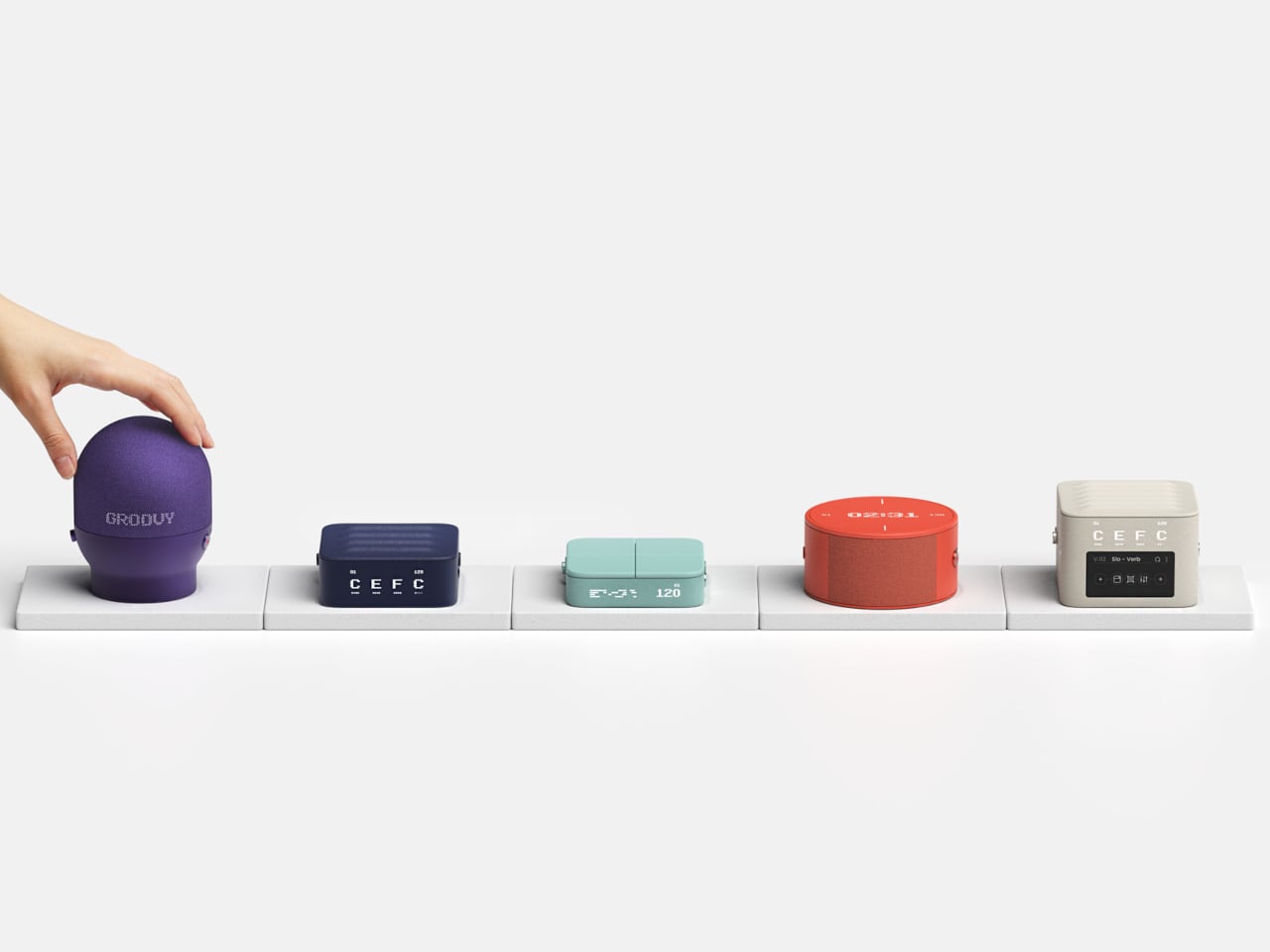
3 weeks agoTembo might just be the world's cutest drum machine
The company says it designed Tembo to "enable everyone to create music from the very first touch." Co-founder David Davidov that most instruments take "so long to get to the fun part" and that Musical Beings wanted to "help people experience music as something they do, not just something they listen to."
Music production
fromThe Verge
1 month agoArturia's FX Collection 6 adds two new effects and a $99 intro version
Pitch Shifter-910 is based on the iconic Eventide H910 Harmonizer from 1974, an early digital pitchshifter and delay with a very unique character. Arturia does an admirable job preserving its glitchy quirks. Pitch Shifter-910 is not a transparent effect that lets you create natural-sounding harmonies with yourself. Instead, it relishes in its weirdness, delivering chipmunk vocals at the higher ranges. There is also a more modern mode that cleans up some artifacts while preserving what makes the 910 so special.
Music
fromYanko Design - Modern Industrial Design News
1 month agoYamaha's Sail and Butterfly speakers reimagine how sound takes shape - Yanko Design
Few brands move as fluidly between precision engineering and artistic expression as Yamaha. From concert grand pianos to motorcycles and professional audio systems, the company has long treated sound as both science and sculpture. Its latest speculative speaker concepts continue that philosophy, challenging the conventional box-shaped loudspeaker with forms that are lighter, more interactive, and visually dynamic. Rather than refining the familiar rectangular enclosure, Yamaha's design team rethinks how sound radiates into space and how users physically engage with it.
Design
fromTechRepublic
1 month agoProfessionals Can Save Hours With This $30 AI Prompt Writer
Prompting Systems: Lifetime Subscription addresses this workflow bottleneck with an AI-powered prompting platform that transforms basic ideas into professionally structured prompts across all major AI platforms. Rather than learning complex prompt engineering techniques for each AI tool separately, business users gain access to a unified system that handles ChatGPT, Claude, Gemini, Midjourney, DALL-E, and other leading platforms. Turn any idea into expert-level AI output
Marketing tech
Gadgets
fromYanko Design - Modern Industrial Design News
1 month agoRoland's $299 Pocket-Sized Audio Interface Was Designed Specifically For TikTok and Instagram Music Creators - Yanko Design
Portable mixer delivers studio-grade 24-bit/192kHz recording, onboard EQ, compression, reverb, battery power, and compact design tailored for livestreaming creators.


fromThe Drum
1 month agoStock music you need for UI, social media, and games
In recent years, multimedia content has firmly established itself online, fueled by the development of high-speed Internet technologies as well as the growing availability of tools for creating and editing video. The global lockdowns also contributed to this process by forcing people to look for similar alternatives on the web. If integrating video into your communications sounds like an overwhelming investment, start leveraging your products with music and audio that are often underestimated by marketers.
Social media marketing
Mobile UX
fromGSMArena.com
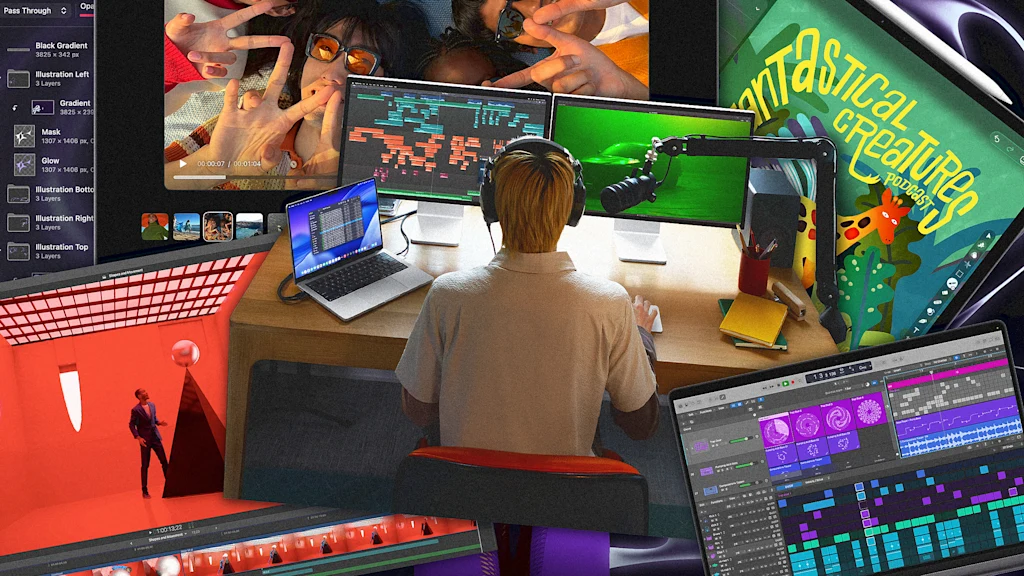
2 months agoApple introduces Creator Studio, a subscription bundle of its best creative apps
Apple launched Creator Studio, a subscription bundle providing Final Cut Pro, Logic Pro, Pixelmator Pro, Motion, Compressor, MainStage, plus intelligent features for $12.99/month or $129/year.





Music
fromYanko Design - Modern Industrial Design News
2 months agoKorg Phase8 Is a Cyberpunk Kalimba for Producers Who Are Bored of Regular Synths - Yanko Design
Korg Phase8 is a tactile tabletop instrument using electromagnetic hammers and acoustic pickups to enable 'Acoustic Synthesis' and encourage physical interaction to shape sound.
Artificial intelligence
fromSearch Engine Roundtable
1 month agoMicrosoft Publisher Content Marketplace To License Content For AI Systems
Microsoft's Publisher Content Marketplace pays publishers for licensed premium content used to improve AI systems while giving publishers control over licensing and usage.
fromEngadget
2 months agoRoland's Go:Mixer Studio is an affordable but capable mixer for budding recording engineers
Roland just unveiled the Go:Mixer Studio, a powerful entry in the company's line of audio interfaces. This one promises to be a portable and affordable way to create high-quality recordings with a smartphone or PC. The biggest news here are the 12 input channels and six output channels. This means that users can record multiple instruments at once and even run the signal through outboard gear if so desired.
Gadgets


fromThe Verge
2 months agoRoland's Go:Mixer Studio turns your phone into a mobile music studio
Roland now offers a more capable audio mixer for phones and tablets with the launch of the Go:Mixer Studio. The Go:Mixer audio interface lineup has always been a bit limited, better suited for scrappy live streams and capturing quick demos on their phones than professional recording. The Go:Mixer Studio is an attempt to actually reach that lofty goal, with more inputs and outputs, built-in effects, and up to 24-bit / 192kHz audio.
Gadgets
fromEngadget
2 months agoKorg's new experimental synthesizer combines acoustic sounds with electronic control
The Phase8 uses a new form of "acoustic synthesis" that combines acoustic sound generation with electronic control. Takahashi says the synthesizer is "beyond analog vs. digital" and "beyond electronics" altogether. It features chromatically tuned steel resonators, which creates an acoustic sound similar to that of a kalimba. These signals can be manipulated via onboard effects and sequenced like a traditional synthesizer. Here's a video of the synth in action.
Music
fromZDNET
1 month agoHow to get unlimited AI video and image generations in Adobe Firefly for free
If you love using Firefly, Adobe's AI-first content creation suite, the company is opening up access for the next six weeks to give you even more generations. Through March 16, users can create unlimited images and videos up to 2K resolution via Firefly's website, Firefly Boards, and the free Firefly app for iOS and Android (more on each below). Firefly lets users generate royalty-free music, sound effects, and try features like the viral Generative Fill.
Artificial intelligence
fromEngadget
2 months agoAkai's MPC XL groovebox is the most powerful device the company has ever made
First of all, it offers four times the processing power of previous MPCs, which is enough to load up to 32 virtual instruments at the same time. This is assisted by a full 16GB of RAM, which is a whole lot in this era of AI tomfoolery. The XL can handle 16 audio tracks simultaneously. In my experience with previous units, this is more than enough for a full song.
Music
fromGSMArena.com
2 months agoSony teases audio-related launch event for next week
As discovered by Dealabs, Sony will likely unveil its LinkBuds Clip (WF-LC900), which features an open-ear design with the buds attaching around the earlobe. A listing from an Indonesian retailer revealed the design and key specs of the LinkBuds Clip, which are expected to feature adaptive volume control, 360 Reality Audio support and background music effect found on previous LinkBuds models.
Gadgets
fromThe Verge
2 months agoSony announces its first turntables in years
Both turntables include one-button automatic playback - which starts the turntable, raises and lowers the tonearm on the vinyl, and returns the tonearm to its resting position once the record ends - a transparent dust cover to keep colored vinyl printings visible as the record plays, and a built-in switchable EQ to select between phono and line-level output. A USB output allows you to convert your vinyl to a digital file and has a three-level output gain selector with low, mid, and high settings. The two turntables also support 96kHz/24-bit wireless aptX Adaptive hi-res Bluetooth audio.
Gadgets
fromPitchfork
2 months agoBandcamp Announces Ban on AI Music
Bandcamp has announced it will no longer allow AI-generated music to be hosted on its platform. In a post shared on Reddit, the company's support team revealed their plans to implement a policy prohibiting "any use of AI tools to impersonate other artists or styles," elaborating more firmly that "music and audio that is generated wholly or in substantial part by AI is not permitted on Bandcamp."
Music
fromYanko Design - Modern Industrial Design News
2 months agoTeenage Engineering-inspired Music Sampler Uses AI In The Nerdiest Way Possible - Yanko Design
Junho Park's graduation concept borrows all the right cues from TE's playbook, that modular control layout, the single bold color, the mix of knobs and buttons that practically beg to be touched, but redirects them toward a gap in the market. Where Teenage Engineering designs for people who already understand synthesis and sampling, the T.M-4 targets people who have ideas but no vocabulary to express them.
Gadgets


fromDesign Milk
1 month agoEverglow is a "Sketchbook" for Musicians on the Go
Designed by Korean up-and-comer Woojin Yang, Everglow is a handheld mini-keyboard that fits into any bag. The "musical sketchbook" of sorts allows artists to quickly jot down ideas when they're not in front of their instruments or computers. The sleekly-designed device comes with a generative AI-based sound system that allows them to iterate and develop a song on the spot, not just transcribe the initial tune.
Music
fromYanko Design - Modern Industrial Design News
2 months agoMP-1 Reimagines a Modern Walkman Through a Teenage Engineering Lens - Yanko Design
Listening to music has mostly collapsed into phones and streaming apps, buried between notifications and multitasking. Some people still crave a single-purpose device that treats listening as the main event, not background noise. The MP-1 is an independent concept study that asks what a modern Walkman could look like if it borrowed Teenage Engineering's design language, without being affiliated with the company or trying to become an official product at all.
Music
[ Load more ]