#30-year-treasury-yield
#30-year-treasury-yield
[ follow ]
#inflation #federal-reserve #interest-rates #monetary-policy #treasury-yields #us-dollar #federal-reserve-policy
World news
fromLondon Business News | Londonlovesbusiness.com
3 hours agoDollar holds firm amid ongoing geopolitical uncertainty - London Business News | Londonlovesbusiness.com
The dollar remains stable amid geopolitical tensions, with demand as a safe-haven asset and rising Treasury yields supporting its value.





Artificial intelligence
fromFortune
5 days ago'Inflationary surge': Fed economists warn AI hype is overheating the economy whether or not the technology ever delivers | Fortune
AI optimism may hinder productivity and contribute to short-term inflation as households and businesses react to perceived future gains.

#us-dollar
US Elections
fromLondon Business News | Londonlovesbusiness.com
5 days agoUS dollar rose amid a rebound in geopolitical concerns - London Business News | Londonlovesbusiness.com
The US dollar strengthened due to geopolitical fears and better-than-expected economic data, while uncertainty keeps market volatility high.

US Elections
fromLondon Business News | Londonlovesbusiness.com
5 days agoUS dollar rose amid a rebound in geopolitical concerns - London Business News | Londonlovesbusiness.com
The US dollar strengthened due to geopolitical fears and better-than-expected economic data, while uncertainty keeps market volatility high.
fromLondon Business News | Londonlovesbusiness.com
1 week agoUS dollar stable near recent highs - London Business News | Londonlovesbusiness.com
Escalating geopolitical risk continued to dominate global markets' concerns, with safe-haven demand keeping the dollar index anchored near a multi-week high.
World politics
#dollar-index
World news
fromLondon Business News | Londonlovesbusiness.com
23 hours agoDollar volatile amid changing geopolitical conditions - London Business News | Londonlovesbusiness.com
The dollar index experienced volatility due to geopolitical uncertainty and economic data influencing interest rates and inflation concerns.
World news
fromLondon Business News | Londonlovesbusiness.com
23 hours agoDollar volatile amid changing geopolitical conditions - London Business News | Londonlovesbusiness.com
The dollar index experienced volatility due to geopolitical uncertainty and economic data influencing interest rates and inflation concerns.
from24/7 Wall St.
3 days agoHow Income Investors Are Using HYBL to Dodge Interest Rate Risk in 2026
HYBL attempts to solve the income problem by combining senior loans, high-yield corporate bonds, and debt tranches from U.S. collateralized loan obligations (CLOs). The result is a portfolio with lower duration and lower volatility compared to traditional high-yield funds, while still targeting high current income with monthly distributions.
Business
Retirement
fromLondon Business News | Londonlovesbusiness.com
3 days agoEvery time you borrow from a bank, you're paying more than you think - London Business News | Londonlovesbusiness.com
Opportunity cost in loans includes lost potential earnings from repayment dollars, not just the interest rate paid.
World politics
fromLondon Business News | Londonlovesbusiness.com
1 week agoUS dollar stable after successive gains - London Business News | Londonlovesbusiness.com
Escalating Middle East tensions are influencing market sentiment, keeping the dollar stable and impacting US Treasury yields amid inflation concerns.
fromnews.bitcoin.com
2 days agoHormuz Blockade Sends Japan's 10-Year Bond Yield to 25-Year High
The 10-year Japanese government bond yield reached 2.38% to 2.39% by early April 2026, topping levels not seen in over two decades and clearing the 2008 financial crisis peak by roughly 30 basis points.
World news
from24/7 Wall St.
4 days agoUSHY Yields 6.58% While VIX Sits at the 96.5th Percentile, A Risky Tradeoff
USHY seeks to track the investment results of the ICE BofA US High Yield Constrained Index, composed of U.S. dollar-denominated, high yield corporate bonds, providing broad exposure in a low-cost wrapper.
Business

from24/7 Wall St.
3 days agoThis ETF Pays Dividends Monthly and Yields 7.3%
The fund blends high yield corporate bonds, senior loans, and debt tranches of U.S. collateralized loan obligations (CLOs) into a single actively managed portfolio, aiming to deliver income that beats the broad bond market while keeping volatility lower than any single segment on its own.
Business
fromFortune
1 week agoBond yields are falling even as oil tops $102, showing that Wall Street fears recession more than inflation | Fortune
"Oil prices are higher again this morning, but Treasury yields are lower as the risks to economic growth begin to take precedence over the risks to inflation," Oxford Economics said in a note on Monday.
World news
from24/7 Wall St.
4 days agoJPMorgan's Short-Duration JPIE Earned 15.24% Since Inception While the Bond Market Cratered
JPMorgan Income ETF has delivered over 50 consecutive monthly distributions since its October 2021 inception, providing stability that is the entire point of the investment strategy.
Business
US Elections
fromFortune
2 weeks ago'A month ago, no one would have believed this': June Fed rate hike odds just surpassed rate cut odds as stagflation fears grow | Fortune
War in Iran drives energy prices higher, reducing probability of Fed rate cuts this year and increasing stagflation concerns that could undermine Trump's economic agenda.
#federal-reserve-policy

World politics
fromFortune
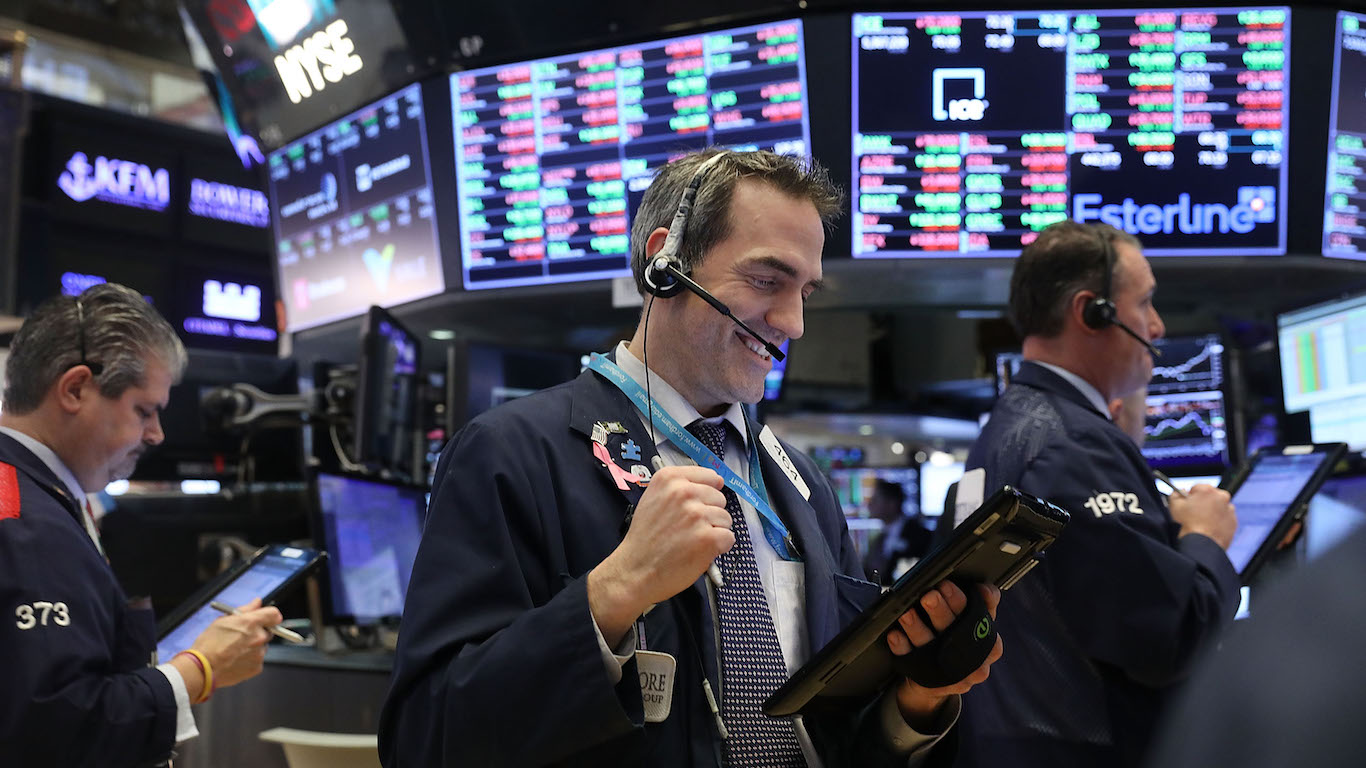
3 weeks agoThis week is Jerome Powell's penultimate meeting as chairman of the Fed-don't expect him to drop Wall Street many hints | Fortune
Jerome Powell's final Federal Reserve meetings will likely maintain interest rates unchanged due to geopolitical tensions, rising oil prices, and inflation concerns before Kevin Warsh assumes the chairmanship in May.
World politics
fromFortune
3 weeks agoThis week is Jerome Powell's penultimate meeting as chairman of the Fed-don't expect him to drop Wall Street many hints | Fortune
Jerome Powell's final Federal Reserve meetings will likely maintain interest rates unchanged due to geopolitical tensions, rising oil prices, and inflation concerns before Kevin Warsh assumes the chairmanship in May.
Business intelligence
from24/7 Wall St.
1 month agoThe 4 ETFs To Buy Before The Fed Lowers Rates And Shoots Them Higher
The Federal Reserve paused rate cuts in January 2026 after three cuts, creating market uncertainty that underprices assets benefiting from future cuts, with four ETFs positioned to capitalize on eventual rate reductions.
from24/7 Wall St.
1 month agoInterest Rates Are Heading Down - These 3 Stocks Win Big When They Do
In my view, interest rates are more likely than not going to head lower over the course of 2026 and into 2027. I'm not saying we're due for a pandemic-like selloff, but I do think that weakness in the labor market is likely more protracted than the government data suggest. As such, I do think the makeup of the Federal Reserve, and which way many of its presidents and voting members lean (toward providing support for the labor market over battling inflation) could lead to much faster rate cuts than many think.
Retirement
fromLondon Business News | Londonlovesbusiness.com
4 weeks agoDollar under pressure as geopolitical concerns ease - London Business News | Londonlovesbusiness.com
The expectations of a decrease in tensions triggered a pullback in oil prices, which in turn softened immediate concerns about inflation pressures. However, the broader geopolitical backdrop remains fragile, and any renewed escalation could quickly push oil prices, the dollar, and Treasury yields higher again.
World politics
Business
fromLondon Business News | Londonlovesbusiness.com
2 weeks agoWhere is the US Dollar Index heading amid rising bond yields? - London Business News | Londonlovesbusiness.com
The US Dollar Index strengthens due to Federal Reserve's hawkish stance, elevated Treasury yields, and geopolitical tensions, with limited rate cuts expected through 2027.
Business
fromFortune
3 weeks agoU.S. debt is competing with a record supply of corporate bonds, which is pushing up the cost of federal borrowing just as war spending piles up | Fortune
Record corporate bond issuance driven by AI capital expenditure and geopolitical factors is increasing Treasury yields and raising borrowing costs for the federal government.
fromLondon Business News | Londonlovesbusiness.com
4 weeks agoDollar surges on geopolitical risks and rising yields
Crude oil breaking above the USD 100 threshold has revived inflation concerns, pushing US Treasury yields higher across the curve. However, Friday's labour market report revealed a significant deterioration in employment conditions, with the economy losing 92,000 jobs in February, its largest contraction in several months.
World news
US news
fromLondon Business News | Londonlovesbusiness.com
2 months agoDow Jones pulls back sharply as yields rise and tariff risks return - London Business News | Londonlovesbusiness.com
Dow Jones' sharp sell-off reflects systemic re-pricing driven by rising Treasury yields, higher-for-longer rate expectations, and an earnings-season market focus shift.
fromwww.housingwire.com
2 months agoDecember inflation flat as Fed eyes interest rate decision
On a monthly basis, the Consumer Price Index was up 0.3% after seasonal adjustment in December. Year-over-year the all-items index was up 2.7%, the same as it was in November. Shelter was the main contributor to the all-items index's monthly increase, rising 0.4% from a month prior. Other major contributors included the food index, which rose 0.7% and the energy index, which jumped 0.3%.
Real estate
Business
fromSilicon Canals
1 month agoGold crossed $3,400 while the Fed signals stability. Central bank buying data tells the real confidence story - Silicon Canals
Central banks publicly project monetary stability while simultaneously purchasing record gold quantities, revealing institutional doubt about current financial systems through their actions rather than statements.
US politics
fromFortune
2 months agoAs U.S. debt soars past $38 trillion, the flood of corporate bonds is a growing threat to the Treasury supply | Fortune
Rising corporate bond issuance from hyperscalers and other firms, combined with large Treasury supply, risks pushing interest rates and mortgage spreads higher.
US news
fromLondon Business News | Londonlovesbusiness.com
1 month agoUS Inflation: Disinflation returns, rate cuts to follow - London Business News | Londonlovesbusiness.com
US inflation eased in January to 2.4% with disinflationary signs raising the prospect of two interest-rate cuts in 2026 if the trend continues.
fromFortune
2 months agoBonds 101: What investors need to know about the 'shock absorber of the portfolio' | Fortune
Many investors regard bonds as the frumpier cousins to stocks. Their prices rarely pop or plummet. They usually deliver a lower return, and-aside from a glamorous cameo in the 1980s thriller Die Hard-they are not part of popular culture in the same way as, say, GameStop or Tesla shares. They are, though, a critical part of any well-managed portfolio, and with the stock market looking particularly frothy, this may be more true than ever.
Business
fromLondon Business News | Londonlovesbusiness.com
2 months agoDollar struggle and monetary policy shape the next phase - London Business News | Londonlovesbusiness.com
The resilience of gold above $4,800 per ounce at this stage reflects a delicate and complex balance between traditional supporting factors and emerging pressures-one that cannot be superficially interpreted or reduced to the movement of the dollar alone. It is true that the U.S. dollar's retreat from its recent peaks, after failing to sustain its recovery momentum from a four-year low, provided gold with a short-term breather and attracted some buyers.
Business
[ Load more ]