#412-max
#412-max
[ follow ]



Tech industry
fromTheregister
2 weeks agoYour next car night need 300GB of RAM, and so will robots
Micron Technology projects sustained growth driven by AI demand, with autonomous vehicles and humanoid robots requiring 300+ gigabytes of DRAM, while the company tripled revenue year-over-year to $23.86 billion in Q2 2026.
fromBikerumor
3 weeks agoAn F1-Style Drag Reduction System for Bikes? Pedra's Smart Plate DRS eliminates up to 60 watts of drag
The product is Pedra's DRS (Drag Reduce System) and, according to the post, is currently a prototype. An electronic noise, similar to that of SRAM mechanical shifting, is heard, leading one to assume someone is hitting a button to activate the system.
Bicycling
frominsideevs.com
1 month agoDonut Lab's Solid-State Battery Charges Fast. But Experts Still Have Questions
VTT's test does show ultra-fast charging capability. It does not, however, address many of the critical details that battery experts consider essential for validating solid-state battery technology, particularly regarding cycle life and performance at the pack level.
Gadgets
Miscellaneous
fromwww.theguardian.com
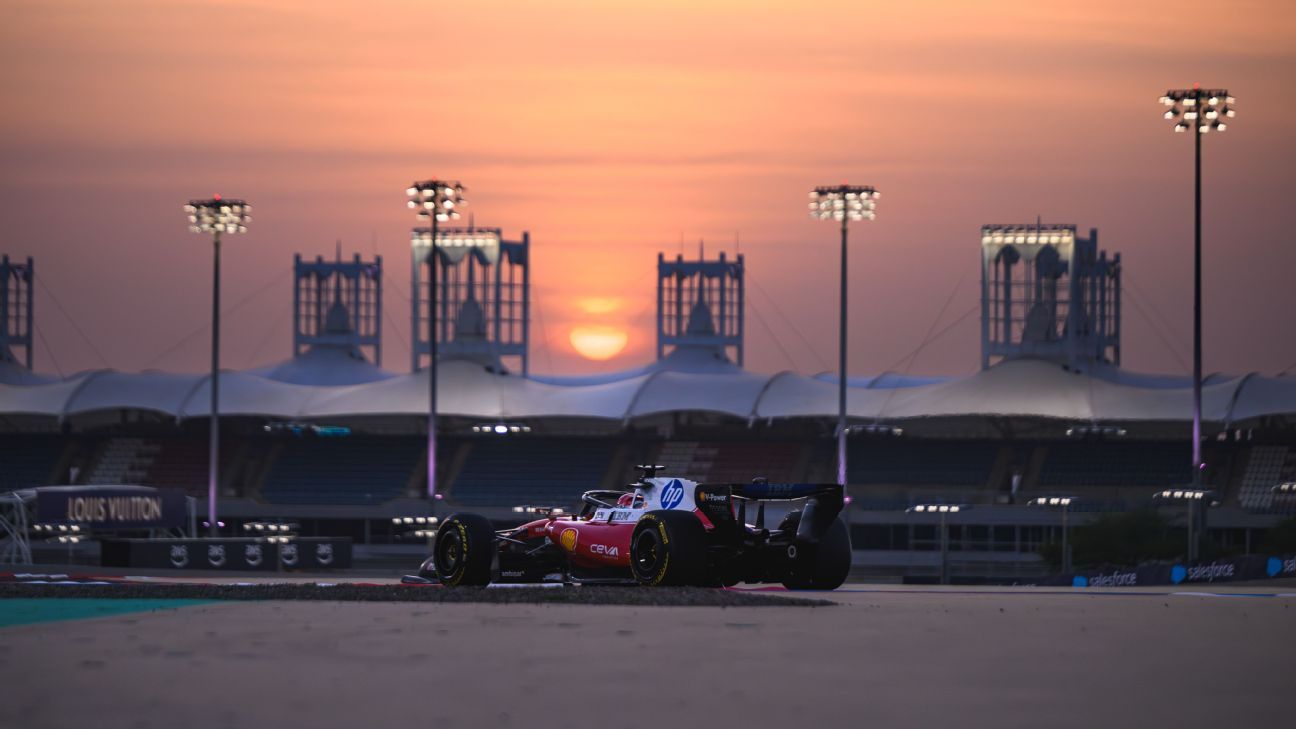
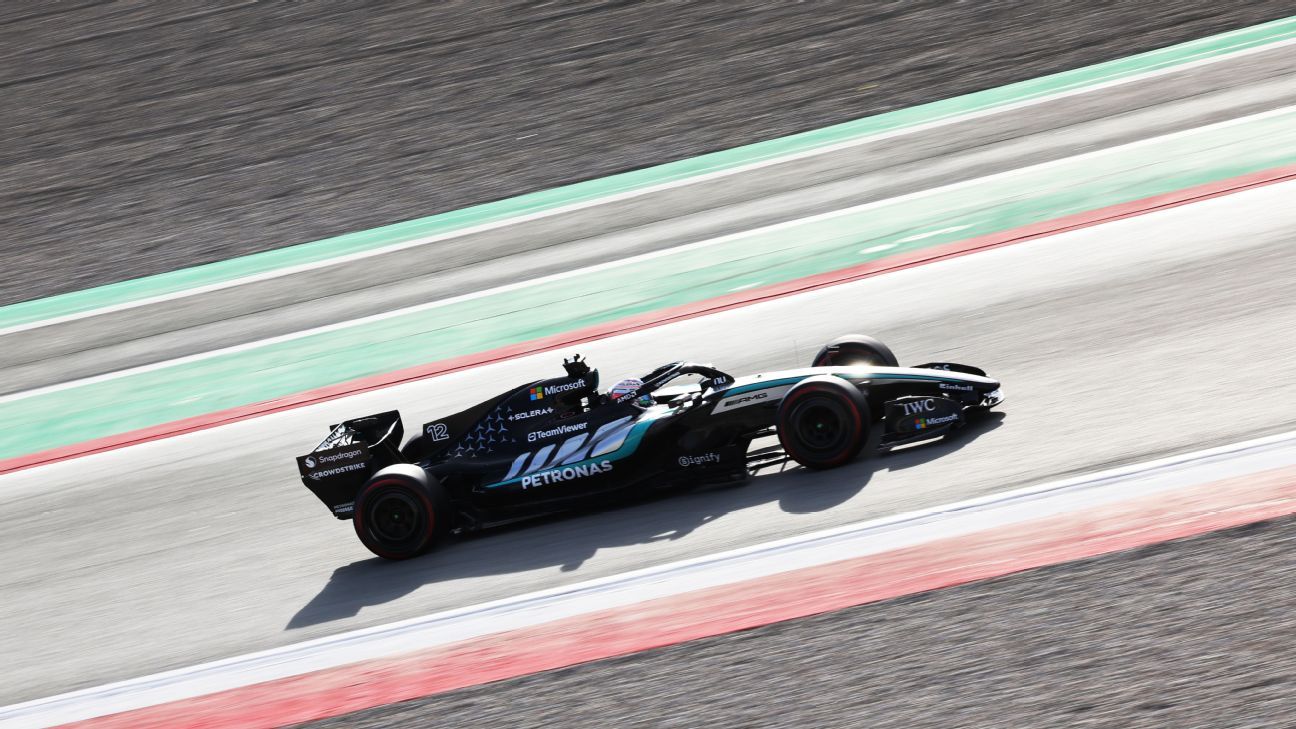
1 month agoMercedes magic and Ferrari's rapid starts: what we learned from F1 testing
Mercedes showed strong reliability and balance in pre-season testing, Ferrari demonstrated exceptional launch performance, and Red Bull displayed efficient energy recovery for straight-line speed.
frominsideevs.com
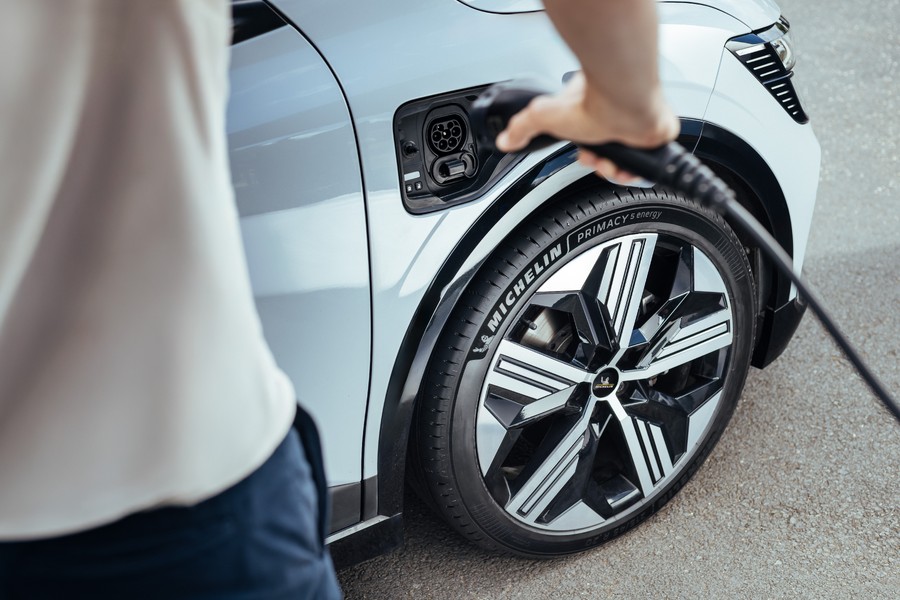
3 weeks agoThe New Chevy Bolt Charges Quicker Than GM's Pricier EVs. It's More Proof That Voltage Matters
There's a key reason why many EVs are expensive. Economies of scale just haven't kicked in as they have for gas cars. Over 100-plus years of building dino-burners, we've gotten pretty good at every individual part. There are plenty of firms that can build fuel pumps, turbochargers, alternators, and radiators at scale, leveraging hundreds of thousand-unit volumes to drive per-unit costs down.
Cars
fromESPN.com
1 month agoAmerica's team: How Cadillac's arrival is already shaking up F1
In the short term, expectations are brutally realistic, but this is still a team intent on making noise from day one. That intent will be made clear when Cadillac unveils the livery of its first F1 car during a Super Bowl commercial Sunday. Such a move is a statement and arrival aimed as much at mainstream America as at a paddock that, for years, questioned whether the brand belonged on the grid at all.
Business
Tech industry
fromYanko Design - Modern Industrial Design News
2 months agoThis 1,000-Pound, 154 HP Motorcycle Has More Cylinders Than Your Car - Yanko Design
GWM's Souo S2000 is a 1,999cc flat‑eight, 154 hp, 461 kg touring motorcycle with automotive-style chassis, DCT, reverse gear, headed to the U.S. in 2027.
Cars
fromYanko Design - Modern Industrial Design News
3 weeks agoAlpine's Wildest F1 Concept Car Concept Uses a Magnetic Levitation Cockpit to Protect Its Driver - Yanko Design
HakHyeon Lee's Alpine Horizon concept features a magnetically levitating driver pod tethered to a Le Mans prototype-inspired chassis, representing speculative design as Alpine consolidates its real racing programs.
fromBig Think
2 months agoHow "tribology" became a new industrial science
the automation of heavy machinery enabled plants to operate continuously, increasing productivity and revenue. The downside was that any small hiccup was acutely felt, cascading through the production line. At first, it was assumed that inadequate lubrication of factory equipment was causing parts to seize up or break apart. And so, the Lubrication and Wear Group of the Institution of Mechanical Engineers, along with the Iron
Science
fromElite Traveler
4 weeks agoI Test-Drove the Corvette ZR1X Trying to Outrun Ferrari and McLaren
In a more-natural habitat - the serpentine road course of Sonoma Raceway - this 1,250-horsepower hybrid advances its case as the fastest production car in American history, and among the speediest to ever roam this planet's surface.
Cars
Cars
fromEngadget
1 month ago2027 Audi RS5 first drive: Big thrills with a big battery
Audi's new RS5 plug-in hybrid combines a 2.9-liter twin-turbocharged V-6 engine with two electric motors, producing 630 horsepower and representing Audi's strategy of offering multiple propulsion options amid uncertain EV market conditions.
fromHeybike
2 months agoTorque Sensor vs Cadence Sensor: Which E-Bike Is Better?
When you ride an electric bike, the way the motor helps you pedal makes a big difference in how the ride feels. There are two main types of pedal-assist systems: cadence sensors and torque sensors. At first they sound technical, but the difference is actually simple-and very important for daily riding. These sensors control how and when the motor supports your pedaling.
Bicycling
Cars
fromdesignboom | architecture & design magazine
1 month agowind-sculpted hypercar by xiaomi embeds cutouts to let air pass through the teardrop body
Xiaomi's Vision Gran Turismo hypercar integrates aerodynamic design through wind-sculpted surfaces and air ducts that eliminate the need for traditional wings while achieving both low drag and downforce.
fromBikeMag
2 months agoThis Aftermarket Suspension Upgrade Could Unlock the Amflow PL's Full Potential
Cascade Components has delivered what could be the best upgrade for the Amflow PL. For $257 USD, Amflow owners can now increase rear travel to 160mm and improve suspension performance, all without tweaking the geometry. With 10mm more rear wheel travel and a more supple rear end, the Amflow PL Link from Cascade Components could make one of the best e-mountain bikes on the market even better.
Bicycling
Cars
fromYanko Design - Modern Industrial Design News
1 month agoThis Bonkers F1 Off-Road Racer Concept Puts Senna's McLaren MP4/4 on Monster Truck Stilts - Yanko Design
A designer reimagined a 1988 McLaren MP4/4 Formula 1 car as a lifted off-road machine with extended suspension travel and increased ground clearance.
fromBikerumor
2 months agoRimpact Components Slashes Chain Damper's Price While Adding Two Tuning Options
Rimpact's Chain Damper was launched in 2024, and since then, interest in drivetrain feedback mitigation seems to be gaining momentum. The fact that current World Cup DH ruler Jackson Goldstone uses a similar device on his bike has likely caused quite a spike in interest. On their part, Rimpact supported 15 World Cup DH Teams through last season, and they're expecting that number to grow this year.
Bicycling
fromYanko Design - Modern Industrial Design News
1 month agoDonkervoort P24 RS is a counterpunch build for drivers who crave raw speed - Yanko Design
The newly unveiled car is ultra-agile thanks to the weight reduction achieved by shaving off components like the skid-control, torque-vectoring, or automatic brake-assist. It doesn't even have power steering, and gives buyers the option to skip the air conditioning unit for weight reduction, making it the ideal fit for raw purists who want to feel every little change happening in the driving dynamics.
Cars
fromBusiness Insider
2 months agoThe roaring revival of the V8 engine
The American automotive landscape is changing after a period that saw tighter emissions rules push automakers toward more efficient, quieter powertrains and prompted shifts away from big V8 engines. But many of those regulations, including the federal EV incentives, have fallen away, leading automakers that once promised to discontinue the gas-hungry engines to reinvest in V8 offerings - especially in full-size trucks and performance cars.
Cars
fromYanko Design - Modern Industrial Design News
2 months agoWhy Cadillac Designed Its F1 Camouflage to Actually Stand Out - Yanko Design
Cadillac's response was to design specifically for that liminal space. The testing livery features what they call "the Cadillac precision geometric pattern" in gloss and matte sequences, turning functional camouflage into brand vocabulary. They're using the constraint of secrecy to communicate design philosophy, establishing that their approach blends automotive prototype discipline with motorsport theater. The giant Cadillac crest draped across the engine cover isn't trying to hide anything. It's declaring that the space between stealth and spectacle is itself worth designing for.
Cars
frominsideevs.com
2 months ago14 Family EVs Faced This Freezing Highway Simulation. One Was A Clear Winner
Germany's ADAC simulated a 361-mile winter highway run at ~0 C with identical conditions to evaluate real-world range and charging needs, showing all EVs fell short of their WLTP figures. The Audi A6 Avant E-tron Performance topped the group with strong efficiency and charging, regaining ~186 miles of range in a 20-minute fast charge. The Tesla Model Y showed the best consumption, but slower charging limited gains; other models varied widely in range and charging capability under winter stress. More than a dozen new electric
Cars
Cars
fromYanko Design - Modern Industrial Design News
1 month agoThis Stealth Fighter-Inspired Buggy Makes Modern Supercars Look Too Polite - Yanko Design
Wedge-inspired dune buggy fuses 1970s–80s angular supercar styling with exposed suspension, bronze wheels, and uncompromising track-focused, non-street-legal design.
fromBusiness Matters
2 months agoLamborghini Spoiler - Aerodynamics, Design and Real Performance Impact
Lamborghini has always represented the extreme edge of automotive performance. Every model produced by the brand is designed around speed, stability and unmistakable visual identity. Nothing in a Lamborghini is accidental, and this applies equally to exterior aerodynamic components. One of the most important yet often misunderstood elements is the rear spoiler. A Lamborghini spoiler is not simply an aesthetic addition. It is a functional component that plays a measurable role in how the car behaves at speed.
Cars
[ Load more ]