#adbfastboot
#adbfastboot
[ follow ]
#android #android-17 #android-16 #smartphone #smartphones #technology #samsung #pixel-10 #oppo #ai-integration





#android-repair-mode

Mobile UX
fromZDNET
3 weeks agoGetting your Android phone repaired? Turn on this setting first - and lock down your data
Android Repair Mode is a special diagnostic mode available on Pixel and Samsung phones running Android 14 or later that helps troubleshoot hardware issues without full system access.
Mobile UX
fromZDNET
3 weeks agoGetting your Android phone repaired? Turn on this setting first - and lock down your data
Android Repair Mode is a special diagnostic mode available on Pixel and Samsung phones running Android 14 or later that helps troubleshoot hardware issues without full system access.
Information security
fromZDNET
3 weeks agoThis security flaw could affect 1 in 4 Android phones - how to check yours
A hardware flaw in MediaTek chips used in approximately 25% of Android phones allows attackers to access sensitive data including crypto wallet seed phrases within minutes via USB connection.
fromZDNET
3 weeks agoI changed 12 settings on my Android phone to extend its battery life by hours
One of the biggest battery drainers for any smartphone is the always-on display. Companies regularly tell you that this display setting only drains about 1% to 2% an hour, but let's be honest -- it's always way more. It may be nice to glance at your phone while it sits on a table to check the time, but it's probably not worth sacrificing battery life.
Gadgets





#android-17

Mobile UX
fromTechRepublic
2 weeks agoAndroid 17 Leaks Reveal Major Redesign, AI Features, and Privacy Upgrades
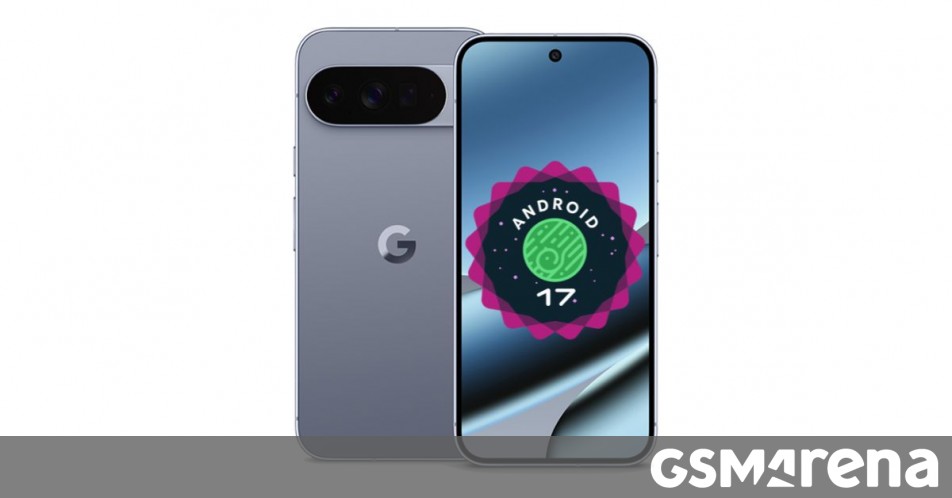
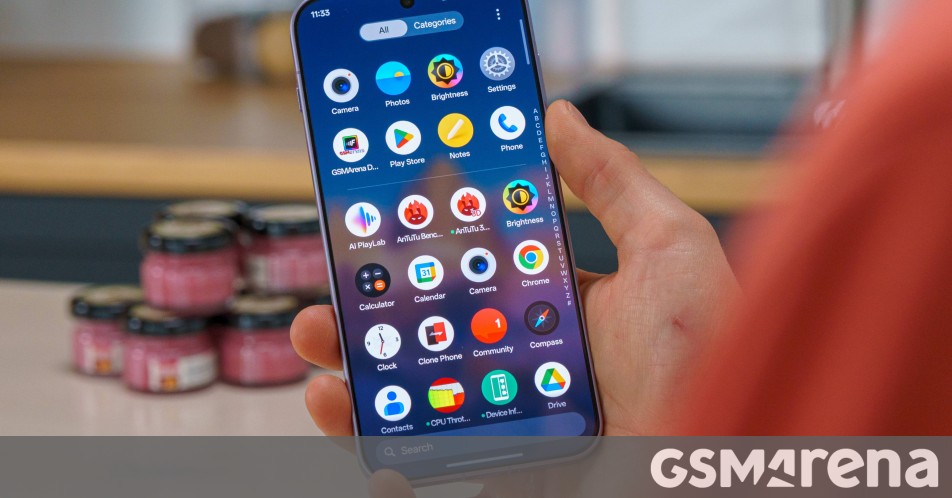
Android 17 is undergoing significant development with a major visual overhaul, expanded Material 3 design system, and frosted glass interface effects expected in the stable release around June 2026.

Artificial intelligence
fromTechCrunch
1 month agoGemini can now automate some multi-step tasks on Android | TechCrunch
Google launched Gemini AI automations on Android to handle multi-step tasks like food delivery and rideshare orders, initially limited to select apps, devices, and U.S./Korea regions.
fromComputerworld
1 month ago3 future Android features you can give yourself today
Thanks to the way Google's for years now been deconstructing Android and pulling OS-level pieces out of the operating system itself - so they exist as regular ol' apps and can consequently be updated quickly, frequently, and in a way that reaches everyone instantly, regardless of what phone or carrier they're using - even Android phones from eight years ago get updates numerous times a year that are all virtually equivalent to an entire iOS operating system rollout.
Gadgets
Artificial intelligence
fromEngadget
1 month agoGoogle announces new Android AI features coming to the Galaxy S26 and Pixel 10 series
Google introduced Gemini-powered Android features including multi-step task automation, enhanced Circle to Search for outfit matching, and AI-driven scam detection for calls and messages.

Mobile UX
fromGSMArena.com
2 weeks agovivo shows a Godfather-style video recorded on the X300 Ultra as the X300s runs Geekbench
Vivo's X300 Ultra features 4K video recording at 120fps across all focal lengths with Log support and cinema-inspired Film Style modes, positioning it as a premium video-focused flagship phone.
fromEngadget
1 month agoGoogle will soon offer AirDrop support on more Android devices
At a press briefing attended by at Google's Taipei office, Eric Kay, Android's Vice President of Engineering, confirmed that AirDrop interoperability will expand in 2026. "We spent a lot of time and energy to make sure that we could build something that was compatible not only with iPhone but iPads and MacBooks," he said. "Now that we've proven it out, we're working with our partners to expand it into the rest of the ecosystem, and you should see some exciting announcements coming very soon."
Apple
fromGSMArena.com
1 month agoDeals: Pixel 10a arrives, but the Galaxy S25 FE and OnePlus 15R might be better deals
The Google Pixel 10a is mostly the same as the 9a. It uses the same 6.3" 1080p+ display (slightly brighter) now with Gorilla Glass 7i (replacing GG3), runs on the same Tensor G4 chipset and has the same 48+13MP camera. The battery capacity is the same too, 5,100mAh, though Google increased the wired (from 23W to 30W) and wireless (from 7.5W to 10W) charging speeds.
Gadgets
Mobile UX
fromGSMArena.com
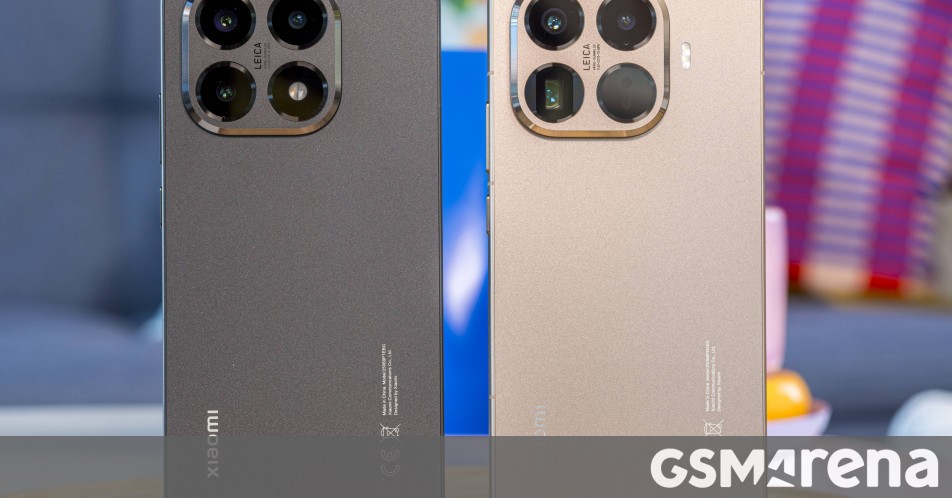
2 weeks agoPoco X8 Pro Max, Oppo Find N6 unboxed, Galaxy A57 listed, Week 11 in review
Multiple smartphone manufacturers are releasing new devices with advanced features including high-capacity batteries, powerful processors, and high-refresh-rate displays in the coming months.
Information security
fromTechCrunch
2 months agoAndroid phones are getting more anti-theft features | TechCrunch
Android expands theft-protection: toggle for Failed Authentication Lock, longer lockouts, Identity Check covers all biometric apps, optional Remote Lock challenge, defaults enabled in Brazil.
fromGSMArena.com
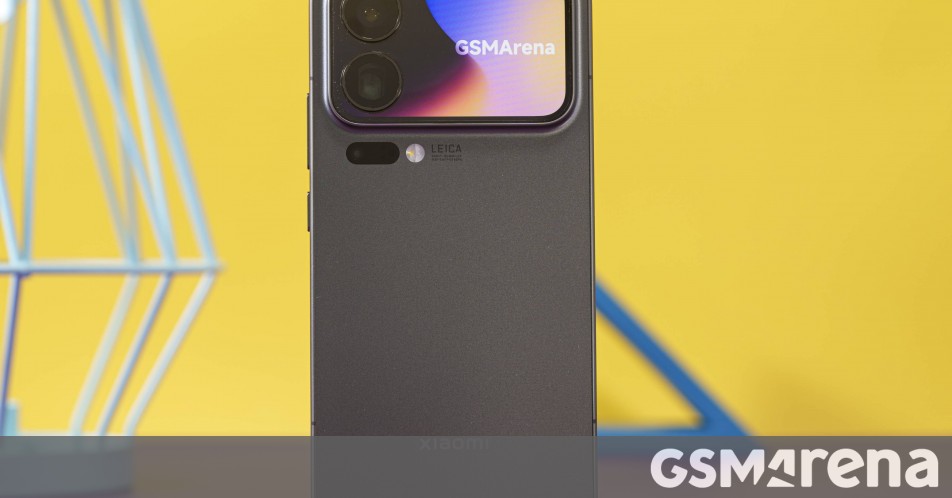
3 weeks agoXiaomi 18 Pro Max details leak
The Xiaomi 18 Pro Max will have a 6.9-inch flat LIPO OLED screen with extremely narrow symmetrical bezels, which will be even narrower than the ones the 17 Pro Max had. The display panel will go down to 1-nit brightness in ultra low light, and will support the BT.2020 color space.
Mobile UX
Mobile UX
fromWRAL.com
3 weeks agoWith many phones in pockets, Samsung stands to gain as uses move from apps to AI
Mobile operating systems are evolving from app launchers into AI-driven intent orchestration layers, but entrenched app store economics will resist this transformation despite its technical and economic efficiency.
Mobile UX
fromGSMArena.com
4 weeks agoOnePlus 15T runs Geekbench, confirms its chipset
OnePlus 15T prototype achieves Geekbench scores of 3,440 single-core and 10,523 multi-core with Snapdragon 8 Elite Gen 5, 16GB RAM, and features a 6.32-inch display, 7,500 mAh battery with 100W wired charging, and upgraded periscope telephoto camera.
fromGSMArena.com
4 weeks agoThe Nothing Phone (4a) Pro has a metal frame and faster chipset, the (4a) gets the same cameras
The Nothing Phone (4a) Pro drops (3a)'s plastic frame and brings a metal unibody design. It's also slimmer at 7.95mm (down from 8.4mm) but weighs the same (despite using metal instead of plastic). The phone is rated IP65 - Nothing couldn't quite hit the requirements for IP67, so it claims that the phone can survive submersion down to 25cm for 20 minutes.
Mobile UX
Mobile UX
fromThe Verge
1 month agoGoogle's latest Pixel drop allows Gemini to order groceries for you and more
Google's March update adds agentic Gemini AI features to Pixel phones, enabling the assistant to complete tasks like ordering groceries or booking rides in select apps, while Circle to Search gains outfit breakdown and virtual try-on capabilities.
Gadgets
fromGSMArena.com
2 months agoWeekly deals: OnePlus 15, Galaxy S25 and Z 7 series, Motorola Razr 2025 series on sale
Motorola introduced a premium Signature phone and Razr Fold book-style foldable, both unavailable in the US; competing phones and storage/price variations offer alternative choices.
Gadgets
fromYanko Design - Modern Industrial Design News
2 months agoThis Phone Runs Android, Linux, and Windows to Replace 3 Computers - Yanko Design
NexPhone is a rugged, high-spec Android handset that can multi-boot Android, Debian Linux, and optionally Windows 11 on Arm to serve as phone and desktop.
fromGSMArena.com
1 month agoPoco X8 Pro runs Geekbench, it's powered by a new chipset
The Poco X8 Pro and Poco X8 Pro Max are definitely both coming soon, since we've already seen them getting certified by various authorities across the globe. Today, the Poco X8 Pro has been spotted in the Geekbench online database, because a prototype has run the benchmark. As you can see from the screenshot below, it managed a single-core score of 1,708 and a multi-core score of 6,297.
Mobile UX
fromKotaku
2 months agoGoogle Pixel 9a Drops to All-Time Low to Compete With Samsung Galaxy S25 Deals, Now the Cheapest Gemini-Powered Smartphone - Kotaku
The Google Pixel 9a Android smartphone features a 6.3-inch Actua display, a Google Tensor G4 processor, built-in Gemini AI capabilities, and an IP68-rated body. It also comes with 8 GB of RAM and 128 GB of storage, making for a seamless experience for users who want to stream, browse, and switch between applications continuously. Additionally, there is an Adaptive Battery designed to provide more than 30 hours of usage time,
Gadgets
fromGSMArena.com
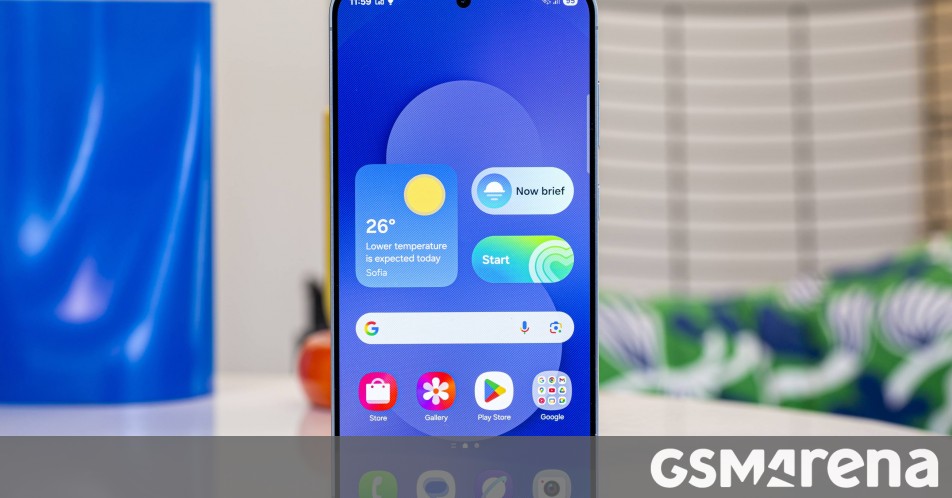
1 month agoSamsung Galaxy A37 and A57 are now listed in the Google Play Console
Samsung's Galaxy A37 and Galaxy A57 are now listed in the Google Play Console, a sure sign that their official launch is very near. The listings confirm that the Galaxy A37 is powered by Samsung's Exynos 1480 SoC, paired with 6GB of RAM in one variant (though more will undoubtedly be offered). The phone will run Android 16 out of the box, unsurprisingly. Here it is in the official image revealed by the listing.
Mobile UX
fromGSMArena.com
2 months agoRedMagic 11 Air seemingly runs Geekbench confirming its chipset and RAM amount
The RedMagic 11 Air uses the Snapdragon 8 Elite SoC, as confirmed by a Geekbench run of a device with the model number NX799J. This is most likely the RedMagic 11 Air. The prototype which ran the benchmark has 16GB of RAM, but of course more memory options could be offered upon launch (in fact, up to 24GB was rumored). The phone will run Android 16 from day one, unsurprisingly.
Mobile UX
[ Load more ]