Right-wing politics
fromwww.dw.com
1 day agoWhy have US-South Africa relations soured?
Cyril Ramaphosa criticized global right-wing forces, particularly Trump, amid deteriorating South Africa-US relations and a shift towards BRICS countries.
In late 2025, the United States shocked the world by suspending global health aid, leading experts to predict 700,000 additional deaths annually, primarily among children. This prompted the US to propose unusual bilateral health agreements with developing countries, which have drawn criticism for being exploitative.
U.S. financial markets experienced a volatile week, largely influenced by geopolitical developments in the Middle East and fluctuations in energy prices. Investor sentiment was driven primarily by external events rather than domestic fundamentals.
The inaugural edition is organized around the central theme "Shifting the Center: From Fragility to Resilience," reclaiming African architecture's place as a site of spatial intelligence and cultural memory.
Moses Chrispus Okello, a senior researcher at the Institute for Security Studies, states that there is a high risk of escalation in Somaliland, where Israel and the UAE have interests. He emphasizes that tensions could also rise in neighboring Djibouti, where the US and other powers are active.
We are told that the country is rich in oil. But I don't see that wealth in my daily life. Look at Pointe-Noire, formerly nicknamed as Ponton la Belle [Beautiful Pointe-Noire]. Today, the city is unrecognisable. Around the Grand Marche, the main roads are potholed, and when it rains, the streets get flooded, making it almost impossible to drive.
Several Nigerian financial institutions are significantly expanding their UK presence, with the banking sector expected to be a major driver of new employment. Zenith Bank has opened a new branch in Manchester, creating up to 30 direct jobs and providing a boost to the North West economy. The bank is also exploring a potential listing on the London Stock Exchange in 2027 as it seeks to deepen its presence in British financial markets and strengthen investment flows between the UK and Africa.
Shortages of medicine in Botswana forced me to declare a public health emergency last year. Patients went without treatment not because health workers failed them, but because the system did. For a nation committed to universal healthcare, free at the point of use, it was a moment of hard truth. Even outwardly strong public health systems can be fragile. As donor assistance bites across the continent, governments cannot afford to delay building resilience.
Expanding your startup into Africa is one of the most ambitious and potentially rewarding moves you can make as a founder. With a rapidly digitalising economy and a booming young population, the continent offers a growth trajectory that is hard to find elsewhere. However, as you begin to scale, you will quickly realise that the financial landscape is not a monolith. Navigating 54 different countries means managing dozens of volatile currencies and banking systems.
Trump's historic cuts to foreign aid, his overhaul of US trade policy, and his sweeping changes to immigration admissions have all had an outsized impact on Africa, though he gave the continent only slight mention in his wider global agenda. Amid the upheaval, the Trump administration has sought to forge new, bilateral agreements with African countries, focused on resources and security gains.
When EU Commission President Ursula von der Leyen and European Council President Antonio Costa arrived at Jordan's Al Husainiyah Palace at midday on Thursday, there was not a cloud in the sky. Temperatures hovered around a pleasant 20 degrees Celsius. While large parts of Europe were struggling with heavy snowfall, Jordan was showing its best side, as were the leaders gathered for the first-ever EUJordan summit in Amman.
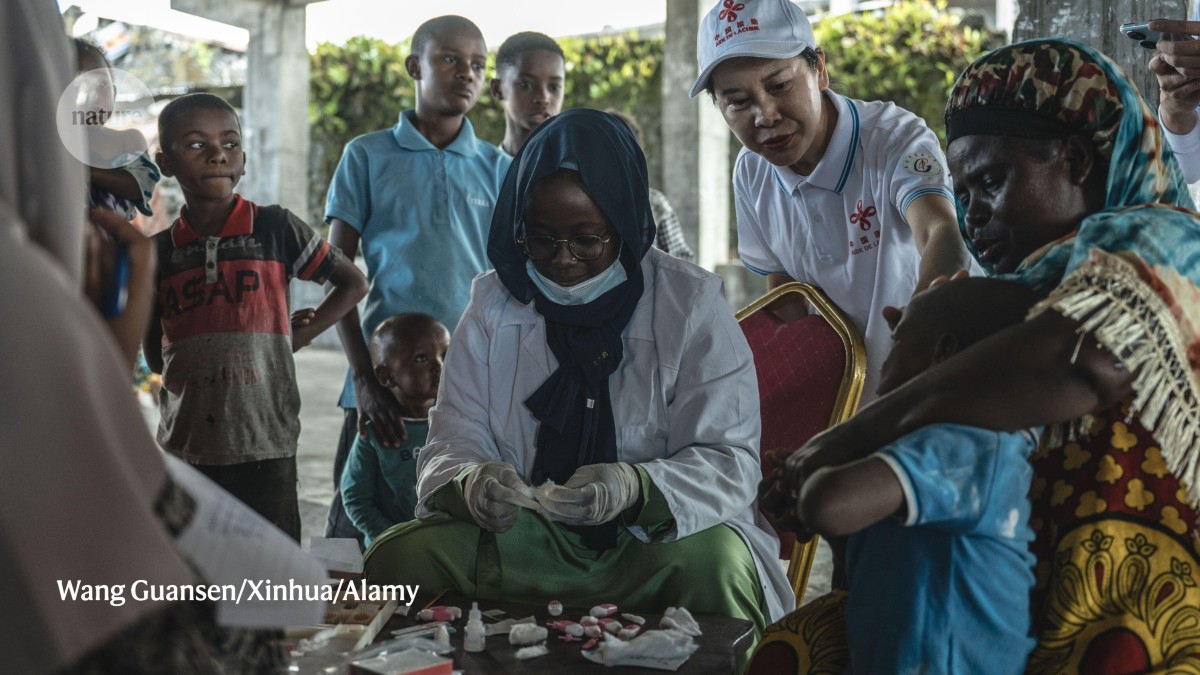
There is little doubt that this is what African countries need if they are serious about universal health coverage - ensuring that every member of their populations has access to this fundamental human right. But such an approach has never been implemented in Africa. Some of the reasons for this are outlined in a report on health financing by the Africa Centres for Disease Control and Prevention (Africa CDC), the continent's public-health agency based in Addis Ababa, published last week (see go.nature.com/3o9wxfc).
For the first time in our history, more than 70% of Africans are under the age of 30. This, along with entrenched inequalities, poverty, unemployment and socioeconomic fault lines, is reshaping how our societies interact with one another and the world. This is Africa's most consequential decade. Leaders who take office over the next 10 years will have to deliver on difficult mandates within a political, economic and social landscape that has been fundamentally altered.
Bilateral ties between Egypt and Somalia continue to deepen. Egyptian President Abdel Fattah el-Sissi assured his Somali counterpart, Hassan Sheikh Mohamud on Sunday in Cairothat Egypt stands firmly behind "Somalia's unity and territorial integrity." On Wednesday, Cairo then followed up on an agreement from January 2025 and deployed 1,091 troops to Somalia's capital Mogadishu. The deployment of Egyptian forces to Somalia the first such deployment in their decades-old bilateral history marks a significant shift.
The 39th African Union (AU) summit is set to be dominated by pressing security concerns across Africa, as the continent continues to face escalating conflicts. However, there are mounting questions on whether the pan-African body can actually deliver on peace and security strategies: A study conducted by the Institute for Security Studies (ISS) in 2023 revealed that a staggering 90% of the decisions made by the AU's Peace and Security Council (PSC) have not been implemented since the inception of the PSC in 2004.
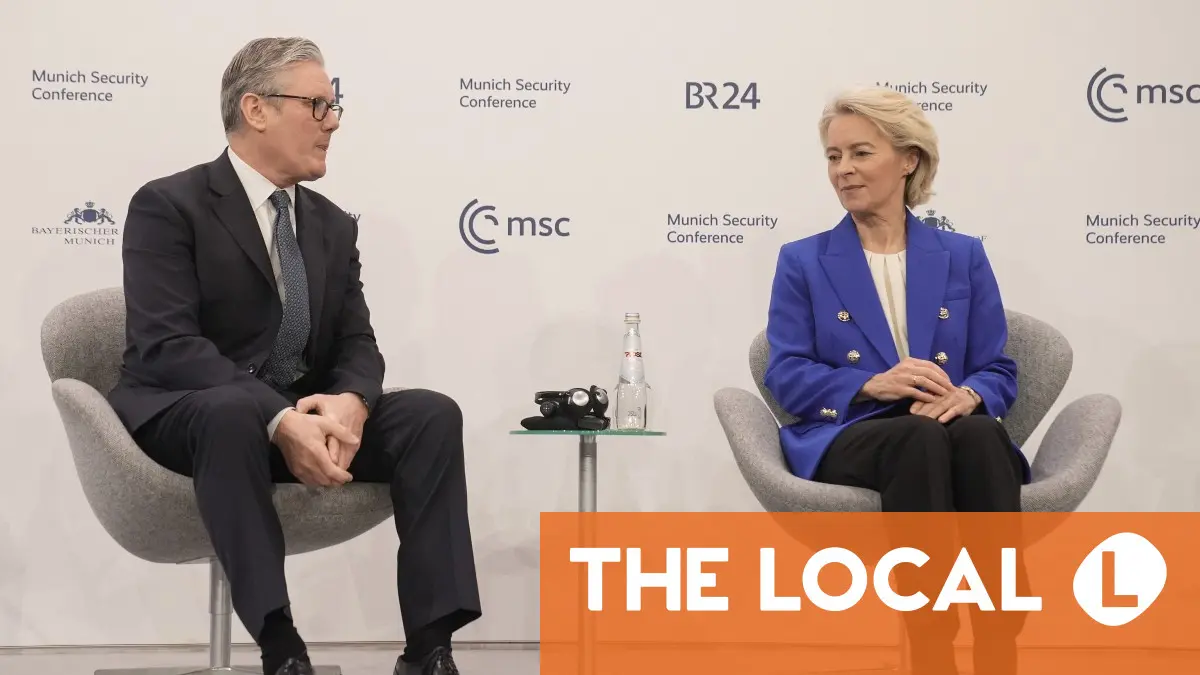
This year's conference comes at a time of strained ties between Europe and the United States, after Trump threatened to take over Greenland and criticised "decaying" and "weak" European nations. Russia's war against Ukraine, set to enter its fifth year this month, is high on the agenda, alongside efforts by European NATO members to raise their defence budgets, in line with Trump's demands, out of concern that Moscow could seek to expand into their territory.
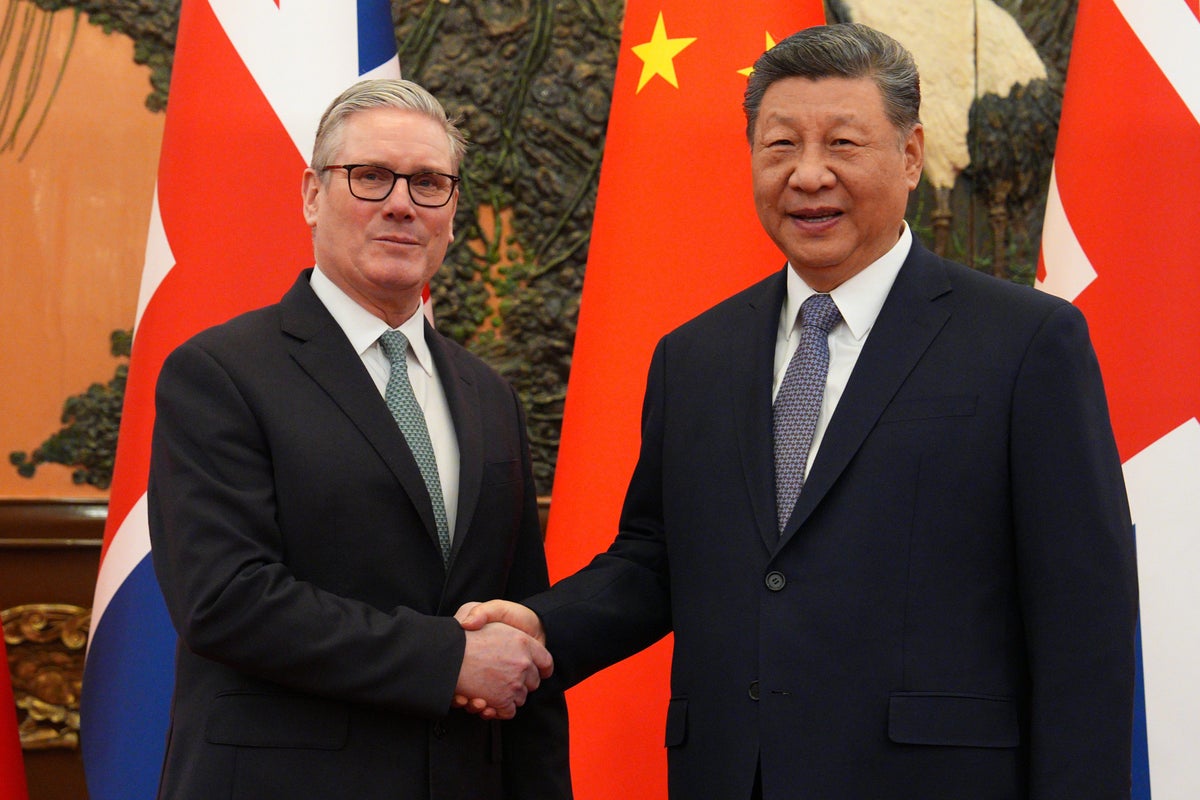
UK Prime Minister Keir Starmer's warm welcome on a visit to China this week marks a thaw in icy relations with Beijing. British Prime Minister Keir Starmer arrived in China this week with a large delegation of businesspeople and cultural figures. He received a warm welcome from Chinese President Xi Jinping. But the visit got a frosty reception from the White House, with United States President Donald Trump calling Starmer's trip dangerous.
Seventy-two different metrics were assessed and divided into these categories: economy (GDP per capita, employment levels, wage rate); research and development (number of patents, startups and presence of top universities); cultural interaction (proximity to World Heritage Sites and number of theatres, museums, stadiums and hotel rooms); livability (life expectancy and rent prices); environment (air quality and waste recycle rate); and accessibility (the price of a cab and the number of international flights).
Germany and Italy are deepening defense and economic cooperation with the leaders of the two countries signing an agreement in Rome. German Chancellor Friedrich Merz and Italian Prime Minister Giorgia Meloni agreed on closer cooperation in the production of drones, naval vessels, underwater systems and air and missile defense systems. The leaders are also looking to collaborate in the development of electronic warfare and aerial combat defense systems.
Ministers from the US, EU, UK, Japan, Australia and New Zealand will meet in Washington this week to discuss a strategic alliance over critical minerals. The summit is being seen as a step to repair transatlantic ties fractured by a year of conflict with Donald Trump and pave the way for other alliances to help countries de-risk from China, including one centred on steel.
Major agreement reached after 20 years of negotiations and during ongoing tensions with the US. New Delhi, India India and the European Union have signed a free trade agreement that both sides have hailed as the mother of all deals. The agreement, announced on Tuesday, came together over nearly two decades of intermittent negotiations and during a geoeconomic crisis triggered by United States President Donald Trump's trade war.
Your visit this time has drawn a lot of attention. Sometimes good things take time. As long as it is the right thing that serves the fundamental interests of the country and the people, then as leaders we should not shy away from difficulties and we should press ahead. As long as we take a broad perspective, rise above differences and respect each other, then we will prove ourselves able to stand the test of history.