Artificial intelligence
fromThe Atlantic
1 day agoThe AI Industry Wants to Automate Itself
Protesters in San Francisco demand a halt to the development of self-improving AI technologies, fearing existential risks to humanity.
Following the acquisition, the Cinemersive Labs team will join SIE's Visual Computing Group (VCG) and contribute to our broader efforts in advancing state of the art visual computing within games. This includes applying machine learning to enhance gameplay visuals, improve rendering techniques, and unlock new levels of visual fidelity for players.
Kinetic's CEO Nikhil Naikal states, 'We have eyes, and when we need to correct vision, we go to an optometrist... In the same way, this is a digital prescription to correct the errors of the car's understanding of the world around it.'
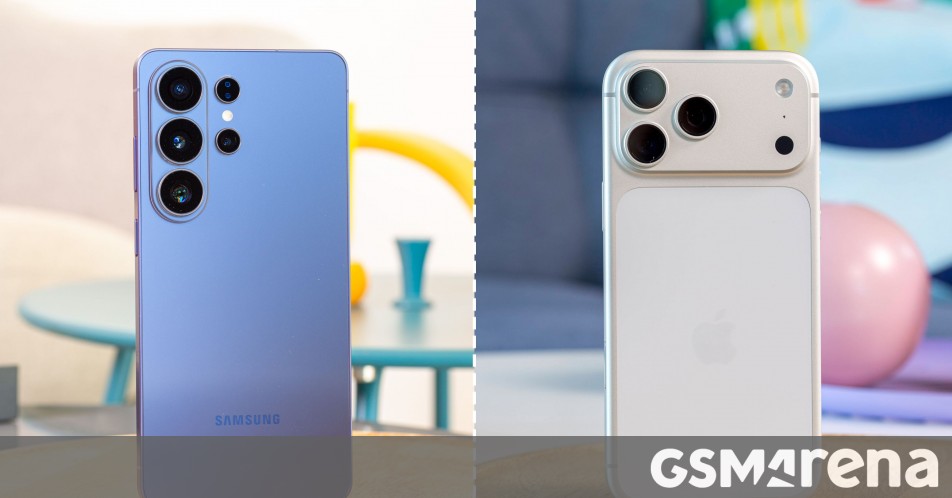
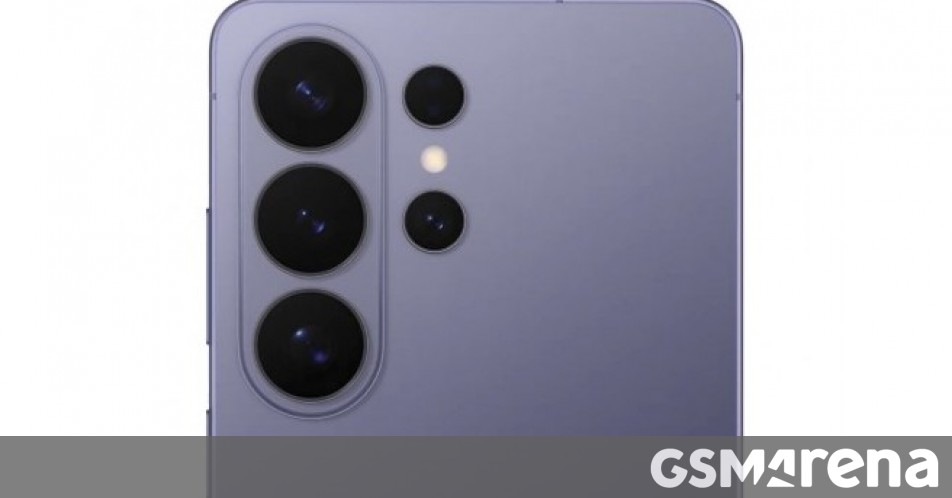
The new camera features, on the other hand, are neither of those things. They're something worse. Something scarier. On this episode of The Vergecast, Nilay and David discuss the new phones, then dive into the ways in which the S26's AI camera features seem to be clearly designed to change the whole idea of what happens when you try to take a picture.
If it's speed you want for sports or action shots of your kids, models like Canon's R50 can shoot bursts as fast as many high-end cameras. Creators, meanwhile, can choose Sony's ZV-E10 for vlogging jobs. There are also great, and cheap, models in the action and gimbal camera categories.
ChatGPT's release over three years ago triggered an AI frenzy. While AI models continue to become more capable, to truly be as helpful as possible to people in their everyday lives, they need to have access to everyday tasks. That's only possible by allowing them to live outside a chatbot on your laptop screen and more presently in your environment.
Xiaomi's Photography Kit Pro for the Xiaomi 17 Ultra represents this evolution by adding manual control features and filter compatibility. The kit includes a magnetic case with detachable filter threads, a photography grip with USB-C connectivity supporting 90W HyperCharge, and customizable controls including a two-stage shutter, zoom lever, video button, and adjustable dial.
In recent years, smartphone photography has become increasingly dominated by software. Computational imaging, AI processing, and post-capture optimisation now play a central role in how images are produced. Yet as these techniques become more widespread, camera hardware is once again emerging as a key differentiator. The REDMI Note 15 Pro 5G Series reflects this shift clearly, placing renewed emphasis on sensor capability and optical fundamentals rather than relying solely on software to define image quality.
The kit consists of nearly 10 individual pieces. At the center of it is a case for the Magic8 Pro. Not only does it serve its photography duties, but it has built-in Qi2 magnets and what Honor calls a radiator grille design, which helps with heat dissipation.
For millions of people, the ability to share a fresh photo wirelessly - Facebook, Twitter, e-mail, text message - is so tempting, they're willing to sacrifice a lot of real-camera goodness. That's an awfully big convenience/photo-quality swap. A real camera teems with compelling features that most phones lack: optical zoom, big sensor, image stabilization, removable memory cards, removable batteries and decent ergonomics. (A four-inch, featureless glass slab is not exactly optimally shaped for a hand-held photographic instrument.)
Perhaps the most anticipated new camera of 2025, Sony's new A7V mirrorless camera just squeaked onto the scene before the end of the year. The A7 series is Sony's all-around camera. It lacks the resolution of the A7R cameras and the video focus of the A7S cameras, but in some ways offering enough of the best of those to make the plain A7 the best choice for most people.
Engadget has been testing and reviewing consumer tech since 2004. Our stories may include affiliate links; if you buy something through a link, we may earn a commission. Read more about how we evaluate products. Catch up on the recent reviews published by Engadget. Our reviews team is rested up after the CES grind and we're back to business. This week we reviewed the latest devices from Valerion,
Multispectral imaging works by capturing light in several distinct wavelength bands, including those not visible to the human eye. This enables more detailed information capture when compared to traditional RGB sensors, which only detect red, green, and blue wavelengths. Using multispectral sensors could help future iPhones achieve better material separation and improved depth perception, with the latter resulting in more accurate portrait photos.