Germany news
fromwww.dw.com
2 days agoGermany news: Easter Sunday marked with Masses, peace demos
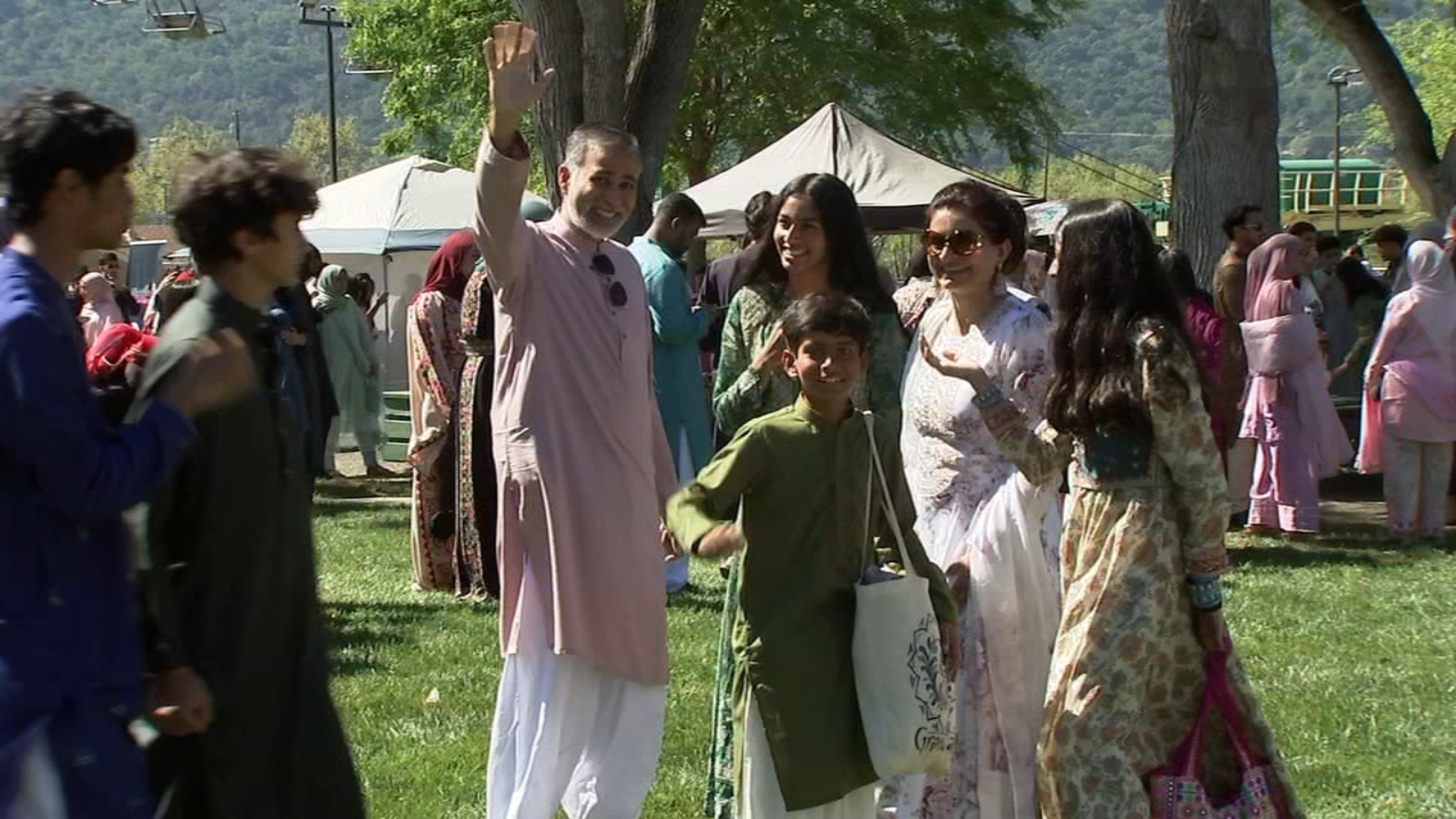
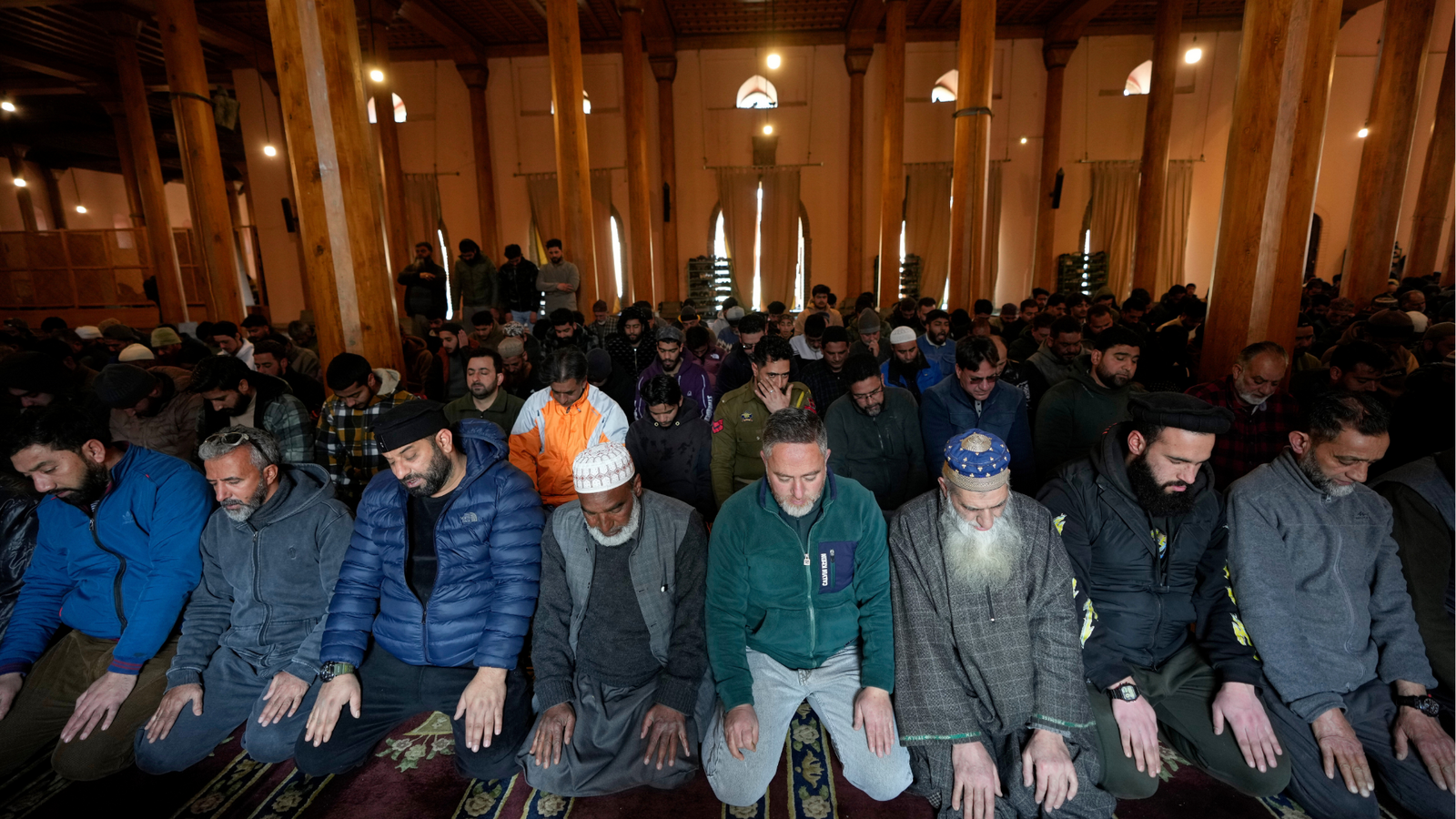
Germans celebrate Easter with church services and peace marches amid geopolitical tensions and rising fuel prices.
A true wellness gathering is something far more ancient and far more urgent: it's any intentional space where humans are invited to arrive whole, body, mind, spirit, and leave more alive than when they walked in. That's it. That's the whole definition.
Similar to four others unearthed nearby earlier this month, it is sitting upright at the bottom of a one-metre-wide pit. The skeleton's hands are resting in its lap. Like the others, its back is against the eastern wall, its face directed westward.
No one will ever mistake this for a tilt-up building in an industrial park. This is the Mormon temple being built adjacent to Interstate 5 on San Diego's affluent northern edge. After all, how many San Diego buildings have a multiterraced design, 190-foot twin spires and a 14-foot-tall gold leaf statue of the angel Moroni atop one of the spires facing eastward and blowing his prophetic trumpet? Try none.
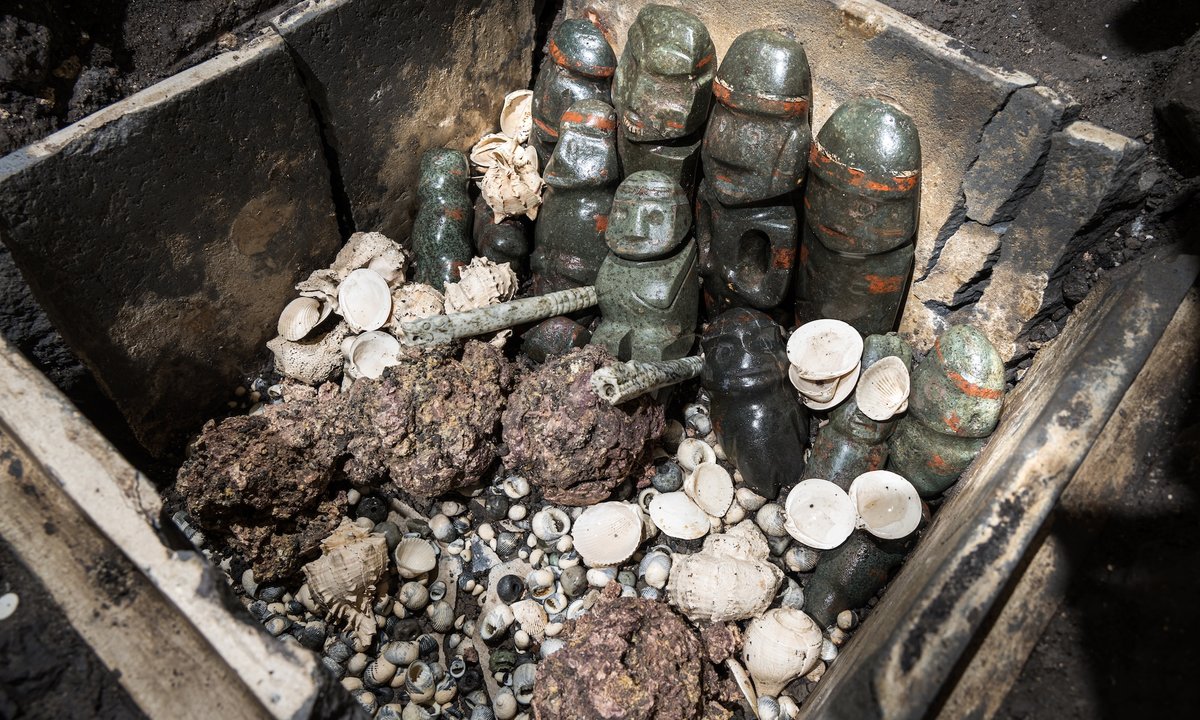
The two socketed axes were discovered last year by a metal detectorist who recognized that their careful positioning could not have been a natural process. He reported the find to the Westphalia-Lippe Regional Association (LWL). The subsequent excavation of the find site revealed a far more complex depositional context. Beneath the axes is a pit carved into the rock.
We are living through one of the most disorienting periods in recorded history. The AI race is accelerating toward ever faster, ever more sophisticated automation and optimization. Agentic AI systems are moving from research labs into workplaces, healthcare, and governance. Geopolitical tensions are restructuring alliances faster than institutions can adapt. And planetary systems are signaling, with increasing urgency, that our current trajectory is unsustainable. Amid all this, it is dangerously easy to lose sight of a foundational question: What are we actually optimizing for?
Papers that interrogate the intersections of religion, culture, and happiness, especially from non-Western, decolonial, feminist, or otherwise critical standpoints are welcomed. Possible questions include: How do different religious traditions conceptualize happiness, and what might be the implications for a global ethics? In what ways do colonial histories shape religious understandings of happiness?
Part of the answer lies in the visceral nature of the game. Unlike chess, football is physical to the point of absurdity. Grown adults in body armor crash into each other over what is essentially a leather egg. There's drama in every play. You don't need a PhD in physics to appreciate a one-handed catch while somersaulting over a defender like a caffeinated acrobat.
I noticed this shift in my own life when I started having dinner with my partner most nights, phones deliberately tucked away in another room. We made this change after too many evenings disappeared into "just checking one thing" that turned into hours of parallel scrolling. The difference was immediate and profound. Conversations went deeper. We actually looked at each other. Time seemed to stretch in the best possible way.
It was less than 24 hours after the news of a horrifying attack at a similar Menorah lighting in Sydney's Bondi Beach reverberated around the globe when Menlo Park's Jewish community gathered in Fremont Park to light the Menorah. Together, those assembled had the victims across the ocean in mind and prayed for them to find healing and comfort. The message of the Menorah has always been the resilience of light, and its message could not have been more relevant for a day which bore such difficult news.
The Maidu tribe of Butte County-Berry Creek, Mechoopda, Mooretown, Enterprise and Konkow Valley, come together to conduct CAL-TREX prescribed burn training to relearn how to put helpful fire back on their native lands that have been devastated by recent catastrophic wildfires. Organizers say the training camp is designed to help restore fire-scarred lands and people. While other Northern California tribes have been reintroducing cultural fire for decades,
The monks are part of a 2,300-mile pilgrimage for peace from a Buddhist temple in Fort Worth, Texas, across nine states to Washington DC. Dressed in vibrant orange robes, they have walked about 20 miles daily, eating one meal a day and practicing loving-kindness a form of mindfulness that can be thought of as a form of non-violent resistance. Their journey is a slow-moving meditation meant to embody peace, rather than argue for it.
This Sunday, step back a century (or ten) at the Society for Creative Anachronism's ninth annual Deck the Halls of Valhalla, featuring activities and performances highlighting the arts of the Middle Ages. New York City better known as the Crown Province of stgar resides in the East Kingdom of the SCA, a Medieval history and culture organization with members around the globe.
Bhante Saranapala gazed down at more than a hundred Buddhist monks wearing burnt-orange, saffron and maroon robes, most sporting woolly hats, a few clutching flowers. These monks are awesome! roared Saranapala, who is known as the Urban Buddhist Monk, prompting a cheer from the big crowd. Their determination should be greatly appreciated. Walking from Texas to Washington DC, 2,300 miles; it requires strong determination!
I was thinking about this the other day while scrolling through my phone on a Saturday morning, realizing I'd been working for two hours without even noticing. Growing up, my weekends looked nothing like this. There were unspoken rules, traditions that just happened without anyone scheduling them into a calendar app. These weren't grand gestures or expensive activities. They were simple rituals that, looking back now, built something most of us are desperately trying to recreate through therapy apps and self-help books: genuine connection.
as the gods were understood as the true monarchs and the king as simply their steward. In order to maintain his authority, the king needed to court the goodwill of the gods, and although they made their approval clear through military victories, bountiful harvests, and prosperous trade, events such as the Akitu festival provided an annual opportunity for the divine to continue its relationship with the ruling house or withdraw its favor.
Two exceptionally rare and beautifully carved Mithraic altars found in Inveresk, East Lothian, Scotland, are going on display for the first time. They are not just the only Roman altars ever found in Scotland, but are among the finest examples of Roman sculpture in Roman Britain. They are also uniquely early in date, having been made in 140s A.D. during Antoninus Pius' reoccupation of southern Scotland, whereas most other archaeological materials related to the worship of Mithras in Britannia date to the 3rd century.
His investigation began after identifying recurring giant T-shapes, three-level indents, and step pyramids carved into ancient stones worldwide. 'These specific symbols that are built in different size proportions, and the symbols are found in ancient stones around the world, are not supposed to exist; no cultures are supposed to have any cross-platform,' LaCroix explained. The symbols appear in locations ranging from Turkey's Van region to South America and Cambodia.