#applied-materials-amat
#applied-materials-amat
[ follow ]
#semiconductors #tsmc #chip-manufacturing #asml #semiconductor-manufacturing #ai-chips #euv-lithography #tesla
#semiconductors
World politics
fromSilicon Canals
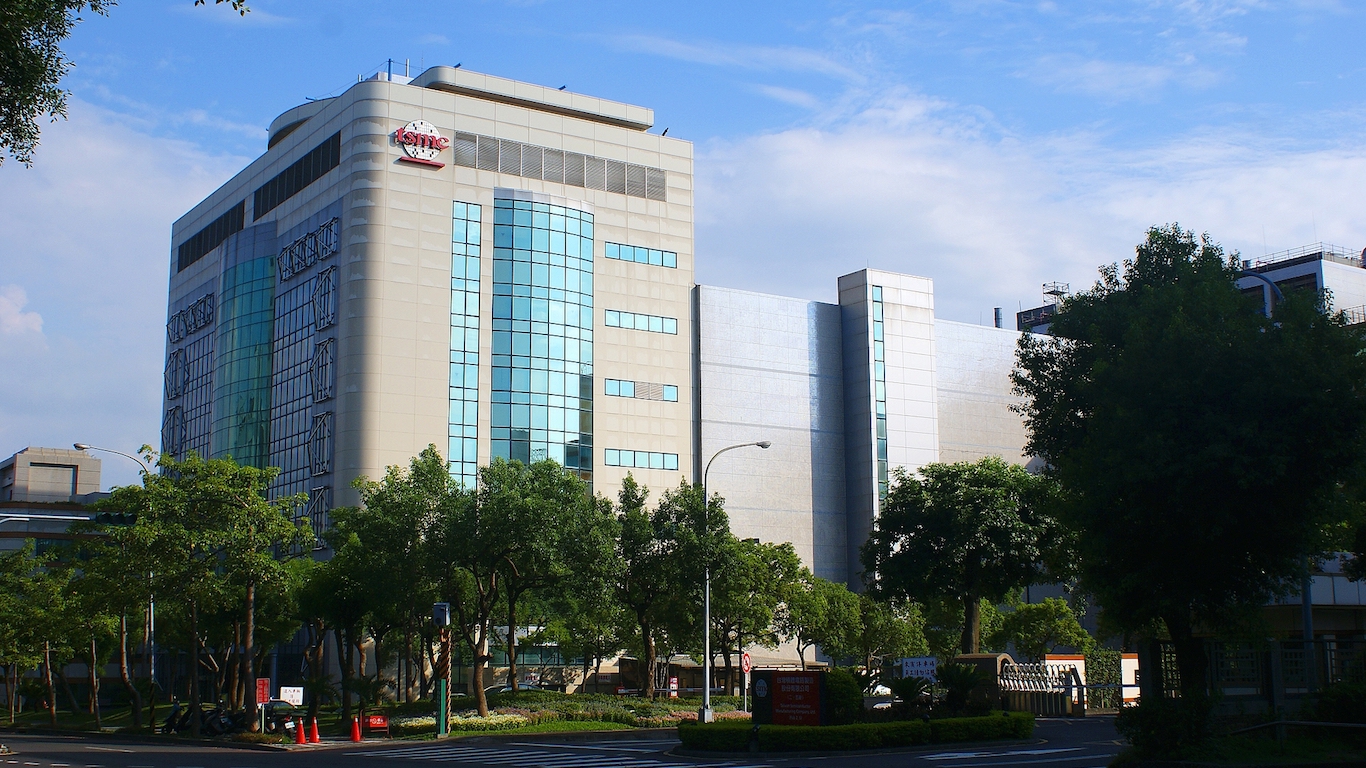
2 weeks agoInside the quiet restructuring of global semiconductor supply chains: how TSMC, Samsung, and Intel's subsidy race is creating three separate technological civilisations - Silicon Canals
Governments are investing heavily in semiconductor production, leading to the creation of three distinct technological ecosystems.

World politics
fromSilicon Canals
2 weeks agoInside the quiet restructuring of global semiconductor supply chains: how TSMC, Samsung, and Intel's subsidy race is creating three separate technological civilisations - Silicon Canals
Governments are investing heavily in semiconductor production, leading to the creation of three distinct technological ecosystems.

from24/7 Wall St.
6 days agoHelium "Tsunami" to Hit Chipmakers -- The Surprising Winner to Profit From the Coming Shortage
Global helium consumption runs about 6 billion cubic feet per year. Qatar supplied a big slice until this month. With one-third of output sidelined, prices have already soared.
Business


Environment
fromEarth911
6 days agoSustainability In Your Ear: Schneider Electric's Steve Wilhite Maps the Renewable Energy Transition
The global energy system is shifting to distributed renewables and digital optimization, with a significant gap between corporate sustainability ambitions and delivery capabilities.
fromSilicon Canals
2 weeks agoThe AI boom's hidden weakness: how Iran's conflict exposed a helium bottleneck for chip manufacturing - Silicon Canals
Geopolitical instability in the Middle East threatens helium supply, which is critical for semiconductor manufacturing and AI infrastructure with no viable substitutes.

European startups
fromFortune
5 days agoEmerald AI and Nvidia aim to offer the fast pass for data center grid connects, partnering with power producers and raising new funds | Fortune
Emerald AI aims to enhance grid flexibility for data centers, reducing peak power consumption while maintaining high reliability.
from24/7 Wall St.
3 weeks agoAMAT and Micron still winning in AI trade despite QQQ and sector weakness
The need for higher performance and more energy-efficient chips is driving high growth rates for leading-edge logic, high-bandwidth memory and advanced packaging. These are areas where Applied is the process equipment leader, and we expect to grow our semiconductor equipment business over 20 percent this calendar year.
Artificial intelligence
fromSilicon Canals
1 week agoChina now controls 92% of rare earth processing. Every Western EV and defense firm depends on a supply chain they can't replicate - Silicon Canals
China controls the overwhelming majority of global rare earth processing capacity, a figure that has remained structurally stable for nearly two decades despite sustained Western policy attention. The problem has never been geology. It's always been industrial chemistry at scale.
Environment
Business
from24/7 Wall St.
2 weeks agoACMR vs KLIC: Battle of the Semiconductor Equipment Stocks
ACM Research achieved record revenue but faced margin collapse, while Kulicke & Soffa posted strong earnings with stable margins after strategic restructuring, revealing divergent momentum in semiconductor tools.
Intellectual property law
fromArs Technica
1 month agoTech industry is in tariff hell, even if refunds are automated
Trade groups urge courts to establish a clear tariff refund process as 300,000 US businesses await $175 billion in unlawful tariff collections, with interest accruing at $23 million daily.
#semiconductor-manufacturing
Silicon Valley real estate
fromThesanjoseblog
1 month agoNokia Subsidiary Launches Photonic Semiconductor Facility in South San Jose
Infinera Corp. purchased an 82,000-square-foot South San Jose facility for $27 million to establish a photonic semiconductor fabrication plant, supported by $40 million in federal CHIPS Act funding.

Silicon Valley real estate
fromThesanjoseblog
1 month agoNokia Subsidiary Launches Photonic Semiconductor Facility in South San Jose
Infinera Corp. purchased an 82,000-square-foot South San Jose facility for $27 million to establish a photonic semiconductor fabrication plant, supported by $40 million in federal CHIPS Act funding.
fromTNW | Startups-Technology
1 week agoLace raises $40M to replace chip-making light with helium atoms
Lace Lithography uses a beam of helium atoms rather than light to etch chip patterns, achieving a width of approximately 0.1 nanometres, which is about 135 times finer than ASML's EUV light.
European startups
fromTheregister
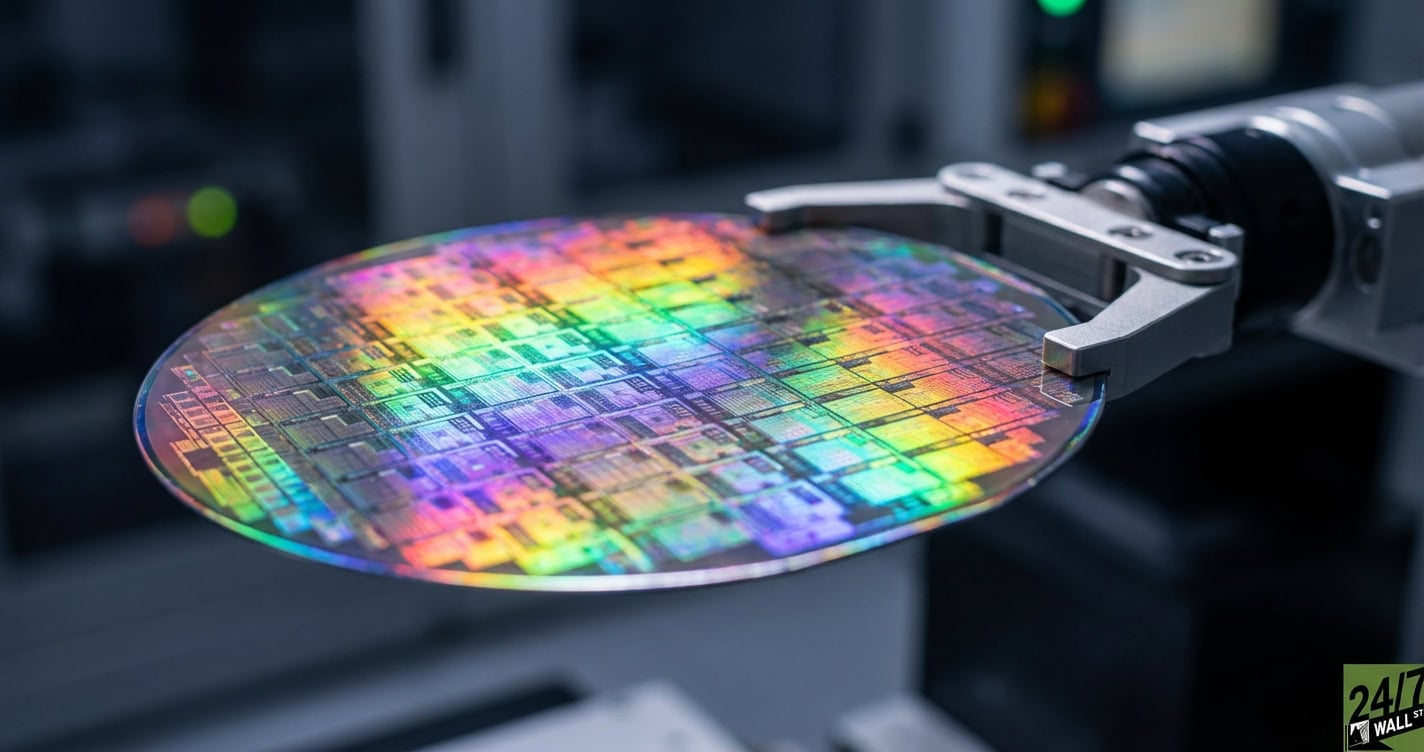
1 month agoBroadcom says AI companies can't make their own silicon
Our custom accelerator business is progressing very well across five customers. Anthropic will soon implement one gigawatt of Broadcom-baked TPUs, and we expect the AI company plans a three-gigawatt deployment in 2027. Meta will install multiple gigawatts of Broadcom's XPU accelerators in 2027 and beyond. OpenAI will deploy over one gigawatt of compute capacity based on custom XPUs in 2027.
Artificial intelligence
from24/7 Wall St.
3 weeks agoRetirees Are Using EWT to Ride Taiwan's Semiconductor Dominance
Taiwan Semiconductor Manufacturing (NYSE:TSM) sits at the center of this fund, representing 22.3% of the portfolio - a concentration that reflects TSMC's irreplaceable role in global chip supply chains. It manufactures chips for Apple, Nvidia, AMD, and virtually every other major technology company, and that dominance shows up in its financials: 45% profit margin and 35% return on equity that few industrial companies anywhere in the world can match.
Business
Business
from24/7 Wall St.
3 weeks agoApplied Materials Q1 2026 Free Cash Flow Hit $1.04 Billion, So Why Is the Stock Sliding
Applied Materials faces valuation debate as stock declines 11% despite strong earnings guidance, with bulls citing AI semiconductor demand and bears questioning peak-cycle pricing amid revenue decline.
fromComputerworld
3 weeks agoData mining? Old servers could become new source of rare earths
Korea Zinc, which it described as one of the world's largest smelters, is in talks with major US technology firms to recycle data center waste and extract rare earth. The move comes almost one year to the day after China announced immediate export controls on seven more rare earth elements critical to enterprise IT hardware manufacturing.
European startups
fromComputerworld
2 months agoApple Silicon: As demand grows, is TSMC driving a harder bargain?
The gold rush across the high-end processor market might help Apple's processor manufacturing partner, TSMC, drive harder bargains than in the past. That's because Apple's huge appetite for processors is being met by fast-growing demand for chips for servers. As a result, the cost of the chips used inside Macs, iPads, and iPhones will likely increase, putting even more inflationary pressure on Cupertino's bottom line.
Apple

fromThe Nation
2 months agoHow Taiwan Became the Chipmaker for the World
When Donald Trump nominated Elbridge Colby as the undersecretary of defense for policy, the news stirred headlines in Taiwan. Colby, who has since been confirmed, had repeatedly stated on social media that if China ever invaded Taiwan, the US military should destroy TSMC, the world's most important chip manufacturer, to prevent it from falling into Chinese hands. The provocative suggestion has been echoed by Democratic Representative Seth Moulton,
World news
European startups
fromTechzine Global
1 month agoCalls for a 'Chinese ASML' are growing louder, but it is still a long way off
Chinese chip executives advocate for developing domestic EUV lithography technology as a central priority, proposing a national integrator model to reduce dependence on ASML amid export restrictions.


European startups
fromTechzine Global
1 month ago"AI chips will remain in America unless foreign countries invest in the US"
The US government is implementing strict export controls on AI chips, requiring foreign customers to invest in US AI infrastructure or provide security guarantees, with ongoing monitoring of chip distribution and usage.
fromTechCrunch
1 month agoUS reportedly considering sweeping new chip export controls | TechCrunch
U.S. regulators have allegedly drafted rules that would require U.S. government approval to ship AI chips anywhere outside the U.S., according to Bloomberg, citing sources. This would give the U.S. significantly more control over companies like AMD and Nvidia.
European startups
fromTechzine Global
1 month agoASML wants to go beyond EUV: expansion into advanced AI chips
We look, not just for the next five years, we look at the next 10, maybe 15 years. The focus is on advanced packaging and a possible expansion of the chip size that ASML's machines can handle, positioning the company to capitalize on the rapidly evolving AI chip manufacturing landscape.
European startups

fromThe Cipher Brief
2 months agoExport Controls Backfire: The China Innovation Paradox
Instead of paralyzing China's AI sector, these controls have promoted domestic self-reliance. With no choice but to develop indigenous workarounds and architectural innovations, Chinese businesses are decoupling AI progress from sheer hardware volume. U.S. policies have undoubtedly bought time, but they have also ushered in a parallel innovation ecosystem totally independent of Western influence.
Artificial intelligence
fromTheregister
2 months agoMicron to boost DRAM output with $1.8bn chip fab buy
Micron's version of events says it's signed a letter of intent to acquire Powerchip's entire P5 site in Tongluo, Taiwan, for total cash consideration of US$1.8 billion. "The acquisition includes an existing 300 mm fab cleanroom of 300,000 square feet and will further position Micron to address growing global demand for memory solutions," the company stated, adding that the company "expects this acquisition to contribute to meaningful DRAM wafer output beginning in the second half of calendar 2027."
Business
Business
fromSitePoint Forums | Web Development & Design Community
1 month agoU.S based custom metal stamping company for precision telecom or shielding components?
Seeking a U.S. precision metal-stamping partner for telecom and EMI/RFI shielding with tight tolerances, in-house tooling, secondary ops, and smooth prototype-to-production transition.
fromBusiness Matters
1 month agoWhy Tolerance Management Is a Business-Critical Skill in Modern Manufacturing
We are now in a time of manufacturing where precision is more than a technical necessity; it's a business requirement. The more complex, globally dispersed and demanding things get, the less slack remains in the system. Under these circumstances tolerance management has become a decisive competence and affects competitiveness not only in terms of controlling costs, ensuring quality and improving production efficiency but also for long term market success.
Business
[ Load more ]