#art-piece
#art-piece
[ follow ]
#contemporary-art #art #art-exhibition #photography #art-exhibitions #illustration #painting #architecture

fromHi-Fructose Magazine - The New Contemporary Art Magazine
3 days agoKyle Cobban Draws From The Unknown - Hi-Fructose Magazine
"It's an amalgamation of the Chicago neighborhood aesthetic with a Bulls fan, quite literally. It's kind of on the nose, but that's how I juxtapose the elements of my work, with the structure of a home and then a figure who is around or in the home."
Chicago Bulls


Renovation
fromdesignboom | architecture & design magazine
6 days agopaul rudolph's historical walker guest house returns in exhibition curated by A$AP rocky
The Walker Guest House, designed by Paul Rudolph, is showcased in Los Angeles with original and modern design elements, highlighting its significance in American modernism.


Design
fromdesignboom | architecture & design magazine
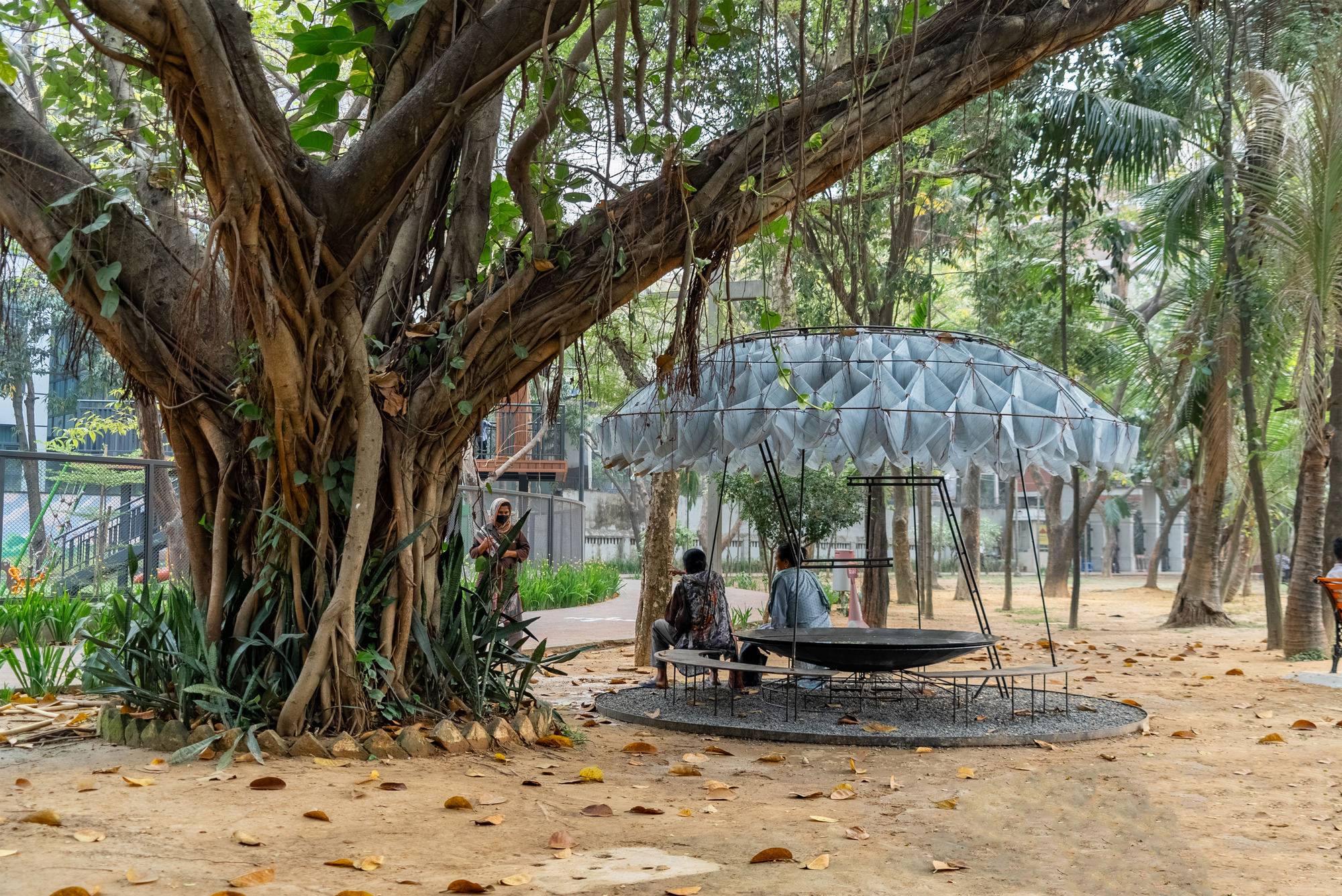
6 days agoartwork uses floating fabric corridor and bodily movement to visualize climate change
Ryo Yamada's Perception Corridor is an immersive installation in Edinburgh that explores perception and environmental awareness through a 40-meter fabric corridor.


fromJuxtapoz
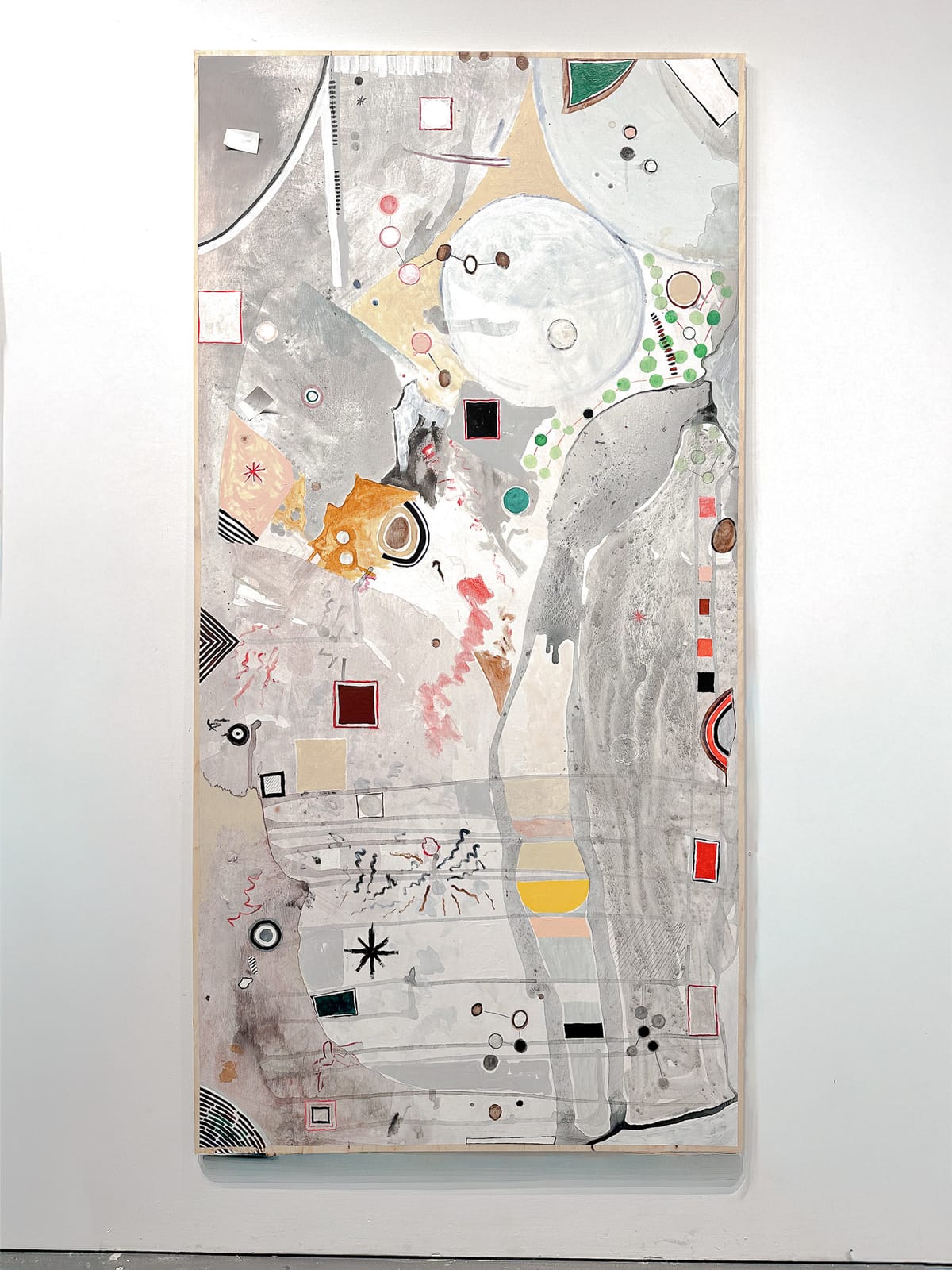
6 days agoJuxtapoz Magazine - Last Days to See Kate Meissner's New Paintings @ Lyles & King's Project Space, NYC
"These works are an exploration of the human body's elasticity and capacity to metamorphose. Informed by my own experience of pregnancy and the birth of my first child last year, these paintings are a meditation on physiological transformation and the body's underlying animalistic and mammalian nature."
Arts
Arts
fromThe Art Newspaper - International art news and events
3 days agoGagosian chooses Paris location to present three important late paintings by Francis Bacon
Three late paintings by Francis Bacon will be exhibited in Paris, showcasing his significant connection to the city and his artistic evolution.
Miscellaneous
fromThe Art Newspaper - International art news and events
1 month agoComment | Art is more than its original context
Understanding art's original context enriches appreciation, yet modern viewing conditions and lost contexts require adapting how we engage with artworks across different settings and time periods.
fromHyperallergic
3 days agoThe Art World Is a Joke
Kamrooz Aram is everywhere this year, from Mumbai Art Week to the Whitney Biennial, and critic Aruna D'Souza is grateful. She pens a beautiful meditation on his work, reading his abstract paintings as not simply a denunciation of Western modernism nor a reassertion of Islamic visual motifs, but something else entirely - something gestural, exuberant, riotous, and incomparably his own.
Arts
fromArtnet News
4 days agoAt Art Basel Hong Kong, Wet Paint Hits Galleries, Malls, a Semi-Secret Space, and More | Artnet News
Hong Kong's particular and seductive Metabolist city planning is an ode to consumption as a great totalizer of culture, and to contemporary art as merely a niche commodity form among many others.
Arts
fromBOOOOOOOM!
4 days ago"Idling" by Artist Greta Kresse
"These paintings merge the landscape and the intimacy of windows through the framing of the car, bridging the two realms I've typically explored separately. The car becomes a meditation on transition, on existing simultaneously here and elsewhere."
Arts
fromBoard Game Quest
1 month agoSand Art Review
Sand Art is a game by Kory Jordan and published by 25th Century Games for two to four players ages 10 and up. It takes about an hour to play, and has you collecting resources and then coloring in a bottle, making art in a bottle out of sand, in case the name didn't give away the plot. Gameplay Overview: Sand Art has you gathering and mixing sand, which is used to fill your bottle.
Board games
fromApartment Therapy
1 month agoThe Clever Way to Turn Your Home into a Curated Art Gallery
LG Gallery+ is a new visual curation service for LG TVs - and a brilliant way to make your home more unique and personalized. It lets you express your ever-changing creativity with a massive library of classic art, digital and 3D artwork, scenery, games, and more. With more than 4,500 options to choose from, you can turn your LG TV into a world-class art gallery, a peaceful forest, or an homage to your favorite video game - all in the same day.
Gadgets
fromArtnet News
2 weeks agoPeter Halley Returns to Austria with First Solo Show in Two Decades
In many ways working in the tradition of Kazimir Malevich and Josef Albers, his compositions employ a language of squares and rectangles known as "Cells" and "Prisons," connected by bold lines called "Conduits." Together, these geometric and linear arrangements tap into the inherent geometry that structure reality, and conceptually refer to the construction of everyday life, both public and private as well as physical and psychological.
Arts
Arts
fromwww.amny.com
2 weeks agoA Living Canvas: Adrian K and the alchemy of art, appetite, and atmosphere at Pinky Swear | amNewYork
Adrian K's three-month residency at Pinky Swear merges art with social participation, using reclaimed materials to create work that balances ethereal beauty with urgent activism and circular economy principles.
fromHyperallergic
3 weeks agoEmbracing Friction in the Art World
On Franklin Street in Brooklyn's Greenpoint neighborhood, one non-commercial gallery fosters 'a small, stubbornly human space for friction.' Friction—the ubiquitous buzzword that captures the simultaneous delight and discomfort of doing things the slow way—is at the heart of artists Pap Souleye Fall and Char Jeré's current show at Subtitled NYC. It also reflects the overall spirit of this little exhibition space and of a burgeoning movement to reject our culture of optimization in favor of a bumpier, more intimate, less alienating experience.
Arts
Arts
fromThe Art Newspaper - International art news and events
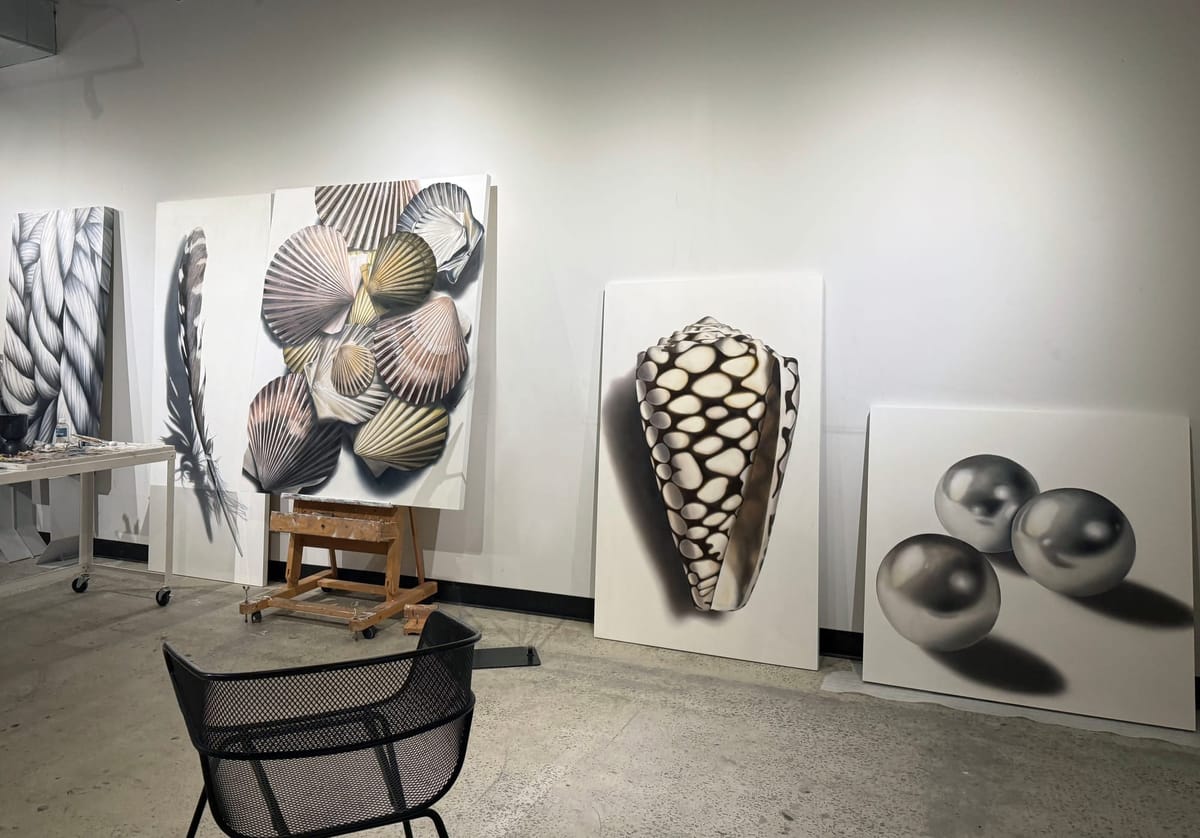
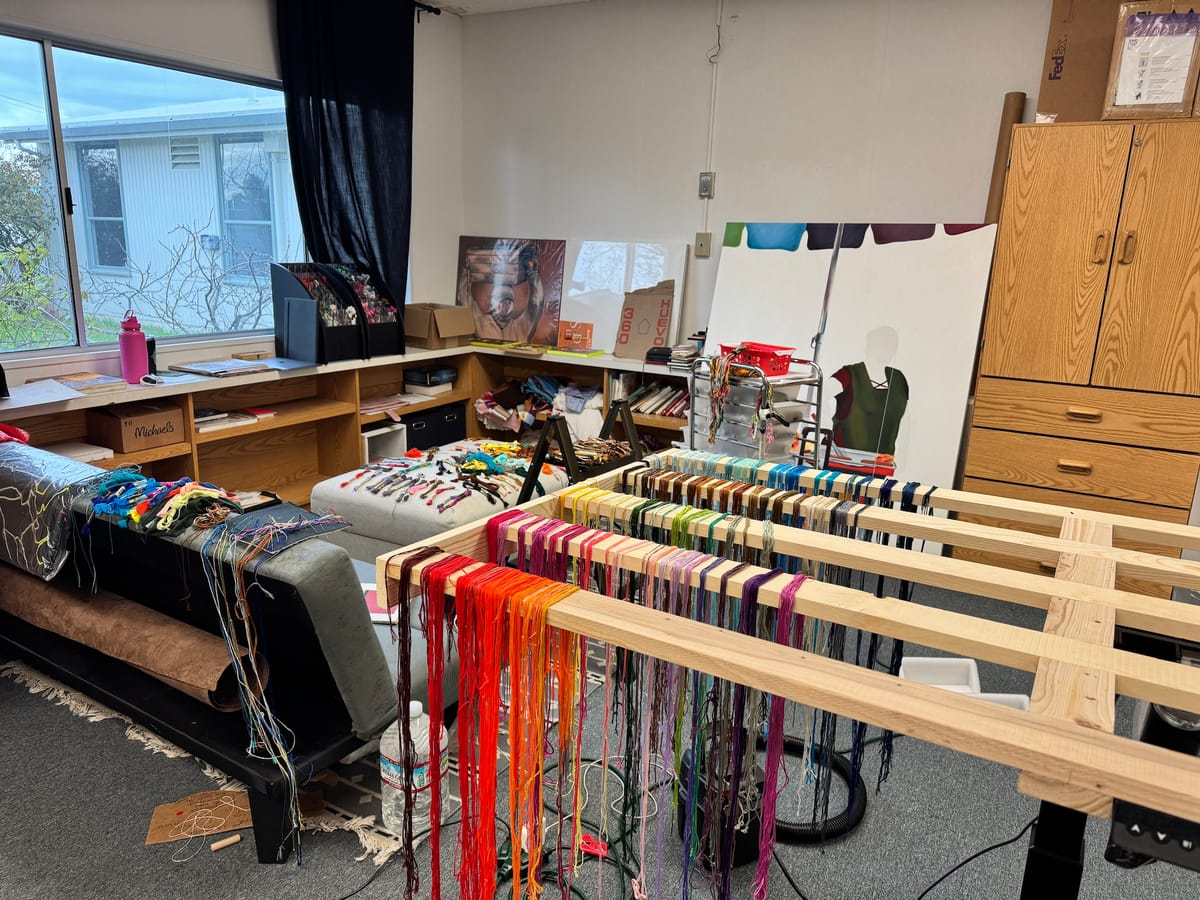
2 months agoComment | We are living in an age of bad painting-the medium must be challenged to stay interesting
Contemporary painting shows a widespread trend of complacent, market-driven, and poorly executed works that often lack urgency and substantive engagement.
Arts
fromHi-Fructose Magazine - The New Contemporary Art Magazine
2 months agoPainting From The Inside Out With Christian Van Minnen - Hi-Fructose Magazine
Paintings juxtapose bruised, tumorous flesh with forbidden fruits and gummy forms to create disorienting, alluring yet repulsive surrealist imagery.
Arts
fromdesignyoutrust.com
2 months agoArtist Paints Smoky Lounges And Quiet Strangers, Letting Halffinished Details Turn Viewers Into Coauthors Of The Scene
A wide-ranging visual roundup showcases creative reinterpretations, vintage design, activist art, photography, illustration, and humorous cultural works spanning contemporary and historical styles.
fromHyperallergic
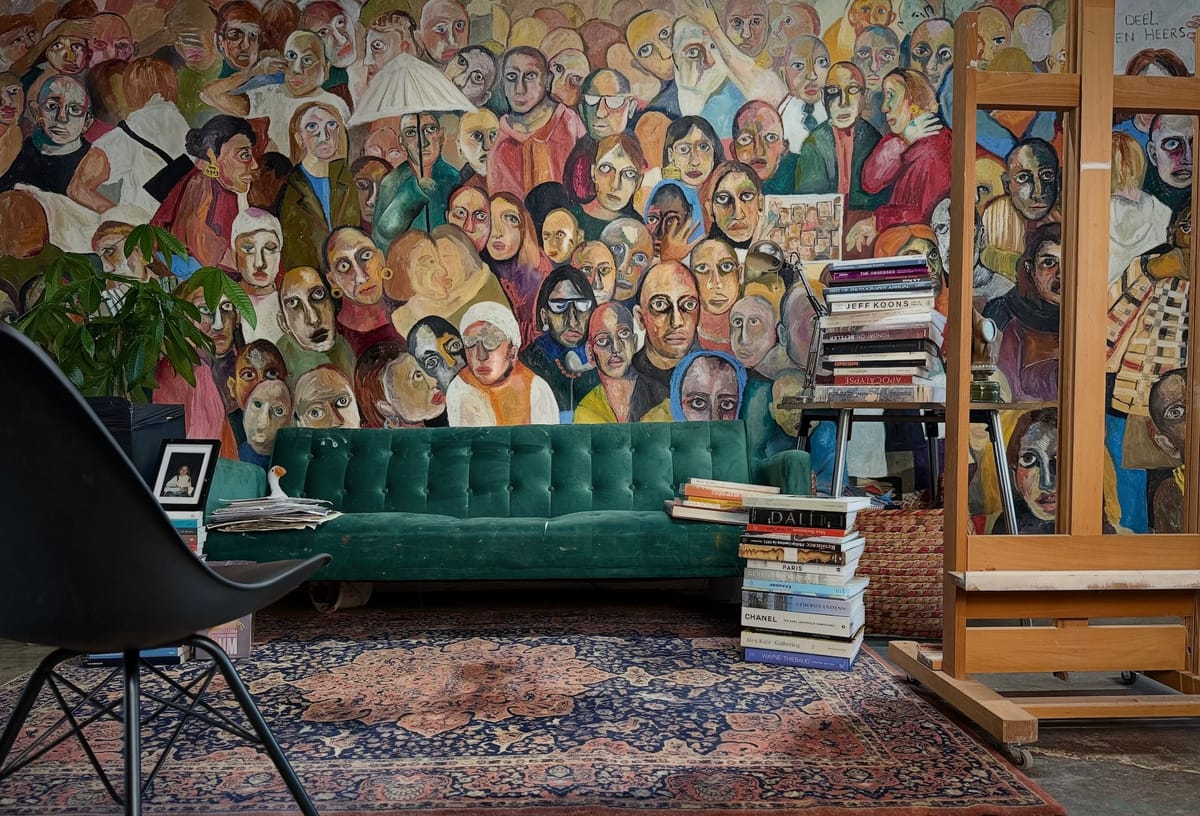
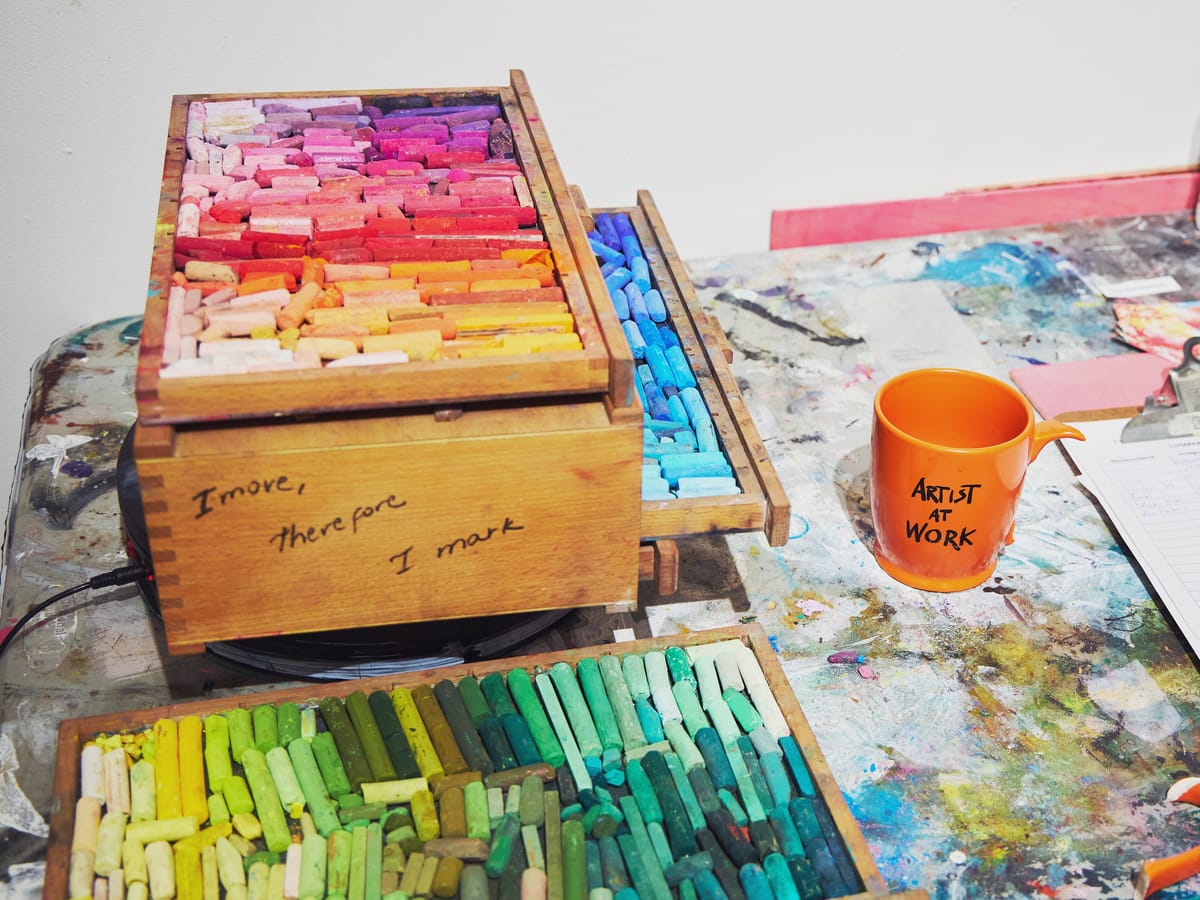
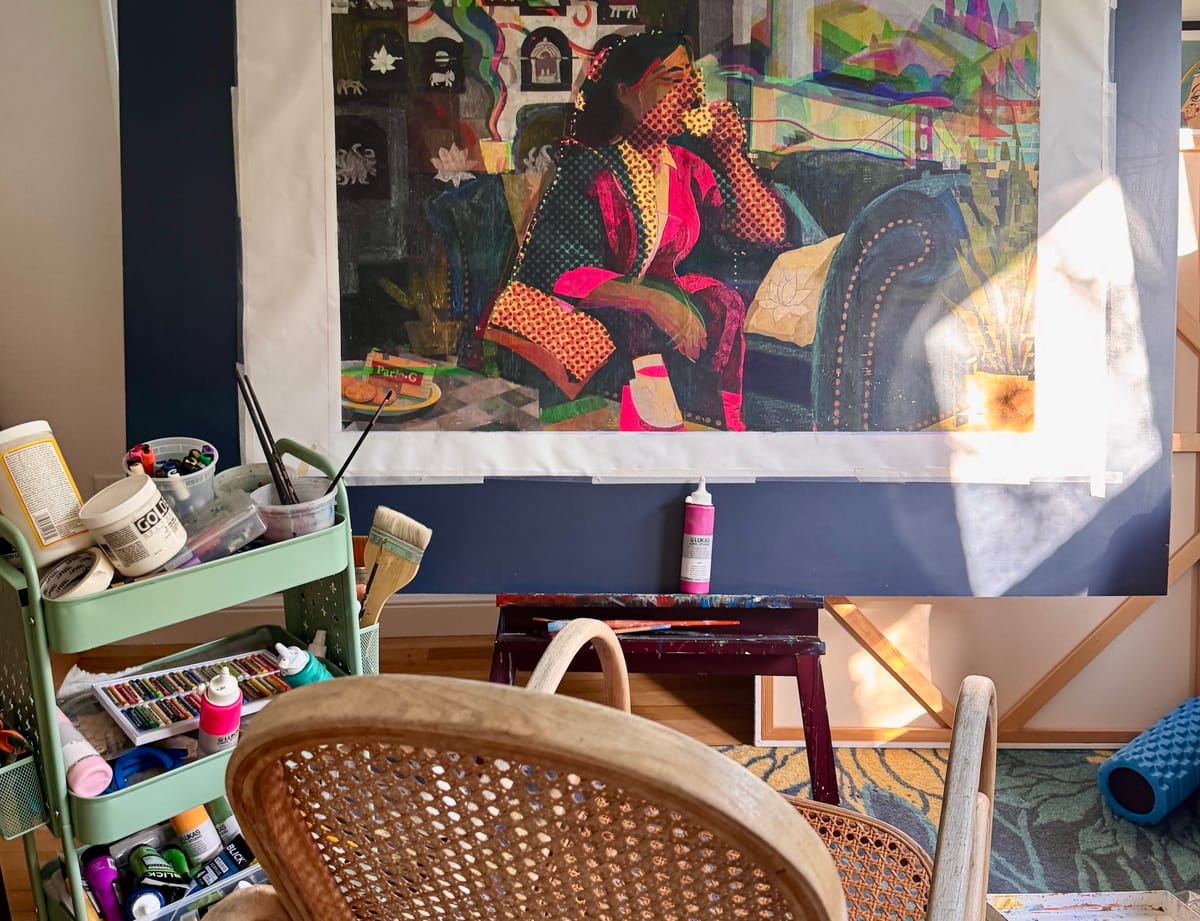
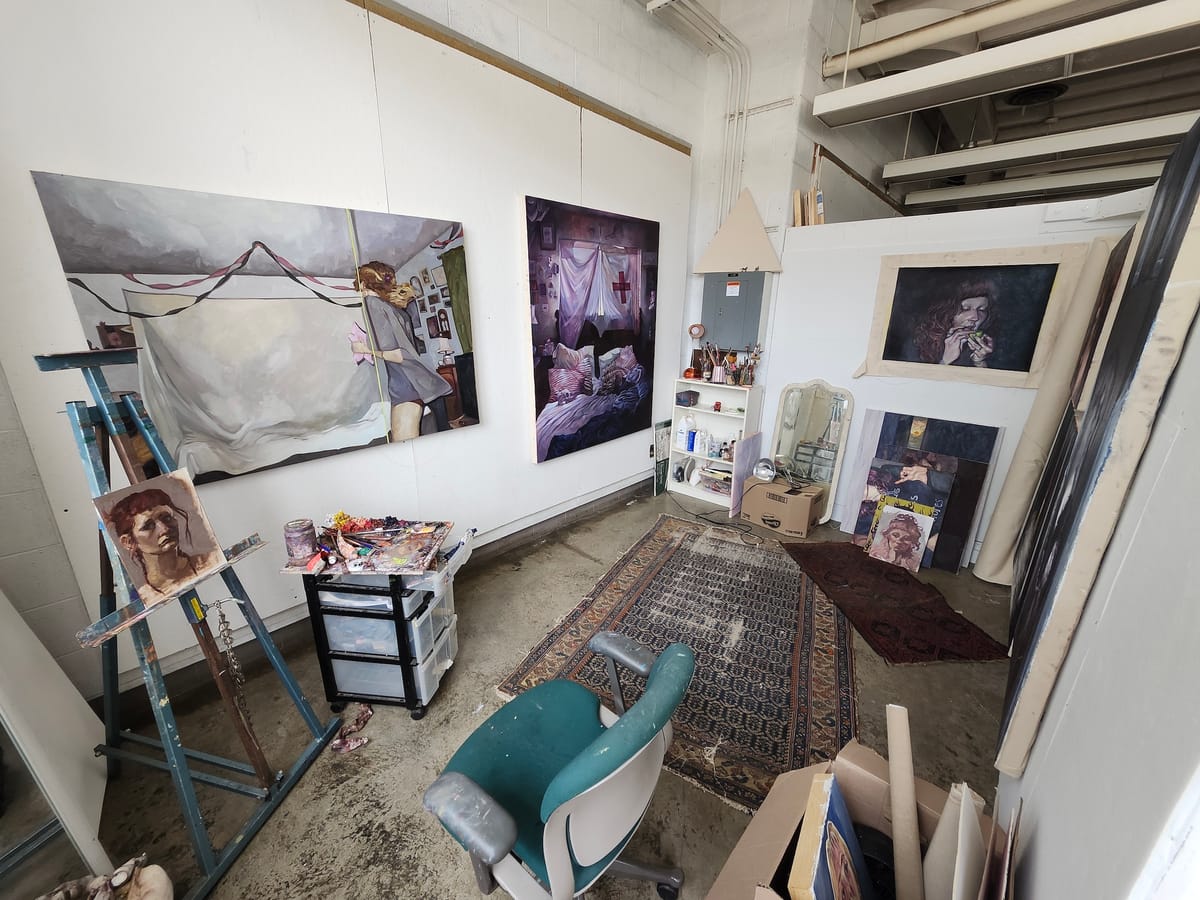
1 month agoA View From the Easel
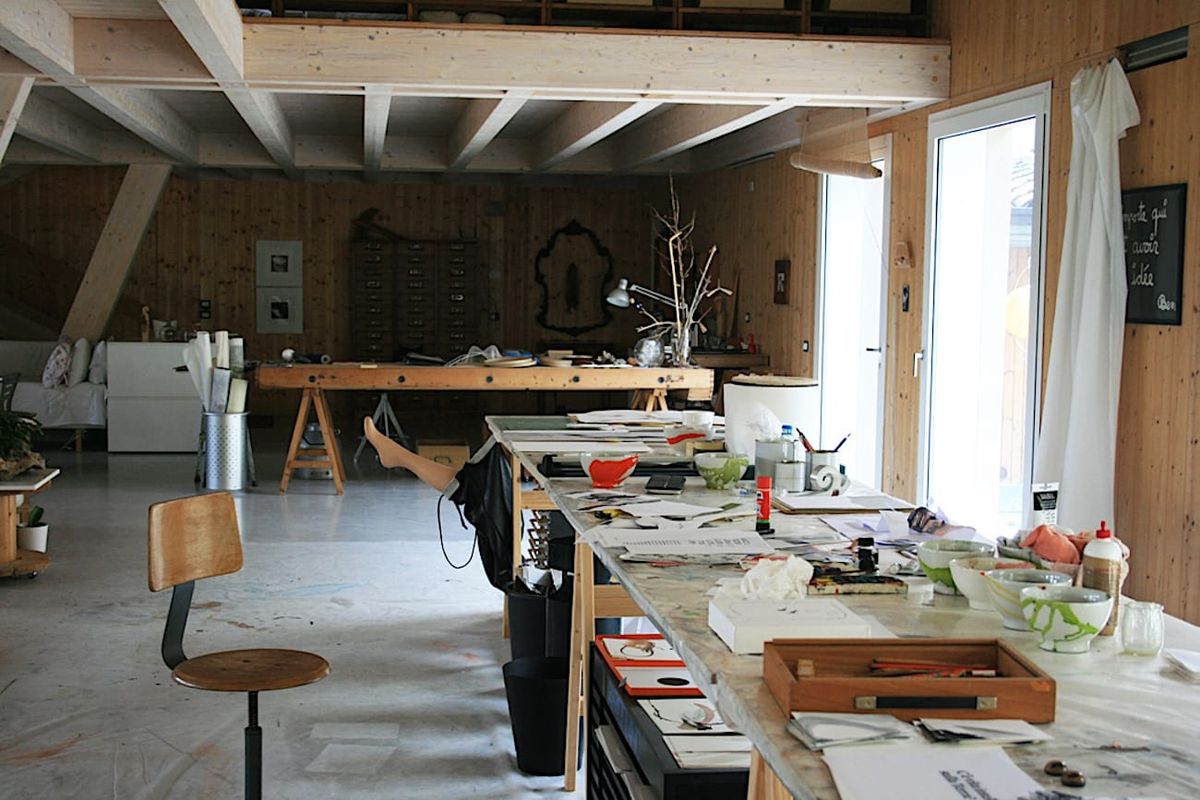
I work outside, carving and shaping the stone. Outside my house, I have a table, an extension cord, and tools. It's very cold and I have to wear all my winter clothes. When it's too cold, I do the filing and finishing work inside after I shape it outside. I listen to all kinds of music. I listen to Eminem all the time; his albums are all my favorites. For drawings, I work at Kinngait Studios or at home on my kitchen table.
Arts
fromHyperallergic
2 months agoA View From the Easel
Mornings are best for concentrated work. In the winter, I turn on the heat at 8am and get started around 10am. Summer, I start around 9am. I have two areas in the studio for projects. The large, heavy wood sculptures are carved in the front section of the studio, closest to the roll-up wide door. Smaller sculptures are placed on a hydraulic workbench. Before I start, I focus, connect with the Source, and ask for guidance.
Arts
fromColossal
2 months agoLuftwerk Transforms Paint and Aluminum into Radiant Explorations of Sunlight
Topped with a roof shaped like a crabshell, Le Corbusier's Chapelle Notre-Dame-du-Haut is a sanctuary amid the French mountainside. The 1955 construction rests atop a hill in Ronchamp, standing unobstructed by the otherwise forested inclines. As the sun rises and falls, light filters in through the mélange of rectangular windows tinted to cast streams of color around the space. The stained glass apertures of Le Corbusier's modernist chapel are a clear reference point for Luftwerk's "Open Frame."
Arts
[ Load more ]