#artifact-weapons
#artifact-weapons
[ follow ]
#archaeology #cultural-heritage #pompeii #roman-archaeology #ancient-egypt #mesopotamia #iraq #ancient-mesopotamia
World news
fromThe Art Newspaper - International art news and events
3 days agoIn a month of war, Iran's cultural heritage has suffered huge damage
Iran's war has caused severe damage to cultural heritage, infrastructure, and loss of life, notably impacting sites like Golestan Palace and Chehel Sotoun Palace.


fromThe Art Newspaper - International art news and events
2 days agoUnesco grants enhanced protection to 39 Lebanese heritage sites as war escalates
The designation prohibits the sites from being targeted or used for military purposes, with violations potentially constituting serious breaches of the 1954 Hague Convention and grounds for criminal responsibility.
Arts
fromThe Art Newspaper - International art news and events
1 week agoArchaeologists create map revealing extent of damage to Iran heritage sites
"It doesn't matter what [story] you want to tell-maps help bring it to life, they help you connect to spaces. And it has to be interactive. You have to be able to read, to click."
World news
World politics
fromArchDaily
3 weeks agoCultural Heritage Sites in the Middle East Damaged as War Strikes Historic Urban Areas
US-Israeli military attacks on Iran in February 2026 initiated a new Middle East conflict zone, joining multiple global armed conflicts causing widespread destruction of cultural and infrastructure assets.
fromwww.thehistoryblog.com
2 days agoNeolithic axe found in Lake Constance
The axe was the most important find in the group and would have been highly valued in the Neolithic community. Experiments with fiddle bows have found that it takes more than a day of work to manufacture an axe like this one.
History
fromThe Art Newspaper - International art news and events
3 weeks agoAncient Egyptian 'Tipp-Ex' discovered on papyrus at UK's Fitzwilliam Museum
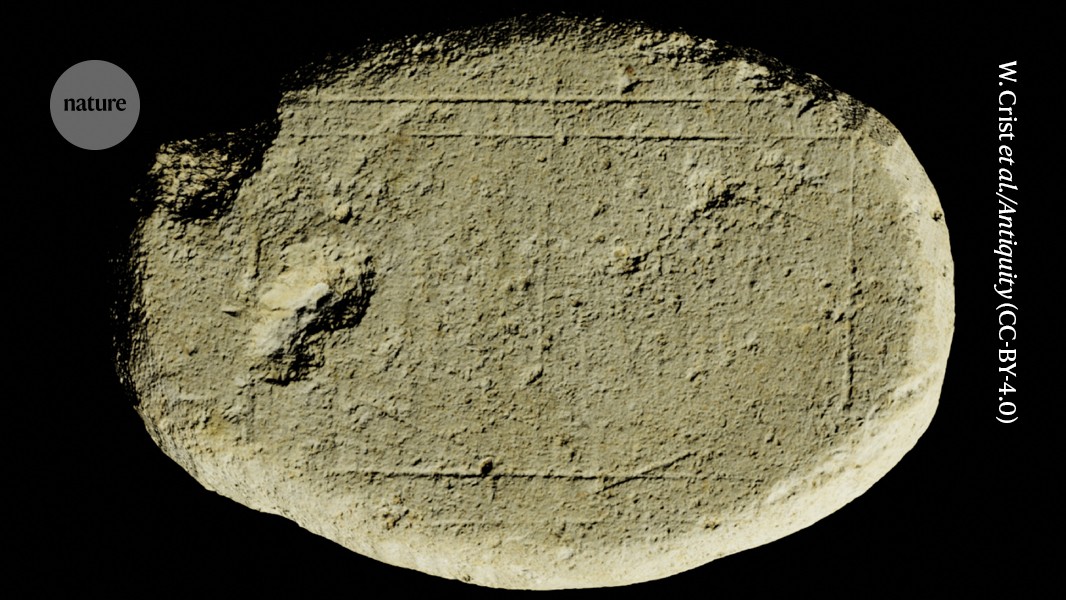
The corrective fluid analysed using light infrared photography revealed a mixture of huntite and calcite, while images made using a 3D digital microscope show that there also are flecks of yellow orpiment, probably to make it blend in better with the fresh papyrus, which would have originally been pale cream in colour.
Typography





fromwww.theguardian.com
3 weeks agoDismay as ancient heritage sites across Iran damaged in US-Israel bombing
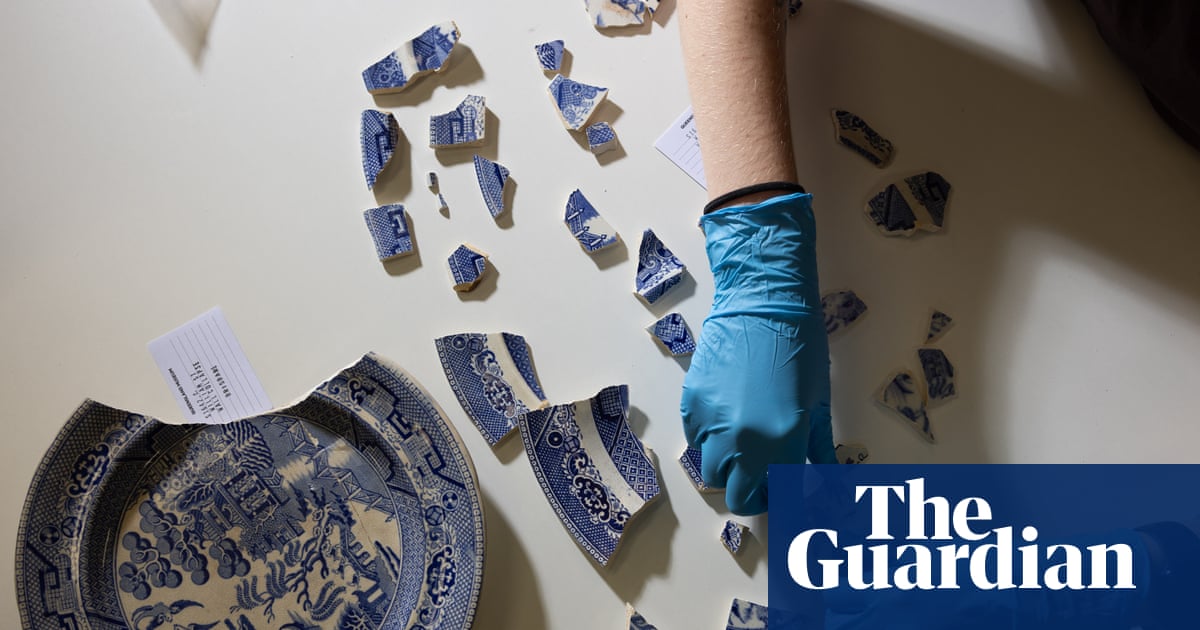
The most serious confirmed damage to date has been to Tehran's Golestan palace, dating back to the 14th century, and the 17th-century Chehel Sotoon palace in Isfahan. Judging from videos and public statements, neither historic building was hit by a missile directly but the shock wave from nearby blasts and possibly some missile debris, shattered glass and brought down tiles and masonry.
World news


fromMedievalists.net
6 days agoWho Lies in Winchester's Medieval Mortuary Chests? - Medievalists.net
This project demonstrates the combined power of science, the study of human remains and historical research to discover new information about the six mortuary chests and their occupants which would not have been available to us a generation ago.
History



US politics
fromwww.independent.co.uk
2 months agoInside the hunt for British Museum's missing treasures
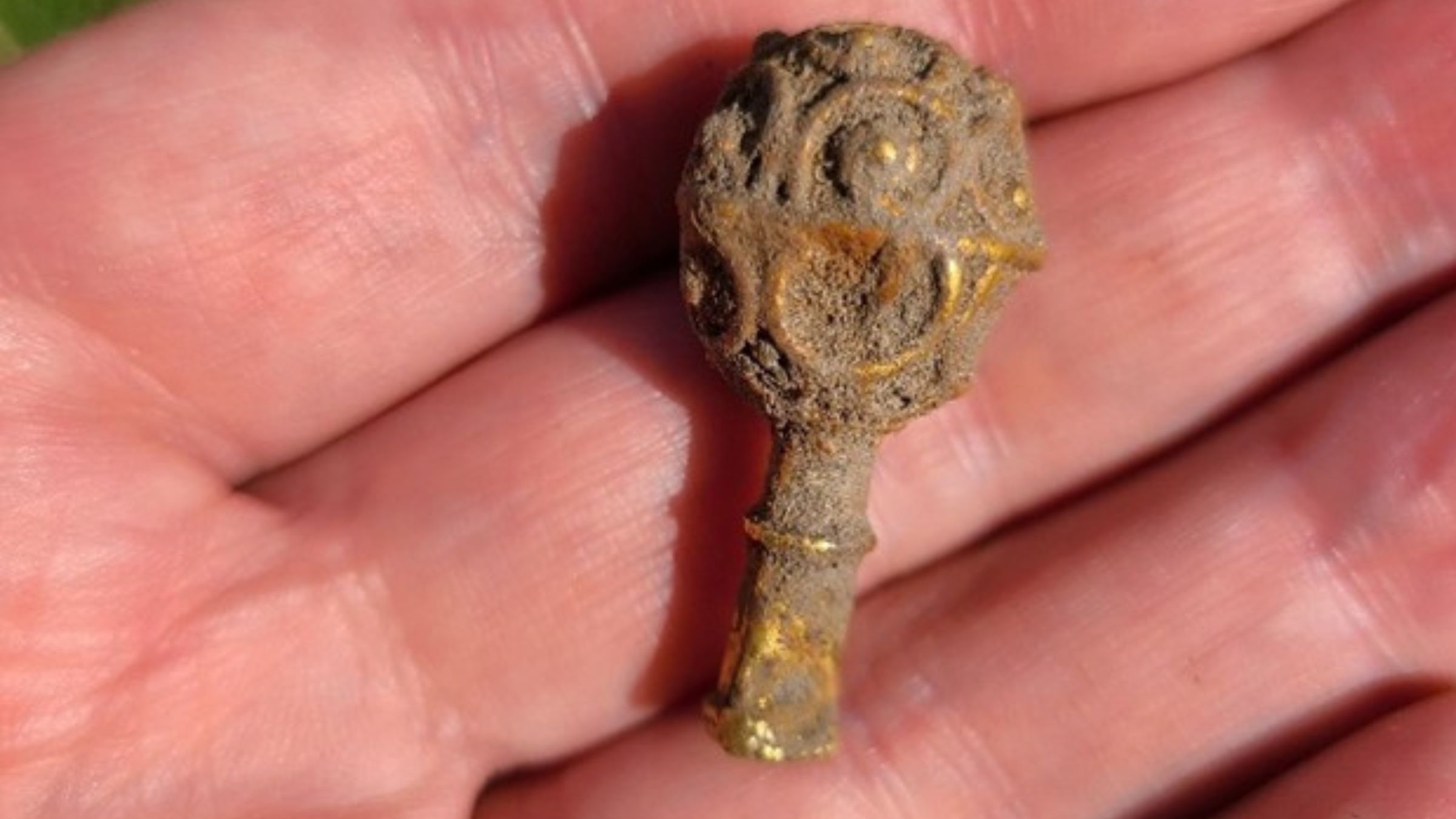
The Independent funds on-the-ground, paywall-free investigative reporting while a six-person British Museum team celebrates breakthroughs in tracing missing Greek and Roman treasures with a golden bell.
fromBig Think
2 months ago7,000-year-old underwater wall raises questions about ancient engineering - and lost-city legends
Nine meters (30 feet) beneath the waves, they found it: a vast, man-made stone wall, averaging 20 meters (66 feet) wide and two meters (6.6 feet) tall. The structure consists of some 60 massive granite monoliths, set directly onto the bedrock in pairs at regular intervals. Smaller slabs and packing stones fill in the gaps, locking the whole into a single, deliberate construction. With an estimated total mass of around 3,300 tons, this is the largest underwater structure ever discovered in France.
France news
fromwww.bbc.com
2 months agoTreasures found on HS2 route stored in secret warehouse
Treasures unearthed by hundreds of archaeologists so far during work on the controversial planned HS2 train line have been shown exclusively to the BBC. The 450,000 objects, which are being held in a secret warehouse, include a possible Roman gladiator's tag, a hand axe that may be more than 40,000 years old and 19th Century gold dentures. It is an "unprecedented" amount and array of items, which will yield new insights into Britain's past, says the Centre for British Archaeology.
London
fromwww.scientificamerican.com
2 months agoHumans Made Poisoned Arrowheads Thousands of Years Earlier Than Previously Thought
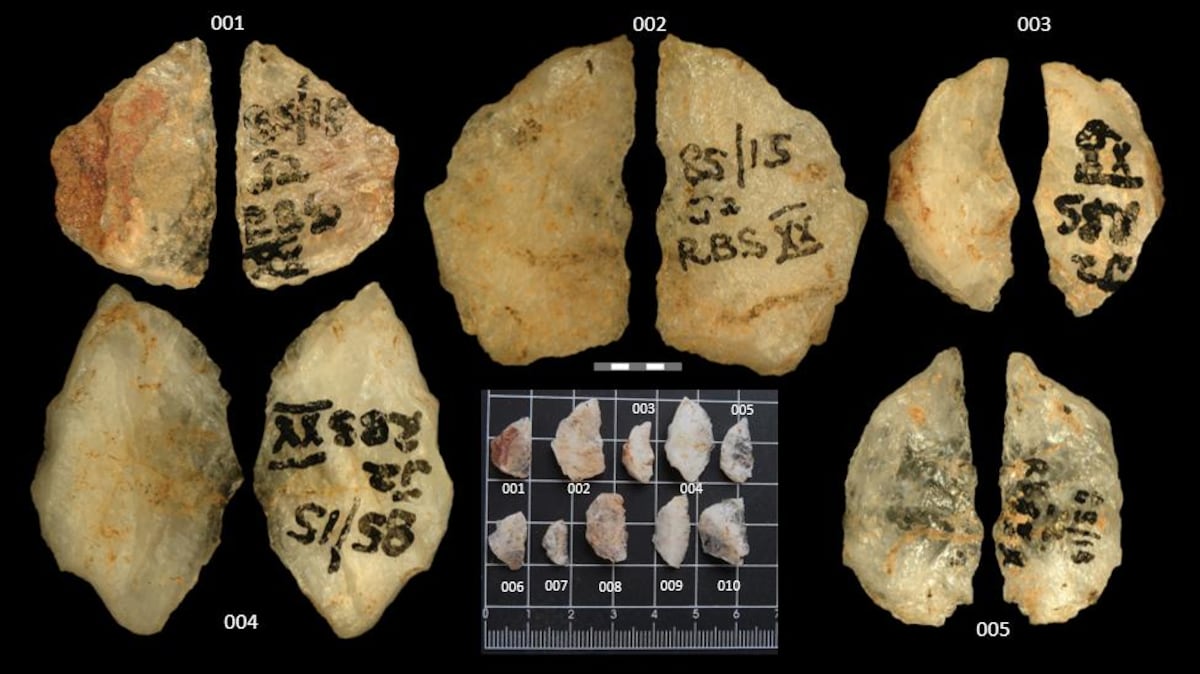
Researchers have found traces of what appears to be plant-derived poison on tiny stone arrowheads from South Africa dated to 60,000 years ago. The finding pushes back the origin of this revolutionary hunting technology by tens of thousands of years. Scientists have long been fascinated by the development of poisoned hunting weapons. For one thing, they would have seriously leveled up our ancestors' foraging game.
Science
fromMail Online
2 months agoLong-lost Egyptian scroll fuels debate over real-life biblical giants
An ancient Egyptian papyrus held by the British Museum has been cited as possible evidence supporting some of the Bible's most controversial claims about giants. The 3,300-year-old document, known as Anastasi I, has been in the museum's collection since 1839 and has recently resurfaced on the Associates for Biblical Research, renewing interest in its possible links to biblical accounts. The papyrus describes encounters with the Shosu people, said to stand 'four cubits or five cubits' tall, up to eight feet in height.
Books
History
fromianVisits
3 weeks agoLooted from a royal palace: The medieval jug now on display in London
A medieval English bronze jug looted from Ghana's Asante kingdom reveals how European luxury goods became valued ceremonial objects through trans-continental trade networks before colonial appropriation.

fromNature
2 months agoOldest known poison arrows show Stone Age humans' technological talents
Making poisoned arrows is about as hard as following a "complex cooking recipe", says study co-author Marlize Lombard, an archaeologist at the University of Johannesburg in South Africa. "You have to add to it the danger of the poison, and planning to work with it without getting poisoned yourself, then you have to hunt and track the prey animal under difficult and dangerous conditions sometimes for a day or two."
Science
History
fromWorld History Encyclopedia
4 weeks agoBabylon: The Gate of the Gods
Babylon, ancient Mesopotamia's most famous city, rose from a minor port to the world's largest city under Hammurabi, later gaining infamy through biblical references that paradoxically ensured its modern fame and archaeological rediscovery.
fromOpen Culture
1 month agoSeven Wonders of the Ancient World: From the Walls of Babylon to the Sewers of Rome
Seven were the strings of the lyre (unless there happened to be eight or nine), seven were the gates of Thebes, and seven were the "wandering stars" in the night sky (if you count the sun and moon). The identity of the wonders was less important than the length of their list, and indeed, additions and changes were proposed since the beginning.
History
History
fromWorld History Encyclopedia
1 month ago12 Great Cities of Ancient Mesopotamia: The Rise and Fall of the Earliest Cities in the World
Twelve major Mesopotamian cities including Nineveh, Uruk, Babylon, and Ur became legendary through Greek writings and yielded significant archaeological discoveries, each connected to a patron deity whose prestige determined the city's fate.
Arts
fromThe Art Newspaper - International art news and events
2 months agoBritish Museum reports record-breaking year for finding treasure in the UK
UK metal detectorists recorded a record 79,616 archaeological finds in 2024, including 1,540 treasures such as a 179-coin hoard and a Roman vehicle fitting.
History
fromMedievalists.net
1 month agoDreaming of Owning a Medieval Artefact? Here's Your Chance - Medievalists.net
TimeLine Auctions' March 3 online sale features hundreds of medieval historical objects including a 13th-century Limoges cross, 1224 Chinese armor, Viking silver mount, and Anglo-Saxon brooch.
fromMail Online
1 month agoAncient time capsule found in Iraq corroborates the Bible
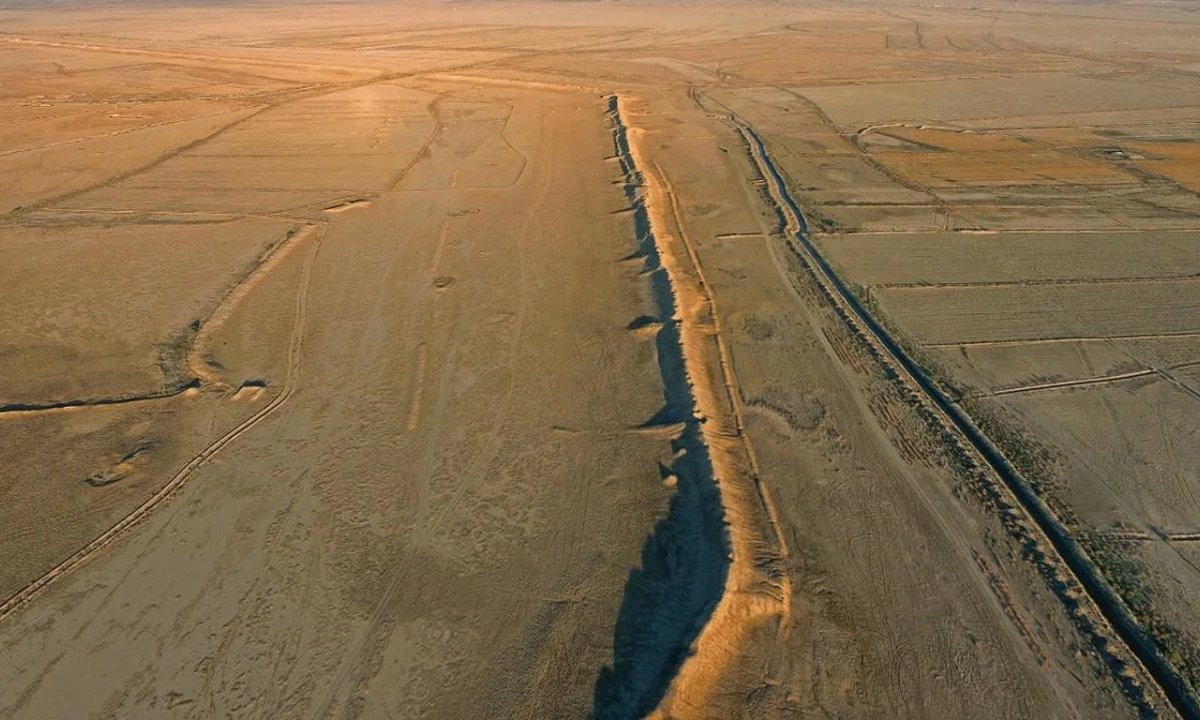
King Nebuchadnezzar II himself 'speaks' in the text, proudly describing how he restored an old, crumbling stepped temple tower in the city of Kish that was dedicated to the Mesopotamian god and goddess of war, Zababa and Ishtar. He explained that earlier kings had built and fixed the ziggurat before, but it had fallen into disrepair again from age and rain.
History
History
fromMedievalists.net
1 month agoEast Roman Archaeology: Goals and Challenges, with Marica Cassis - Medievalists.net
Archaeology reveals material evidence of daily life, settlement patterns, and economic systems in the East Roman world that textual sources cannot provide, while facing challenges in establishing itself as a distinct field separate from classical and Islamic archaeology.
fromMail Online
1 month agoMysterious symbols spanning the globe hint at a lost civilization
His investigation began after identifying recurring giant T-shapes, three-level indents, and step pyramids carved into ancient stones worldwide. 'These specific symbols that are built in different size proportions, and the symbols are found in ancient stones around the world, are not supposed to exist; no cultures are supposed to have any cross-platform,' LaCroix explained. The symbols appear in locations ranging from Turkey's Van region to South America and Cambodia.
History
fromwww.thehistoryblog.com
1 month agoRare Mithraic altars found in Scotland go on display for the first time
Two exceptionally rare and beautifully carved Mithraic altars found in Inveresk, East Lothian, Scotland, are going on display for the first time. They are not just the only Roman altars ever found in Scotland, but are among the finest examples of Roman sculpture in Roman Britain. They are also uniquely early in date, having been made in 140s A.D. during Antoninus Pius' reoccupation of southern Scotland, whereas most other archaeological materials related to the worship of Mithras in Britannia date to the 3rd century.
History
fromWorld History Encyclopedia
1 month agoMesopotamian Art and Architecture: The Birth of Art and Architecture in the Ancient World
Mesopotamian art and architecture began over 7,000 years ago, evolving from northern sites into Sumerian innovations and sustained through multiple ancient Mesopotamian periods.
fromwww.thehistoryblog.com
2 months agoFirst ancient mosaic in 70 years found in Izmir
It is approximately 10 by 13 feet in dimension and features two main sections consisting of a central hexagonal panel bordered on each side with five square panels and one rectangle. The space between the squares is filled with triangular panels. Each panel contains different geometric and abstract botanical designs. The hexagonal panel in the center contains a Solomon's Knot (two interlocked ovals). The square panels contain flowers with four pointed petals. The triangular panels contain small solid triangles.
History
fromWorld History Encyclopedia
2 months agoFestivals in Ancient Mesopotamia: Courting the Goodwill of the Gods
as the gods were understood as the true monarchs and the king as simply their steward. In order to maintain his authority, the king needed to court the goodwill of the gods, and although they made their approval clear through military victories, bountiful harvests, and prosperous trade, events such as the Akitu festival provided an annual opportunity for the divine to continue its relationship with the ruling house or withdraw its favor.
History
[ Load more ]