#asteroid-impacts
#asteroid-impacts
[ follow ]
#nasa #space-exploration #artemis-ii #planetary-defense #moon-mission #space-debris #astronomy #exoplanets
#planetary-defense

OMG science
fromTheregister
3 weeks agoNASA's asteroid defence mission slowed targets just a bit
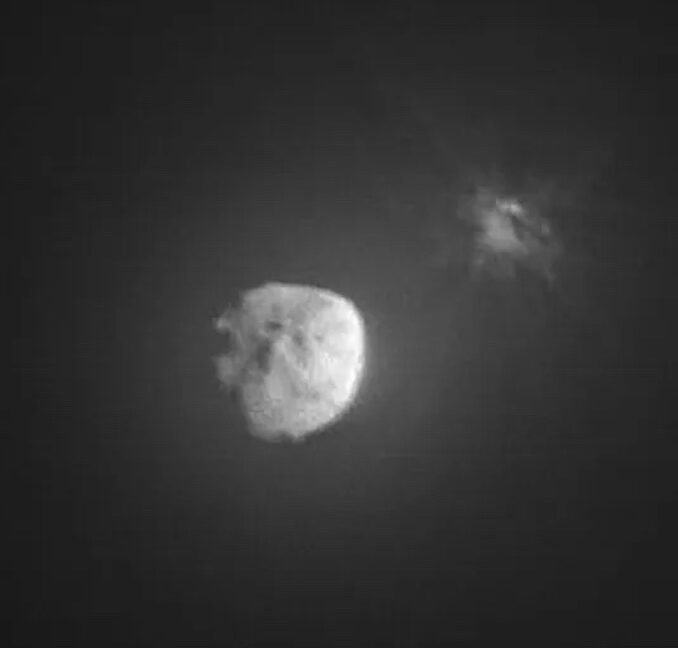
NASA's DART mission successfully demonstrated that a spacecraft collision can alter an asteroid's trajectory, with debris ejection doubling the impact's momentum and changing the binary system's orbital period by 0.15 seconds.


:max_bytes(150000):strip_icc()/TAL-zodiacal-light-APRILSKYGUIDE0326-da3e7f01cfd249569fbb5c57cf7d5836.jpg)

fromArs Technica
2 weeks agoWe keep finding the raw material of DNA in asteroids-what's it telling us?
The new work was less notable for showing that we had found these bases in Ryugu than for solving a previous mystery: earlier studies had failed to detect them there, despite their presence in many other asteroid samples.
OMG science


fromwww.theguardian.com
3 days agoLunar prospectors: the businesses looking to mine the moon
In the silent vacuum of space, five autonomous robots churn through the lunar surface, digging up a loose layer of rock and dust and leaving rows of uniform tracks in their wake. Stopping only to recharge at a central solar power station, the car-sized machines process the lunar dirt internally to extract a type of helium so rare on Earth that a palm-sized container is estimated to be worth millions.
Science
OMG science
fromFuturism
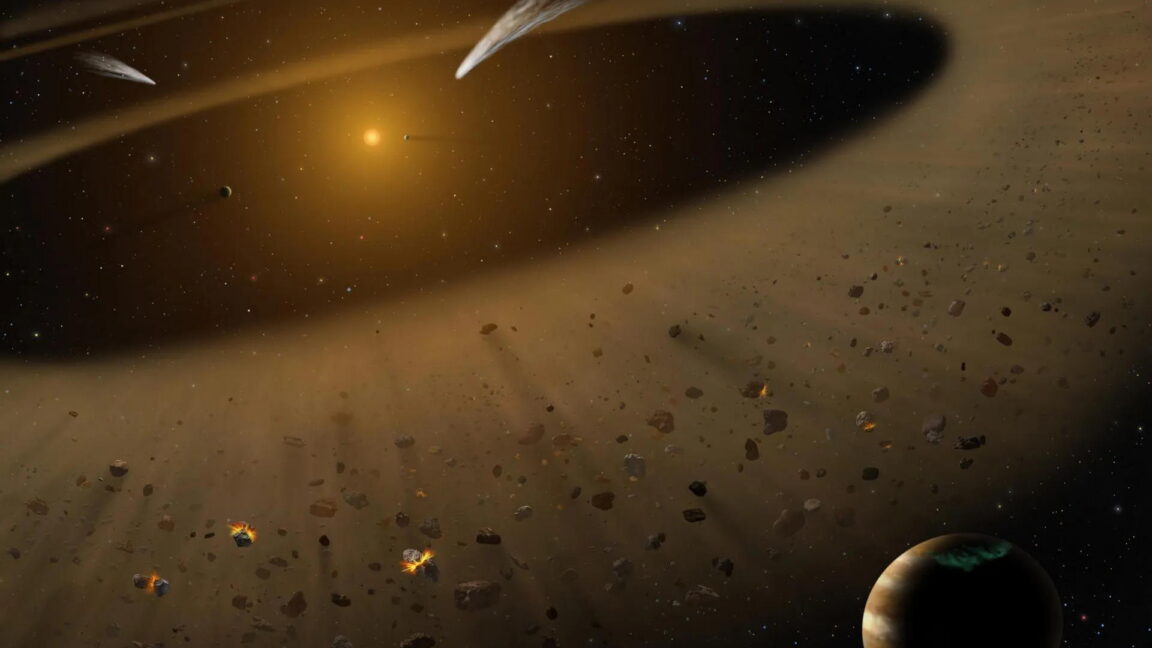
2 weeks agoScientists Spot Two Planets That Collided, Resulting in Carnage That Will Send Prickles Through Your Scalp
Astronomers detected a planetary collision around star Gaia20ehk through unusual brightness fluctuations and infrared signatures consistent with massive debris and extreme heat from impact.
OMG science
fromFuturism
4 weeks agoScientists Find Microbes Can Survive Traveling from Planet to Planet While Clinging to Asteroids
Extremophile bacteria can survive extreme pressures simulating asteroid impacts, supporting the possibility that microorganisms could travel between planets via panspermia.
fromwww.scientificamerican.com
4 weeks agoNotorious asteroid 2024 YR4 won't crash into the moon after all
Soon after it was spotted in December 2024, worldwide telescopic observations quickly positioned it as the most dangerous space rock ever discovered—one that stood a 3.1-percent (or 1-in-32) chance of crashing into Earth on December 22, 2032. If it were to hit one of the cities potentially in its path, this 60-meter asteroid would have unleashed a force comparable to several atomic bombs, devastating the unfortunate metropolis.
OMG science
OMG science
fromwww.scientificamerican.com
4 weeks agoBlast off! Martian microbes might travel between worlds on asteroid-impact debris
Deinococcus radiodurans, an extremophile bacterium, can survive extreme pressures from asteroid impacts on Mars, suggesting potential for microbial life dispersal across the solar system.
fromwww.theguardian.com
3 weeks agoThe moon is safe': asteroid is not on collision course, scientists confirm
Discovered in December 2024, asteroid 2024 YR4 was briefly considered the most dangerous asteroid in decades after scientists initially estimated it had a 3.1% chance of colliding with the Earth in 2032. Closer observations quickly ruled out a city killer scenario, but instead astronomers calculated there was a 4.3% chance that the moon lay in the path of impact.
Science
Science
fromwww.scientificamerican.com
3 weeks agoNASA space probe expected to reenter the atmosphere with a chance of raining debris
NASA's Van Allen Probe A is reentering Earth's atmosphere with a one-in-4,200 risk of debris harm to people, expected around 7:45 P.M. EDT with a 24-hour uncertainty window.
Science
fromsfist.com
3 weeks agoTuesday Morning Topline: Defunct NASA Probe to Crash Onto Earth, Likely Today
A NASA probe is reentering Earth's atmosphere with a 1 in 4,200 chance of harm, Berkeley schools face layoffs, YouTube expands AI deepfake detection, Jello Biafra recovers from stroke, St. Helena addresses brown tap water, DNC sues Trump administration over election security, and RFK Jr. undergoes rotator cuff surgery.


fromwww.theguardian.com
3 weeks agoStormy space weather may be garbling messages from aliens, new research suggests
Stellar activity such as solar storms and plasma turbulence from a star near a transmitting planet can broaden otherwise ultra-narrow signals. That spreads the power of any such transmission across more frequencies, the institute's scientists say, which makes it more difficult to detect using traditional narrowband searches.
Science
fromMail Online
1 month agoAliens could be CATAPULTED onto Earth via an asteroid, study claims
We found that life is more likely to survive an asteroid impact, so it's definitely still a real possibility that life on Earth could have come from Mars. Maybe we're Martians! The idea that life could have spread through the solar system or even the universe on rocks is known as the lithopanspermia hypothesis.
Science

fromFuturism
1 month agoScientists Say Heck, Just Nuke a Killer Asteroid Heading for Earth
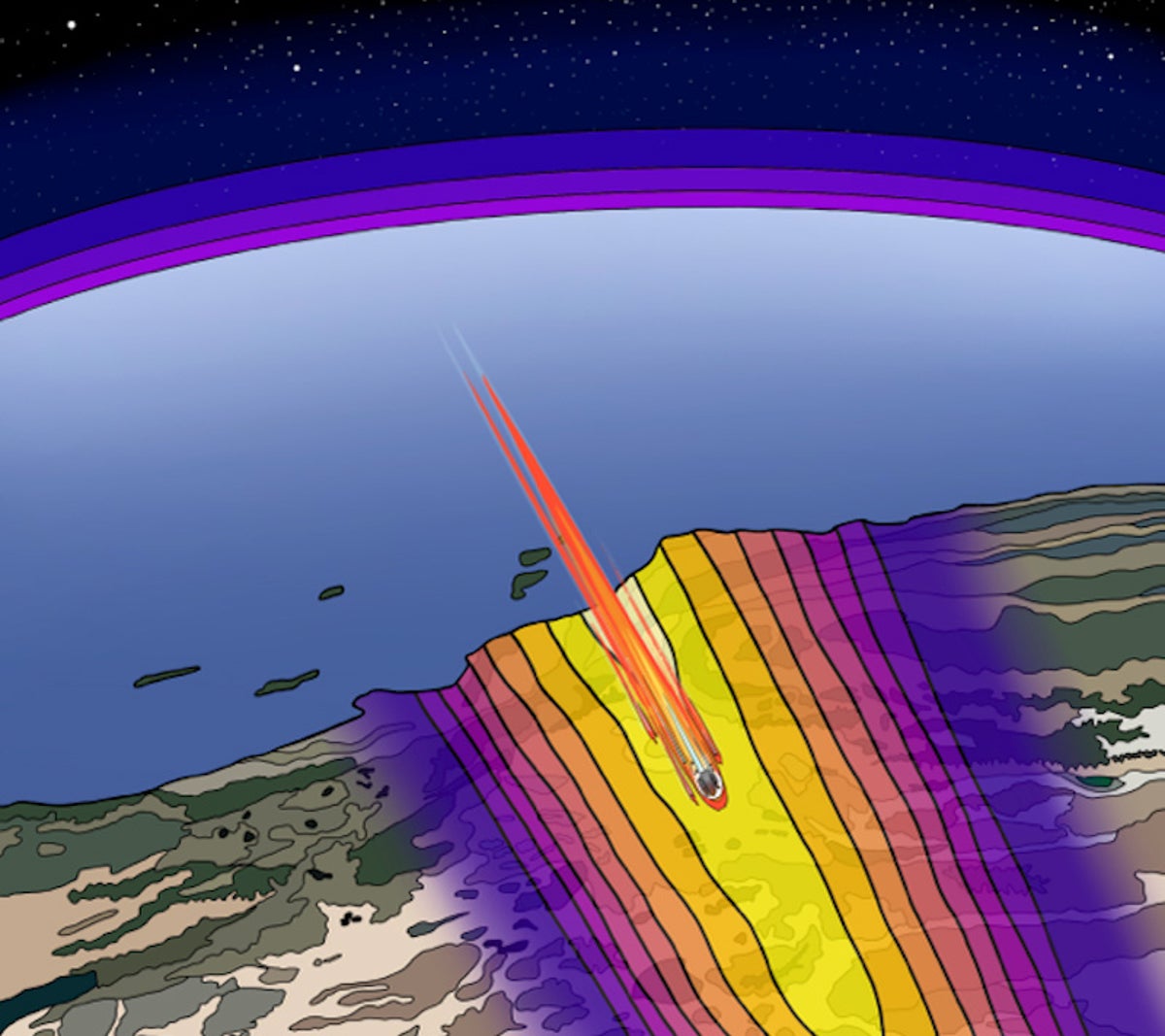
Plenty of asteroids can survive their fiery plunge through the Earth's atmosphere. If they're big enough, they can prove incredibly destructive, like the 60-foot Chelyabinsk meteor that exploded over the southern Ural region in Russia in 2013, releasing a blast equivalent to 30 times the energy of the atomic bomb that was dropped on Hiroshima. And in case an even larger space rock were to ever threaten humanity, we'd have to get creative to keep it from colliding with our planet.
Science
[ Load more ]