#authoritarianism
#authoritarianism
[ follow ]
#democracy #protests #human-rights #trump-administration #donald-trump #lgbtq-rights #venezuela #civil-rights #trump
fromenglish.elpais.com
3 days agoNicaragua and Cuba in the mirror of Venezuela
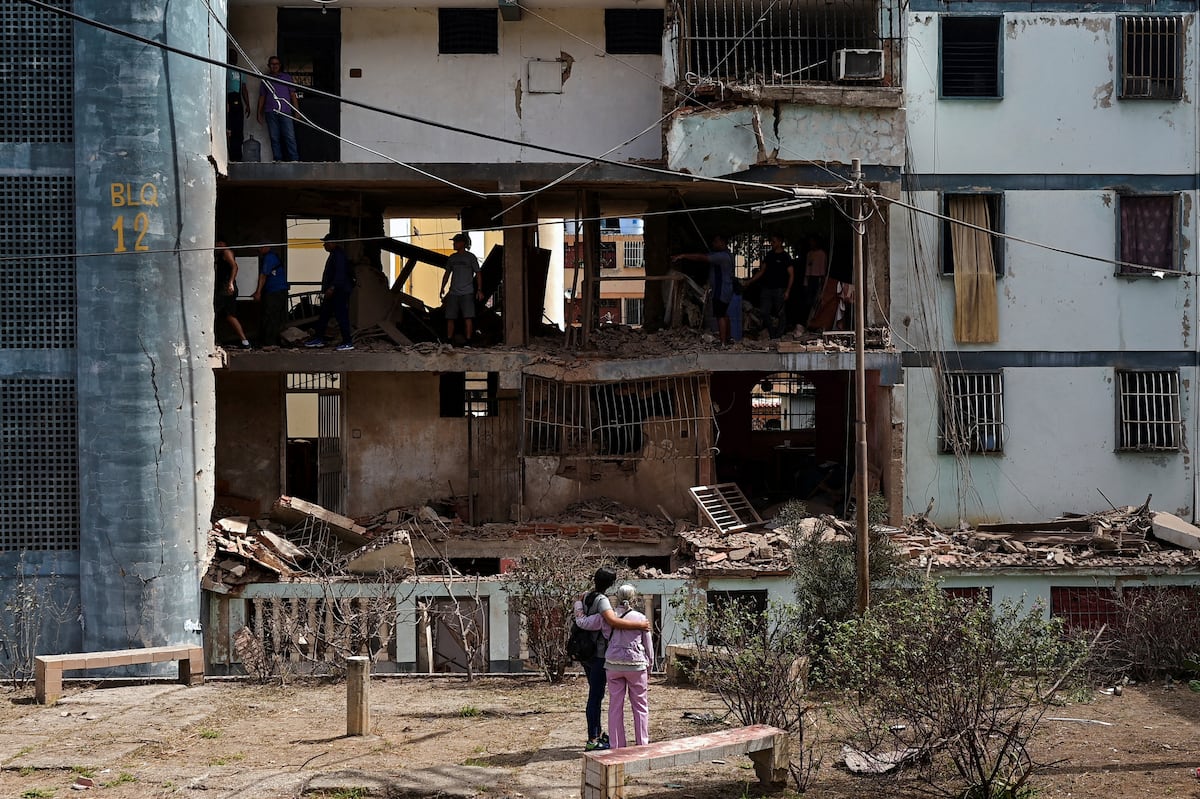
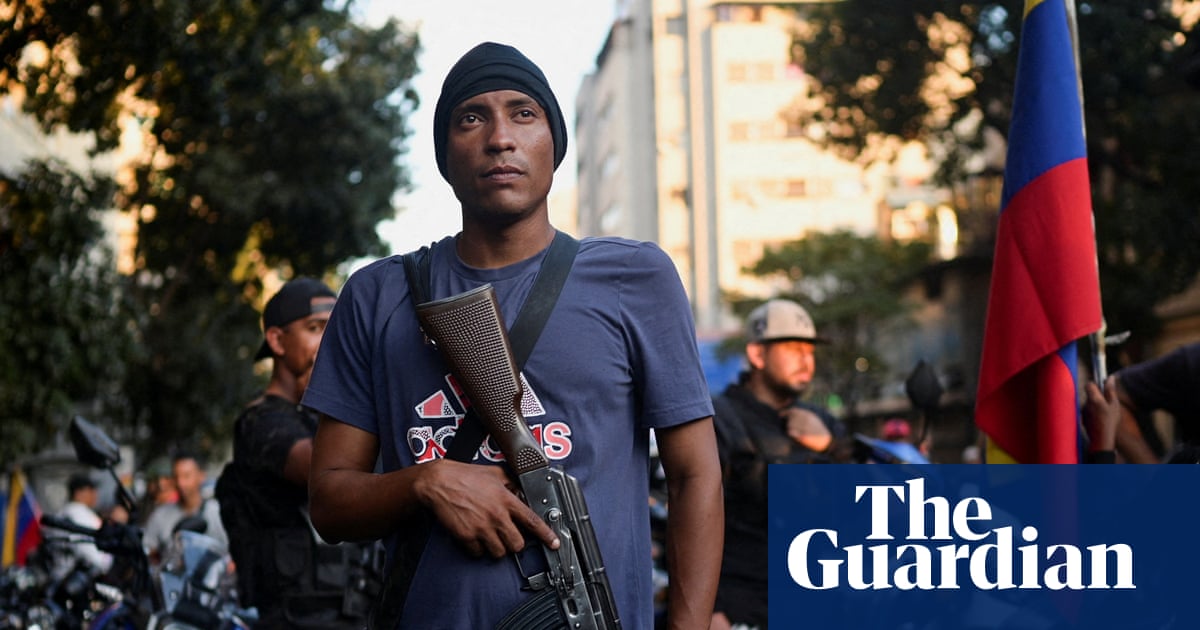
The so-called troika of tyranny in Latin America, the dictatorships of Cuba, Venezuela, and Nicaragua, was always a misleading oversimplification. Despite sharing some common elements due to their authoritarian resilience, 21st-century dictatorships were never a homogeneous bloc.
World politics



fromLGBTQ Nation
6 days agoThe far-right's dehumanization of trans people is similar to the Nazi's treatment of Jewish people - LGBTQ Nation
Dehumanization, as a psychological and socio-political process, represents one of the most destructive phenomena in human history. It involves the denial of attributes that define individuals or social groups as human, thereby devaluing their moral status and legitimizing violence and cruelty against them.
Right-wing politics
#democracy



Social justice
fromNonprofit Quarterly | Civic News. Empowering Nonprofits. Advancing Justice.
1 week agoHope in the Dark: Four Tests for the Pro-Democracy Movement in 2026 | Nonprofit Quarterly | Civic News. Empowering Nonprofits. Advancing Justice.
Active hope is essential for shaping a brighter future for democracy amidst current challenges.
Media industry
fromPoynter
2 weeks agoA year after Trump administration cuts, Voice of America and its sister outlets are mostly shadows of their former selves - Poynter
Termination of Voice of America staff has left many, including Donmez Ersoz, in precarious situations amid health and job uncertainties.
US Elections
fromTruthout
2 weeks agoTrump Is Destroying US Democracy at Unprecedented Rate, Global Watchdog Finds
Trump's second term has dismantled U.S. democracy at an unprecedented rate, concentrating executive power while suppressing dissent and civil rights faster than autocratic leaders in other countries.
Right-wing politics
fromInverse
2 weeks ago20 Years Later, An Iconic Dystopian Thriller Remains Tragically Timely
V for Vendetta remains relevant across decades because its core emotional foundation of sadness transcends its specific political context, resonating with audiences regardless of contemporary circumstances.
World news
fromwww.theguardian.com
2 weeks agoWe are being silenced': Mongolian politicians face jail after vote calling for PM to resign
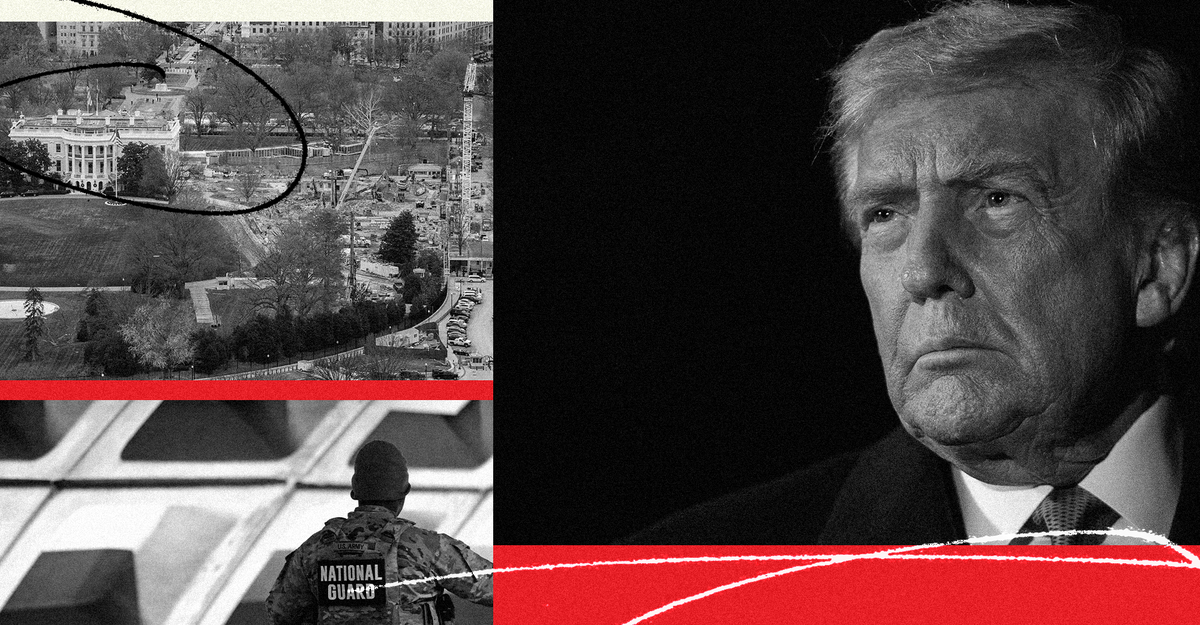
Younger Mongolian politicians, including women, face lengthy jail sentences for challenging leadership in what they characterize as efforts to prevent authoritarianism amid factional power struggles within the ruling party.

World politics
fromwww.dw.com
1 month agoIran's supreme leader dead at 86: Who was Ali Khamenei?
Ayatollah Ali Khamenei increasingly claimed divine authority, stating God spoke through him and positioning himself as God's representative on Earth while maintaining absolute control over Iran's state affairs for over three decades.
US politics
fromThe Nation
1 month agoDemocrats Should Launch a "Nuremberg Caucus" to Investigate the Crimes of the Trump Regime
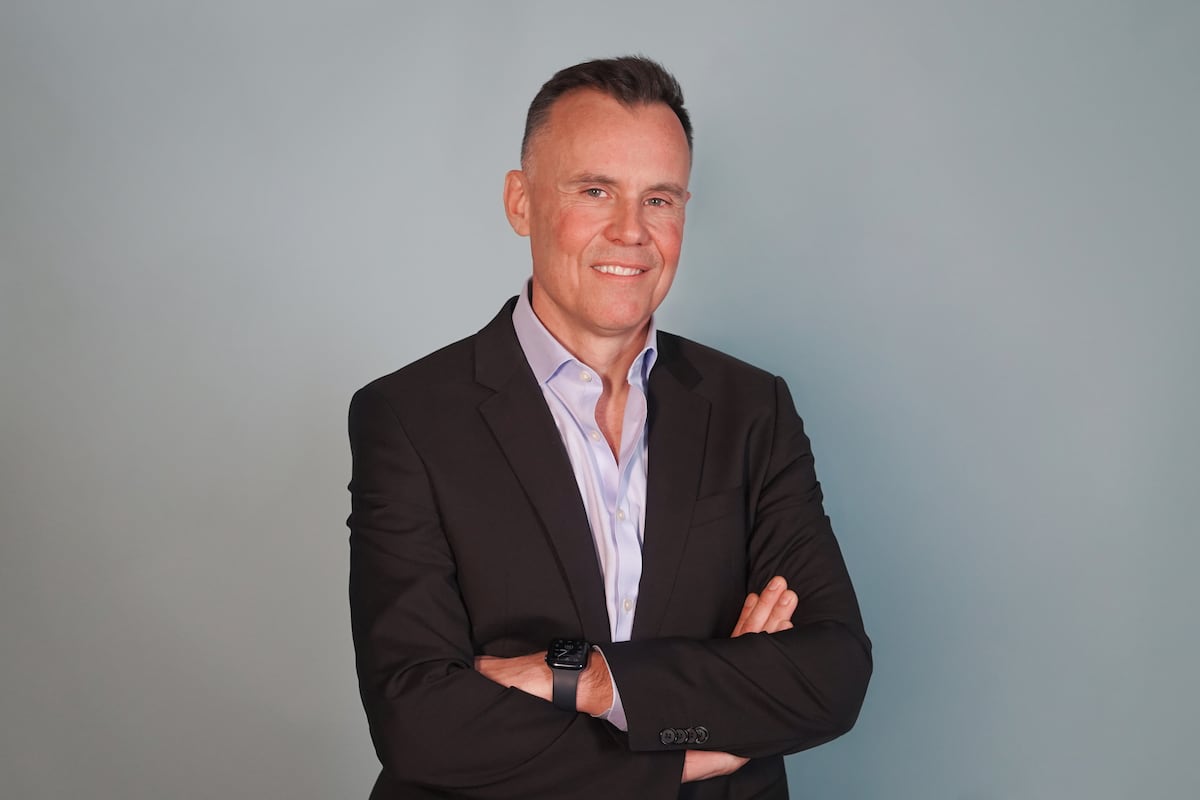
Cory Doctorow proposes a 'Nuremberg Caucus' to document Trump administration crimes and establish accountability through public trials, arguing healthy democracies must prosecute those who attempt authoritarian rule.




US politics
fromwww.mediaite.com
1 month agoInsane Dictator Sh*t!' Jim Acosta Goes Off on Giant Trump Banner at DOJ Shows He's Staying in Power No Matter What!'
A giant Trump banner at the Department of Justice was denounced as 'insane dictator' behavior and seen as evidence of efforts to cling to power.
fromAdvocate.com
1 month agoHillary Clinton and Sarah McBride expose how weaponizing 'scarcity' drives anti-trans political attacks
The first out transgender member of the U.S. Congress took the world stage in Germany last week, warning that attacks on people like her and on LGBTQ+ rights more broadly are being weaponized in the current political climate, as she joined former first lady and Secretary of State Hillary Rodham Clinton on a high-profile panel at the Munich Security Conference.
LGBT



fromwww.mediaite.com
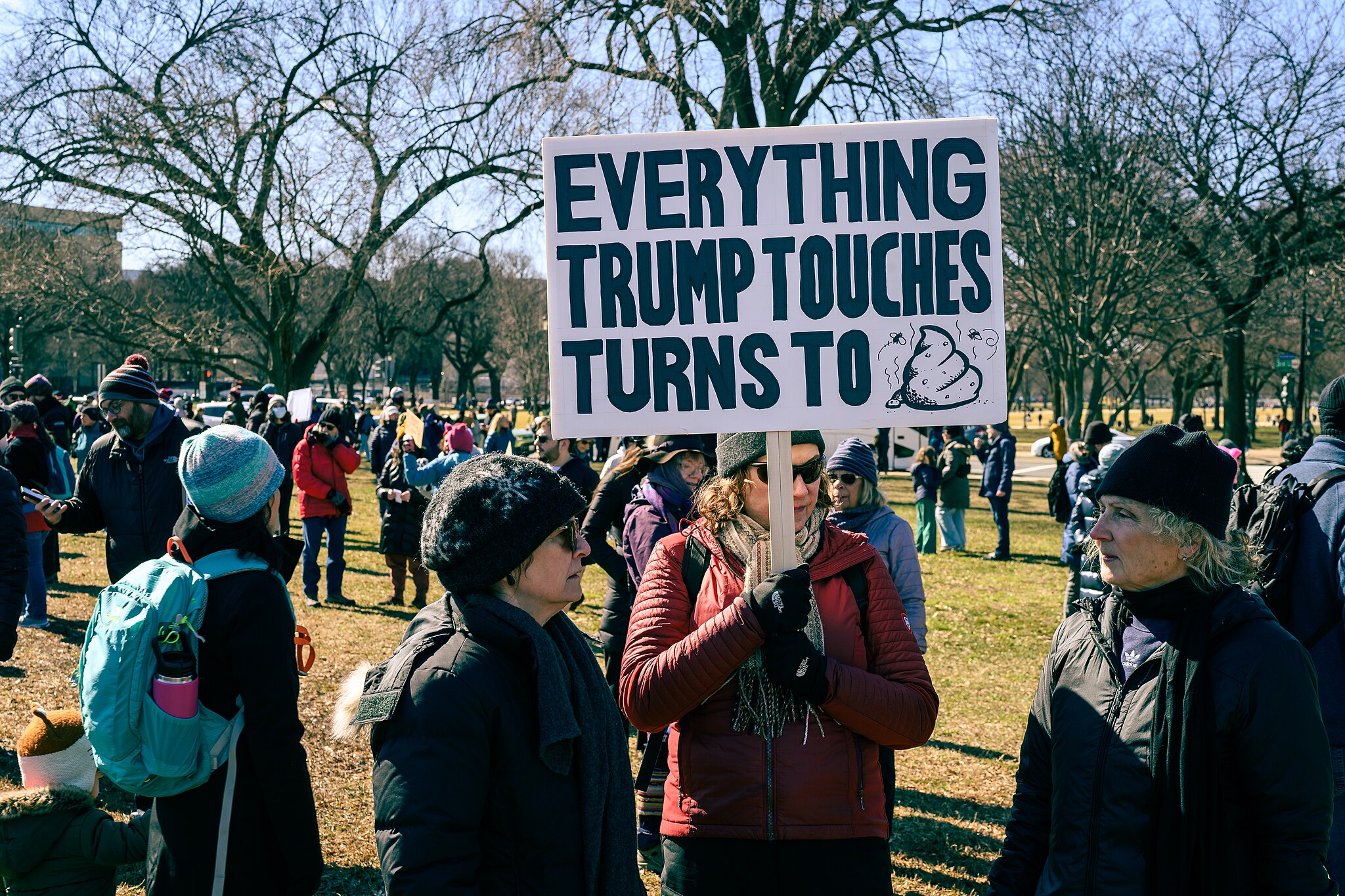
1 month agoAn Age of Authoritarians': AOC Issues Grave Warning About Trump at Munich Security Conference
They are looking to withdraw the United States from the entire world so that we can turn into an age of authoritarianism, of authoritarians, that can carve out the world where Donald Trump can command the Western Hemisphere and Latin America as his personal sandbox, where Putin can saber-rattle around Europe and try to bully around our own allies there, and for essentially authoritarians to have their own geographic domains.
US politics
fromwww.mediaite.com
1 month agoTrump Gives Glowing Endorsement to Strong and Powerful Leader' Viktor Orban As He Faces Tough Reelection Fight
Highly Respected Prime Minister of Hungary, Viktor Orban, is a truly strong and powerful Leader, with a proven track record of delivering phenomenal results. He fights tirelessly for, and loves, his Great Country and People, just like I do for the United States of America. Orban has served as Hungary's prime minister since 2010, and previously held the post from 1998 to 2002.
US politics
fromThe Washington Post
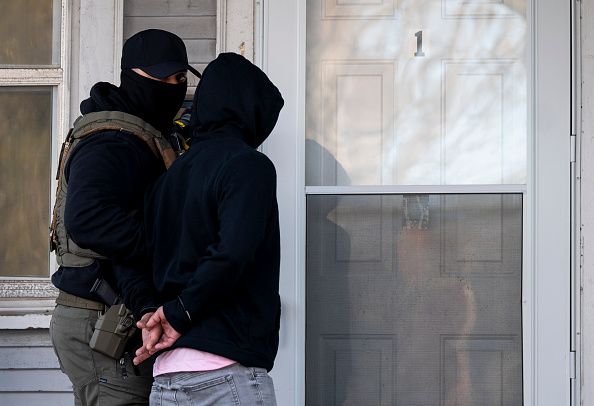
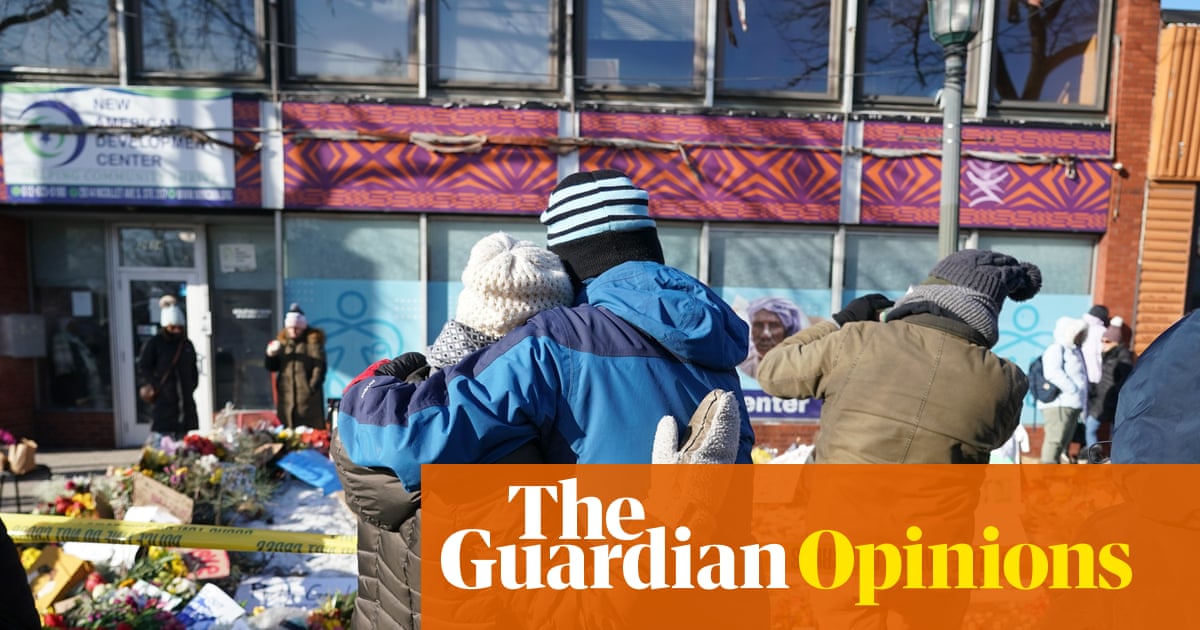
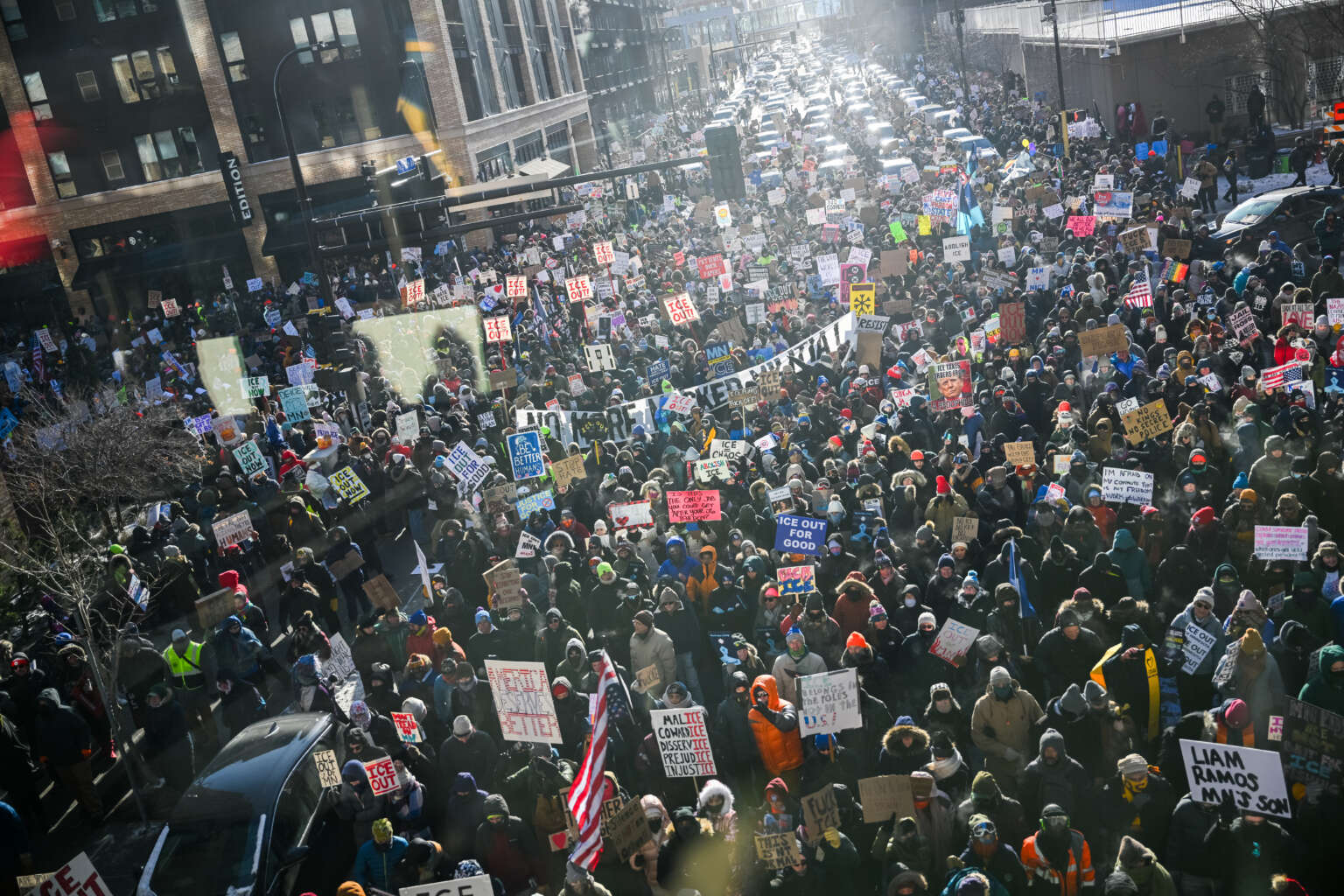
1 month agoFor these clergy, Trump's immigration blitz became a call to action
Then came Minneapolis. The massive ICE crackdown there - with its stories of federal law enforcement shooting U.S. citizens, separating families and deporting undocumented people, even those trying to go through legal channels - led Leigh to feel called in a new way, to go to Minnesota and join the opposition. He didn't end up doing it. But some of his congregants began pushing: What are we doing? How are we defending democratic norms?
US news
fromThe Conversation
1 month agoFifteen years after Egypt's uprising, how faith and politics reshaped a generation
Fifteen years ago, Egyptians from all walks of life took to the street to demand "bread, freedom, social justice." They were protesting the oppressive 30-year rule of Hosni Mubarak. Egypt had been under martial law for 31 years. This meant that political opposition was silenced, and opponents were often imprisoned and tortured. Police brutality was the norm. Egypt's economy was also weak and relied heavily on foreign aid and loans from the World Bank and International Monetary Fund.
Philosophy
fromEast Bay Express | Oakland, Berkeley & Alameda
1 month agoFreedom From Fear, pt. 3: What we can do here and now
"Freedom from fear" was the fourth of four freedoms defining democracy President Franklin D. Roosevelt framed in his rally cry to fight fascist conquest from without. It is openly debated whether America is now fighting a fascist takeover from within. It may be debated, but only because the would-be dictators of the world will always disguise their plays for power in the mock forms of democratic legality-by declaring a fake emergency, attacking political rivals through trumped-up legal charges or holding rigged elections.
US politics
fromNonprofit Quarterly | Civic News. Empowering Nonprofits. Advancing Justice.
1 month agoThis Is Not a Retreat | Nonprofit Quarterly | Civic News. Empowering Nonprofits. Advancing Justice.
The change in the administration's tactics in Minneapolis is not a retreat. Instead, they are regrouping and planning another mode of attack, with the hopes that their repression might be met with resistance that is easier to control and contain. People who garner their relevancy and power through the dehumanization and oppression of others will do whatever it takes to cling to their soulless sense of self.
US politics

US politics
fromLGBTQ Nation
1 month agoTrump's power may already be falling apart as he steps on common authoritarian pitfall - LGBTQ Nation
Authoritarian megalomania, insulated by loyalists and propaganda, drives risky, self-reinforcing actions that erode approval and can precipitate autocratic backfire.
fromTruthout
2 months agoThe Hardest Part of Fighting Fascism Comes After the Fascists Have Fallen
I lived in Argentina in the mid-1980s, just after the fall of the brutal military dictatorship that ruled from 1976 to 1983. The country was taking its first, shaky steps back toward democracy. It was a time of great hope, but also of grave uncertainty - because while the generals were gone, the political culture that enabled them remained. Like most of the nation, I was captivated by the pioneering trials of the military generals that promised to restore justice.
World news


fromThe Nation
2 months agoHealthcare Workers Must Continue Alex Pretti's Fight
One might ask why an epidemiologist like me would be interested in Latin American history at this moment. What drew me to that era was the key role that clinicians and public health workers played in the resistance against the dictatorship; their simultaneous push for a national healthcare program; and the ways in which this sector organized, even as more conservative physicians sided with the putschists, happy to see their more progressive colleagues jailed and persecuted.
Public health
fromTruthout
2 months ago"This Is Not America" Is the Most Dangerous Lie We Keep Telling Ourselves
As authoritarianism accelerates - as government-sanctioned violence becomes more overt in immigration enforcement, in policing, in the open deployment of federal force against civilians, and in the steady erosion of civil rights - people are scrambling for reference points. But instead of reckoning with the long and violent architecture of U.S. history, much of this searching collapses into racialized tropes and xenophobic reassurance: This isn't Afghanistan. This isn't Iran or China. This is America. We have rights. This is a democracy. This isn't who we are.
US politics
fromThe Atlantic
2 months agoWhat Should Americans Do Now?
The killings in Minneapolis of Renee Good and Alex Pretti have been compared to the murder of George Floyd, because they all happened within a few miles of one another, and because of the outrage they inspired. There's an important difference, though: In 2020 the United States was in turmoil, but it was still a state of law. Floyd's death was followed by investigation, trial, and verdict-by justice. The Minneapolis Police Department was held accountable and ultimately made to reform.
US politics
fromTruthout
2 months agoRaskin Says Nationwide General Strike May Be Needed to Stop Trump
"We're not going to have one magic solution to the problem that ails us," Raskin said on Sunday. "It's not going to be the courts, or the House, or the Senate, or the people in the movements. It's going to be all of it together."
US politics
fromThe Atlantic
2 months agoYes, It's Fascism
For one thing, there were too many elements of classical fascism that didn't seem to fit. For another, the term has been overused to the point of meaninglessness, especially by left-leaning types who call you a fascist if you oppose abortion or affirmative action. For yet another, the term is hazily defined, even by its adherents. From the beginning, fascism has been an incoherent doctrine, and even today scholars can't agree on its definition. Italy's original version differed from Germany's, which differed from Spain's.
fromComputerworld
2 months agoExperts warn: Swarms of AI bots threaten democracy
A group of researchers from Berkeley, Harvard, Oxford, Cambridge, and Yale warn that the rise of AI bots and AI agents could pose a serious threat to democracy. For example, power-hungry politicians around the world can relatively easily create swarms of AI bots that flood social media and messaging services with propaganda and disinformation. In this way, they can not only influence election results but also persuade parts of the population to replace parliamentary democracy with an authoritarian regime.
World politics
fromwww.theguardian.com
2 months agoMark Carney says Canada must be a beacon to a world that's at sea'
"Canada cannot solve all the world's problems, but we can show that another way is possible: that the arc of history isn't destined to be warped towards authoritarianism and exclusion, it can still bend towards progress and justice, he said."
Canada news
fromThe Atlantic
2 months agoWhy Trump Sides With Putin
Before I get to the dialogue and the book, I wanna open with some preliminary thoughts about a domestic subject. And that is this extraordinary moment where Secretary of Agriculture Brooke Rollins informed a TV interviewer that her department had run thousands of simulations, and good news, it was possible to feed an American person for less than $3 if that person ate a piece of chicken, a piece of broccoli, a corn tortilla, and one other thing.
US politics
US politics
fromNonprofit Quarterly | Civic News. Empowering Nonprofits. Advancing Justice.
2 months agoHolding the Line Together: Civil Society & the First Year of the Trump Administration | Nonprofit Quarterly | Civic News. Empowering Nonprofits. Advancing Justice.
Protecting American democracy requires protecting civil society by supporting nonprofits facing authoritarian attempts to consolidate executive power and eliminate checks and balances.
[ Load more ]