#bailout-risk
#bailout-risk
[ follow ]
#fiscal-policy #inflation #national-debt #federal-reserve #federal-debt #student-loans #interest-rates





US politics
fromFortune
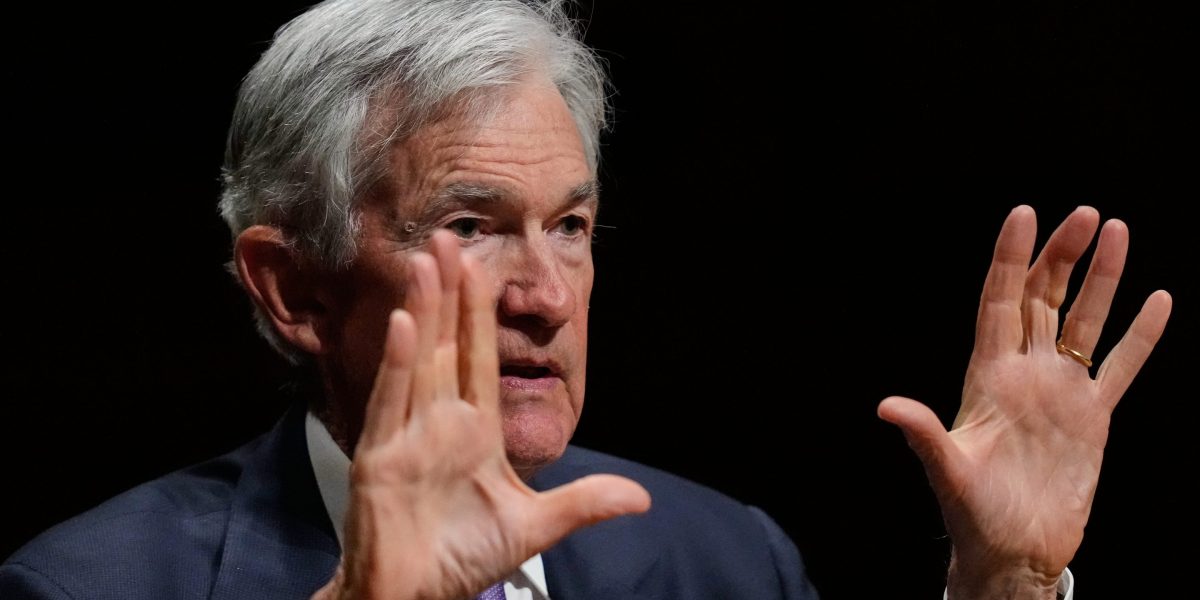
6 days agoJerome Powell lets loose: 'it's very hard to build great democratic institutions and much easier to bring them down' | Fortune
Monitoring inflation is crucial due to energy price spikes, while the job market remains challenging for young graduates amid AI advancements.
fromFortune
6 days agoBond yields are falling even as oil tops $102, showing that Wall Street fears recession more than inflation | Fortune
"Oil prices are higher again this morning, but Treasury yields are lower as the risks to economic growth begin to take precedence over the risks to inflation," Oxford Economics said in a note on Monday.
World news
#student-loans
Higher education
fromwww.businessinsider.com
5 days agoMillions of student-loan borrowers risk being driven into a 'shadow' market of costly private lenders, a new report says
Risky lending products may increase as federal student-loan repayment changes could push borrowers towards subprime lenders.
fromBusiness Insider
2 months agoUS politics
Over 400 student-loan borrowers shared their concerns for 2026 about SAVE, defaulting, and payment plans
Over 400 borrowers reported varied repayment experiences, with many facing affordability, servicer problems, default risk, and concern over elimination of income-driven plans like SAVE.
Higher education
fromFortune
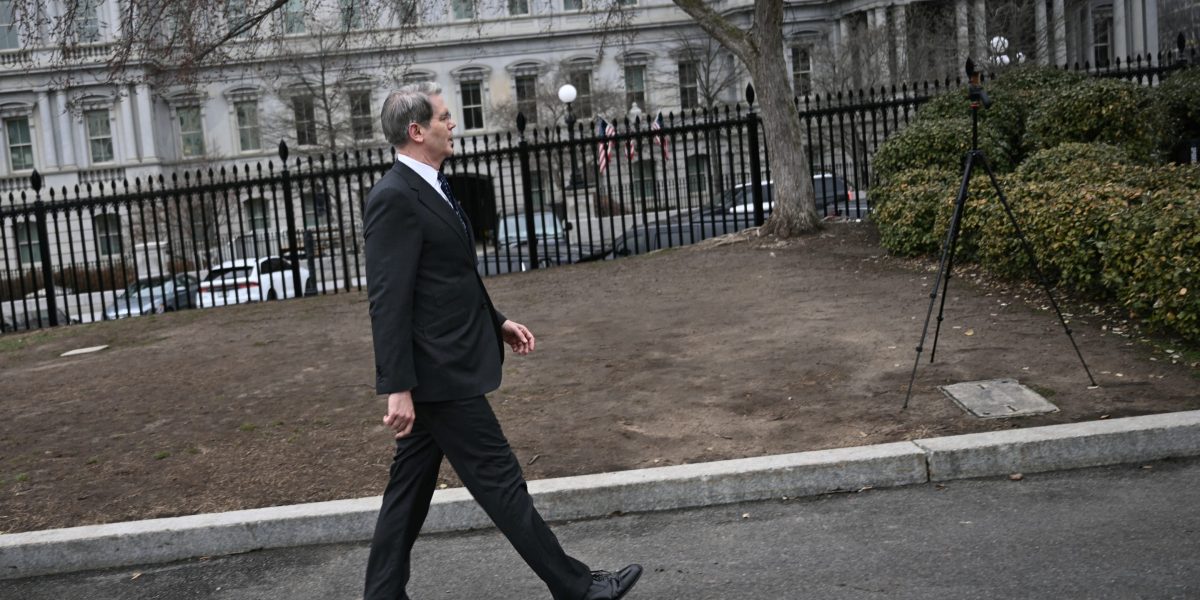
2 weeks agoScott Bessent's Treasury Department will start overseeing the $180 billion of student loans that are in default | Fortune
The U.S. Education Department is transferring management of student loans to the Treasury Department, marking a significant shift in federal student loan oversight.

Retirement
fromLondon Business News | Londonlovesbusiness.com
2 days agoEvery time you borrow from a bank, you're paying more than you think - London Business News | Londonlovesbusiness.com
Opportunity cost in loans includes lost potential earnings from repayment dollars, not just the interest rate paid.
#national-debt



Business
fromFortune
1 week ago'There is no silver lining in this trajectory': Budget watchdog warns of financial, inflation or currency crisis due to $39 trillion national debt | Fortune
U.S. national debt exceeds $39 trillion, prompting calls for a deficit-to-GDP benchmark of 3% to stabilize fiscal trajectory.
fromInside Higher Ed | Higher Education News, Events and Jobs
2 weeks agoED Transfers Defaulted Loan Collection Duties to Treasury
With roughly nine million student borrowers in default, the Treasury Department will "assume operational responsibility for collecting" on those loans, the Education Department announced Thursday. The move is ED's latest effort to render itself obsolete as part of the Trump administration's plan to eliminate the department. This is the 10th interagency agreement it has signed to share with or spin off functions to other federal agencies.
Education
from24/7 Wall St.
2 weeks agoMoody's Puts Odds Of Recession At 50/50
behind the recent jump are primarily the weak labour market numbers, but almost all the economic data has turned soft since the end of last year. Total nonfarm payroll employment edged down by 92,000 in February, and the unemployment rate changed little at 4.4 percent.
US Elections
Europe politics
fromThe Local France
2 weeks agoWhat you should know about the EU's plan to tap your savings
The EU revives its decade-old capital market integration plan, now called the Savings and Investments Union, to compete with the US and China while addressing market fragmentation and investment barriers.

Europe news
fromFortune
3 weeks agoU.S. debt is like a Hallmark movie boyfriend who eventually gets dumped for a small town firefighter, budget watchdog warns | Fortune
U.S. debt remains attractive to investors due to lack of better alternatives, but this may change as debt grows and other options emerge.


#national-debt-crisis


SF politics
fromFortune
2 weeks agoAmerica's $38 trillion debt crisis is already here. The reckoning comes next | Fortune
Despite strong economic indicators, the U.S. faces a critical fiscal crisis with national debt projected to reach 120% of GDP within a decade, requiring urgent bipartisan reform before gradual decline becomes sudden collapse.
US politics
fromFortune
3 weeks agoAmerica's never had such high national debt heading into an economic shock. We need a 'break glass' plan, think tank warns | Fortune
U.S. national debt now equals 100% of GDP, the highest since World War II, leaving the country severely unprepared for the next economic crisis with limited fiscal capacity to respond.
UK news
fromBusiness Matters
2 weeks agoIndividual insolvencies surge 18% as experts warn households are at 'breaking point'
Individual insolvencies in England and Wales surged 18% year-on-year to 11,609 in February 2026, driven by rising borrowing costs, persistent inflation, and accumulated debt affecting households across income levels.
fromFortune
2 weeks ago300 years of wars show they are 'always disaster times' for holders of government debt because of inflation and financial repression | Fortune
"The historical evidence reveals a striking pattern: government bonds have repeatedly generated substantial real losses during these extreme episodes. They have even underperformed equities and real estates which are traditionally regarded as risky assets."
World politics
Business
fromSilicon Canals
1 week agoPrivate credit gates are spreading. Why Apollo's 45% redemption cap is a structural warning for the entire $1.7T asset class - Silicon Canals
Liquidity crises are most dangerous when distress signals are misrepresented as routine management, as seen with Apollo Global Management's redemption caps.
Business
fromFortune
2 weeks agoA 'debt spiral,' before a fiscal crisis: interest on the national debt will be growing faster than GDP in just 5 years, think tank warns | Fortune
By 2031, U.S. federal debt interest rates will exceed economic growth rates, triggering a self-reinforcing debt spiral where deficits cause debt to grow indefinitely.
Business
fromFortune
2 weeks agoU.S. debt is competing with a record supply of corporate bonds, which is pushing up the cost of federal borrowing just as war spending piles up | Fortune
Record corporate bond issuance driven by AI capital expenditure and geopolitical factors is increasing Treasury yields and raising borrowing costs for the federal government.
US politics
fromFortune
3 weeks agoThe U.S. borrowed $50 billion a week for the past five months, finds the CBO: 'Our fiscal problems will not solve themselves' | Fortune
The U.S. Treasury added $1 trillion to the federal deficit in the first five months of fiscal year 2026, with monthly borrowing of $308 billion in February and interest payments reaching $433 billion through February.
Business
fromFortune
3 weeks agoThe $265 billion private credit meltdown: How Wall Street's hottest investment craze turned into a panic | Fortune
Private equity stocks surged dramatically from mid-2023 to early 2025, then collapsed sharply starting September 2024, erasing over $265 billion in market value as retail investors demanded redemptions from private debt funds.
Real estate
fromFast Company
1 month agoBig banks retreated from mortgages after the 2008 housing market crash-now this Fed governor wants them back
Federal Reserve officials are reconsidering post-2008 regulations that may have pushed mortgage lending from large banks to nonbank lenders, with potential policy shifts ahead.
UK politics
fromLondon Business News | Londonlovesbusiness.com
1 month agoJenrick Warns the UK 'Is Going Bankrupt' Action Needed - London Business News | Londonlovesbusiness.com
Reform UK will approach tax-and-spend cautiously, reimpose the two-child benefit limit, prioritize working people over welfare, and aim to reduce dependency amid public finance concerns.
fromwww.aljazeera.com
1 month agoWhen money is scarce, every choice counts: Bank, cash, or credit?
I have not touched a paper note for months. I don't even have money to pay for a taxi. Now we walk a lot, for long distances. Palestinians in Gaza use the Israeli currency, the shekel, in their daily transactions, and depend on Israel to supply banks with new banknotes and coins.
World news
Retirement
fromwww.twincities.com
1 month agoUS Postal Service expects to run out of cash in a year without help from Congress, postmaster says
The U.S. Postal Service will exhaust cash within a year unless Congress raises the $15 billion borrowing cap established in 1990, risking inability to pay employees and vendors by February 2027.
fromEd Zitron's Where's Your Ed At
3 months agoThe Enshittifinancial Crisis
There is an echoing melancholy to this era, as we watch the end of Silicon Valley's hypergrowth era, the horrifying result of 15+ years of steering the tech industry away from solving actual problems in pursuit of eternal growth. Everything is more expensive, and every tech product has gotten worse, all so that every company can "do AI,"
Venture

fromwww.bbc.com
1 month agoCounty council facing 'effective bankruptcy'
"If we don't get what we need [in terms of extra government help] then a Section 114 Notice will come in, which is effective bankruptcy. We'd then get administrators come in, in effect - they'd then make a plan for where the money gets spent in Worcestershire. It would be a catastrophe. We're going to have to halt projects that were put into the budget by the previous administration, things that maybe were 'nice to have', but we can't afford them."
UK politics
Business
fromIndependent
1 month agoMoney experts on the pros and cons of borrowing - and whether they have any loans themselves
Debt can be categorized as good or bad depending on whether it finances appreciating assets or depreciating expenses, making strategic borrowing potentially beneficial despite cultural stigma against all debt.
UK news
fromLondon Business News | Londonlovesbusiness.com
1 month agoEmergency government bailouts needed by third of councils over next three years - London Business News | Londonlovesbusiness.com
Over a third of councils and nearly half of social care councils are likely to need emergency government bailout agreements to set budgets within three years.
Education
fromLondon Business News | Londonlovesbusiness.com
1 month agoSEND crisis: Vast majority of councils warn of insolvency and call for reform amid huge deficits - London Business News | Londonlovesbusiness.com
Eight in ten councils expect insolvency by 2028/29 due to rising SEND high-needs deficits unless the Government writes off deficits and reforms the system.
US politics
fromFortune
1 month agoThe 'alternative scenario' of an even bigger national debt disaster is in play after the Supreme Court ruled Trump's tariffs illegal | Fortune
Supreme Court invalidated major Trump tariffs, removing tariff revenues and potentially raising federal deficits and national debt toward 131% of GDP by 2036.
fromFortune
1 month agoAmerica's debt problem just got worse by $2 trillion with the Supreme Court's tariff ruling | Fortune
It might make the average American consumer happy, but the decision could amount to trillions of dollars worth of lost government revenue over the next decade, and eventually come back to haunt the country's fiscal stability. As evidence mounted that tariffs were taking a toll on American shoppers and companies, the Supreme Court justices ruled 6-3 that Trump had exceeded his authority when he installed sweeping "emergency" tariffs on a number of trade partners. The decision was cheered by business coalitions, and markets surged on the news.
US politics
fromFortune
2 months agoArgentina has repaid its $20 billion credit line from Trump administration, Scott Bessent says | Fortune
Argentina has repaid the funds it drew from a $20 billion credit line with the Trump administration, U.S. Treasury Secretary Scott Bessent announced Friday, in a crucial step for Argentine President Javier Milei to restore confidence in his chronically distressed economy. In addition to making payments to bondholders, Milei's radical libertarian administration had "quickly and fully repaid its limited draw," Bessent said, without specifying the amount.
World news
World news
fromFortune
2 months agoKen Griffin says America has been sent an 'explicit warning' from the bond market that it's time to get the national debt in order | Fortune
Japan's bond-market selloff and rising yields highlight risks of large fiscal stimulus, warning that high yields can undermine bonds' role as portfolio hedges.

US politics
fromFortune
2 months agoDeficits boost U.S. debt but also inflate corporate profits and stocks, so reducing red ink could trigger a financial crisis, analysts warn | Fortune
Budget deficits have become the primary driver of corporate profits and inflated stock valuations by channeling government spending into financial markets.
from24/7 Wall St.
1 month agoClark Howard Calls Credit Card Debt an Emergency For Americans
The Quote and Why It Resonates Howard, host of The Clark Howard Podcast and founder of Clark.com, classifies credit card debt as an emergency requiring urgent action. The message reframes debt from a common financial burden into something requiring the same urgency as a broken-down car or medical crisis. It's simple, direct, and cuts through the rationalization that keeps many people making minimum payments indefinitely.
Business
fromwww.theguardian.com
2 months agoAI bubble: five things you need to know to shield your finances from a crash
Bubbles are hard to predict You never know if there has been a bubble until after the event, says Daniel Casali, the chief investment strategist at the wealth management company Evelyn Partners, and if Guardian Money could predict the peaks and troughs in the stock market you would be the first to know (shortly before we all cashed in and retired).
Business
[ Load more ]