#barbarian

[ follow ]
fromwww.nature.com
1 week ago

Genomic history of early dogs in Europe

Genomic data indicates that early dogs in Europe underwent significant genetic changes as they adapted to diverse environments and human lifestyles, reflecting a complex interplay of domestication and natural selection.
Pets
Alternative medicine
fromArs Technica
2 weeks ago

Never mind Band-Aids, Neanderthals had antiseptic birch tar

Neanderthals likely used birch tar for medicinal purposes, including treating infections and insect bites, beyond its known use as a weapon adhesive.
Roam Research
fromArs Technica
2 weeks ago

Study pinpoints when bow and arrow came to North America

North Americans adopted the bow and arrow about 1,400 years ago, replacing the atlatl and dart, with rapid adoption in the south and gradual replacement in the north.
History
fromMedievalists.net
1 week ago

Scientists Confirm Remains of Medieval Emperor Otto the Great - Medievalists.net

Emperor Otto the Great's identity has been confirmed through scientific research, including DNA analysis, after centuries of uncertainty.
#mesopotamia
OMG science
fromMail Online
3 weeks ago

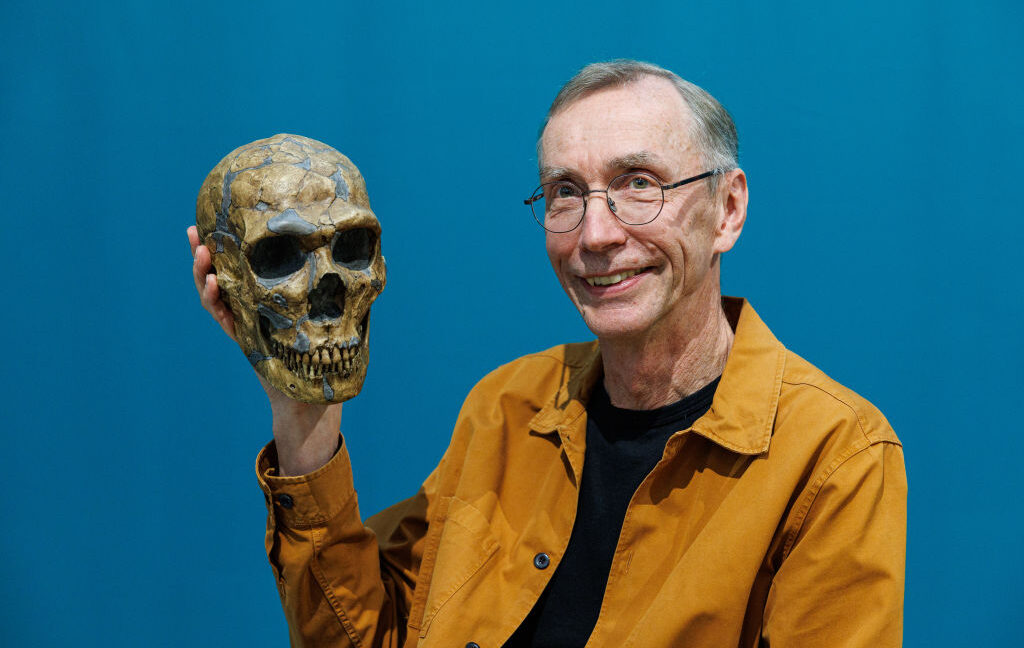
Scientists recreate the lost languages of ancient humans

Scientists reconstructed ancient human species languages by analyzing fossilized skeletal imprints of soft tissues like the larynx, tongue, and brain, revealing that Neanderthals likely spoke languages understandable to early Homo sapiens.
Science
fromNature
3 weeks ago

How pollutants and poo paint a picture of past civilizations

Environmental archaeologists extract mud cores from swamps to analyze molecular biomarkers like coprostanol, revealing ancient human population trends and behaviors.
Board games
fromOpen Culture
3 weeks ago

AI Figures Out the Rules of a Mysterious 2,000-Year-Old Board Game from Ancient Rome

Machine learning and AI simulation helped researchers determine how an ancient Roman stone board game was played by testing different rule sets against observed wear patterns.
#roman-archaeology
History
fromMedievalists.net
1 week ago

The Size of Armies in Early Medieval Warfare - Medievalists.net

The size of early medieval armies remains debated, with some scholars arguing for small warbands while others suggest larger fighting forces existed.
History
fromMedievalists.net
2 weeks ago

When Charlemagne Became a Thief: A Medieval Tale Retold - Medievalists.net

Charlemagne's legacy includes tales of his youth, notably an adventure involving a thief named Basin, showcasing his character and moral lessons.
Books
fromNature
1 month ago

Brain mysteries and Bronze Age diplomacy: Books in brief

Lionel Penrose's mid-twentieth century research connected genetic abnormalities to hand creases, establishing the hand as a significant diagnostic tool across multiple medical disciplines.
fromwww.thehistoryblog.com
2 weeks ago

Five more seated Gauls found in Dijon

They were all adult males between 40 and 60 years old when they died, ranging in height from 1.62 to 1.82 meters (5'4-6). They were in good overall health with excellent teeth, but osteoarthritis in the bones, particularly in the legs, attests to them having consistently experienced strenuous physical activity in their lives.
History
History
fromMail Online
2 weeks ago

Roman artifact found in the Americas shatters New World history

A Roman terracotta head discovered in a sealed Mexican tomb in 1933 suggests Roman contact with the Americas around 200 AD, predating Columbus by over a thousand years.
#neanderthal-human-interbreeding
History
fromwww.thehistoryblog.com
2 weeks ago

Only image of Gallo-Roman god found in Burgundy sanctuary

The only known pictorial depiction of Gallic god Sucellus was discovered at the Mancey sanctuary in Burgundy, a religious complex continuously used from the late Iron Age to the 4th century.
History
fromMedievalists.net
2 weeks ago

Two Medieval Men Found Buried in Prehistoric Site - Medievalists.net

Medieval men were buried in the Menga dolmen, a Neolithic monument in Spain, over 4,000 years after its construction, demonstrating the site's enduring symbolic importance across millennia.
History
fromWorld History Encyclopedia
2 weeks ago

Sargon of Akkad: From Gardener to King of the Four Corners of the World

Sargon of Akkad founded the first multinational empire in history, uniting Mesopotamian kingdoms under central authority and establishing bureaucratic administration standards that influenced rulers for 1,500 years.
Science
fromNature
1 month ago

Neanderthal dad, human mum: study reveals ancient procreation pattern

Female Homo sapiens and male Neanderthals mated more frequently than the reverse pairing, shaping human genetic ancestry patterns revealed through analysis of female Neanderthal specimens.
History
fromWorld History Encyclopedia
3 weeks ago

What Defines a Civilization?

Civilization requires a writing system, government, food surplus, labor division, and urbanization, with Mesopotamia recognized as the birthplace of civilization due to its early city construction around 5400 BCE.
fromwww.thehistoryblog.com
3 weeks ago

Samnite burials of children with bronze warrior belts found

The excavation ultimately unearthed 34 burials, 15 of them belonging to children between two and ten years old when they died. The graves are clustered in groups, probably reflecting family nuclei. Most the grave types are earthen pits covered with roof tiles angled against each other.
History
Philosophy
fromPhilosophynow
1 month ago

What Have the Romans Ever Done For Us?

Roman thought combined Greek philosophical influences with practical political and engineering practices, producing enduringly useful ideas rooted in pragmatism.
Business
fromFast Company
2 months ago

Navigating the ghosts of cultures past

Organizational culture constantly changes; leaders must discern which legacy cultural elements to retain and which to remove while balancing enduring beliefs with adaptive practices.
#roman-villa
History
fromwww.thehistoryblog.com
1 month ago

Impressive Bronze Age axe found in Switzerland

A 3,500-year-old bronze axe of exceptional craftsmanship was discovered in northwestern Switzerland, likely a votive offering from the Middle Bronze Age.
History
fromMail Online
1 month ago

The first non-binary person? Stone Age woman was buried like a MAN

Stone Age societies in Hungary practiced flexible gender roles, with some individuals buried according to non-traditional gender norms, indicating tolerance for complex identities 7,000 years ago.
fromWorld History Encyclopedia
1 month ago

Vespasian: How A Commoner Became Roman Emperor

Titus Flavius Vespasianus was born in Falacrinae, a rural town northeast of Rome, on 17 November 9 CE. There was nothing in his lineage to suggest that he would one day rule as emperor. Indeed, his ancestors were commoners who did not achieve any kind of prominence until the era of the late Roman Republic, when they came into modest wealth.
History
Science
fromwww.scientificamerican.com
2 months ago

Archeologists Just Found a 2,000-Year-Old Battle Trumpet That May Be Linked to Queen Boudica

A roughly 2,000-year-old Iron Age carnyx was discovered in West Norfolk, likely linked to Celtic resistance against Rome and possibly to Boudica's Iceni.
History
fromOpen Culture
1 month ago

Behold the First Realistic Depiction of the Human Face (Circa 25,000 BCE)

The Venus of Brassempouy, a 25,000-year-old mammoth ivory carving, represents the earliest realistic human face depiction and marks the dawn of beauty in human culture.
fromwww.scientificamerican.com
2 months ago

Humans Made Poisoned Arrowheads Thousands of Years Earlier Than Previously Thought

Researchers have found traces of what appears to be plant-derived poison on tiny stone arrowheads from South Africa dated to 60,000 years ago. The finding pushes back the origin of this revolutionary hunting technology by tens of thousands of years. Scientists have long been fascinated by the development of poisoned hunting weapons. For one thing, they would have seriously leveled up our ancestors' foraging game.
Science
History
fromMedievalists.net
1 month ago

The Survival of Roman Education in Early Medieval Britain - Medievalists.net

Roman cultural practices persisted in Britain for generations after AD 410, with aristocrats maintaining traditional education and Christian learning similar to their Gallic counterparts.
History
fromMedievalists.net
1 month ago

East Roman Archaeology: Goals and Challenges, with Marica Cassis - Medievalists.net

Archaeology reveals material evidence of daily life, settlement patterns, and economic systems in the East Roman world that textual sources cannot provide, while facing challenges in establishing itself as a distinct field separate from classical and Islamic archaeology.
History
fromWorld History Encyclopedia
1 month ago

The first time a Roman emperor and his successor died in battle

The Battle of Abritus in 251 resulted in a decisive Gothic victory under Cniva, killing Roman Emperor Decius and his son, marking the first time a sitting emperor died in battle.
Science
fromNature
1 month ago

Daily briefing: Hunter-gatherers in Europe's 'water world' resisted the switch to farming for millennia

Rhine-Meuse delta populations retained substantial hunter-gatherer ancestry for millennia before steppe-related mixing spurred Bell Beaker expansion and large genetic turnovers.
History
fromMedievalists.net
1 month ago

Military Intelligence and Planning in the Carolingian Empire - Medievalists.net

Carolingian rulers built systematic intelligence networks—interrogating travelers and compiling detailed reports to gather topographical, political, and military information for campaign planning.
#crisis-of-the-third-century
fromWorld History Encyclopedia
1 month ago

Cnut: The North Sea King

"Cnut: The North Sea King" by Ryan Lavelle is a short and engaging biography of the most ambitious and successful Scandinavian leader of the Viking Age. Lavelle captures both the brutality and pragmatism that allowed Cnut to govern England effectively for almost two decades, despite being an outsider and a foreign conqueror. In 1066 and All That (1930), a parody book of English history,
History
fromMail Online
1 month ago

The bone that proves Hannibal really DID cross the Alps with elephants

While the bone was worn and poorly preserved, archaeologists managed to identify its origin by comparing it with modern elephant and mammoth bones. Despite there not being enough DNA to confirm the exact species, the researchers were able to carbon date a tiny sample of the bone. This places the elephant's death between the late fourth and early third centuries BC - right in the middle of the Second Punic War.
History
History
fromwww.thehistoryblog.com
2 months ago

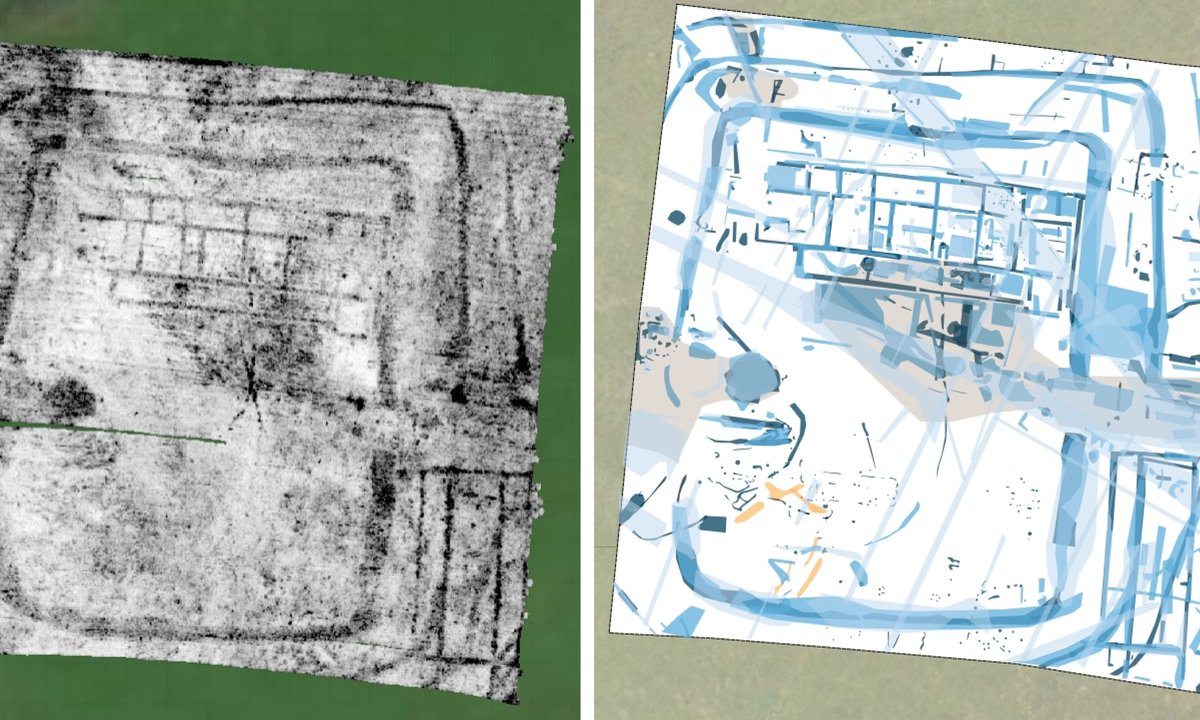
First Roman marching camps discovered in Saxony-Anhalt

Four Roman marching camps found in Saxony-Anhalt prove Roman legions reached the Elbe in the 3rd century, the northeasternmost camps in Germania.
History
fromMedievalists.net
2 months ago

Early Medieval England Saw Continuous Migration, Study Finds - Medievalists.net

Migration in early medieval England was continuous from the end of Roman rule to the eve of the Norman Conquest, with regional and sex differences.
History
fromwww.thehistoryblog.com
2 months ago

Rich graves of three elite warriors found in Hungary

Three elite 10th-century Hungarian Conquest cavalry graves in Akaszto contained elite weapons, gilded harness fittings, and an unprecedented intact silver belt with textile remains.
History
fromMedievalists.net
2 months ago

Crossing Under Fire: River Operations in Early Medieval Warfare - Medievalists.net

Forcing a river crossing under enemy resistance demands extensive planning, deception, and logistics, a persistent and difficult military problem from antiquity through modern warfare.
fromMail Online
1 month ago

Mysterious symbols spanning the globe hint at a lost civilization

His investigation began after identifying recurring giant T-shapes, three-level indents, and step pyramids carved into ancient stones worldwide. 'These specific symbols that are built in different size proportions, and the symbols are found in ancient stones around the world, are not supposed to exist; no cultures are supposed to have any cross-platform,' LaCroix explained. The symbols appear in locations ranging from Turkey's Van region to South America and Cambodia.
History
#ancient-mathematics
fromMedievalists.net
2 months ago

Online Course: The Normans in Europe - Medievalists.net

We get started by exploring the origins of the Normans in the county and then duchy of Normandy. We will understand their Norse background and their relationship with the Carolingians. The timeline approach will help us discover all the counts and dukes of Normandy, and what they contributed to their realm. This will set the foundation for the interconnected stories that will lead us to England and the Mediterranean.
History
History
fromwww.thehistoryblog.com
2 months ago

Sealed bronze medieval reliquary found in Turkey

An intact sealed bronze reliquary cross from 9th–11th century Lystra was found containing shroud-like textile and designed to be worn as a pendant.
History
fromwww.thehistoryblog.com
1 month ago

Trepanned skull of giant found in Viking-era mass grave

A 9th-century mass grave near Cambridge contains up to ten young men, including an exceptionally tall trepanned individual likely surviving surgery, linked to Viking-era conflict.
History
fromWorld History Encyclopedia
2 months ago

Ur: the center of the Sumerian Renaissance

Ur was an influential Sumerian port city and ancient trade center in southern Mesopotamia with notable archaeological finds and contested biblical associations.
#mongol-invasions
fromwww.thehistoryblog.com
1 month ago

Rare Mithraic altars found in Scotland go on display for the first time

Two exceptionally rare and beautifully carved Mithraic altars found in Inveresk, East Lothian, Scotland, are going on display for the first time. They are not just the only Roman altars ever found in Scotland, but are among the finest examples of Roman sculpture in Roman Britain. They are also uniquely early in date, having been made in 140s A.D. during Antoninus Pius' reoccupation of southern Scotland, whereas most other archaeological materials related to the worship of Mithras in Britannia date to the 3rd century.
[ Load more ]