#barnet-heritage
#barnet-heritage
[ follow ]
#urban-development #london #uk-museums #exhibitions #heritage #heritage-preservation #cultural-heritage

fromianVisits
2 weeks agoLittle Holland House: The arts and crafts home open to visitors once a month
It's not a house of outstanding art, being a self-taught carver whose skills evidently advanced over the years, as you can see the evolution from fairly rough carving on the stairs to the very skilled work in the living room. He also created the paintings on the walls - talented chap - but never finished the carving in the living room, as his time finally ran out.
Renovation
fromArtnet News
3 weeks agoStrange Coin Used on U.K. Bus Turns Out to Be 2,000-Year-Old Relic
An enigmatic coin that someone used to board a British bus seven decades ago is now entering the collection of the Leeds Discovery Centre, following the revelation that it's a bit of 2,000 year old currency from the former Carthaginian trading settlement of Gadir, in modern-day Cádiz, Spain-one of Europe's longest-inhabited cities, settled by Phoenicians around 1,100 B.C.E.
Arts
History
fromMedievalists.net
1 month agoNew Medieval Books: Castles and Strongholds of Northumberland - Medievalists.net
Northumberland contains more castles, towers, peles, bastles and barmkins than any other British county, serving as private residences and fortifications for nobility and landowners.

fromianVisits
1 month agoThe church with anti-aircraft guns: Kilburn's unusual naval relics removed
The Grade II listed building is on Historic England's Heritage at Risk Register and is currently recorded as being in poor condition. The national Marine Society and Sea Cadets (MSSC), which held the lease, has confirmed that it can no longer meet the building's repair obligations and will surrender the lease so that restoration can be carried out by new occupants.
London music
Renovation
fromwww.bbc.com
4 weeks agoThe house hidden in the garden of a Catford terrace
Architects Will and Sogand Howard built a modern home in a neighbor's garden in London, demonstrating how small urban plots can address housing shortages through creative land use and direct outreach to homeowners.
London politics
fromwww.standard.co.uk
2 weeks ago176-year-old London pub facing demolition gets lifeline as plans for flats rejected
Greenwich Council rejected plans to demolish the 176-year-old Anglesea Arms pub in Woolwich for a second time, citing insufficient evidence that the pub is no longer commercially viable.
Arsenal
fromwww.bbc.com
1 month agoArsenal set to celebrate St Totteringham's Day earlier than ever
St Totteringham's Day, when Tottenham mathematically cannot finish above Arsenal in the Premier League, is set to occur earlier than ever, highlighting the massive current gap between the north London rivals.
London
fromTime Out London
2 weeks agoThis new east London museum has been crowned one of the best places to visit in the world in 2026 by TIME magazine
The V&A East Storehouse in London was featured on TIME's World's Greatest Places for its innovative approach to reimagining museums as interactive conversations rather than one-way presentations.
London
fromTime Out London
3 weeks agoOne of London's most spectacular houses is opening to the public next month
The Cosmic House, a rare Grade I-listed postmodernist building in Kensington designed by Charles Jencks and Sir Terry Farrell, opens to the public on April 22 with an Isaac Julien film installation.
London politics
fromLondon On The Inside
1 month agoNorth vs South London | Ten Reasons Why Each Side Is Better
North London claims superiority through Roman history, the Barbican, anti-fascist heritage, major protest movements, and superior underground transport infrastructure compared to South London.
Soccer (FIFA)
fromwww.fourfourtwo.com
1 month agoFancy VIP tickets to the biggest North London derby in decades? Here's how you can see Tottenham vs Arsenal in this huge Premier League clash from just 199
Tottenham host Arsenal in a crucial North London derby that could influence the Premier League title race and affect Tottenham's relegation-threatened season.
#london-transport-museum
London
fromianVisits
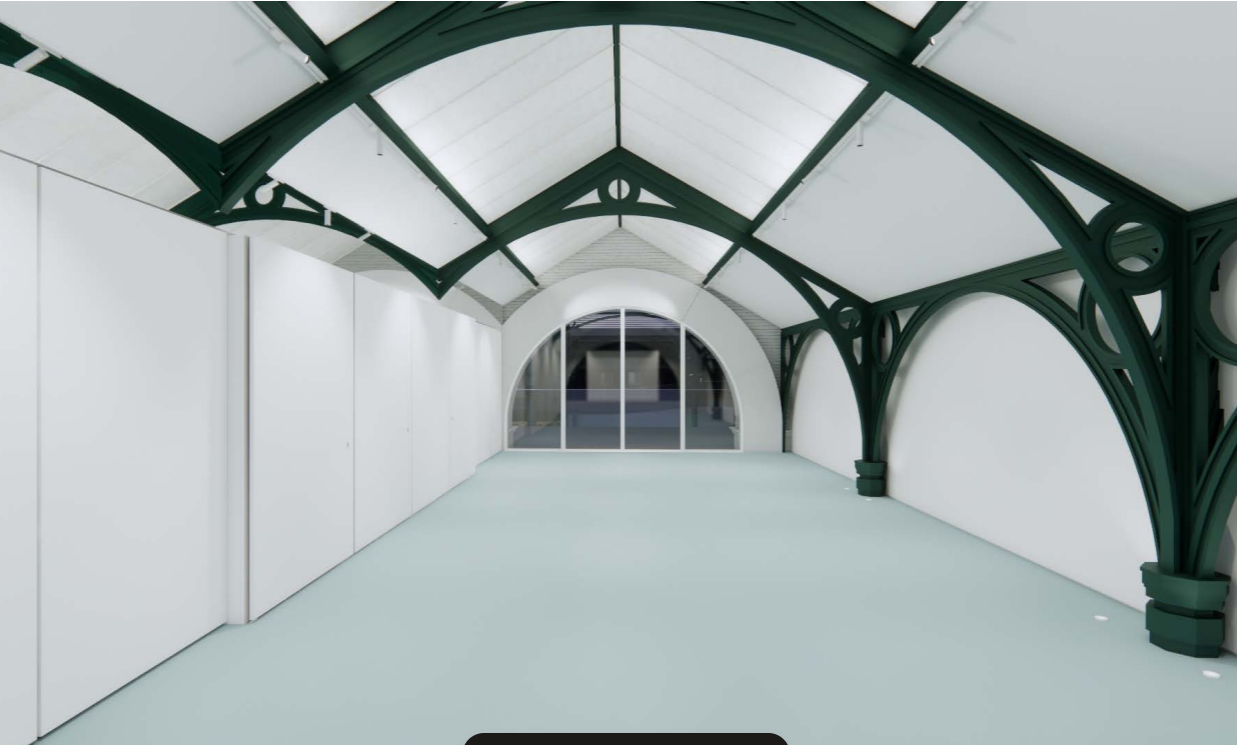
3 weeks agoGo behind the scenes at London Transport Museum's vast Acton depot this April
The London Transport Museum's Acton warehouse opens April 9-12, 2026, showcasing 320,000 objects including trains and buses, with special programming celebrating the Bakerloo and Piccadilly lines' 120th anniversaries and the Routemaster bus's 70th anniversary.
London
fromianVisits
3 weeks agoGo behind the scenes at London Transport Museum's vast Acton depot this April
The London Transport Museum's Acton warehouse opens April 9-12, 2026, showcasing 320,000 objects including trains and buses, with special programming celebrating the Bakerloo and Piccadilly lines' 120th anniversaries and the Routemaster bus's 70th anniversary.
fromwww.bbc.com
2 months agoHornsey Town Hall taken off at-risk register
Bringing such a culturally and historically significant building back into public use has been a huge privilege for everyone involved. This restoration has taken years of considered collaboration and care, guided by a shared commitment to do justice to the Town Hall's heritage while giving it a new lease of life and protecting it for future generations to enjoy.
Remodel
fromianVisits
1 month agoAmersham's fairground organ museum is starting to offer tours
The charming Amersham fairground organ museum, which is usually open a few Sundays per year, has now started offering guided tours. The occasional open days are more a chance to sit and listen to the old fair organs playing their pipes, and have a nice lunch at the same time. However, the guided tours, which will take place on Saturdays, will offer a deeper dive into their collection of organs and the music cards that control them.
Music
fromLondon On The Inside
1 month agoExploring London's Hidden Gems: A Local's Guide to Secret Spots
London is a city that rewards curiosity. Beyond the iconic landmarks, Big Ben, Buckingham Palace, and the London Eye, lies a quieter, more intimate version of the capital. This is the London locals know: tucked-away streets, overlooked parks, independent cafés, and historic corners that rarely make it into guidebooks. For travellers willing to stray from the obvious routes, the city offers countless hidden gems that reveal its true character.
Travel
fromTime Out London
2 months agoThis brand new neighbourhood in north London will finally soon be complete
In September Hackney Council gave the green light to the final phases of the Woodberry Down regeneration masterplan. This has been a long time in the making, as the Woodberry Down regeneration officially began 20 years ago. Developers Berkeley Homes have now been given the go-ahead to complete the final stages, officially known as phases 5-8. Berkeley sought permission to build up to a 3,083 new homes in the area across the four phases, of which the developer said 43 percent would be affordable.
Real estate
fromwww.london-unattached.com
1 month agoDon't Tell Dad, Queens Park
Step inside Don't Tell Dad and you're immediately greeted by a warm, low-lit vintage atmosphere. When we arrived, a funky soundtrack was drifting over dark wood floors, while super-comfy olive-green velvet banquettes, booths, and bar stools offered a front-row view of the kitchen in action. Wood panels with coloured glass windows, marble-topped tables set with linen napkins, and vintage cutlery and candle holders hint at 1930s Art Deco elegance, while oval mirrors and playful statement lighting reinforce the space's French bistro vibes.
Food & drink
fromwww.theguardian.com
2 months agoWe're in limbo': the garden centre golden mile' that may be lost to a new town
Tucked just inside the M25, Crews Hill near Enfield has been home to a cluster of horticultural businesses for decades, leading to it being nicknamed the golden mile. Many of these small, family-run businesses selling plants, fencing and paving fear they will be closed down and forced to move if the government selects Crews Hill and nearby Chase Park as one of its next generation of new towns.
UK politics
fromianVisits
2 months agoLondon's Alleys: Ann's Place, Whitechapel, E1
This part of London sits just outside the historic City walls, so it attracted traders who wanted to avoid the strict rules binding City merchants. The land was later acquired by Thomas Wentworth, 1st Earl of Cleveland, who developed it, hence the main road being named Wentworth Street. If you're wondering about Ann's Place, that was probably after his wife, Anne Hopton.
History
fromianVisits
2 months agoLondon Alleys: Buckingham Mews, Victoria, SW1
Despite its proximity to one of London's busiest tourist attractions, its back street location is remarkably quiet and peaceful. Leading off Stafford Place, it was originally, and unsurprisingly, called Stafford Mews, as it was built as stabling for houses on Buckingham Gate, facing the palace. Constructed around 1860, the stables were simple two-storey houses, built initially with stables at the ground and accommodation above.
Real estate
fromLondon On The Inside
1 month agoA Pickle Festival Is Coming to London
The Big Brine, co-founded by Emma and Clarice, who have backgrounds in events and event catering, will bring together the worlds of food, wellness and sustainability by showcasing the craft and culture behind brining and fermenting.
London food
fromianVisits
1 month agoDerelict shops in Aldgate to be redeveloped as horse stables for the police
The row of shops (and pub) here used to be known as Butchers' Row as it was lined with, well, butchers of course - and they would hang their meat outside their stores on rows of metal hooks. Most of the buildings have since been redeveloped, but the gap between shops on Aldgate High Street has been there since shortly after WWII. The gap wasn't due to bomb damage, but for some reason, one building was cleared, and later its neighbour as well.
UK news
London food
fromLondon On The Inside
1 month agoA Well-Known British Hospitality Family Is Opening a West London Pub
The Spiteri family, with two generations of hospitality experience, is opening The Latimer, a neighbourhood pub featuring seasonal British cuisine, craft drinks, and family-curated design.
fromTime Out London
1 month agoEverything you need to know about the huge 231 million makeover of London's Barbican
The City of London Corporation described the resulting plan as 'sensitive, conservation-led, yet future facing'. Changes will be made to the Barbican's famous Conservatory, beloved among Londoners for its lush greenery, to address long-standing maintenance issues and to improve accessibility. This will include a new lift (providing step-free access to the fly tower for the first time) and stairs up to the Conservatory's raised balconies, offering eye-popping views over the flora below.
London
fromwww.standard.co.uk
2 months agoOne of London's oldest music venues played by the Rolling Stones and Kate Bush set for massive revamp
The first floor of the iconic pub on Lower Richmond Road will be extended to create the new terrace, which will have a retractable roof and spiral staircase. The venue will also get new equipment to allow it to sell a better range of food, while it will undergo some internal reorganisation and redecoration. An artist's impression of the refurbished pub The Half Moon on Lower Richmond Road
London music
Arts
fromTime Out London
1 month agoThis underrated, tiny west London museum is celebrating its 100th birthday with a blockbuster year of exhibitions in 2026
Leighton House celebrates its 100th year with exhibitions and workshops showcasing its history, international influences, Arab Hall origins, and restored collections.
Arts
fromThe Art Newspaper - International art news and events
2 months agoBritish Museum reports record-breaking year for finding treasure in the UK
UK metal detectorists recorded a record 79,616 archaeological finds in 2024, including 1,540 treasures such as a 179-coin hoard and a Roman vehicle fitting.


fromianVisits
1 month agoLondon's Alleys: Ship Tavern Passage, City of London, EC3
The alley likely came into existence when the first Leadenhall Market, as a market for herbs, opened, with a long passage leading from the market to Gracechurch Street. The alley used to be longer and straighter, but the eastern half was cut off when a building was constructed on the site. That building was demolished in 2000, and archaeologists researched it for Roman remains in 2002.
London
fromianVisits
1 month agoLondon's Alleys: Martin Lane, City of London, EC4
For most of its life, the alley's main feature was the church of St Martin Orgar, possibly named after Ordgarus, a Dane who donated the church to the canons of St Paul's. Sadly, most of the church was destroyed during the Great Fire of London. The badly damaged remains were restored and used by French Protestants right up to 1820.
London
fromwww.bbc.com
2 months agoTreasures found on HS2 route stored in secret warehouse
Treasures unearthed by hundreds of archaeologists so far during work on the controversial planned HS2 train line have been shown exclusively to the BBC. The 450,000 objects, which are being held in a secret warehouse, include a possible Roman gladiator's tag, a hand axe that may be more than 40,000 years old and 19th Century gold dentures. It is an "unprecedented" amount and array of items, which will yield new insights into Britain's past, says the Centre for British Archaeology.
London
fromianVisits
2 months agoTickets Alert: 200th anniversary tours of London Zoo
To celebrate its bicentenary, London Zoo is launching a programme of monthly history tours that delve into two centuries of animals, architecture and scientific discovery. The guided walks are included as a free extra with a paid Zoo visit and run on a rotating theme throughout the year, allowing visitors to choose tours that match their particular interests in the Zoo's long and varied past.
London
[ Load more ]