#berlin-collective
#berlin-collective
[ follow ]
#art #contemporary-art #exhibition #berlin #fashion-photography #art-exhibition #art-exhibitions #street-art
Design
fromdesignboom | architecture & design magazine
3 days agoreversible cultural pavilion activates public space in frankfurt 2026
Spain's pavilion for World Design Capital 2026 emphasizes reversible cultural infrastructure and sustainable design through innovative materials and construction methods.
fromItsnicethat
3 days agoBravas Graphix are the rave connoisseurs behind some of Brussels' most explosive posters
"We're constantly striving to strike a balance between work that respects academic rules of composition, established visual codes and good readability, with something more spontaneous, adventurous, playful, even naive."
Typography
#art

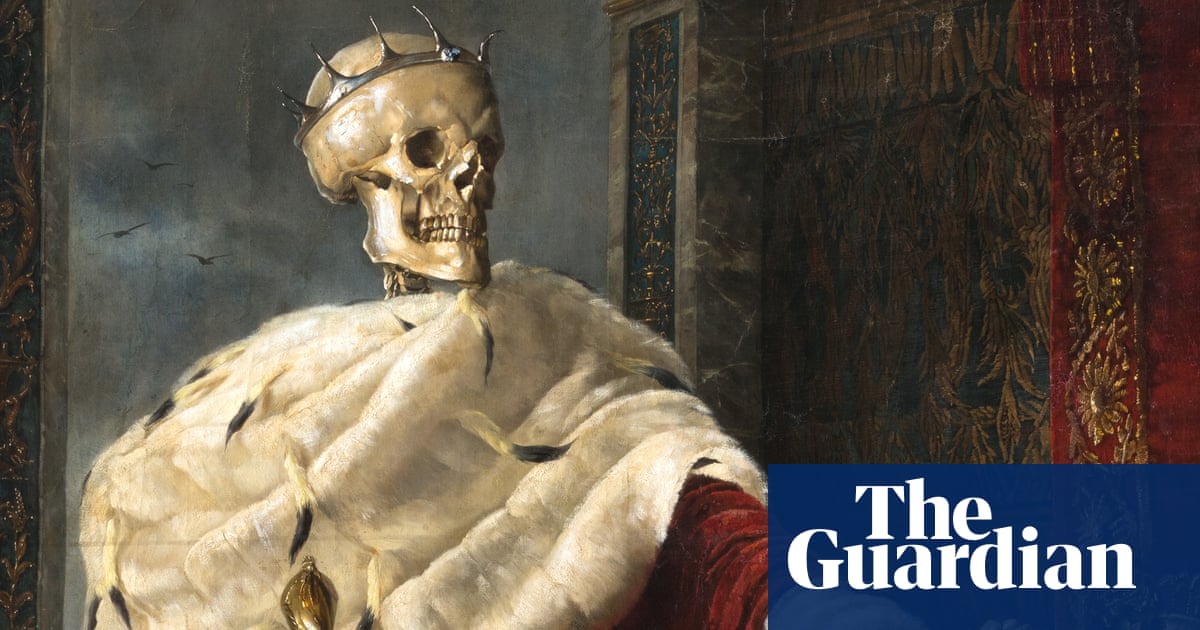
Arts
fromIrish Independent
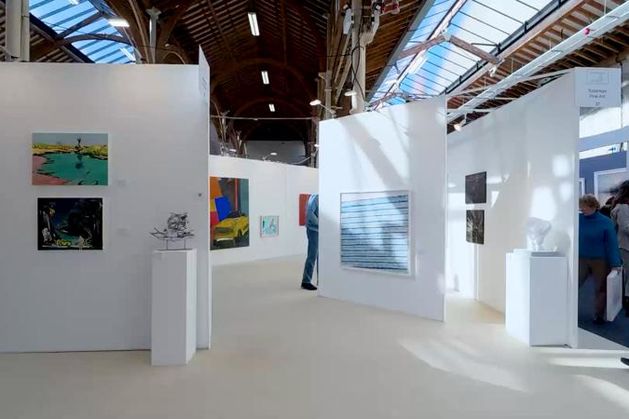
4 days ago'You have to step in and experience it' - artists on the rise of AI-generated art and the 'essential' gallery visit
Miriam Fitzgerald Juskova's exhibit combines paper quilling with mathematics, showcasing intricate art that engages viewers and emphasizes the value of handmade creations.

Music
fromKALTBLUT Magazine
3 weeks agoKITSCHKRIEG ZWEI: Dive into the Electric Wave of 'Sommerregen' ft. Domiziana & MilleniumKid! - KALTBLUT Magazine
KITSCHKRIEG ZWEI reimagines pop music for the rave scene, blending nostalgic roots with innovative electronic production and contemporary collaborations.
Berlin
fromdesignboom | architecture & design magazine
3 weeks agoel departamento stages berlin nightlife inside nude project's flagship store
El Departamento designed a Nude Project flagship store inspired by 1970s Berlin nightlife culture, using expressive materials and theatrical lighting to create a visually charged retail environment.
Berlin music
fromKALTBLUT Magazine
2 weeks agoExperience the Pulse of Existence: "Urgency" by Leonis Works at Haus Der Visionare - KALTBLUT Magazine
"Urgency" is a groundbreaking multi-disciplinary dance work exploring personal experience and socio-political issues through immersive choreography that transcends traditional stage boundaries.
fromBOOOOOOOM!
4 days ago"Idling" by Artist Greta Kresse
"These paintings merge the landscape and the intimacy of windows through the framing of the car, bridging the two realms I've typically explored separately. The car becomes a meditation on transition, on existing simultaneously here and elsewhere."
Arts
fromJuxtapoz
5 days agoJuxtapoz Magazine - Last Days to See Kate Meissner's New Paintings @ Lyles & King's Project Space, NYC
"These works are an exploration of the human body's elasticity and capacity to metamorphose. Informed by my own experience of pregnancy and the birth of my first child last year, these paintings are a meditation on physiological transformation and the body's underlying animalistic and mammalian nature."
Arts
fromKALTBLUT Magazine
3 weeks agoIn Conversation with Malte Bossen! A Movement Of Change. - KALTBLUT Magazine
Pornceptual challenges mainstream perceptions of pornography, reframing it as inclusive, artistic, intimate, and respectful rather than exploitative or taboo. Its events, from Berlin to international stages, bring a sex-positive, body-inclusive ethos to nightlife. Strict consent practices, no-photo policies, and spaces designed for authentic self-expression create a rare kind of freedom - one that allows visitors to explore identity, desire, and intimacy without judgment.
Berlin music
fromHyperallergic
3 days agoThe Art World Is a Joke
Kamrooz Aram is everywhere this year, from Mumbai Art Week to the Whitney Biennial, and critic Aruna D'Souza is grateful. She pens a beautiful meditation on his work, reading his abstract paintings as not simply a denunciation of Western modernism nor a reassertion of Islamic visual motifs, but something else entirely - something gestural, exuberant, riotous, and incomparably his own.
Arts
fromArtnet News
3 days agoAt Art Basel Hong Kong, Wet Paint Hits Galleries, Malls, a Semi-Secret Space, and More | Artnet News
Hong Kong's particular and seductive Metabolist city planning is an ode to consumption as a great totalizer of culture, and to contemporary art as merely a niche commodity form among many others.
Arts
fromBerlin Art Link
1 month agoStudio Visit with Jerszy Seymour | Berlin Art Link
Countering the passive consumption of today's social, political, ecological and informational debacle, artist and designer Jerszy Seymour proposes a necessarily utopian alternative, grounded in cooperative creativity. His interdisciplinary practice engages the transformative potentials of art, design and activism through instinctual and embodied energies.
Design
fromwww.kaltblut-magazine.com
1 month agoExperience the Essence of Black Creativity at Platte Berlin!
From February 17 to March 10, 2026, the vibrant intersection of fashion and art will come alive at Platte Berlin with SPOTLIGHT ON BLACK CREATIVITY. This unmissable pop-up exhibition showcases the brilliance of Black designers and visual artists, setting the stage for an extraordinary celebration of heritage and contemporary expression. Dive into a world where creativity knows no bounds, featuring groundbreaking brands such as adesa, Amaluma Studio, Gelisa George, Dinga, Azea Zalea, and GEMZ.
Fashion & style
fromBerlin Art Link
2 months agoReview of Alexander Basil at Galerie Judin | Berlin Art Link
Alexander Basil has created a cosmos. His instantly recognizable style and established color palette implicate the subject matter in a process of calm and sure scrutiny. Central to this cage is the familiar figure that reappears, on a quest through daily life. The protagonist is both the subject and object of reflection that morphs in and with his surroundings, travelling worlds beyond the room he finds himself in.
Wellness
Berlin music
fromKALTBLUT Magazine
1 month agoImmerse Yourself in Time: The Infinite Now at Kraftwerk Berlin - KALTBLUT Magazine
Berlin Atonal and Unsound present The Infinite Now, a 30-hour continuous sound experience at Kraftwerk Berlin on May 16-17, 2026, featuring over 20 artists in a communal immersive environment.


fromBerlin Art Link
1 month agoAn Interview with Dorte Eifeldt | Berlin Art Link
Dörte Eißfeldt's photography is grounded in the experience of seeing: a relational seeing that holds in view not only the self and the world, but also the photographic object itself, which can act as a vital intermediary between the two. Making us encounter gentler close-ups of a neck pressed into sheets of silver, nebulated, spectral hands and snowballs that seem to glow far beyond the print's surface, her largely self-taught photographic practice probes phenomenological questions of appearance, perception and form.
Photography
fromArtnet News
2 weeks agoBerlin's First-Ever Art Gala Was a Love Letter to the City
The evening, spearheaded by directors Sam Bardouil and Till Fellrath alongside patrons Monique Burger and Christine Würfel-Strauss, arrived at a fraught moment for Berlin, whose cultural scene faces funding cuts of roughly €130 million.
Arts
fromBerlin Art Link
2 months agoStudio Visit with Myriam Jacob-Allard | Berlin Art Link
Myriam Jacob-Allard appears through a heavy door and greets us with an easy warmth, scooping us up and welcoming us into her world. We are immediately absorbed by an unexpected color-drenched stairwell. Every surface is saturated in a dense, glowing yellow that reads unmistakably as egg yolk, insulating us from the outside in as we make our ascent. We turn into a long hallway whose fragrant freshly waxed floor catches the light, reflecting it back upward so that the corridor seems to glow beneath our feet.
Photography
fromHyperallergic
3 weeks agoEmbracing Friction in the Art World
On Franklin Street in Brooklyn's Greenpoint neighborhood, one non-commercial gallery fosters 'a small, stubbornly human space for friction.' Friction—the ubiquitous buzzword that captures the simultaneous delight and discomfort of doing things the slow way—is at the heart of artists Pap Souleye Fall and Char Jeré's current show at Subtitled NYC. It also reflects the overall spirit of this little exhibition space and of a burgeoning movement to reject our culture of optimization in favor of a bumpier, more intimate, less alienating experience.
Arts
fromKALTBLUT Magazine
2 months agoGulu's Berlin Solo Debut: NIHILISTIC SUPERSTAR at Migrant Bird Space - KALTBLUT Magazine
As we traverse an era dominated by algorithms and driven by the impulse for efficiency, we increasingly sacrifice our ability to feel. In this "age of emotional poverty," highlighted by philosopher Byung-Chul Han, our emotional landscapes grow flatter, our pains diluted, and genuine intimacy replaced with a sterile digital façade. However, in Gulu's evocative imagery, the body emerges as a resilient space of resistance, pushing back against a world that demands we conform to neat, predictable narratives.
Photography
Arts
fromKALTBLUT Magazine
3 weeks agoLeaving the System Behind: Ines Trafford's Approach to Artist Advocacy - KALTBLUT Magazine
Inès Trafford developed a practice focused on long-term preservation and stewardship of artists' careers by addressing gaps in traditional gallery systems' ability to maintain artistic legacies.
Arts
fromThe Art Newspaper - International art news and events
3 weeks agoThe rise of the destination art fair, from Aspen to Mallorca
Art dealers are shifting toward smaller, intimate fairs in desirable destinations over traditional flagship events, driven by luxury travel growth and desire for experiential engagement.
fromThe Good Life France
1 month agoStreet Art rules in France - The Good Life France
If you've walked around any of France's cosmopolitan cities in recent years, you're sure to have come across some stunning murals. Painted onto the side of buildings, in hidden corners, and just about anywhere an artist can paint, street art is booming. We're not talking old-school graffiti here, hastily sprayed names on walls, and anti-social stuff like that. Today's street art is commissioned by city or town councils and created by prominent street artists from around the globe says Suzanne Pearson.
Arts
fromBerlin Art Link
1 month agoAn Interview with Monia Ben Hamouda | Berlin Art Link
Monia Ben Hamouda's work weaves calligraphy, material transformation and ancestral memory into sculptures and installations that oscillate between language and form. In conversation, we traced the conceptual and sensory threads of her practice, unfolding through key works that reflect on heritage, embodiment and translation. Using materials such as iron, stone and pigment, her installations become sites where history is not only referenced but physically felt.
Arts
Arts
fromThe Art Newspaper - International art news and events
1 month ago'Still young and going strong': Berlin's pioneering contemporary art space Hamburger Bahnhof turns 30
Hamburger Bahnhof will operate as an experimental, production-oriented public museum that engages artists to reshape institutional structures, practices, and public dialogue.
Arts
fromdesignyoutrust.com
2 months agoRobert Reimann Turns Synthography Into Surreal Fine Art Where Prompts Meet Hand And Lens
A wide-ranging showcase of contemporary visual art and photography spanning surrealism, digital and AI art, conceptual sculptures, documentary photography, and inventive fashion and design.
Arts
fromThe Art Newspaper - International art news and events
2 months agoNew experimental art organisation opens in New York
Summer Guthery and Francesca Sonara launch Times, a small, nimble three-year Manhattan art space prioritizing artists' needs, flexibility, and rejection of perpetual-growth institutional models.
fromBerlin Art Link
2 months agoReview of David Horvitz at ChertLudde | Berlin Art Link
In ChertLüdde, evocations abound: the show is a transcription of California (I've never been, but I imagine it to be sun drenched and a bit dehydrated), which is transposed onto the grid of the gallery in Schöneberg. Shells, dried stalks, bits of pottery, sea urchins, art left behind by visitors, are arranged on a stage (a duplication of the one found in Horvitz's garden in Los Angeles),
Arts
fromThe Art Newspaper - International art news and events
2 months agoDenmark exhibition invites visitors to come face to face with Basquiat's 'head' works
When a 22-year-old Jean-Michel Basquiat (1960-88) was asked how he typically began a piece, his answer was simple: "I suppose I would start with a head." That instinct-almost a reflex-sits at the core of a remarkable group of early works on paper that remained largely unseen during his lifetime. The Basquiat: Headstrong exhibition, which opens this month at the Louisiana Museum of Modern Art in Denmark, is set to become the first comprehensive showing devoted to the artist's depictions of the human head.
Arts
[ Load more ]