#biocodicology

[ follow ]
History
fromArs Technica
2 days ago

Ice Age dice show early Native Americans may have understood probability

Native Americans used dice for games of chance over 12,000 years ago, predating Old World dice by millennia.
OMG science
fromHarvard Gazette
4 days ago

Anthropologist traces split between Homo sapiens and Neanderthals - Harvard Gazette

The transition from multiple human forms to Homo sapiens dominance involved interactions and interbreeding with Neanderthals, not a clear-cut victory.
Arts
fromHyperallergic
1 week ago

UK Museums Hold Over 260,000 Human Remains, Report Finds

UK museums hold over 263,000 human remains, with significant collections from former British colonies, raising ethical concerns.
OMG science
fromArs Technica
4 days ago

Research roundup: 7 cool science stories we almost missed

Raccoons exhibit flexible problem-solving skills, thriving in human environments by successfully navigating complex puzzles.
History
fromMedievalists.net
4 days ago

Medieval "Giant" with Trepanned Skull Discovered in Mass Grave - Medievalists.net

A 9th-century mass grave in England reveals remains of young men, suggesting violent conflict during the Viking conquest of East Anglia.
fromwww.nature.com
1 week ago

Genomic history of early dogs in Europe

Genomic data indicates that early dogs in Europe underwent significant genetic changes as they adapted to diverse environments and human lifestyles, reflecting a complex interplay of domestication and natural selection.
Pets
Pets
fromwww.dw.com
1 week ago

Humans and dogs scientists find new proof of ancient bond

A female puppy from 15,800 years ago in Turkey is identified as the earliest-known dog, predating the previous record by 5,000 years.
Alternative medicine
fromArs Technica
2 weeks ago

Never mind Band-Aids, Neanderthals had antiseptic birch tar

Neanderthals likely used birch tar for medicinal purposes, including treating infections and insect bites, beyond its known use as a weapon adhesive.
OMG science
fromNature
1 week ago

Giants of the deep and the wonder of space: Books in Brief

Right whales have drastically declined from abundant populations in the 17th century to fewer than 400 today.
History
fromwww.thehistoryblog.com
1 week ago

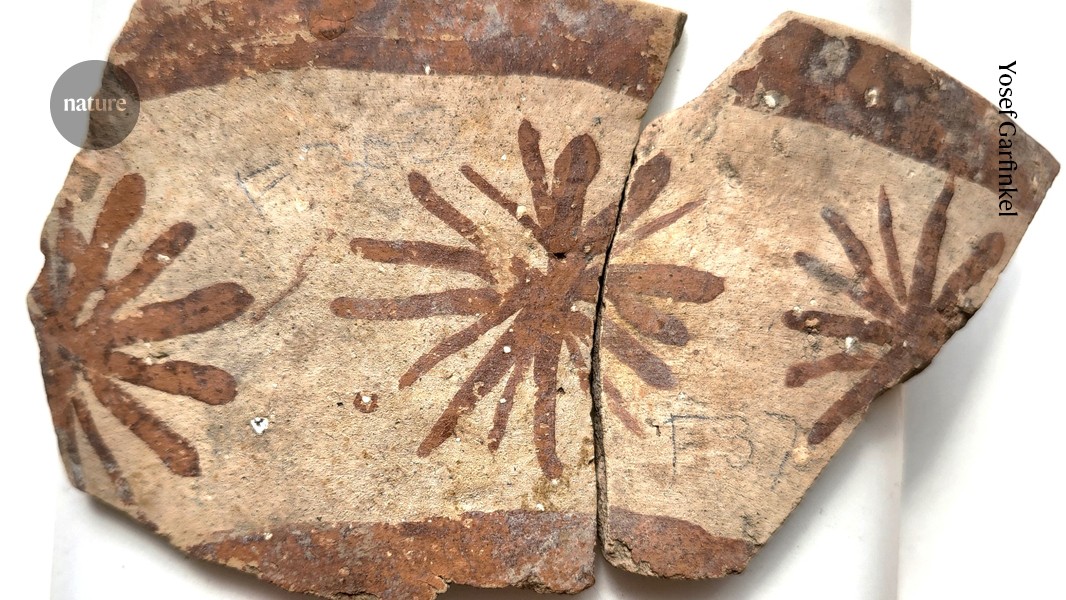
Site where unique Iberian wolf ceramic was found excavated again

Excavation of the ancient Iberian Corral del Castell site in Spain reveals significant archaeological findings, including the only wolf depiction on Iberian pottery.
Arts
fromArtnet News
2 weeks ago

Archaeologists Identify Lost Medieval Village in Polish Forest | Artnet News

Researchers in Poland have located Stolzenberg, a lost medieval village in Pomerania, using metal detection and geophysical surveys that revealed 1,500 surface anomalies including coins and building remnants.
Science
fromNature
3 weeks ago

How bioRxiv changed the way biologists share ideas - in numbers

bioRxiv has grown to over 310,000 preprints since 2013, with neuroscientists as top users and monthly submissions reaching 4,000 by 2025, demonstrating widespread acceptance of preprint publishing in scientific research.
OMG science
fromNature
1 week ago

How DNA in dirt is shaking up the study of human origins

Ancient DNA can be recovered from sediments, revolutionizing the study of extinct species and the history of ecosystems.
fromThe Art Newspaper - International art news and events
3 weeks ago

Mummies and other human remains held in UK museums raise serious ethical questions, warn scholars

The significant number of ancestors held in UK museums is extremely distressing and symbolic of the colonial origins of these collections. We hope that the responses gathered by The Guardian will be shared with the relevant communities to support them in bringing their ancestors home.
London
Science
fromNature
4 weeks ago

How pollutants and poo paint a picture of past civilizations

Environmental archaeologists extract mud cores from swamps to analyze molecular biomarkers like coprostanol, revealing ancient human population trends and behaviors.
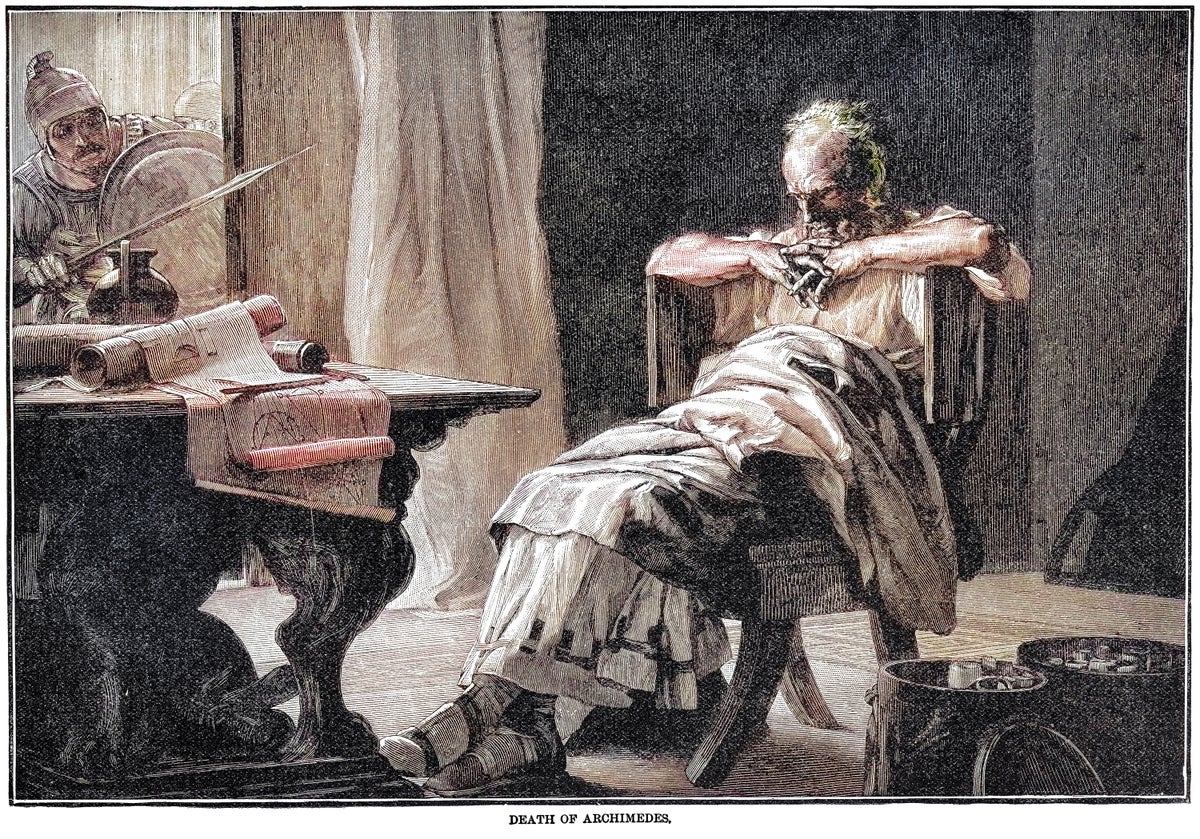
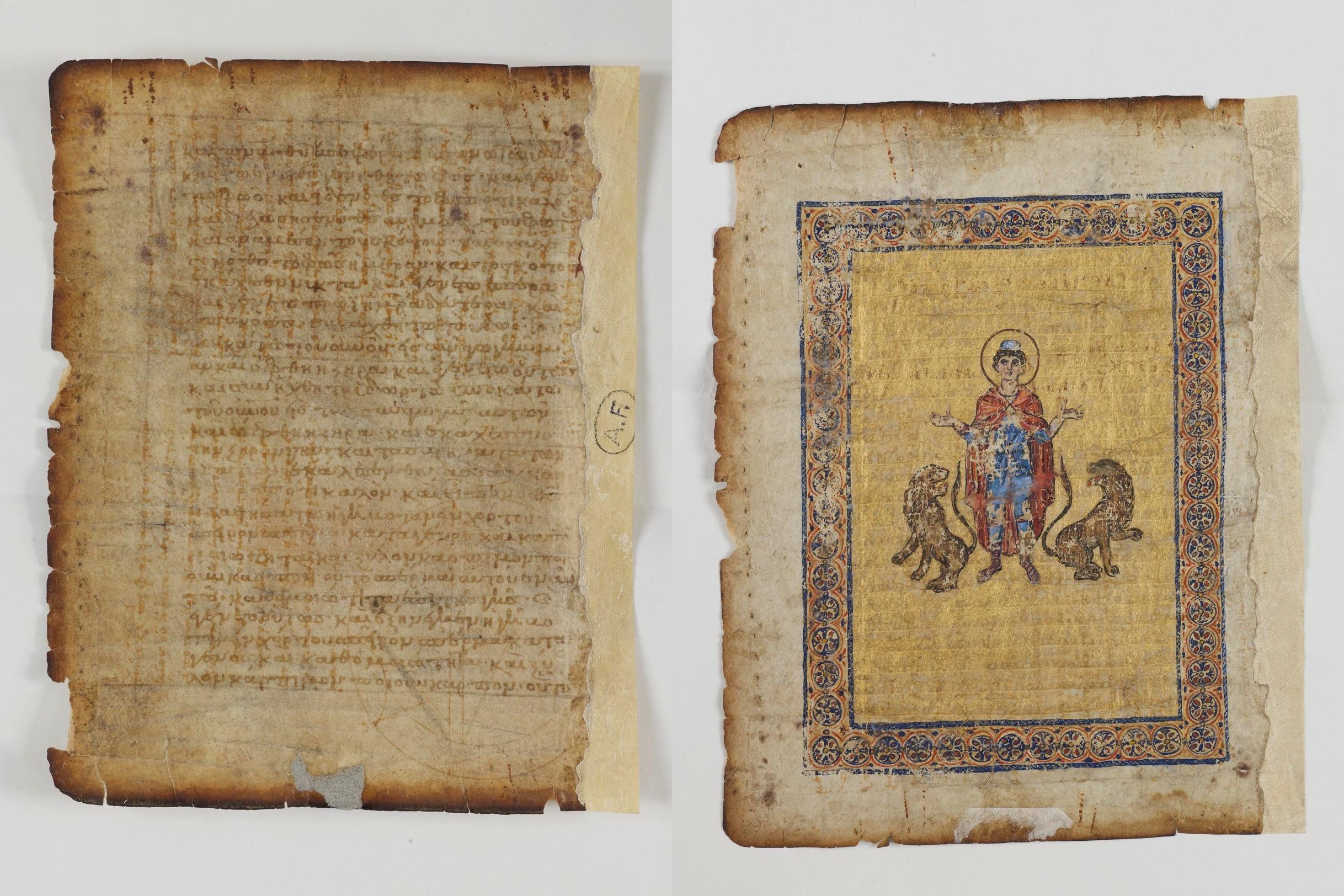
#archimedes-palimpsest
#de-extinction
fromwww.theguardian.com
3 weeks ago
OMG science

Can scientists really resurrect the dodo? Inside the company that says they can

Colossal Biosciences is using ancient DNA and gene editing to resurrect extinct species including dire wolves, woolly mammoths, and dodos, raising questions about the ethics and feasibility of de-extinction technology.
fromwww.npr.org
1 month ago
OMG science

Colossal Biosciences breeds controversy while trying to revive mammoths

Colossal Biosciences uses gene-editing, cloning, and AI technologies to resurrect extinct species like woolly mammoths while developing tools to save endangered animals, though critics question the ethics and feasibility of de-extinction.
OMG science
fromwww.theguardian.com
3 weeks ago

Can scientists really resurrect the dodo? Inside the company that says they can

Colossal Biosciences is using ancient DNA and gene editing to resurrect extinct species including dire wolves, woolly mammoths, and dodos, raising questions about the ethics and feasibility of de-extinction technology.
OMG science
fromwww.npr.org
1 month ago

Colossal Biosciences breeds controversy while trying to revive mammoths

Colossal Biosciences uses gene-editing, cloning, and AI technologies to resurrect extinct species like woolly mammoths while developing tools to save endangered animals, though critics question the ethics and feasibility of de-extinction.
OMG science
fromMail Online
3 weeks ago

Scientists recreate the lost languages of ancient humans

Scientists reconstructed ancient human species languages by analyzing fossilized skeletal imprints of soft tissues like the larynx, tongue, and brain, revealing that Neanderthals likely spoke languages understandable to early Homo sapiens.
Science
fromArs Technica
1 month ago

Neanderthals seemed to have a thing for modern human women

Neanderthal X chromosomes are largely absent from modern humans while modern human X chromosomes are overrepresented in Neanderthal genomes, suggesting selective mating preferences favoring Neanderthal males with modern human females.
Books
fromNature
2 months ago

Marvellous microbes, memory and the multiverse: Books in brief

Microscopy uncovered microbes and cellular anatomy; biosemiotics connects life and sign systems; memory constitutes both reader and read of personal identity.
Business
fromFast Company
2 months ago

Navigating the ghosts of cultures past

Organizational culture constantly changes; leaders must discern which legacy cultural elements to retain and which to remove while balancing enduring beliefs with adaptive practices.
Philosophy
fromPsychology Today
2 months ago

Can Accepting Our Biological Heritage Improve the World?

Biological imperative centers on protecting, promoting, and propagating genetic code, shaping behavior, sex-specific roles, physiology, and intergenerational wellbeing.
US politics
fromwww.independent.co.uk
2 months ago

Inside the hunt for British Museum's missing treasures

The Independent funds on-the-ground, paywall-free investigative reporting while a six-person British Museum team celebrates breakthroughs in tracing missing Greek and Roman treasures with a golden bell.
Environment
fromOpen Culture
2 months ago

300,000 Wondrous Nature Illustrations Put Online by The Biodiversity Heritage Library

Human activity reduced wildlife to about 3% of terrestrial animal biomass and converted nearly half of Earth's land to farmland, driving widespread species loss.
E-Commerce
fromBuzzFeed
1 month ago

12 Grandparent Memory Books And Journals To Chronicle Family Histories

BuzzFeed Shopping provides service-focused product recommendations prioritizing readers, vetting products, fact-checking claims, exposing fake deals, and offering authentic, inclusive choices across price points.
fromOpen Culture
1 month ago

The Rohonc Codex: Hungary's Mysterious Manuscript That No One Can Read

Image by Klaus Schmeh, via Wiki­me­dia Com­mons Mag­yar, which is spo­ken and writ­ten in Hun­gary, ranks among the hard­est Euro­pean lan­guages to learn. (The U.S. For­eign Ser­vice Insti­tute puts it in the sec­ond-to-high­est lev­el, accom­pa­nied by the dread­ed aster­isk label­ing it as "usu­al­ly more dif­fi­cult than oth­er lan­guages in the same cat­e­go­ry.") But once you mas­ter its vow­el har­mo­ny sys­tem, its def­i­nite and indef­i­nite con­ju­ga­tion, and its eigh­teen gram­mat­i­cal cas­es, among oth­er noto­ri­ous fea­tures, you can final­ly enjoy the work of writ­ers like Nobel Lau­re­ates Imre Kertész and Lás­zló Krasz­na­horkai in the orig­i­nal. Alas, no degree of mas­tery will be much help if you want to under­stand a much old­er - and, in its way, much more noto­ri­ous - Hun­gar­i­an text, the Rohonc Codex.
Books
Science
fromFuturism
2 months ago

Scientists Suddenly Discover That Cow Tools Are Real

A cow spontaneously selected, adjusted, and used a broom handle to scratch itself, demonstrating tool use and suggesting cattle possess underestimated cognitive abilities.
#woolly-rhinoceros
Science
fromNature
2 months ago

Daily briefing: Scientists delve into the smells of history

Researchers recreate historical smells and use imaging, AI, and biomedical advances to probe heritage, ancient human timelines, medical rescue devices, and rare-disease genetics.
History
fromOpen Culture
1 month ago

The Dead Sea Scrolls: Discover the Secrets of the Bible's Oldest and Strangest Texts

Dead Sea Scrolls include the oldest known biblical manuscripts, diverse texts (biblical, apocryphal, sectarian, unknown) that complicated but did not completely upend understanding of Christianity.
fromArs Technica
1 month ago

Scientists hunting mammoth fossils found whales 400 km inland

At first glance, it looked like Wooller and his colleagues might have found evidence that mammoths lived in central Alaska just 2,000 years ago. But ancient DNA revealed that two "mammoth" bones actually belonged to a North Pacific right whale and a minke whale-which raised a whole new set of questions. The team's hunt for Alaska's last mammoth had turned into an epic case of mistaken identity, starring two whale species and a mid-century fossil hunter.
Science
fromMedievalists.net
2 months ago

New Medieval Books: Chasing the Pearl-Manuscript - Medievalists.net

This is a book about a book: the small, cropped, somewhat ragged but brightly illustrated volume now known formally, and rather forbiddingly, as British Library MS Cotton Nero A.x/2. The fame and beauty of its four Middle English poems have given it sobriquets beyond the shelfmark, however, which are more familiar and intimate: it is also the Gawain-Manuscript or, as I will call it, the Pearl-Manuscript.
History
Science
fromNature
2 months ago

Marvellous microbes, memory and the multiverse: Books in brief

Leeuwenhoek's microscopic discoveries illuminated microbes and cells; biosemiotics links human and nonhuman sign systems; memory entwines the remembering and the remembered.
fromMedievalists.net
2 months ago

Rules of a Medieval Library - Medievalists.net

When universities began to emerge in Europe during the eleventh and twelfth centuries, they soon became important centres of knowledge. Their libraries could hold hundreds of books, and many of the most valuable volumes were kept under close control - sometimes even chained to desks. We have few details about how medieval university libraries operated, but a revealing set of rubric headings survives from the University of Angers in western France.
History
Science
fromMail Online
1 month ago

Prehistoric killer superbug discovered in 5,000-year-old ice

An ancient Psychrobacter strain from Scarisoara Ice Cave, frozen about 5,000 years, is resistant to ten modern antibiotics and harbors over 100 resistance genes.
#ancient-mathematics
Science
fromArs Technica
2 months ago

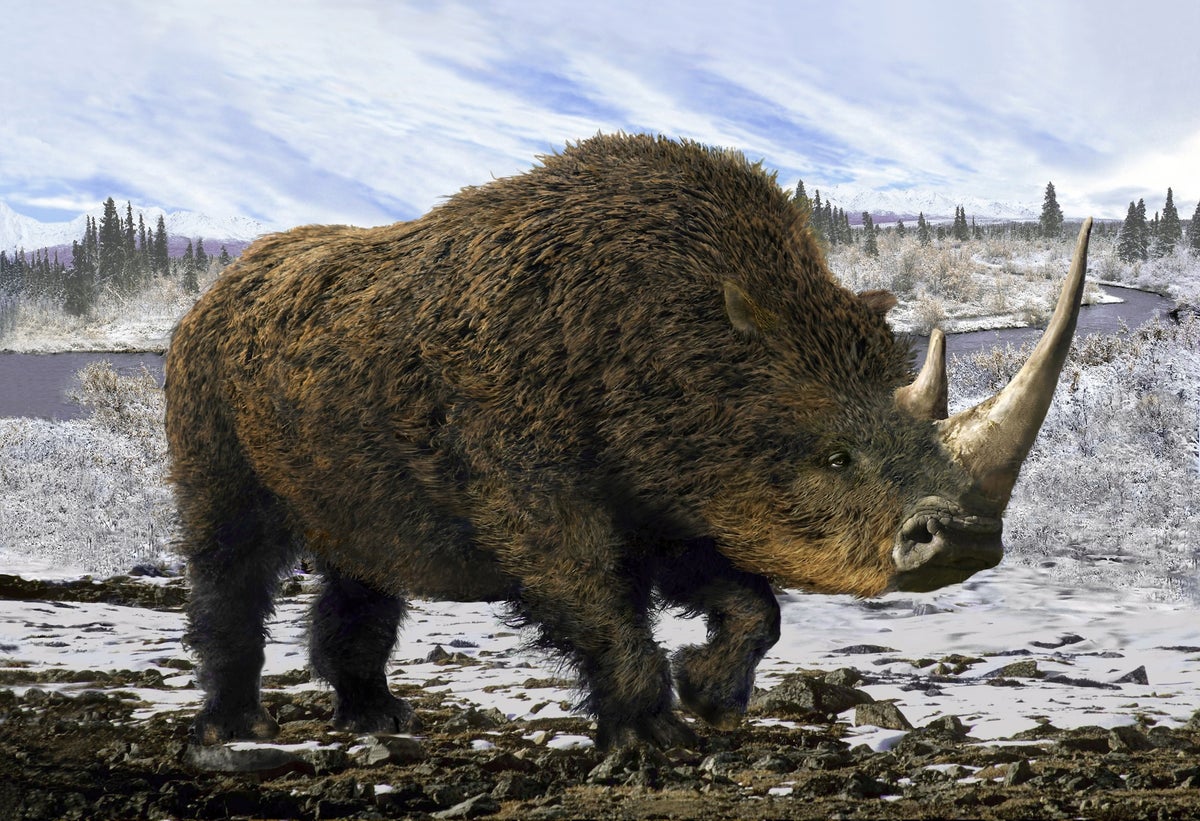
Scientists sequence a woolly rhino genome from a 14,400-year-old wolf's stomach

Woolly rhino effective population fell from about 15,600 to 1,600 between 114,000–63,000 years ago, then stabilized around 1,600 breeding individuals.
fromDefector
2 months ago

Let The Record Show That Otzi Fucked | Defector

Ötzi, the 5,000-something-year-old man found frozen in the Alps, did not have an easy go of it. He was probably murdered, shot from behind with an arrow that missed his vital organs and led to heavy bleeding and a prolonged and painful death. Days before his death, he fought another person in hand-to-hand combat and gashed his right hand. The more scientists have been able to study his body, the more ailments they have unveiled.
Science
History
fromMedievalists.net
2 months ago

New Medieval Books: Impossible Recovery - Medievalists.net

Julian of Norwich's illness and visions show how sickness and revelation intertwine, shaping personal recovery and the subsequent expression and theorization of experience.
Science
fromArs Technica
2 months ago

Research roundup: 6 cool stories we almost missed

Mineral fingerprinting and zircon analysis indicate humans transported Stonehenge stones from distant quarries, not glaciers.
History
fromMedievalists.net
2 months ago

Over 32,000 medieval manuscripts transcribed in four months using AI - Medievalists.net

Automated transcriptions of 32,763 medieval manuscripts were produced in four months using a standardized, machine-learning-trained corpus to enable large-scale searchable manuscript analysis.
History
fromMedievalists.net
2 months ago

10 Medieval Studies' Articles Published Last Month - Medievalists.net

Local populations in Anatolia used spolia to assert cultural continuity with the ancient and Byzantine past, challenging exclusive Western claims to that heritage.
Science
fromFuturism
2 months ago

Scientists Investigating 2,000-Year-Old Artifact That Appears to Be a Battery

A reconstructed Baghdad battery configuration could have produced about 1.4 volts, comparable to a modern AA battery, using a porous clay separator and an electrolyte.
History
fromNature
1 month ago

An ancient Roman game board's secrets are revealed - with AI's help

An ancient Roman object from the southern Netherlands most likely functioned as a blocking board game, indicating such games existed in Europe earlier than believed.
fromwww.scientificamerican.com
2 months ago

A foraging teenager was mauled by a bear 27,000 years ago, skeleton shows

We have little physical evidence of these interactions turning violent, however, because burials were rare and carnivores were more likely to finish off their prey. That's why the embellished burial site of a 15-year-old from 27,000 years ago is an important window into the past: the teenager's bones indicate he was mauled by a bear. The finding represents some of the first evidence of its kind.
Science
fromMedievalists.net
1 month ago

10 Medieval Studies' Articles Published Last Month - Medievalists.net

In this paper we investigate whether infant and childhood feeding practices influenced the imbalanced adult sex ratio reported in medieval Europe from historical and osteological evidence. First, we examine hypotheses for the observed imbalanced sex ratios in Europe and the evidence presented to support these hypotheses. We then use stable isotope analysis (δ13C and δ15N) of incremental dentine in 64 first molars from adults at three medieval sites (Aulla, Badia Pozzeveri, and Montescudaio) in north-western Tuscany (11th-15th c. CE).
History
Science
fromwww.nature.com
1 month ago

Author Correction: Inference and reconstruction of the heimdallarchaeial ancestry of eukaryotes

Eukaryotes likely emerged from a bona fide Asgard archaeal ancestor, forming a monophyletic group with Hodarchaeales; marker set corrected to NM54.
History
fromMedievalists.net
2 months ago

Reading in Byzantium: Literacy, Books, and a World of Texts - Medievalists.net

Byzantine reading was communal and performative, woven into religious, educational, and administrative life while preserving classical learning within a Christian intellectual framework.
Science
fromNature
2 months ago

A 'time capsule for cells' stores the secret experiences of their past

Engineered TimeVaults capture and store cellular mRNA to continuously record past transcriptional activity, enabling retrospective study of cellular history and responses.
History
fromMedievalists.net
1 month ago

Previously Unknown Medieval Chronicle Discovered - Medievalists.net

A previously unknown 8th-century Maronite chronicle (dated 712–13 CE) offers early Christian perspective on Arab-Islamic expansion and Late Antique religious-political change.
Science
fromNature
1 month ago

Daily briefing: Hunter-gatherers in Europe's 'water world' resisted the switch to farming for millennia

Rhine-Meuse delta populations retained substantial hunter-gatherer ancestry for millennia before steppe-related mixing spurred Bell Beaker expansion and large genetic turnovers.
History
fromMedievalists.net
2 months ago

Medieval manuscript lost in World War II returns to Poland - Medievalists.net

A 12th-century Cistercian manuscript looted during World War II has been returned from Yale University to the Republic of Poland.
Science
fromNature
2 months ago

A mysterious ancient fingerprint and a lemon-shaped planet - the stories you've missed

A 4,400-kilometre undersea fibre-optic cable can detect seismic waves by measuring light reflections from glass impurities along its length.
History
fromMedievalists.net
1 month ago

New Medieval Books: Ipomedon - Medievalists.net

A twelfth-century Anglo-French romance about Ipomedon, an incognito prince tested by adventures, tournaments, and ironic narration exploring chivalry, humour, and social values.
fromwww.scientificamerican.com
2 months ago

Meet the Ancestor That Connects Us to Neandertals and Denisovans

New research published today in Nature dates the boneschipped out from a cave called Grotte a Hominides and nearby it over decadesto about 773,000 years ago, during the era of the last common ancestor of Homo sapiens, Homo neanderthalensis and Denisovans (a group of humans that ranged across Asia and that does not have an agreed-upon species name). We can say that the shared ancestry between these three species is perhaps in Grotte a Hominides in Casablanca, says study co-author Abderrahim Mohib, a prehistorian at the National Institute of Archaeology and Heritage Sciences in Rabat, Morocco.
Science
Science
fromwww.scientificamerican.com
2 months ago

Life's evil twins, called mirror cells, could wipe us out if scientists don't stop them

Engineered mirror-image bacteria used to manufacture durable drugs can evade immune detection and cause uncontrollable infections and environmental spread.
fromNature
2 months ago

Daily briefing: The battle over the identity of the first animals

Wooden objects carrying the marks of carving and use could be the oldest wooden tools ever found. Researchers dated the artefacts, found in what is now Greece, to 430,000 years ago - and suggest they might have been made by early Neanderthals or their ancestors, Homo heidelbergensis. A separate study describes 480,000-old flint-knapping tools made from antler and elephant bone, from what is now the United Kingdom.
Science
[ Load more ]