#biotech-partners
#biotech-partners
[ follow ]
#ai #biotechnology #biotech #clinical-trials #openai #drug-discovery #anthropic #genomics #tbpn #synthetic-biology



fromwww.businessinsider.com
1 day agoMeta's CTO has some advice for college students wanting to work in tech: 'Constantly be building.'
You just have to immerse yourself in it. You should just constantly be building. That's what's going to give you the best chance of having the relevant skill set that is needed to make a difference in technology.
Education
Silicon Valley
fromFortune
2 days agoI helped build Uber and Discord and now my tools help fuel billion-dollar unicorns. But Silicon Valley is losing the AI race to itself | Fortune
Silicon Valley is falling behind in innovation due to slow adaptation to social demands and a focus on preserving existing business models.

from24/7 Wall St.
4 days ago5 Biotechs That Big Pharma Could Snap Up as Oncology M&A Heats Up
Incyte tops this list due to its rare combination of commercial scale, cash generation, and pipeline depth. The company posted FY2025 revenue of $5.14 billion, up 21.2% YoY, anchored by Jakafi generating $828.2 million in Q4 2025 alone (+7% YoY) and Opzelura delivering $207.3 million (+28% YoY). With $3.58 billion in cash and 14 pivotal clinical trials underway, Incyte offers an acquirer immediate revenue, margin expansion potential, and a deep oncology pipeline spanning KRASG12D, CDK2 inhibition, and mutCALR.
Venture
fromNature
3 days agoMix-and-match synthesis of 3D small molecules
Small organic molecules underpin modern life, from medicines and flavours to advanced materials. Much of this functional diversity comes from shape: modest changes in a molecule's 3D structure can completely change its properties.
Medicine
#biotechnology
Silicon Valley
fromSilicon Canals
6 days agoSilicon Valley startup backed by Tim Draper pitches growing brainless human clones for organ harvesting and brain transplants - Silicon Canals
A Silicon Valley startup is developing brainless cloned human bodies for organ sourcing and potential brain transplants.

fromBoston.com
5 days agoHow one family's bipolar disorder experience led to more than $1 billion for the Broad Institute in Cambridge
The Stanley Family Foundation announced another $280 million for the Stanley Center for Psychiatric Research at Broad Institute earlier this month, bringing its total contributions to the Massachusetts-based nonprofit over $1 billion.
Medicine
fromNature
6 days agoNow is the time for scientific societies to guide global research
Modern scientific societies are increasingly vulnerable due to their dependence on membership fees and journal subscriptions, which are being challenged by the rise of virtual networking and open-access publishing.
Science
Data science
fromwww.scientificamerican.com
3 weeks agoOpenAI and Ginkgo Bioworks show how AI can accelerate scientific discovery
OpenAI's GPT successfully designed and iterated on biology experiments autonomously, demonstrating AI capability in scientific hypothesis generation, experimental design, and result interpretation beyond summarization tasks.
Medicine
fromBusiness Matters
2 weeks agoUK biotech Ternary raises 3.6m to scale AI platform for next-generation drugs
Ternary Therapeutics secured £3.6 million in seed funding to develop an AI-driven platform for engineering molecular glues, a new class of medicines that bring proteins together to destroy disease-causing targets.
Artificial intelligence
fromFortune
2 weeks agoCould data from 100 million species help cure disease? One startup is betting on it | Fortune
Basecamp Research launches the Trillion Gene Atlas to map genetic diversity across 100 million species, aiming to expand biological knowledge 100-fold through AI-powered genomic data collection.
Science
fromScienceDaily
3 weeks agoA lab mistake at Cambridge reveals a powerful new way to modify drug molecules
Cambridge researchers developed an LED-powered photochemical technique that enables late-stage modification of complex drug molecules without toxic chemicals or metal catalysts, accelerating drug development.
Artificial intelligence
fromTNW | Artificial-Intelligence
3 weeks agoAnthropic commits $100M to Claude Partner Network
Anthropic launches a $100 million Claude Partner Network with major consulting firms to establish Claude as the default AI platform for enterprises while facing Pentagon legal challenges.
fromBoston.com
4 weeks ago'My scientific career is essentially over.' A brain drain imperils Massachusetts' biomedical future.
Over two-thirds said they recommend their students consider careers outside academia. The majority had delayed hiring in their labs, and one-third had laid off workers. More than one in six said they have lost researchers to institutions in other countries since Trump took office. Sixty-eight percent said funding cuts and federal policy changes had moderately or significantly reduced the scope of their work.
Science
fromFast Company
2 months agoMost scientific inventions don't leave the lab. This VC firm is changing that
But he'd been considering an idea for new technology-an autonomous, wind-powered cargo ship. Then, while on paternity leave in 2024, he discovered a free program that helps scientists and engineers launch businesses for the first time. Weeks after finishing the program, called 5050, Cymbalist had launched a startup called Clippership. The company's first ship is being built in the Netherlands this year. Without the accelerator, he says, the company likely wouldn't exist.
Startup companies
Startup companies
fromComputerWeekly.com
2 months agoInside the trend of tech 'spinouts' solving real-world problems | Computer Weekly
Hospitality operators built in-house data-management technology to solve fragmented, manual post-pandemic processes and then spun those solutions out as products for the sector.
fromNature
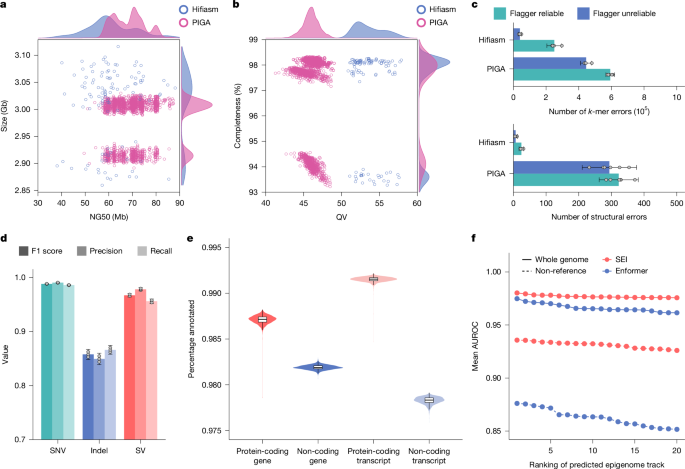
1 month agoAI tools can design genomes. Will they upend how life evolves?
Biology is undergoing a transformation. After centuries of studying life as it evolves naturally, researchers are now using a combination of computation and genome engineering to intervene, generating new proteins and even whole bacteria from scratch. The use of artificial-intelligence tools to design biological components, an approach known as generative biology, is set to turbocharge this area of research. Just last year, scientists used AI-assisted design to produce artificial genes that can be expressed in mammalian cells.
Science
OMG science
fromHarvard Gazette
2 months agoWhy did that cancer cell become drug-resistant? - Harvard Gazette
TimeVault records and stores cellular gene-expression history inside living cells, enabling retrieval of past gene-activity information to study differentiation, stress responses, adaptation, and drug resistance.
fromArs Technica
1 month agoHave we leapt into commercial genetic testing without understanding it?
Martschenko's argument is largely that genetic research and data have almost always been used thus far as a justification to further entrench extant social inequalities. But we know the solutions to many of the injustices in our world-trying to lift people out of poverty, for example-and we certainly don't need more genetic research to implement them. Trejo's point is largely that more information is generally better than less.
Science


fromNature
1 month agoMy 'detective' job as a competitive-intelligence consultant for pharma
We provide thought partnership. When a company is developing a drug, there's a lot of work involved, such as understanding the science, designing a study and generating good data. We come in and explain what the standard of care looks like today for their patient population, and what we think it will look like in five to eight years or whenever they plan to launch their therapy.
Medicine
Science
fromFast Company
2 months agoScientific breakthroughs are redefining what's possible with asteroids, cancer research, and neurotech
Cross-disciplinary collaborations and AI enable breakthroughs—asteroid deflection, immunotherapy mapping, and vestibular control—advancing capability to protect and improve human life.
Medicine
fromwww.theguardian.com
1 month agoPeople are turning themselves into lab rats': the injectable peptides craze sweeping the US
Grey-market injectable peptides are unapproved, widely used by biohackers despite lacking reliable safety data, quality control, and presenting potential health and legal risks.
[ Load more ]