#bond-yield
#bond-yield
[ follow ]
#federal-reserve #interest-rates #inflation #treasury-yields #monetary-policy #dividend-yield #dividend-stocks


fromnews.bitcoin.com
1 day agoHormuz Blockade Sends Japan's 10-Year Bond Yield to 25-Year High
The 10-year Japanese government bond yield reached 2.38% to 2.39% by early April 2026, topping levels not seen in over two decades and clearing the 2008 financial crisis peak by roughly 30 basis points.
World news



fromLondon Business News | Londonlovesbusiness.com
5 days agoUS dollar stable near recent highs - London Business News | Londonlovesbusiness.com
Escalating geopolitical risk continued to dominate global markets' concerns, with safe-haven demand keeping the dollar index anchored near a multi-week high.
World politics


#us-dollar
US Elections
fromLondon Business News | Londonlovesbusiness.com
3 days agoUS dollar rose amid a rebound in geopolitical concerns - London Business News | Londonlovesbusiness.com
The US dollar strengthened due to geopolitical fears and better-than-expected economic data, while uncertainty keeps market volatility high.

US Elections
fromLondon Business News | Londonlovesbusiness.com
3 days agoUS dollar rose amid a rebound in geopolitical concerns - London Business News | Londonlovesbusiness.com
The US dollar strengthened due to geopolitical fears and better-than-expected economic data, while uncertainty keeps market volatility high.
fromFortune
6 days agoBond yields are falling even as oil tops $102, showing that Wall Street fears recession more than inflation | Fortune
"Oil prices are higher again this morning, but Treasury yields are lower as the risks to economic growth begin to take precedence over the risks to inflation," Oxford Economics said in a note on Monday.
World news
from24/7 Wall St.
2 days agoHow Income Investors Are Using HYBL to Dodge Interest Rate Risk in 2026
HYBL attempts to solve the income problem by combining senior loans, high-yield corporate bonds, and debt tranches from U.S. collateralized loan obligations (CLOs). The result is a portfolio with lower duration and lower volatility compared to traditional high-yield funds, while still targeting high current income with monthly distributions.
Business
Retirement
fromLondon Business News | Londonlovesbusiness.com
2 days agoEvery time you borrow from a bank, you're paying more than you think - London Business News | Londonlovesbusiness.com
Opportunity cost in loans includes lost potential earnings from repayment dollars, not just the interest rate paid.

UK news
fromLondon Business News | Londonlovesbusiness.com
2 weeks agoUK rates: Savers, investors should act now in higher-for-longer era - London Business News | Londonlovesbusiness.com
UK interest rates will likely remain elevated longer than expected due to renewed inflation threats from energy prices and geopolitical tensions, requiring savers and investors to adjust their financial strategies accordingly.
from24/7 Wall St.
2 days agoThis ETF Pays Dividends Monthly and Yields 7.3%
The fund blends high yield corporate bonds, senior loans, and debt tranches of U.S. collateralized loan obligations (CLOs) into a single actively managed portfolio, aiming to deliver income that beats the broad bond market while keeping volatility lower than any single segment on its own.
Business

Venture
from24/7 Wall St.
3 weeks agoYieldMax's Buffett Tracking BRKC Pays 2.78% While Treasuries Yield 4.15%, and That Gap Is Hard to Ignore
BRKC uses synthetic covered calls to generate monthly distributions from Berkshire Hathaway exposure, but caps upside potential while offering 2.78% yield below the 4.15% Treasury rate, with underperformance versus BRK-B since launch.
fromFortune
2 weeks ago300 years of wars show they are 'always disaster times' for holders of government debt because of inflation and financial repression | Fortune
"The historical evidence reveals a striking pattern: government bonds have repeatedly generated substantial real losses during these extreme episodes. They have even underperformed equities and real estates which are traditionally regarded as risky assets."
World politics
US Elections
fromAxios
2 weeks agoFed keeps rates on hold, Powell says he will remain in place until successor confirmed
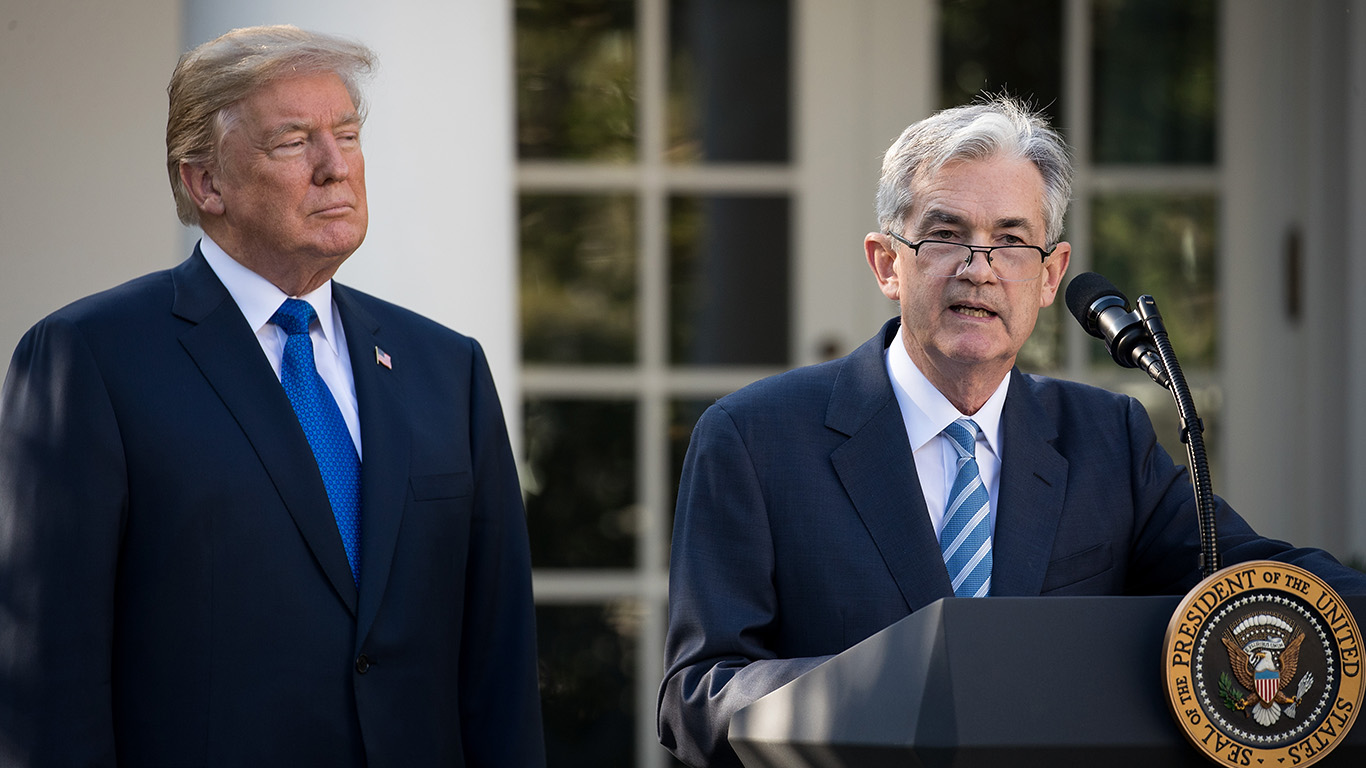
Powell commits to remaining at the Federal Reserve through a criminal investigation into his leadership, blocking his successor's confirmation and resisting Trump administration pressure to lower interest rates.
from24/7 Wall St.
2 days agoThe 13% Yield Trap? Why MORT's Dividend Hike Is Masking a NAV Slide
MORT holds shares in mortgage real estate investment trusts, companies that borrow at short-term rates and invest in mortgage-backed securities or originate real estate loans. The income MORT distributes comes from the dividends paid by the underlying mREITs to their shareholders.
Business
US politics
from24/7 Wall St.
3 weeks agoStagflation Fears Are Returning: Grab These 5 Safe High-Yield Dividend Kings Now
Stagflation risks are rising due to weak job growth, persistent inflation, and structural economic changes, requiring investors to consider defensive dividend stocks that historically perform well during such periods.
from24/7 Wall St.
3 days agoUSHY Yields 6.58% While VIX Sits at the 96.5th Percentile, A Risky Tradeoff
USHY seeks to track the investment results of the ICE BofA US High Yield Constrained Index, composed of U.S. dollar-denominated, high yield corporate bonds, providing broad exposure in a low-cost wrapper.
Business
from24/7 Wall St.
3 days agoJPMorgan's Short-Duration JPIE Earned 15.24% Since Inception While the Bond Market Cratered
JPMorgan Income ETF has delivered over 50 consecutive monthly distributions since its October 2021 inception, providing stability that is the entire point of the investment strategy.
Business
Miscellaneous
from24/7 Wall St.
1 month ago3 Clear Winners When Exploring High-Yield Savings Accounts
High yield savings accounts and money market funds offer FDIC-insured returns of 3.3% or higher with full liquidity and no early withdrawal penalties, making them attractive alternatives to traditional CDs in volatile markets.
Business intelligence
from24/7 Wall St.
1 month agoThe 4 ETFs To Buy Before The Fed Lowers Rates And Shoots Them Higher
The Federal Reserve paused rate cuts in January 2026 after three cuts, creating market uncertainty that underprices assets benefiting from future cuts, with four ETFs positioned to capitalize on eventual rate reductions.
fromLondon Business News | Londonlovesbusiness.com
2 weeks agoDollar retreats ahead of federal reserve interest rate decision - London Business News | Londonlovesbusiness.com
The dominant force in play remains the Middle East conflict, which has kept oil prices elevated and inflation expectations firm. Reports that Washington is assembling a coalition to escort vessels through the Strait of Hormuz could offer some relief for the oil market and could weigh on the dollar.
World news
from24/7 Wall St.
4 days agoWall Street Bullish on Americas Gold and Silver: BMO Sees Major Re-Rate Ahead
BMO believes Americas Gold has the expertise to execute its optimization strategy, particularly at the Galena Complex, and sees the company's approach increasing free cash flow generation as production grows organically.
Business
fromLondon Business News | Londonlovesbusiness.com
3 weeks agoDollar surges on geopolitical risks and rising yields
Crude oil breaking above the USD 100 threshold has revived inflation concerns, pushing US Treasury yields higher across the curve. However, Friday's labour market report revealed a significant deterioration in employment conditions, with the economy losing 92,000 jobs in February, its largest contraction in several months.
World news

from24/7 Wall St.
1 month agoInterest Rates Are Heading Down - These 3 Stocks Win Big When They Do
In my view, interest rates are more likely than not going to head lower over the course of 2026 and into 2027. I'm not saying we're due for a pandemic-like selloff, but I do think that weakness in the labor market is likely more protracted than the government data suggest. As such, I do think the makeup of the Federal Reserve, and which way many of its presidents and voting members lean (toward providing support for the labor market over battling inflation) could lead to much faster rate cuts than many think.
Retirement
Retirement
from24/7 Wall St.
1 month agoThere Is A Corporate Bond ETF Retirees Are Using to Replace CD Income in 2026
CRED is a REIT equity fund, not a bond fund, generating income from real estate dividends rather than corporate debt interest, making it unsuitable as a direct bond substitute for retirees seeking stability.
Business
fromSilicon Canals
2 weeks agoGold crossed $5,300 the same week three central banks quietly dumped $47B in US Treasuries. That's not coincidence - it's coordination - Silicon Canals
Gold's price surge is driven by strategic positioning of central banks, not just fear, as they reduce US Treasury holdings amid geopolitical tensions.
Business
fromLondon Business News | Londonlovesbusiness.com
2 weeks agoUS dollar stable after Fed decision and stronger yields - London Business News | Londonlovesbusiness.com
The dollar strengthens near 100 as the Fed maintains a cautious stance, while Treasury yields rise on reduced rate cut expectations amid higher inflation projections and Middle East tensions driving oil prices up.
Business
fromLondon Business News | Londonlovesbusiness.com
2 weeks agoWhere is the US Dollar Index heading amid rising bond yields? - London Business News | Londonlovesbusiness.com
The US Dollar Index strengthens due to Federal Reserve's hawkish stance, elevated Treasury yields, and geopolitical tensions, with limited rate cuts expected through 2027.
Business
fromwww.housingwire.com
2 weeks agoFed holds rates, officials signal wait and see on inflation risks
Oil price resolution timing in the Strait of Hormuz will determine whether inflation stays elevated, delaying Fed rate cuts, or eases, allowing Treasury yields and mortgage rates to decline toward early-year levels.
US politics
fromFortune
2 months agoAs U.S. debt soars past $38 trillion, the flood of corporate bonds is a growing threat to the Treasury supply | Fortune
Rising corporate bond issuance from hyperscalers and other firms, combined with large Treasury supply, risks pushing interest rates and mortgage spreads higher.
US news
fromLondon Business News | Londonlovesbusiness.com
2 months agoDow Jones pulls back sharply as yields rise and tariff risks return - London Business News | Londonlovesbusiness.com
Dow Jones' sharp sell-off reflects systemic re-pricing driven by rising Treasury yields, higher-for-longer rate expectations, and an earnings-season market focus shift.
Business
fromFortune
2 weeks agoU.S. debt is competing with a record supply of corporate bonds, which is pushing up the cost of federal borrowing just as war spending piles up | Fortune
Record corporate bond issuance driven by AI capital expenditure and geopolitical factors is increasing Treasury yields and raising borrowing costs for the federal government.
Business
fromFortune
2 weeks agoA 'debt spiral,' before a fiscal crisis: interest on the national debt will be growing faster than GDP in just 5 years, think tank warns | Fortune
By 2031, U.S. federal debt interest rates will exceed economic growth rates, triggering a self-reinforcing debt spiral where deficits cause debt to grow indefinitely.
from24/7 Wall St.
2 months agoWhat I'm Watching Before Buying JP Morgan's Active Bond ETF
The JPMorgan Active Bond ETF (NYSEARCA:JBND) charges a premium for active management, but has attracted $5.4 billion since its October 2023 launch by delivering outperformance when markets get volatile. The real test ahead is whether managers can continue generating alpha as corporate bond spreads compress to levels not seen in two decades. The Spread Squeeze That Could Define 2026 Corporate bond spreads have compressed to their tightest levels in two decades, creating a challenging environment for active managers.
Business
from24/7 Wall St.
2 months agoRetirees Chasing 5.3% Yields Need to Know: JAAA's Dividend Safety Depends Entirely on Fed Rate Moves
JAAA invests exclusively in AAA-rated tranches of collateralized loan obligations. CLOs are structured securities backed by pools of leveraged loans to corporations. The AAA-rated senior tranches sit at the top of the payment waterfall, receiving interest payments first and enjoying the strongest credit protection. These loans carry floating interest rates tied to benchmark rates, meaning the fund's income rises and falls with prevailing rates. As borrowers pay interest, that income flows through to JAAA shareholders as monthly distributions.
Business
Business
fromFortune
1 month agoSomething weird is going on with gold and interest rates, and a top Wall Street analyst sees inflation risks rewriting market logic | Fortune
The historical inverse correlation between gold prices and real interest rates has broken down since 2022, indicating investor anxiety and demand for alternative assets.
fromLondon Business News | Londonlovesbusiness.com
2 months agoDollar struggle and monetary policy shape the next phase - London Business News | Londonlovesbusiness.com
The resilience of gold above $4,800 per ounce at this stage reflects a delicate and complex balance between traditional supporting factors and emerging pressures-one that cannot be superficially interpreted or reduced to the movement of the dollar alone. It is true that the U.S. dollar's retreat from its recent peaks, after failing to sustain its recovery momentum from a four-year low, provided gold with a short-term breather and attracted some buyers.
Business
[ Load more ]