#carole-monnet
#carole-monnet
[ follow ]
fromHyperallergic
2 days agoThe Art World Is a Joke
Kamrooz Aram is everywhere this year, from Mumbai Art Week to the Whitney Biennial, and critic Aruna D'Souza is grateful. She pens a beautiful meditation on his work, reading his abstract paintings as not simply a denunciation of Western modernism nor a reassertion of Islamic visual motifs, but something else entirely - something gestural, exuberant, riotous, and incomparably his own.
Arts
fromBBC
2 days agoMore than the Score - David Bellion gets creative in Paris - BBC Sounds
David Bellion spent over a decade in top-flight football, playing for clubs like Manchester United and Sunderland, before becoming Red Star FC's creative director, focusing on brand development and cultural connections.
English Premier League
fromItsnicethat
2 days agoBravas Graphix are the rave connoisseurs behind some of Brussels' most explosive posters
"We're constantly striving to strike a balance between work that respects academic rules of composition, established visual codes and good readability, with something more spontaneous, adventurous, playful, even naive."
Typography
Design
fromYanko Design - Modern Industrial Design News
1 week agoThis walkable steel sculpture turns geometric chaos into an experience - Yanko Design
Five Fragmented Cubes is an interactive sculpture designed for immersion, challenging traditional viewing by inviting people to enter and explore its structure.

Berlin music
fromwww.theguardian.com
2 weeks agoEmpreintes review Jess and Morgs go off-piste at Paris Opera and Marcos Morau sets the chandelier swinging
Arena explores competition and conformity in digital culture through innovative choreography and live camerawork at the Palais Garnier, examining how social media surveillance affects individual identity.

fromBOOOOOOOM!
3 days ago"Idling" by Artist Greta Kresse
"These paintings merge the landscape and the intimacy of windows through the framing of the car, bridging the two realms I've typically explored separately. The car becomes a meditation on transition, on existing simultaneously here and elsewhere."
Arts
Design
fromdesignboom | architecture & design magazine
4 weeks agomarie adam-leenaerdt invites guests to build the runway with modular stools in paris
Marie Adam-Leenaerdt's FW26 show transforms the fashion presentation into a collaborative act where guests physically construct the runway using branded folding stools, embedding care and imperfection into the spatial experience.
fromThe Art Newspaper - International art news and events
1 month agoThe year of Andre Malraux: France salutes its pioneering intellectual with exhibitions and more
At the official launch last November, the current culture minister Rachida Dati described the imperative behind the programme as not just celebrating an uncommon visionary but the "burning relevance" of his legacy: "a commitment to continuing to nurture this demanding idea of what culture is".
France news
Paris food
fromdesignboom | architecture & design magazine
2 weeks agodreamlike aquarium chamber of 'kissing fish' at thaddaeus ropac paris invites visitors inside it
Ariana Papademetropoulos' Glass Slipper exhibition merges painting, sculpture, and installation around an inhabitable aquarium with kissing fish, ambient sound, and perceptual disorientation.
fromFrenchly
1 month agoThe Best Art Apps for Exploring France - Frenchly
CultureClic is one of the most comprehensive French art apps available. Designed as a mobile-first discovery tool, it maps out more than 1,350 museums across France and highlights hundreds of geolocated artworks, photographs, and historical engravings. The app is particularly strong in Paris but also features content in cities like Bordeaux, Lyon, Marseille, and Avignon. What sets CultureClic apart is its use of augmented reality, allowing users to visualize artworks and historical documents in context.
France news
Berlin music
fromKALTBLUT Magazine
1 month agoUnveil the Pulse of Memory: Filipp Jenikae's Visual Symphony at Galerie Sara Lily Perez - %
Filipp Jenikäe's exhibition explores how urban spectacle, collective memory, and personal experience merge through dynamic paintings of cities, crowds, and athletic figures.
Paris food
fromThe Art Newspaper - International art news and events
3 weeks agoTwo Renoir exhibitions at Musee d'Orsay explore the joy of human connection
Renoir was a resourceful, experimental artist whose early work capturing modern life established him as a founding Impressionist painter, though critics often dismiss his paintings as superficial without truly examining them.
Arts
fromdesignboom | architecture & design magazine
2 weeks agopaola pivi imagines a living cosmos grown from lemon trees at perrotin paris exhibition
Paola Pivi's Live Again exhibition uses living lemon tree branches and playful language to create regenerative art that embeds ecological cycles and political critique into sculptural forms.
Paris food
fromWWD
3 weeks agoParisian Designer Pauline Leprince to Make NYC Debut
French designer Pauline Leprince combines futuristic aesthetics with historical codes, creating radical minimalist pieces that explore tension between individual and society through sharp geometry and materials like burnt metal and glass.
fromArtnet News
2 weeks agoVeronica Fernandez Builds an Uneasy Monument to Childhood Imagination
There's this push and pull between feeling unease and discomfort, the nature of the spaces, and why they feel uncomfortable. But there is also tenderness and warmth, people adapting to these spaces and finding ways to make them comfortable.
Arts
fromAnOther
3 weeks agoOlivier Saillard Presents a Poetic History of Everyday Fashion
The question of how fashion is archived - what enters the museum; what is deemed worthy of preservation; whose clothes are considered culturally significant enough to outlast the bodies that wore them - has long sat uneasily at the centre of fashion history itself. Institutions have tended to answer it, or ignore it, in much the same way: couture gowns under glass, luxury garments mounted on conservation-grade mannequins in blockbuster exhibitions - an implicit hierarchy of the designed over the worn, the authored over the anonymous.
Paris food
fromArtnet News
3 weeks agoMarina Abramovic Is the Unlikely Star of the New Balloon Museum
As a child, I imagined a place far behind our own sky. A planet with its own weather, its own atmosphere, its own logic entirely. It was my own version of science fiction. How did it feel on this planet? Was it snowy, windy, or could you sense the first green breath of spring-I called it Planet Z.
Arts

fromBerlin Art Link
2 months agoStudio Visit with Myriam Jacob-Allard | Berlin Art Link
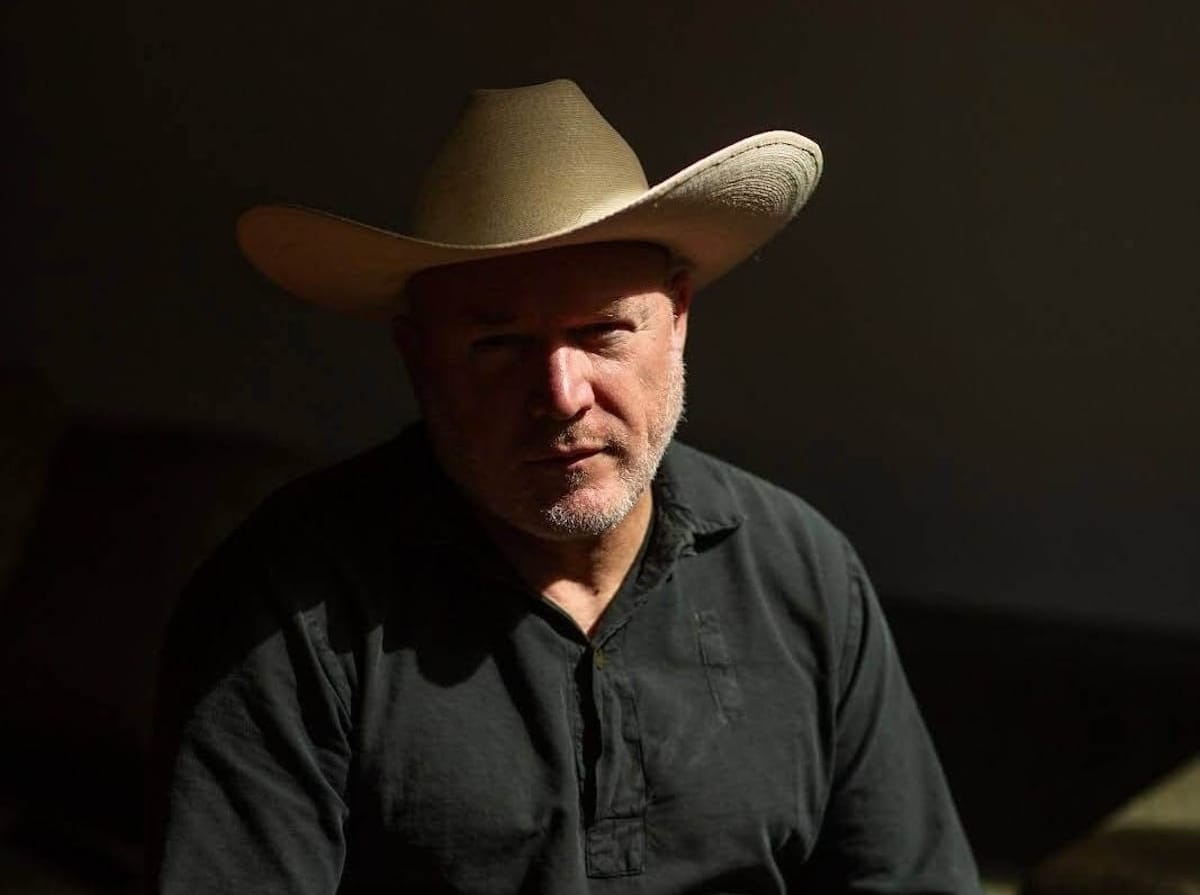
Myriam Jacob-Allard appears through a heavy door and greets us with an easy warmth, scooping us up and welcoming us into her world. We are immediately absorbed by an unexpected color-drenched stairwell. Every surface is saturated in a dense, glowing yellow that reads unmistakably as egg yolk, insulating us from the outside in as we make our ascent. We turn into a long hallway whose fragrant freshly waxed floor catches the light, reflecting it back upward so that the corridor seems to glow beneath our feet.
Photography
fromArchDaily
2 months agoRethinking Museums: A Conversation with Beatrice Grenier on Architecture as Cultural Policy
As cultural institutions continue to proliferate worldwide in this digital era, the museum itself appears increasingly in need of redefinition. Rather than offering a single model or solution, Architecture for Culture: Rethinking Museums, written by architectural historian and curator Béatrice Grenier, argues for a more contextual and plural understanding of what a museum can be: an institution shaped by its environment, its public, and the specific cultural questions it seeks to address.
Remodel
fromHyperallergic
3 weeks agoEmbracing Friction in the Art World
On Franklin Street in Brooklyn's Greenpoint neighborhood, one non-commercial gallery fosters 'a small, stubbornly human space for friction.' Friction—the ubiquitous buzzword that captures the simultaneous delight and discomfort of doing things the slow way—is at the heart of artists Pap Souleye Fall and Char Jeré's current show at Subtitled NYC. It also reflects the overall spirit of this little exhibition space and of a burgeoning movement to reject our culture of optimization in favor of a bumpier, more intimate, less alienating experience.
Arts
fromwww.thelocal.fr
2 months ago15 art exhibitions to look forward to in France in 2026
Photographer Henri Cartier-Bresson (19082004) travelled all over the world and extensively throughout Europe. After producing numerous series of photographs for magazines in Germany, Spain, Italy, Greece, Switzerland and France, Cartier-Bresson wanted to bring them together in a book and in 1955, he published Les Europeens (The Europeans). This book of photographs aims to show what makes each of the peoples of this geographical area unique while highlighting their similarities. This exhibition brings together some of the most important photographs from the book.
Photography
Arts
fromKALTBLUT Magazine
3 weeks agoCelebrate the Unconventional: Discover Fernando Carpaneda's Solo Exhibition at the Arkell Museum - KALTBLUT Magazine
Fernando Carpaneda's solo exhibition at the Arkell Museum showcases expressive portraiture celebrating LGBTQIA+ narratives and everyday urban life through vibrant acrylic paintings.
Paris food
fromwww.theguardian.com
1 month agoAn ugly year for the Louvre: where does the world's biggest museum go from here?
Laurence des Cars resigned as Louvre president after a year marked by staff strikes, infrastructure crises, a major heist, and ongoing operational challenges despite a €1 billion renovation plan.
fromThe Art Newspaper - International art news and events
1 month agoParis to host first museum devoted to Alberto Giacometti with more than 10,000 artworks and objects
The foundation's collection is exceptionally large, encompassing more than 10,000 items-including thousands of drawings, over 400 sculptures, 100 paintings, a whole collection of decorative objets d'art, prints, everything that was in the studio, all the archives. Most of the collection has never been exhibited.
Paris food
Photography
fromKALTBLUT Magazine
2 months agoCamille Schaeffer: A Reflective Visual Archive - KALTBLUT Magazine
Camille Schaeffer creates sensory, reflection-based installations and collaborative film and photography that explore perception, embodiment, and the transformation of space through movement and materials.
Arts
fromArtnet News
4 weeks agoAn Octopus in the Front Row: Artist Cosima von Bonin Invades Loewe's Runway | Artnet News
Loewe's Paris Fashion Week show collaborated with artist Cosima von Bonin to create a whimsical collection featuring plush animals, inflatable parkas, and zoomorphic accessories that blended fashion with artistic creative play.
Arts
fromArtnet News
4 weeks agoThe Whitney Biennial's Hottest New Artist Is Also Its Oldest | Artnet News
92-year-old Carmen De Monteflores emerges as a breakout star at the Whitney Biennial, exhibiting large, brightly colored shaped canvases after decades in storage, with her daughter Andrea Fraser's advocacy helping secure her inclusion.

fromHyperallergic
1 month agoMagdalena Abakanowicz Sculpted the Collective Body
The organicity of the human body we're born inside of is encoded in us. This concept of our organic nature as the source of elemental knowledge, at once direct and mysterious, permeates the textural abstractions exhibited in her survey Magdalena Abakanowicz: The Thread of Existence at Musée Bourdelle.
Arts
Arts
fromwww.theguardian.com
1 month agoThe Guardian view on an explosion of solo exhibitions by women: move over old masters | Editorial
Major UK art institutions are finally increasing exhibitions of female artists after decades of severe underrepresentation, marking a significant shift from historical gender disparities in museum programming.
fromThe Art Newspaper - International art news and events
1 month agoThe stories we tell ourselves: Sophie Calle at the Orange County Museum of Art
We tell ourselves stories in order to live. For more than 50 years, the French artist Sophie Calle has worked in the space between facts and their retelling, demonstrating how the narratives we share about ourselves are always partial, constructed. Working across photography, text, film and installation, she reveals how fantasy and projection intervene in our best attempts to see and be seen.
Arts
fromThe Good Life France
1 month agoStreet Art rules in France - The Good Life France
If you've walked around any of France's cosmopolitan cities in recent years, you're sure to have come across some stunning murals. Painted onto the side of buildings, in hidden corners, and just about anywhere an artist can paint, street art is booming. We're not talking old-school graffiti here, hastily sprayed names on walls, and anti-social stuff like that. Today's street art is commissioned by city or town councils and created by prominent street artists from around the globe says Suzanne Pearson.
Arts
fromBerlin Art Link
1 month agoAn Interview with Monia Ben Hamouda | Berlin Art Link
Monia Ben Hamouda's work weaves calligraphy, material transformation and ancestral memory into sculptures and installations that oscillate between language and form. In conversation, we traced the conceptual and sensory threads of her practice, unfolding through key works that reflect on heritage, embodiment and translation. Using materials such as iron, stone and pigment, her installations become sites where history is not only referenced but physically felt.
Arts

fromHyperallergic
1 month agoMitchell Johnson's Personal Color at Galerie Mercier in Paris
Influenced by the works of Hopper and Hans Hofmann, Mitchell Johnson: Personal Color (Selected Small Paintings 1988-2026) is shaped by decades of visits to Paris and Cape Cod, two places that have anchored and evolved Johnson's painting over the course of his career. Hofmann, through his teaching, transported the aesthetics and concerns of the School of Paris across the Atlantic, eventually creating a group atelier curriculum that would expand the breadth of American Modernism through his theory of push and pull.
Arts
fromDocumentjournal
1 month agoAn evening with Mickalene Thomas: Document marks her historic Grand Palais solo show
The exhibition centers the visibility, agency, and radical joy of Black women, celebrating love as a generative force-of liberation, self-definition, and community. Through richly textured compositions and her iconic rhinestone-studded surfaces, Thomas depicts her subjects-friends, family, lovers, and cultural figures-with a confidence and sensuality that reclaims spaces where Black women have been historically overlooked or misrepresented. With this exhibition, she becomes the first African-American artist to receive a major solo presentation at the Grand Palais.
Arts

Arts
fromwww.amny.com
1 month agoKing Paris shows the sovereignty of light through his contemporary masks on display in Manhattan | amNewYork
Embellished masks and reflective surfaces in West African traditions use radiance and material brilliance to convey authority, spiritual meaning, and social order through performance.
Arts
fromHi-Fructose Magazine - The New Contemporary Art Magazine
1 month agoAccepting Their Strangeness: the Sculptures of Clementine Bal - Hi-Fructose Magazine
Bal's sculptures blend personal life influences, playful open-eyed characters, and layered materials to portray intimate, universal experiences of rest, parenthood, and whimsical strangeness.
Arts
fromdesignboom | architecture & design magazine
2 months agoconstellation of glass and dancing tower shape mona hatoum's fondazione prada exhibition
Mona Hatoum’s Cisterna installation at Fondazione Prada uses large-scale glass and metal works to explore interconnectedness, entrapment, and borderless spatial experience.
Arts
fromdesignyoutrust.com
2 months agoFabien Merelle Masters Ink And Watercolor To Craft Pyjama-Clad Figures Teetering On Absurd Family Edges
A diverse collection of contemporary and vintage visual art, illustrations, posters, and provocative campaigns spanning pop culture, horror, urban, and political themes.
fromColossal
2 months agoRegina Silveira Pieces Together an Evolving Narrative of Latin America
Regina Silveira has spent the better part of three decades considering the relationship between media and meaning, particularly as it relates to Latin America. First presented in 1997, "To Be Continued..." features 100 black-and-white reproductions of photos, newspaper clippings, propaganda, advertisements, and more. Silveira nests each image into an oversized puzzle piece, which cuts off faces and scenes to leave fragments of pop culture icons, flora and fauna, and even the occasional mugshot spliced next to one another.
Arts
fromwww.amny.com
2 months agoDreams full of voltage: Karina Lumiere's abstract works electrify the art scene amNewYork
Karina Lumiere paints like someone who trusts color more than language. Her work does not whisper its intentions. It glows, pulses, seduces. This is abstraction born not from theory, but from devotiondevotion to intuition, to sensation, to the unapologetic power of hue as an emotional instrument. Her path to abstract expressionism was never academic. It unfolded in solitude, shaped by meditation and spiritual practice, where listening became more important than learning and presence eclipsed instruction.
Arts


Arts
fromwww.theguardian.com
1 month agoIt's about hurling yourself into the unknown': Charmaine Watkiss on turning a UK museum upside down
Charmaine Watkiss connects Caribbean, African and UK botanical knowledge and diaspora histories through portraits and sculpture emphasizing medicinal plants and ancestral herbal traditions.
[ Load more ]