#character-driven
#character-driven
[ follow ]



Mental health
fromSilicon Canals
8 hours agoYou know a woman has lost her joy in life when she describes her days accurately and without feeling - when the words are all correct and the tone is completely flat and the account of her own life sounds like something being reported rather than lived, and she doesn't notice the flatness because she has been inside it long enough that it just sounds like how things are - Silicon Canals
Emotional flatness can creep in, making life feel like a series of tasks rather than meaningful experiences.
Psychology
fromSilicon Canals
2 days agoThe hardest friendships to maintain aren't the ones with conflict. They're the ones where both people are growing but in different directions, and neither person is wrong, and there's no argument to have, just a slow widening that nobody caused and nobody can fix. - Silicon Canals
Friendships often end due to gradual emotional distance rather than specific events, highlighting the importance of recognizing blameless drift.
Mindfulness
fromSilicon Canals
3 days agoI'm 37 and I realized I wasn't actually a good person the day my wife said "you're kind to strangers and cruel to the people closest to you" - and the worst part wasn't the accusation, it was that I couldn't argue because I'd been using up all my patience on people who didn't matter and coming home empty - Silicon Canals
Kindness should be abundant at home, not rationed for public interactions, to foster authentic connections with loved ones.
Books
fromThe Beer Thrillers - Central PA beer enthusiasts and beer bloggers. Homebrewers, brewery workers, and all around beer lovers.
2 weeks agoBook Review: Shock Induction (Chuck Palahniuk) - The Beer Thrillers
Shock Induction explores dark themes of high school disappearances and the exploitation of youth by billionaires through a satirical lens.
#midlife-crisis
Mental health
fromSilicon Canals
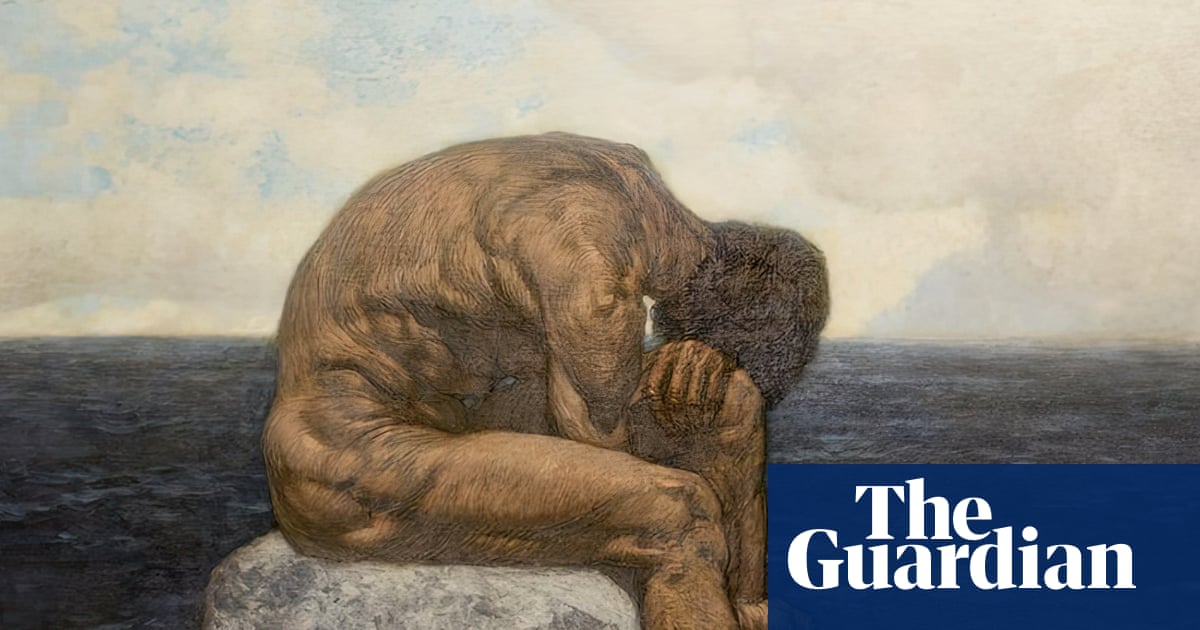
6 days agoPsychology says the midlife crisis isn't about wanting something new - it's the moment you finally hear your own voice after decades of executing someone else's blueprint and mistake the unfamiliarity for chaos - Silicon Canals
Midlife crisis often reflects an identity confrontation rather than mere loss, revealing buried personal preferences and voices.
Psychology
fromSilicon Canals
3 days agoThere's a particular kind of strength that belongs to people who rebuilt their entire personality after 40 - not because something broke them, but because they finally had enough distance from their childhood to see what was never theirs to carry - Silicon Canals
Personality changes after forty often reflect a deeper honesty about one's true self rather than a crisis or breakdown.
Artificial intelligence
fromThe Atlantic
2 weeks agoThe Human Skill That Eludes AI
Generative AI has paradoxically declined in creative writing quality since GPT-2, despite advancing in technical capabilities, with current models producing formulaic, flawed prose despite access to centuries of literature.

Writing
fromwww.theguardian.com
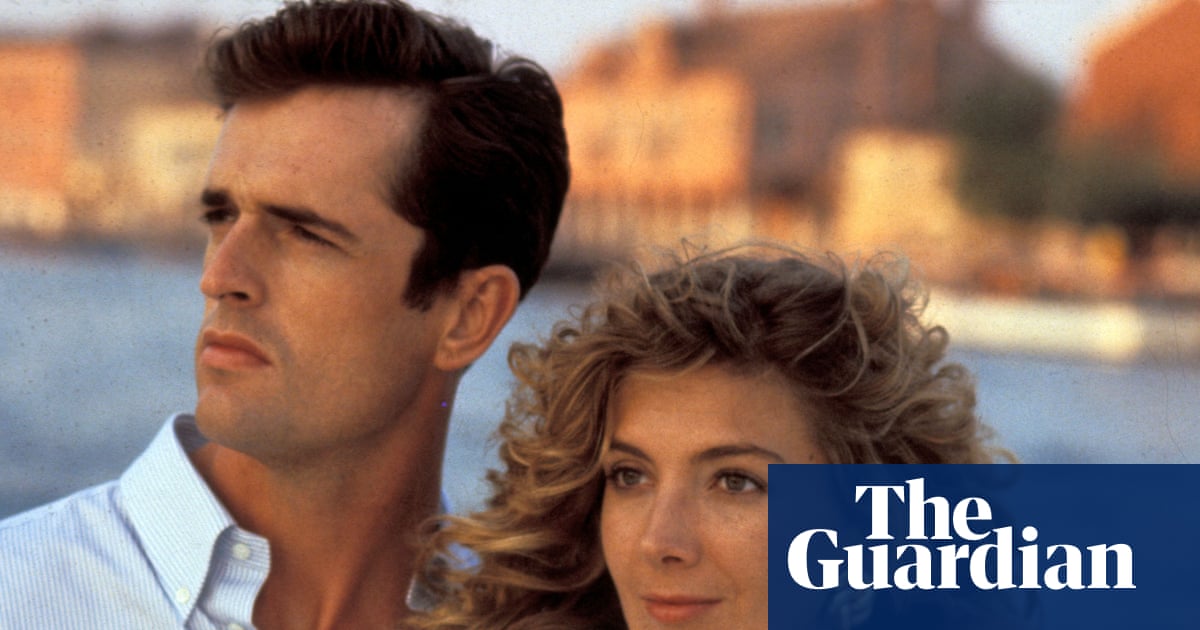
3 weeks agoLight and Thread by Han Kang review a tantalising book of reflections
Han Kang's Nobel Prize-winning work explores historical trauma and human fragility through poetic prose that balances outward examination of events like the Gwangju massacre with inward psychological portrayal, leaving interpretive gaps for readers.
Boston
fromSilicon Canals
1 month agoI was the sibling who left and my brother was the sibling who stayed - and 30 years later we finally had the conversation about which one of us actually escaped and the answer wasn't what either of us expected - Silicon Canals
The narratives we construct about life choices—leaving or staying—often obscure the validity and value of paths different from our own.
fromBustle
4 weeks agoExclusive: Leo Woodwall Breaks Down The *Very* Twisted Ending Of 'Vladimir'
There is an allure about him. There's a warmth to him, and something new about him, but also it's the timing. The backlash of her open relationship with John is really starting to take on a new shape, and I think he's a sort of exciting escape from it too.
Television
fromPsychology Today
1 month agoThe Goodness Test: Dunk, Baelor, and Why Heroes Still Matter
For decades, we smallfolk have been told that goodness is naïve, that moral grayness is sophistication, and cynicism is cleverness. Turns out, we do not want it. Most of us can only take an endless string of villains, liars, and normalized nastiness for so long. Our battered nervous systems want a hero to root for who would not lie to us or betray us.
Miscellaneous
Music
fromwww.npr.org
1 month agoWhy music has become such a big part of the romance novel reading experience
Romance novel readers increasingly use pop music playlists to enhance their reading experiences, creating a community that bridges book fandom and music fandom, exemplified by Charli XCX's Wuthering Heights album.
Philosophy
fromBig Think
1 month agoThe 3 colors: What folktales teach about how to grow wise
European folktales use red, black, and white colors to represent three modes of being that map human maturation: red as ambition and life force, black as introspection and shadow, and white as wisdom and transcendence.
fromMedium
4 weeks agoThings that don't matter when you write
To deny one's own experiences is to put a lie into the lips of one's own life. It is no less than a denial of the soul. The concept I stick to - my core principle - is simple: I write in plain English, and only when I actually have something to say.
Writing
Books
fromwww.npr.org
2 weeks agoAuthor Luke Kennard talks about his novel, 'Black Bag'
Luke Kennard's novel 'Black Bag' fictionalizes a 1967 psychology experiment where a silent, bagged actor in a classroom gradually becomes liked by students through repeated exposure, exploring how familiarity transforms perception.
Film
fromwww.theguardian.com
3 weeks agoScarlet review Mamoru Hosoda turns Hamlet into tale of prowling knights and deep nothingness'
Mamoru Hosoda's anime adaptation of Hamlet, Scarlet, features stunning visuals but suffers from incoherent storytelling, arbitrary world-building, and heavy-handed philosophical messaging that undermines its narrative impact.
Books
fromThe New Yorker
2 weeks agoBriefly Noted Book Reviews
Two literary works explore complex themes through innovative narrative techniques: Morrison's essays examine challenging craft elements in Toni Morrison's writing, while Nganang's memoir uses the scale as a metaphor connecting personal experience to colonial history.
fromPsychology Today
1 month agoBurn Your Romance Novels!
The short answer is yes, unless you take fiction for what it is-fiction. When you long for something you don't have, it can lead to dissatisfaction with what you DO have. Romantic fiction has witty, heartfelt dialogue, buckets of romantic gestures, and protagonists who have a preternatural ability to read each other's minds. It's easy to forget it is not real. This can set up unrealistic expectations both conscious and unconscious.
Relationships
Books
fromwww.theguardian.com
3 weeks agoDaisy Johnson: I wasn't a fan of David Szalay, but Flesh is a masterpiece'
Reading shapes identity across life stages, from childhood memories through formative teenage years to adult perspectives, with specific books creating lasting connections and inspiring creative ambitions.
fromPortland Mercury
3 weeks agoKevin Sampsell's New Novel Looks at the World Through a Baby in the Night
It was like my brain really wanted to but my mouth didn't know how yet or maybe just didn't try hard enough," Tony says of learning how to talk. But as the first-person narrator, Tony is well-suited to describe his world in fresh ways. He can't lean on stereotypes; he can only learn about the world as he perceives it, tabula rasa.
Books
Video games
fromwww.theguardian.com
2 months agoIt's a loving mockery, because it's also who I am': the making of gaming's most pathetic character
Baby Steps uses deliberate frustration and an inept, awkward protagonist to transform player irritation into empathy, identification, and unexpected affection.
fromHarvard Gazette
1 month agoMoved by what's missing in Homer's 'Harrow' - Harvard Gazette
At first sight, Winslow Homer's " The Brush Harrow," which depicts two young boys, a horse, and a harrow against an arid landscape, evokes a feeling of somber isolation - but it's hard to pinpoint why. During a talk by curator Horace D. Ballard at the Harvard Art Museums on Jan. 29, visitors learned that Homer painted the scene in 1865, as the Civil War was ending, making the emotional underpinnings of the work clearer.
Arts
Books
fromwww.theguardian.com
1 month agoThey by Helle Helle review a novel to make the reader slow down and take notice
A Danish novel explores the deepening bond between a teenage daughter and terminally ill mother through minimalist prose that captures unspoken emotional intimacy and life's quiet, defining moments.
fromInverse
2 months agoThe Best Character of 2026 Is Totally Unexpected
Trails Beyond the Horizon's new character, Ulrika, is like staring into the abyss of a broken TikTok algorithm, and while my knee-jerk reaction might have been shock and even a little disdain, over the next 100 hours, I grew to find the character's bit surprisingly genuine and, admittedly, hilarious. What first felt like a gimmick grew to become one of my absolute favorite parts of the game, enhancing the already distinct personality of the Trails games.
Video games
fromSlate Magazine
2 months agoHelp! I Want to Escape a Chaotic Friendship. But I'm Trapped By a Dark Chapter From Our Past.
"Sara" is a close friend who suffers from significant mental health challenges. She is often sullen, easily offended, and quick to anger. Recently, she had a severe meltdown (which was never discussed), cut me off completely, and didn't speak to me for months. We patched that one up somehow, but her behavior is frequently challenging to the point where I question whether our friendship is worth it.
Relationships
fromJezebel
1 month agoTurns Out, When You Write a Novel About Killing a Politician, People Tell You How They'd Do It
When the people who are after me get here, they'll arrest me and put me on trial, or they'll disappear me to some black site. Or they won't bother with any of that and they'll just kill me. All of these seem like plausible outcomes, but in the novel's prologue, the narrator seems much more confident of her success: I am a fucking genius, a gorgeous fucking genius, and the only thing left to do is sit down and write.
Books
Books
fromThe Atlantic
1 month agoWhen Did Literature Get Less Dirty?
Philip Roth's Zuckerman Unbound functioned as a response to the controversial reception of Portnoy's Complaint, with Roth's protagonist expressing regret over writing sexually explicit material that drew accusations of anti-Semitism and misogyny.
fromSlate Magazine
2 months agoThe New Game of Thrones Show Flashes Something ... Huge in Episode 2. It's Not Even the Most Impressive Part.
Jenny G. Zhang: After a series premiere that seemed to be received pretty well by viewers-although the diarrhea smash cut was certainly divisive-we open the second episode of A Knight of the Seven Kingdoms with another jump scare: big dong alert, courtesy of Ser Arlan of Pennytree, who is truly packing the heat. (While he is probably not a Best or a Worst Person in Westeros this week, he certainly deserves some kind of title.)
fromSilicon Canals
1 month ago7 things people do when telling stories that make others tune out immediately without realizing it - Silicon Canals
We've all been there. Someone starts telling a story, and within seconds, your mind starts wandering. Maybe you pull out your phone, suddenly remember an urgent email, or find yourself mentally reorganizing your weekend plans. The storyteller doesn't notice. They keep going, completely unaware that they've lost their audience. After interviewing over 200 people for various articles, I've noticed patterns in how people communicate their experiences. Some captivate you from the first word, while others lose you before they've even gotten to the point.
Writing
fromwww.theguardian.com
2 months agoUncomfortably relatable': writers on their favourite unlikeable movie characters
In one scene, an adoring fan asks Melvin his secret to writing women. I think of a man, and I take away reason and accountability, he says, an epic burn forever seared in my brain. Of course Melvin's anti-charm offensive only goes so far in a James L Brooks project. Before long, the rudeness erodes as Melvin is forced on to a journey of self-discovery with the nextdoor neighbor he can't abide (Greg Kinnear) and the diner waitress he can't live without (Helen Hunt).
Film
fromwww.theguardian.com
2 months agoThe Puma by Daniel Wiles review a visceral tale of cyclical violence
After finding this seam of gold, miner Michael dreams that his son will be able to go to school, rather than join the other children who work in the mine, like blind, bald rodents unearthing themselves in search of scraps of candlelight. In the novel, which won the 2023 Betty Trask prize, everything closes in on Michael: lungs clog, tunnels collapse, horse-drawn narrowboats are attacked by robbers in the sooty dusk. It's a vivid reminder of the cost, in bodily suffering, of resource extraction.
Books
[ Load more ]