#cmos-fabrication
#cmos-fabrication
[ follow ]
#semiconductors #semiconductor-manufacturing #tsmc #asml #ai-chips #chip-manufacturing #supply-chain
#semiconductors
World politics
fromSilicon Canals
1 week agoInside the quiet restructuring of global semiconductor supply chains: how TSMC, Samsung, and Intel's subsidy race is creating three separate technological civilisations - Silicon Canals
Governments are investing heavily in semiconductor production, leading to the creation of three distinct technological ecosystems.




World politics
fromSilicon Canals
1 week agoInside the quiet restructuring of global semiconductor supply chains: how TSMC, Samsung, and Intel's subsidy race is creating three separate technological civilisations - Silicon Canals
Governments are investing heavily in semiconductor production, leading to the creation of three distinct technological ecosystems.


fromTNW | Startups-Technology
1 week agoLace raises $40M to replace chip-making light with helium atoms
Lace Lithography uses a beam of helium atoms rather than light to etch chip patterns, achieving a width of approximately 0.1 nanometres, which is about 135 times finer than ASML's EUV light.
European startups

Online marketing
fromSocial Media Explorer
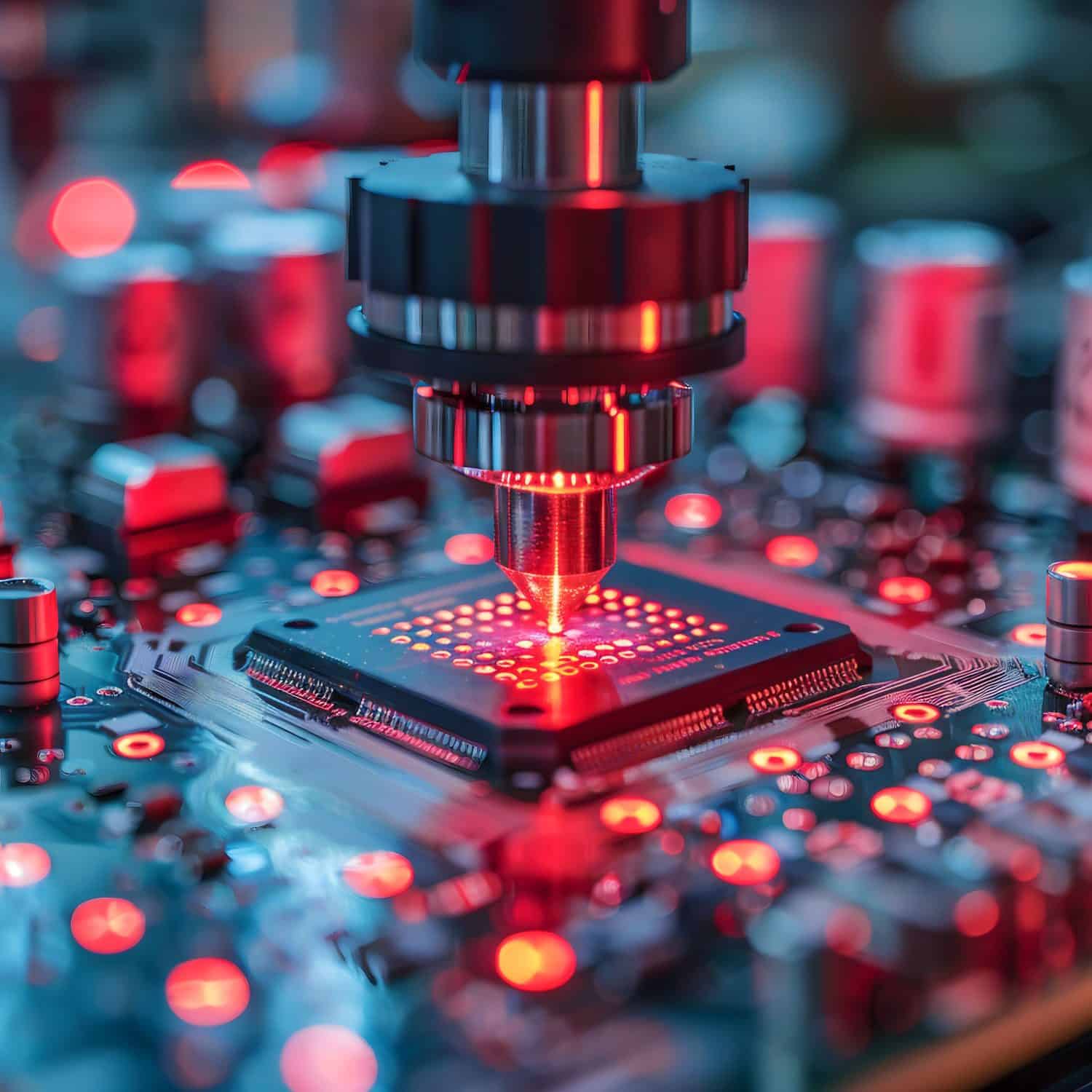
3 weeks agoPrecision Circuit Board Flux Removal with Dry Ice - Social Media Explorer
Dry ice blasting uses solid CO₂ pellets accelerated by compressed air to clean delicate electronics without introducing moisture, static risks, or physical damage to sensitive components.
from24/7 Wall St.
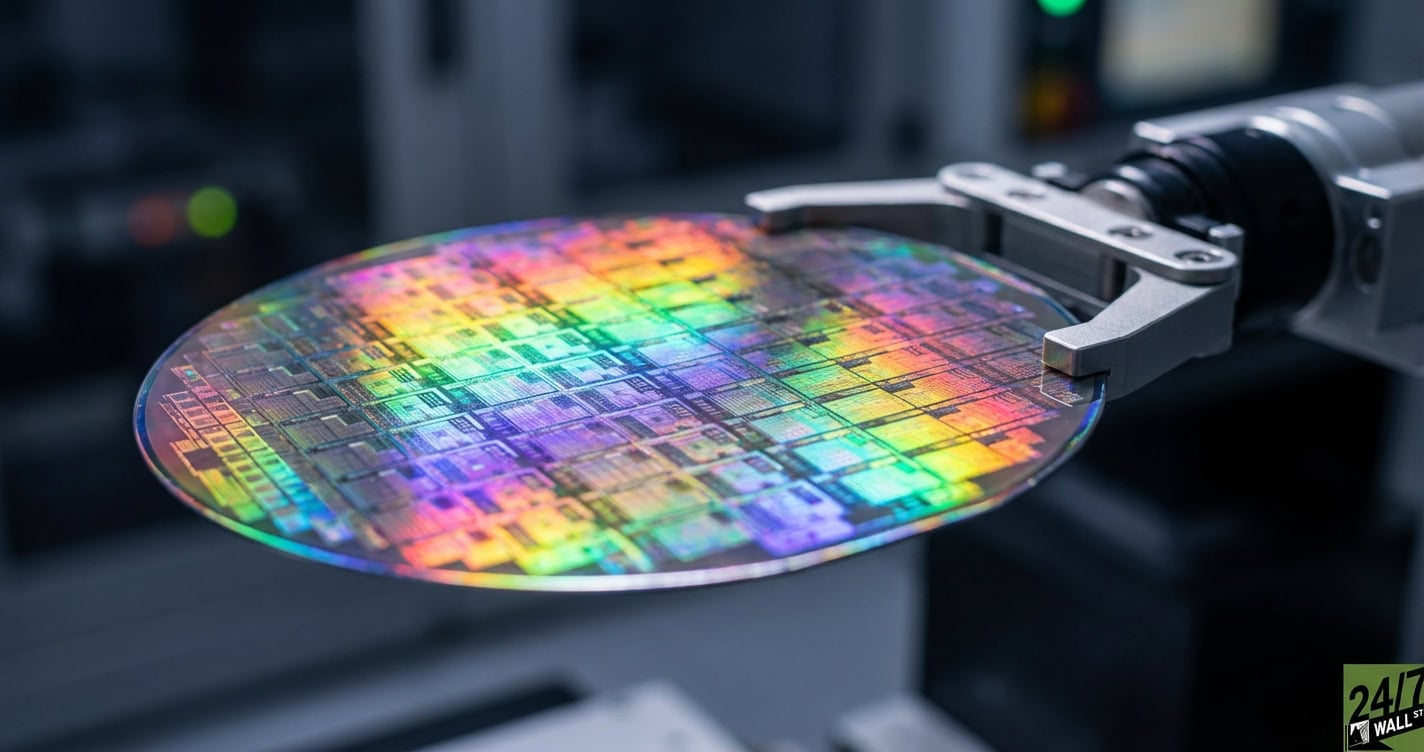
3 weeks agoAMAT and Micron still winning in AI trade despite QQQ and sector weakness
The need for higher performance and more energy-efficient chips is driving high growth rates for leading-edge logic, high-bandwidth memory and advanced packaging. These are areas where Applied is the process equipment leader, and we expect to grow our semiconductor equipment business over 20 percent this calendar year.
Artificial intelligence
Artificial intelligence
from24/7 Wall St.
3 weeks agoIf You Haven't Already Bought Micron, Here Are 300 Reasons Why You Should
Micron Technology benefits from explosive AI-driven demand for memory chips, positioning it as a critical supplier despite trading at discounted valuations relative to growth potential.
Business
from24/7 Wall St.
2 weeks agoACMR vs KLIC: Battle of the Semiconductor Equipment Stocks
ACM Research achieved record revenue but faced margin collapse, while Kulicke & Soffa posted strong earnings with stable margins after strategic restructuring, revealing divergent momentum in semiconductor tools.
#semiconductor-manufacturing
Silicon Valley real estate
fromThesanjoseblog
1 month agoNokia Subsidiary Launches Photonic Semiconductor Facility in South San Jose
Infinera Corp. purchased an 82,000-square-foot South San Jose facility for $27 million to establish a photonic semiconductor fabrication plant, supported by $40 million in federal CHIPS Act funding.

Silicon Valley real estate
fromThesanjoseblog
1 month agoNokia Subsidiary Launches Photonic Semiconductor Facility in South San Jose
Infinera Corp. purchased an 82,000-square-foot South San Jose facility for $27 million to establish a photonic semiconductor fabrication plant, supported by $40 million in federal CHIPS Act funding.
fromTheregister
1 month agoBroadcom says AI companies can't make their own silicon
Our custom accelerator business is progressing very well across five customers. Anthropic will soon implement one gigawatt of Broadcom-baked TPUs, and we expect the AI company plans a three-gigawatt deployment in 2027. Meta will install multiple gigawatts of Broadcom's XPU accelerators in 2027 and beyond. OpenAI will deploy over one gigawatt of compute capacity based on custom XPUs in 2027.
Artificial intelligence
European startups
fromTechzine Global
3 weeks agoFirst factory for InP photonic chips on 6-inch wafer scale in the Netherlands
Eindhoven is building the world's first industrial factory for indium phosphide photonic chips on 6-inch wafers, funded by €150 million from the EU Chips Act and PIXEurope consortium.
European startups
fromTechzine Global
4 weeks agoCalls for a 'Chinese ASML' are growing louder, but it is still a long way off
Chinese chip executives advocate for developing domestic EUV lithography technology as a central priority, proposing a national integrator model to reduce dependence on ASML amid export restrictions.
fromTechCrunch
4 weeks agoUS reportedly considering sweeping new chip export controls | TechCrunch
U.S. regulators have allegedly drafted rules that would require U.S. government approval to ship AI chips anywhere outside the U.S., according to Bloomberg, citing sources. This would give the U.S. significantly more control over companies like AMD and Nvidia.
European startups
Tech industry
from24/7 Wall St.
1 month agoAMD Looks to Displace Intel With World's First Copilot+ Desktop Chips
The AI PC market will grow at 30% annually from 2025 to 2034, reaching $967 billion, driven by on-device AI demand, with AMD's Ryzen AI 400 Series challenging Intel's x86 dominance through superior AI performance capabilities.
fromComputerworld
2 months agoApple Silicon: As demand grows, is TSMC driving a harder bargain?
The gold rush across the high-end processor market might help Apple's processor manufacturing partner, TSMC, drive harder bargains than in the past. That's because Apple's huge appetite for processors is being met by fast-growing demand for chips for servers. As a result, the cost of the chips used inside Macs, iPads, and iPhones will likely increase, putting even more inflationary pressure on Cupertino's bottom line.
Apple


fromThe Nation
2 months agoHow Taiwan Became the Chipmaker for the World
When Donald Trump nominated Elbridge Colby as the undersecretary of defense for policy, the news stirred headlines in Taiwan. Colby, who has since been confirmed, had repeatedly stated on social media that if China ever invaded Taiwan, the US military should destroy TSMC, the world's most important chip manufacturer, to prevent it from falling into Chinese hands. The provocative suggestion has been echoed by Democratic Representative Seth Moulton,
World news
fromWIRED
2 months agoThe Daring Attempt to End the Memory Shortage Crisis
When I asked him how bad things really were, Clarke looked at me with a sigh. "Look, I've been at this a long time. This is the worst shortage I've ever seen. Demand is way ahead of supply. And it's driven by AI. It's driven by infrastructure. You've seen the spot market price-it's up to five times from September. That will manifest. It already has in contract pricing."
Gadgets
fromTheregister
2 months agoMicron breaks ground on $100B New York DRAM megafab
Micron broke snowy winter ground in New York on Friday to begin building a chip fab that promises to bring up to 50,000 jobs and much-needed computer memory production to US shores, as the AI boom continues to push memory prices up. The company's stock surged on the news that shovels had been put to work on the facility first announced in 2022, which had been bedeviled by environmental delays.
Gadgets
fromTheregister
2 months agoMicron to boost DRAM output with $1.8bn chip fab buy
Micron's version of events says it's signed a letter of intent to acquire Powerchip's entire P5 site in Tongluo, Taiwan, for total cash consideration of US$1.8 billion. "The acquisition includes an existing 300 mm fab cleanroom of 300,000 square feet and will further position Micron to address growing global demand for memory solutions," the company stated, adding that the company "expects this acquisition to contribute to meaningful DRAM wafer output beginning in the second half of calendar 2027."
Business
from24/7 Wall St.
2 months agoAfter Taiwan Semi's Earnings Blowout, These 3 Chip Stocks Are Positioned to Dominate
Taiwan Semiconductor Manufacturing Company crushed Q4 earnings, reporting record profits that blew past Wall Street's expectations. Revenue hit $33.73 billion against a $1.03 trillion consensus, while EPS came in at $19.50 versus $17.89 expected. TSMC raised Q1 2026 guidance to $34.6-$35.8 billion with gross margins expanding to 63-65%, up from 62.3% last quarter. The market's response was immediate: semiconductor stocks rallied across the board in premarket trading, with ASML crossing $500 billion in market cap.
Tech industry
from24/7 Wall St.
2 months agoMemory Chip Stocks are Red-Hot. Is it Too Late to Buy?
The memory chip stocks have been really heating up to start the year, thanks in part to the AI-driven RAM shortage, which could last well into the year's end and perhaps beyond. Undoubtedly, AI demand is showing no signs of slowing down, and as the high-performance memory needs continue to blast off, questions linger as to how the top memory players can step up to meet the needs of this unprecedented boom.
Tech industry
[ Load more ]