#comfortable-carrying-capacity-ccc
#comfortable-carrying-capacity-ccc
[ follow ]
#robotics #ai #packing-strategies #travel-essentials #ergonomics #functionality #travel #bike-racks #logistics


Alternative transportation
fromSustainable Bus
6 days agoNew certified Ultrafabrics collections target durability and compliance in passenger transport interiors - Sustainable Bus
Ultrafabrics launches new certified collections for passenger transport, combining durability, aesthetics, and sustainability in high-performance upholstery fabrics.
Relationships
fromBusiness Insider
3 weeks agoWe went from being a 2-car household to just sharing one. So far, the benefits have outweighed the inconvenience.
Sharing a car after totaling one vehicle improved communication, reduced expenses, and preserved independence while helping save money for major life goals.
E-Commerce
fromBusiness Matters
3 weeks agoThe Hidden Costs of DIY Shipping: When to Switch to an Ecommerce Shipping Platform
DIY shipping becomes a business bottleneck as order volume grows, consuming excessive time and increasing errors while established shipping platforms automate processes and enable scalability.
Alternative transportation
fromNature
2 weeks agoAffordable mobility for all: why we need smaller, cheaper electric vehicles
Low-speed electric vehicles offer affordable, practical decarbonization for underserved populations but remain overlooked due to bias toward expensive, high-tech solutions and nationalist trade policies.
Healthcare
fromdesignboom | architecture & design magazine
4 weeks agofoldable medical brace adapts to user's injured arm using adjustable cables
Bracesys is an adjustable foldable medical brace using Kevlar cables that adapts to individual arm sizes and healing stages, eliminating the need for custom orders or replacements.
Artificial intelligence
fromTechCrunch
3 weeks agoFord's new AI assistant will help fleet owners know if seatbelts are being used | TechCrunch
Ford launched a free AI assistant for commercial customers to analyze fleet data and improve profitability, betting that software generates revenue even when offered at no cost.
fromTravel + Leisure
1 month ago9 Simple Ways to Make Your Next Flight Better, According to Flight Attendants
When traveling by air, take a look at the type of aircraft you're expected to fly with, as it can make a difference in terms of overall flight experience. This can also help you get to know the different cabin classes so you can make the right seat selection for your comfort level and your wallet.
Travel
fromBusiness Matters
3 weeks agoHeavy Duty Diesel Engines for Transport and Service Businesses
Diesel remains the backbone for moving massive loads across long distances. It provides the torque needed for heavy hauling that other fuel types just cannot match. Investment in diesel tech leads to better fuel systems and longer lifespans for newer models.
Alternative transportation
Gadgets
fromComputerWeekly.com
1 month agoConnectivity, AI drive fleet safety, productivity and decision-making | Computer Weekly
AI, connected data, and safety-focused services are transforming fleet operations, with GPS tracking adoption at record highs and AI delivering measurable safety improvements and cost reductions.
Artificial intelligence
fromFortune
1 month agoI help manage one of the world's most constrained supply chains, up close to the defining energy bottleneck of the decade | Fortune
Power transformer shortages are the critical bottleneck limiting AI infrastructure expansion and corporate electrification globally.
fromYanko Design - Modern Industrial Design News
1 month agoThis 40-Pound Robot Dog Can Carry 143 Pounds of Cargo - Yanko Design
At about 18 kilograms, roughly 40 pounds with its battery included, the As2 is compact enough to move through tight spaces, yet built to handle a standing payload of up to 65 kilograms. That's more than 143 pounds sitting on top of a 40-pound robot, which is genuinely impressive and a little hard to picture until you actually see it in action.
Gadgets
#vehicle-safety

Alternative transportation
fromFast Company
1 month agoWe need to rethink our love affair with big vehicles
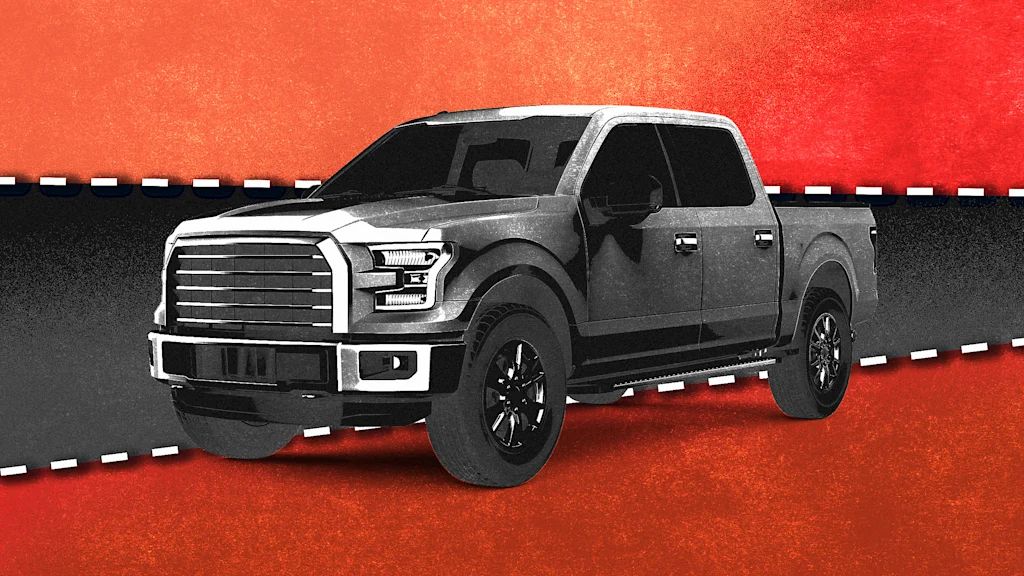
Larger vehicles like SUVs and pickup trucks pose significantly greater safety risks to pedestrians and cyclists than standard passenger cars, with research showing they are 45% deadlier and children are eight times more likely to be killed by them.
Travel
fromTravel + Leisure
1 month agoI'm a Former Overpacker Who Finally Went Carry-on-only-These 13 Essentials Made It Possible
Switching to carry-on-only travel requires intentional packing strategies, versatile clothing choices, and space-saving tools like compression cubes and expandable luggage.
fromBusiness Matters
1 month agoInternal handling evolves: Renova's approach between ergonomics and operational continuity
Rising operational complexity and higher volumes are transforming internal flows into a lever for continuity, labor sustainability and reduced congestion within plants. SKU proliferation, omnichannel strategies, flexible production schedules and multi-shift operations are increasing pressure on material movements. Disruptions in these flows can slow production, increase Work-in-Progress (WIP) and create bottlenecks in critical areas.
Alternative transportation


fromFast Company
1 month agoMy employee was upset I told him to drive, not fly, for business travel
I manage a team of four. One of my staff members, Jeff, asked to go to a conference that was about a five-hour drive away. I approved the request as the conference would be good for his professional development. Three other staff members from our closely connected teams were also going. Jeff registered for the conference. A couple of weeks later, he asked me about booking a flight to it. I was surprised by this, as the conference was a reasonable driving distance. I explained that the department would rent a van and the attendees would drive there together. (Our department wants to minimize expenses when reasonable, so this is normal unless it doesn't make sense logistically or financially.) He pushed back with a couple of reasons that he wanted to fly, such as it would save time and he didn't feel comfortable driving.
Careers
fromSocketsite
9 years agoSelf-Driving Truck Tech Headed for San Francisco's Waterfront
It has been almost three years since the Port of San Francisco awarded TMG Partners the redevelopment rights for San Francisco's Pier 38, with TMG winning over the Port with a pitch that emphasized the speed with which they planned to act and an "immediate revitalization" of the pier with a mix of public, office and maritime uses. But Pier 38, which has been shuttered since 2011, remains red tagged and inactive.
San Francisco
fromwww.theguardian.com
2 months agoYou be the judge: should my husband stop walking everywhere and get on his bike?
Bikes are a quicker way to get around. We should use them so we can enjoy more of our destination I hate walking anywhere. Whenever we explore Berlin, where we live, I prefer to cycle. It's easier, it's more fun, and it saves time. My husband disagrees. Frantz loves walking and I always end up trailing behind him by bike, which is uncomfortable because I have to pedal slowly to keep at his pace.
Berlin
fromBusiness Matters
1 month agoWhy Tolerance Management Is a Business-Critical Skill in Modern Manufacturing
We are now in a time of manufacturing where precision is more than a technical necessity; it's a business requirement. The more complex, globally dispersed and demanding things get, the less slack remains in the system. Under these circumstances tolerance management has become a decisive competence and affects competitiveness not only in terms of controlling costs, ensuring quality and improving production efficiency but also for long term market success.
Business
fromBGR
1 month ago3 Cheap Office Chairs To Buy And 3 To Avoid According To Consumer Reports - BGR
Home office setups vary widely. Some people work from a laptop in bed, on the sofa, or at the kitchen table, while others prefer a traditional desk-based arrangement. For those in the latter category, it is easy to get overwhelmed by the vast number of ergonomic desk chair options, which vary massively in price. The Herman Miller Aeron, for example, is often brought up in discussions surrounding the world's best task chair, retails for nearly $2,000.
Health
fromThe Verge
1 month agoTenways nearly perfects the shareable city e-bike
It adapts in seconds without any tools to comfortably fit riders of varying heights thanks to its low-entry frame, quick-release seat post, and height-adjustable handlebar. It also takes up less space than an ordinary bike with its 20-inch wheels, folding pedals, and a handlebar that twists to create a slim, wall-hugging profile that goes flat inside a car or train.
Alternative transportation
fromTechCrunch
1 month agoAurora's driverless trucks can now travel farther distances faster than human drivers | TechCrunch
It takes Aurora about 15 hours to carry freight in its driverless trucks on the 1,000-mile journey, according to the company. Human truck drivers take much longer to complete the same distance due to federal regulations that limit how long they can be behind the wheel. For instance, truck drivers must stop for a 30-minute break after eight hours and can operate a semi truck for a maximum of 11 hours at a time, according to federal regulations.
Tech industry
UX design
fromYanko Design - Modern Industrial Design News
1 month agoThe Thoughtful Shopping Cart That Organizes, Protects, and Moves With You - Yanko Design
Marketday Cart reimagines shopping trolleys with three shallow, insulated, zippered, stackable baskets that improve visibility, organization, and temperature control while reducing mental effort.
fromYanko Design - Modern Industrial Design News
2 months agoThis Trolley Stacks and Rotates Like Shipping Containers at a Port - Yanko Design
Most storage furniture sits where you put it, fixed shelves and cabinets that do their job but rarely respond to how space changes during a day. Trolleys help with mobility, but they often feel generic, more utility than character. Harbor 051 is a storage trolley that borrows its logic from a place built entirely around movement and stacking, Busan Port, where containers shift and cranes swing in a constant choreography.
Design
Medicine
fromdesignboom | architecture & design magazine
2 months agofoldable medical brace adapts to user's injured arm using adjustable cables
A foldable, reusable medical brace uses adjustable Kevlar cables and modular segments to provide precise, adaptable support and reduce pressure points during healing.
fromSocial Media Explorer
2 months ago10 Last Mile Technology Trends Transforming Urban Logistics in 2025 - Social Media Explorer
Urban logistics is entering a new era where practical technology drives meaningful results. Today, more than 55% of people live in cities, and urbanization is expected to rise to 68% by 2050, placing intense pressure on delivery networks to keep up with growing demand. U.S. e-commerce is projected to reach $1.1 trillion in sales by 2026, heightening expectations for faster and more reliable last-mile service.
E-Commerce
Cars
fromLondon Business News | Londonlovesbusiness.com
2 months agoCity-proof driving: Why all-season tyres fit modern urban life - London Business News | Londonlovesbusiness.com
All-season tyres provide dependable year-round performance for unpredictable urban British weather, reducing the need for seasonal tyre changes.
frominsideevs.com
1 month agoHow Pedal-Assist Mini-Trucks Are Transforming Cities
Climbing onto the Honda Fastport eQuad is, quite literally, just like getting on a bicycle, except easier. With four wheels and broad diamond-plate running boards on either side, ingress and egress is as simple as swinging my leg over and stepping on and off the pedals, no kickstands involved. This makes sense, as the e-bike-based mini box-truck has been custom designed and constructed by the Japanese transportation company for the constant stop-and-go of urban e-commerce package delivery.
Cars
fromTravel + Leisure
2 months agoI'm a Pro Packer-These Are 12 Tricks to Fit 2 Weeks' Worth of Clothing in a Weekender Bag
Packing lightly is not an art-it's a science. If you're someone, like me, who deeply cares about traveling with the right pieces- clothes you feel comfortable in that also match the destination or activity-the process requires research and precision. This is especially true if you're trying to fit multiple weeks' worth of clothes into a small piece of luggage, like a weekender bag. Every single inch of space matters, and every single item must have a specific purpose (or even multiple purposes).
Fashion & style
Artificial intelligence
fromeLearning Industry
2 months agoArtificial Intelligence In Transportation Training And Education
AI enables individualized transportation training by evaluating trainee performance, tailoring instruction, simulating real scenarios, and measuring performance for targeted improvement.
Travel
fromTravel + Leisure
1 month agoI'm a Professional Packer, and These Are My 11 Hacks for Fitting 2 Weeks' Worth of Belongings in a Carry-on
Intentional pre-planning and strategic packing hacks enable efficient carry-on-only travel even for extended trips, maximizing suitcase space and adapting to destination constraints.
fromTravel + Leisure
2 months agoI'm a Professional Packer Who Hates Clutter-Here Are the Only 12 Travel Essentials I'm Keeping for 2026
Various marketing campaigns may tempt you into thinking you need multiple carry-on bags, but most travelers only need one. When I'm not testing new brands, I heavily rely on my Away Bigger Carry-on-it's traveled with me from Alaska to Scotland-and have never had an issue fitting everything I need inside the relatively spacious piece of luggage. If you're looking for a more affordable version, Travel + Leisure editors recommend the Samsonite Freeform Carry-on Spinner, noting it's one of the best carry-ons of the year.
Travel
Gadgets
fromYanko Design - Modern Industrial Design News
2 months agoA Granny Cart That Looks Like Luggage: Someone Actually Built It - Yanko Design
Roulette Cart is a stylish, well-organized, durable wheeled grocery cart with a 40-liter padded bag, organized interior, and quiet skateboard-style wheels for urban walking.
fromEngadget
2 months agoWheelMove gives manual wheelchairs the power and height to handle rough terrain
French startup WheelMove demonstrated a compact motorized wheelchair add-on at CES 2026 that not only acts as a power-assist device, but can also lift up a chair's small front wheels so it can ride over rough terrain. The accessory upgrades a manual wheelchair with a 10-inch extra wheel and a 250W motor that can drive at up to six miles per hour (10 kilometers per hour) and handle slopes up to 10 percent, with a range of 15.5 miles (25km).
Alternative transportation
fromwww.consumerreports.org
2 months agoA CR Ergonomics Expert Shows Off His Home Workspace
Ritchey's seat of choice is the Cooler Master Ergo L, a gaming chair that doubles as a serious office workhorse. While it's marketed to gamers, Ritchey points out that many high-level gaming chairs are essentially well-designed ergonomic office chairs with cool color accents and aesthetic details. While you're essentially paying for style on top of substance, the substance itself is actually real.
Gadgets
Alternative transportation
fromSustainable Bus
2 months agoHSL selects INIT container-based on-board system for Helsinki's multimodal fleet of 1,700 vehicles - Sustainable Bus
HSL will deploy INIT's container-based COPILOTcontainer across about 1,700 multimodal vehicles to create a unified, updatable on-board technical platform.
[ Load more ]