#commercial-glazing
#commercial-glazing
[ follow ]
#architecture #sustainable-architecture #sustainability #sustainable-design #design #home-improvement


Alternative transportation
fromSustainable Bus
4 days agoNew certified Ultrafabrics collections target durability and compliance in passenger transport interiors - Sustainable Bus
Ultrafabrics launches new certified collections for passenger transport, combining durability, aesthetics, and sustainability in high-performance upholstery fabrics.



fromArchDaily
3 weeks agoLight from Above: Measuring and Designing Daylight Under Sloped Roofs
From Alpine chalets shedding snow to Mediterranean roof tiles mitigating summer heat, the slope responded to climate and construction challenges long before it became an aesthetic code. Although modern architecture has favored horizontal planes and orthogonal plans, the pitched roof requires a project to be conceived in section.
Miscellaneous
fromLondon Business News | Londonlovesbusiness.com
1 month agoHow to maintain efficient heat recovery ventilation in modern commercial spaces - London Business News | Londonlovesbusiness.com
Checking your equipment once a month helps catch small issues before they turn into expensive repairs. A routine keeps everything running smoothly and extends the life of the hardware. Managers should create a simple checklist for their maintenance staff to follow.
Business
Arts
fromArchDaily
1 month agoBuildFest Introduces "Acts of Construction," a Three-Year Exploration of Timber Installations
Bethel Woods launches BuildFest, a three-year initiative featuring large-scale timber installations and multimedia experiences on the historic 1969 Woodstock festival grounds, organized sequentially around construction, choreography, and performance themes.
fromArchDaily
4 weeks agoBuildner and Kingspan Launch MICROHOME 2026 With 100K in Awards and Announce 10th Edition Winners
Participants are challenged to design a modular, self-sufficient, and energy-efficient microhome with a maximum footprint of 25 m². Proposals should push the boundaries of innovation, functionality, and sustainability while addressing real-world challenges such as urban density, affordability, and environmental responsibility.
Miscellaneous
fromLos Angeles Times
35 years agoStress-Skin Paneling Makes Airtight House
Stress-skin panel construction is probably the most energy-efficient and cost-effective building method available today. With super-high insulation levels and airtightness, a stress-skin panel house should have extremely low heating and cooling costs. A reduction of 50% on utility bills as compared to a typically constructed house is reasonable.
Remodel
fromArchDaily
3 weeks agoHow Architecture Is Learning to Generate Its Own Energy
Photovoltaic (PV) solar energy represents a modular technology that can be manufactured in large-scale facilities, generating economies of scale, while also being adaptable to small-scale applications. From residential rooftop systems to large-scale power generation installations, photovoltaic solar energy has established itself as a cost-effective option for electricity production in many countries around the world.
Environment
fromArchDaily
1 month agoThermal Memory: How Climate Shapes Architectural Heritage
Heritage is usually catalogued by what can be drawn, not by what changed temperature. In heat, buildings are learned first through skin, only later through sight. Generations learn, through their bodies, what works. Shade reduces glare and radiant heat. Air movement shifts perception by several degrees. Thick walls slow temperature swings.
Miscellaneous
fromdesignboom | architecture & design magazine
1 week agoproposal for net-zero landmark office in warsaw highlights adaptive use and ecological design
The project reimagines the structure through circular thinking, ecological strategies, and new construction technologies, embracing reuse as a model for sustainable urban development.
Renovation
fromBusiness Matters
2 weeks ago6 Business Use Cases For Perforated Metal
Perforated metal has long been valued for its strength, versatility, and clean visual appeal. Created by punching patterns of holes into metal sheets, it offers a practical balance between airflow, light control, and structural support. Across industries such as architecture, construction, mining, and interior design, perforated metal has become a go-to material for projects that require both function and style.
Design

Environment
fromArchDaily
1 month agoHow to Design with the Rain: Architectural Strategies for Rainwater Collection across Climates
Architecture must shift from water disposal to active rainwater collection, storage, and reuse through climate-specific design strategies that address distinct precipitation patterns and regional environmental demands.
Remodel
fromLondon Business News | Londonlovesbusiness.com
1 month agoThe dos and don'ts of cleaning large office windows - London Business News | Londonlovesbusiness.com
Clean large office windows using proper solutions, commercial-grade tools, and a top-to-bottom technique to avoid streaks, damage, and safety risks.
Environment
fromArchDaily
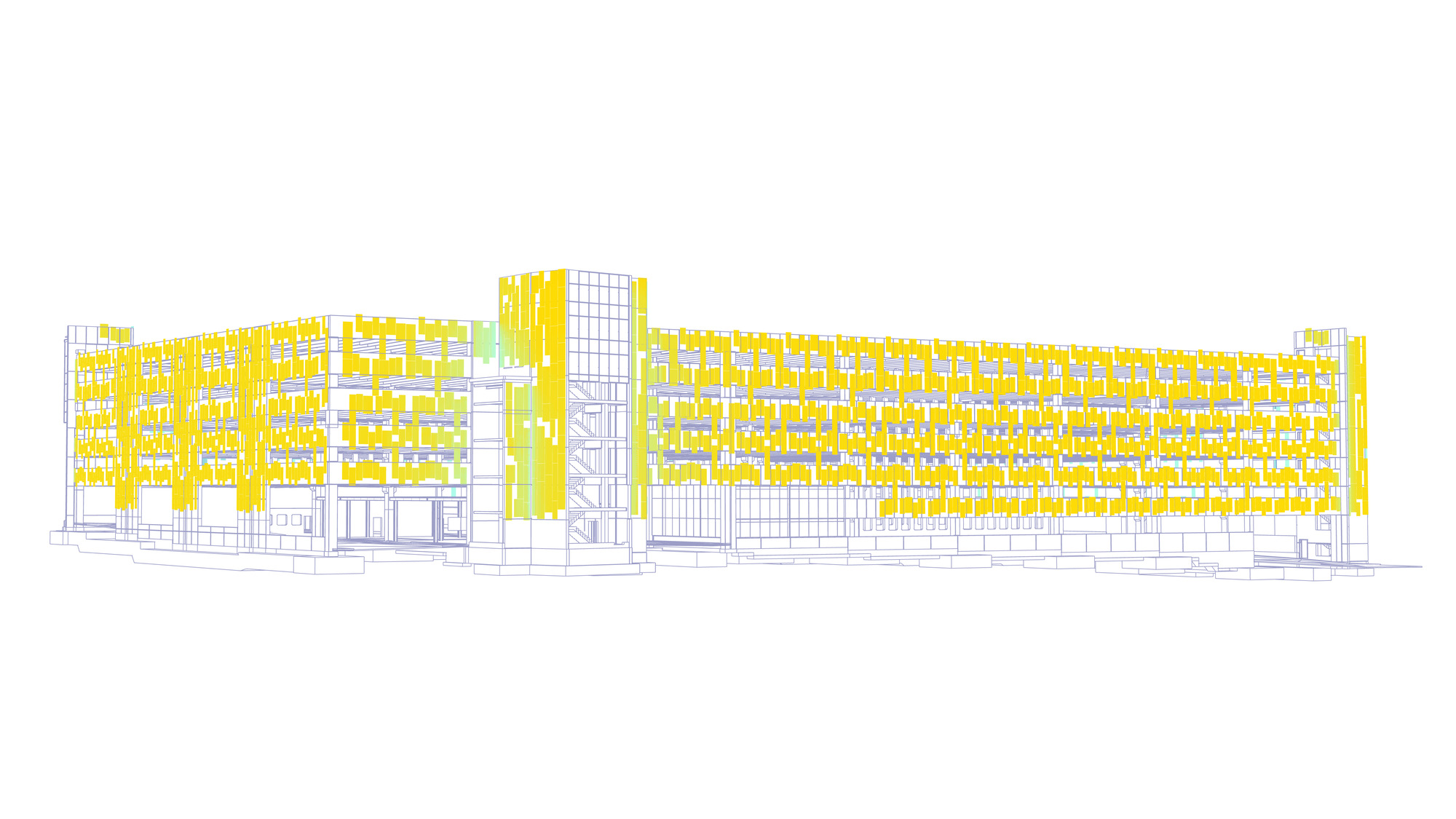
1 month agoCan Shading Become Energy? From Passive Facades to Productive Envelopes
Facades can generate significant renewable energy by integrating colored photovoltaic shutters that combine shading, daylight control, and electricity production without adding envelope complexity.
fromdesignboom | architecture & design magazine
2 weeks ago400-foot installation turns climate pledge arena into a living environmental interface
Inside Climate Pledge Arena, a large-scale media installation titled Turn the Tide transforms two interior walls into an architectural interface combining environmental imagery, and . Designed by Digital Kitchen within the arena by , the installation spans nearly 400 feet across the building's east and west walls. The intervention is integrated into the spatial environment of the arena, which is recognized as the world's first net-zero carbon certified arena.
Renovation
Design
fromdesignboom | architecture & design magazine
3 weeks agoperforated wooden screens filter light and shadow within milan ceramic workshop
Curved walls and filtered light create an intimate ceramic workshop where shadow enhances material texture and artisanal gestures while maintaining functional separation of spaces.
fromArchDaily
3 weeks agoBuilding with Earth: Traditional Knowledge in Contemporary Architecture
Rather than representing a simple return to the past, this renewed interest reflects a broader reconsideration of how architecture engages with materials, local resources, and environmental conditions.
Renovation
Remodel
fromdesignboom | architecture & design magazine
1 month agotranslucent glass shingles wrap timber-framed museum intervention by wulf architekten
A contemporary timber museum completes a medieval Reutlingen street with a glowing cast-glass shingle facade, revealing historic timber frames as exhibited artifacts.
Renovation
fromLondon Business News | Londonlovesbusiness.com
1 month agoCan you temporarily fix a broken shop front window yourself? - London Business News | Londonlovesbusiness.com
Temporary DIY fixes for broken windows are acceptable only for minor damage when done safely, but professional repair is always necessary for proper restoration.
Renovation
fromArchDaily
1 month agoUnderstanding U-Value: The Foundation of Energy-Efficient Envelopes
Building envelope thermal transmittance (U-value) is the fundamental metric determining energy efficiency, calculated by dividing heat flow by surface area and temperature difference to assess insulation performance.
fromBusiness Matters
2 months agoWhy Thermally Modified Timber Has Moved Into the Construction Mainstream
Thermal modification is not a new invention, but its relevance has increased as expectations around performance, sustainability, and predictability have tightened. Developers, architects, and contractors are no longer just asking whether timber looks good or performs well initially. They want to know how it behaves after ten, twenty, or thirty years, and how much risk it introduces into a project once the scaffolding is gone.
Remodel
fromTasting Table
2 months agoThe Eco-Friendly Countertop Material That's Surprisingly Durable - Tasting Table
It's likely that you've encountered recycled glass countertops without realizing it. They're far from the hippie-style broken-glass mosaic art of yesteryear, instead presenting as sleek, highly polished, professional slabs with intriguing bits of confetti-style color trapped inside. That's the recovered glass bits set into a binding material such as resin, cement, or concrete, and then smoothly polished so that the composite surface feels like stone.
Remodel
fromLos Angeles Times
7 years agoDon't toss those soulful old windows. Fix them.
As the weights touch, they get a bit musical and there's a kind of harmonic ring in your wall. It's like the house is alive. But with soulful age come other sounds: rattles, wind whistling through gaps and a homeowner's curses because the blasted contraptions won't open and close properly.
Renovation
Environment
fromSocial Media Explorer
2 months agoCommercial Window Tinting Becomes a Practical Upgrade for New York City Commercial Properties - Social Media Explorer
Commercial window tinting improves interior comfort, reduces solar heat gain and glare, and supports energy efficiency in New York City commercial buildings without altering exteriors.
fromArchDaily
2 months agoCircular Composites: Designing for a Sustainable Future
One of the earliest large-scale examples of composite materials can be found in the Great Wall of China, where stone, clay bricks, and organic fibers such as reeds and willow branches were blended to create a resilient and lasting structure. These early techniques reveal a timeless intuition: distinct materials, when combined thoughtfully, produce properties unattainable by any single element.
Environment
Environment
fromwww.theguardian.com
1 month agoWe can learn from the old': how architects are returning to the earth to build homes for the future
Unstabilised rammed earth provides a low-carbon, locally sourced building method with thermal mass, moisture control and potential for circular construction.
fromArchDaily
1 month agoWhen Light Meets Energy in Glass Ceilings
From the large industrial roofs and galleries of the 19th century to the contemporary atriums of museums and public buildings, glass has been a recurring material in shaping large and monumental interior spaces. More than a technological or engineering solution, these horizontal glazed planes introduce a distinct luminous quality: light that comes from above. Unlike lateral daylight entering through façades, zenithal light is more evenly distributed, reduces harsh shadows, and lends spaces a sense of continuity and openness that is difficult to achieve otherwise.
Design
fromArchDaily
2 months agoSelf-Sufficient Facades: Where Solar Protection Meets Renewable Energy
Spaces of light and darkness are conceived to enhance circulation and spatial directionality, as well as to highlight the colors, textures, and forms of specific architectural elements. That said, the impact of natural light on building facades reveals the need to develop strategies that support energy savings, improve the thermal and visual comfort of interior spaces, and promote the reduction of carbon emissions.
Design
fromdesignboom | architecture & design magazine
1 month agoreflective steel sheet cladding wraps acheres technical center in france
The site lies within the Petite Arche joint development zone, where design considerations include the town entrance, contextual integration, and alignment with natural elements. The building's form signals its position in an urbanized area and maintains visual dialogue with the surrounding landscape, including the protected Saint-Germain-En-Laye forest. A vegetated threshold along the northern edge reinforces landscape continuity, while the southern boundary engages with the urban character of the area.
Design
fromRemodelista
2 months agoInside a Sustainable Edinburgh Kitchen with a Rainbow of Surplus Wood Cabinets
Architecture Office founder Alexander Mackison and glass artist Juli Bolaños-Durman had something of a creative meet-cute. The two became acquainted while running a lecture series at Custom Lane, a collaborative center for designers and makers in Edinburgh, where they both have studios. They remained friendly, so Alexander eventually learned of Juli's plans to renovate an apartment nearby. "Just through casual conversations, I became integrated into the project," he remembers.
Renovation
Design
fromwww.archdaily.com
2 months agoFrom Material Intelligence to Circularity: Lessons from Architecture in 2025
Architects prioritize material innovation in 2025—agricultural waste, recycled plastics, and living materials—balancing tradition, circularity, and material intelligence for resilient, low-carbon construction.
[ Load more ]