#conceptual-narrative
#conceptual-narrative
[ follow ]
#literature #ben-lerner #autofiction #zendaya #ai #communication #george-saunders #infinite-jest #transcription



fromwww.theguardian.com
1 week agoDaunting, inspiring, comforting, terrifying: the writers who can make silence as eloquent as words
A vision lay before him: Fleet Street blanketed with snow, silent, empty, pure white, and, at the end of it, the huge and majestic form of Saint Paul's Cathedral. It was a spellbinding moment: the great thoroughfare temporarily devoid of carts and carriages, the cathedral looming blurrily out of the still-falling snowflakes a real-life snow globe.
London
Writing
fromwww.theguardian.com
1 day agoLife of Pi author Yann Martel: I thought the Iliad was a book for old farts then I started getting ideas'
Yann Martel's new novel, Son of Nobody, reimagines the Trojan War from the perspective of an unknown soldier, blending humor and domesticity with scholarly footnotes.
Books
fromThe Beer Thrillers - Central PA beer enthusiasts and beer bloggers. Homebrewers, brewery workers, and all around beer lovers.
3 weeks agoBook Review: Shock Induction (Chuck Palahniuk) - The Beer Thrillers
Shock Induction explores dark themes of high school disappearances and the exploitation of youth by billionaires through a satirical lens.

fromwww.theguardian.com
3 days agoSarah Hall: Everyone wangs on about Anna Karenina I've never been able to finish it'
My earliest independent reading memory is The Story of Ferdinand by Leaf and Lawson. I loved that bull! My favourite book growing up Big books gave me the whirlies so it took a while for them to start landing.
Books
Artificial intelligence
fromThe Atlantic
2 weeks agoThe Human Skill That Eludes AI
Generative AI has paradoxically declined in creative writing quality since GPT-2, despite advancing in technical capabilities, with current models producing formulaic, flawed prose despite access to centuries of literature.
Books
fromenglish.elpais.com
6 days agoFrankenstein, Jane Eyre and Snow White with a gender-based perspective: The Madwoman in the Attic' and the beginning of feminist literary criticism
The new edition of 'La loca del desvan' revives feminist literary criticism, highlighting the relevance of women's voices in literature today.
fromThe Conversation
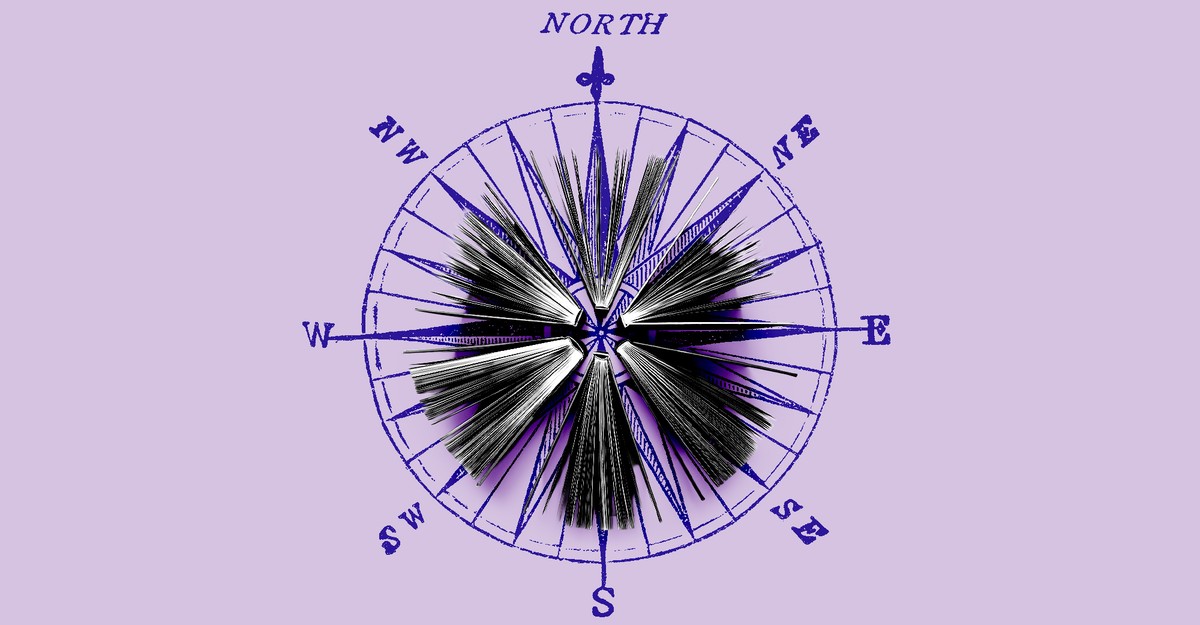
1 month agoToday's obsession with authenticity isn't new - being true to yourself has troubled philosophers for centuries
All of us live in an age where we're bombarded by social media and artificial intelligence - when striving to be your authentic self becomes an increasingly difficult task. Yet, even if it has somehow become a common goal, it is unclear how many of us can truly define the "authenticity" that we say we are pursuing.
Philosophy
Music
fromwww.npr.org
1 month agoWhy music has become such a big part of the romance novel reading experience
Romance novel readers increasingly use pop music playlists to enhance their reading experiences, creating a community that bridges book fandom and music fandom, exemplified by Charli XCX's Wuthering Heights album.
Writing
fromwww.theguardian.com
3 weeks agoLight and Thread by Han Kang review a tantalising book of reflections
Han Kang's Nobel Prize-winning work explores historical trauma and human fragility through poetic prose that balances outward examination of events like the Gwangju massacre with inward psychological portrayal, leaving interpretive gaps for readers.
Writing
fromBig Think
3 weeks ago"If it sounds literary, it isn't": The deceptively simple rules behind good writing
Neal Allen and Anne Lamott co-authored Good Writing by combining Allen's 36 writing rules with Lamott's annotations, creating a collaborative guide where Allen explains rules and Lamott provides practical examples and alternative perspectives.
Philosophy
fromBig Think
1 month agoThe 3 colors: What folktales teach about how to grow wise
European folktales use red, black, and white colors to represent three modes of being that map human maturation: red as ambition and life force, black as introspection and shadow, and white as wisdom and transcendence.
fromPsychology Today
1 month agoBurn Your Romance Novels!
The short answer is yes, unless you take fiction for what it is-fiction. When you long for something you don't have, it can lead to dissatisfaction with what you DO have. Romantic fiction has witty, heartfelt dialogue, buckets of romantic gestures, and protagonists who have a preternatural ability to read each other's minds. It's easy to forget it is not real. This can set up unrealistic expectations both conscious and unconscious.
Relationships
fromMedium
1 month agoThings that don't matter when you write
To deny one's own experiences is to put a lie into the lips of one's own life. It is no less than a denial of the soul. The concept I stick to - my core principle - is simple: I write in plain English, and only when I actually have something to say.
Writing
Video games
fromwww.theguardian.com
2 months agoIt's a loving mockery, because it's also who I am': the making of gaming's most pathetic character
Baby Steps uses deliberate frustration and an inept, awkward protagonist to transform player irritation into empathy, identification, and unexpected affection.
fromHer Campus
1 month agoThe Space Between Then and Now: Modern Storytelling
Storytelling is shaped by the way we engage with it. In the past, narratives unfolded slowly, giving the audience time to reflect and analyze at their own pace. Classic games, podcasts, and films provided the audience with time to settle into the narrative, and for emotions to build up gradually. These slower forms of media created room for reflection and engagement, allowing audiences to process narratives thoughtfully.
Digital life
Film
fromwww.theguardian.com
1 month agoPeople feel like they're in on the joke': the new wave of pseudo-biopics
Filmmakers increasingly create pseudo-biopics that borrow recognizable elements from real people and events while changing names and details to avoid legal liability and maintain creative freedom.
fromThe Independent
1 month ago17 great movies ruined by terrible endings
10 Cloverfield Lane Mary Elizabeth Winstead, John Goodman and John Gallagher Jr are locked in an underground bunker for the majority of this left-field sequel to Cloverfield, with thrilling results. In the film's final throes, Winstead's character exits the bunker, and finds that her captor was telling the truth about an alien invasion above - a twist that completely and ruinously dissipates the hard-earned tension that came before.
Film
Books
fromThe Atlantic
1 month agoWhen Did Literature Get Less Dirty?
Philip Roth's Zuckerman Unbound functioned as a response to the controversial reception of Portnoy's Complaint, with Roth's protagonist expressing regret over writing sexually explicit material that drew accusations of anti-Semitism and misogyny.
fromwww.theguardian.com
1 month agoThe National Year of Reading celebrates the joy' of books. But let's not forget they can also be deeply troubling, too | Charlotte Higgins
Research has linked reading for pleasure in childhood to a host of positive educational and socioeconomic outcomes. But now 14 years after the Department for Education, in a more innocent time, commissioned a chunky report on the matter—reading books for pleasure is an activity in crisis. The culprit usually blamed for this falling-off is the smartphone and its many short-term distractions; the mere presence of a smartphone in the room, recent research suggests, has an impact on our ability to concentrate.
Books
fromJezebel
1 month agoTurns Out, When You Write a Novel About Killing a Politician, People Tell You How They'd Do It
When the people who are after me get here, they'll arrest me and put me on trial, or they'll disappear me to some black site. Or they won't bother with any of that and they'll just kill me. All of these seem like plausible outcomes, but in the novel's prologue, the narrator seems much more confident of her success: I am a fucking genius, a gorgeous fucking genius, and the only thing left to do is sit down and write.
Books
fromSilicon Canals
1 month ago7 things people do when telling stories that make others tune out immediately without realizing it - Silicon Canals
We've all been there. Someone starts telling a story, and within seconds, your mind starts wandering. Maybe you pull out your phone, suddenly remember an urgent email, or find yourself mentally reorganizing your weekend plans. The storyteller doesn't notice. They keep going, completely unaware that they've lost their audience. After interviewing over 200 people for various articles, I've noticed patterns in how people communicate their experiences. Some captivate you from the first word, while others lose you before they've even gotten to the point.
Writing
fromThe Atlantic
2 months agoThe Writer's Magic Trick
A writer is a kind of magician. Their job is to create living, three-dimensional people out of the ordinary stuff of ink and paper. This is no easy task, because readers can't literally hear, touch, or observe a character. Everything that defines a human being in real life-the physical space they occupy, or how they smell, feel, and sound-is stripped away, replaced by description. But authors have one major, mystical advantage: They can show you what's happening inside of someone's brain.
Books

[ Load more ]