#counterfeit-and-fraud
#counterfeit-and-fraud
[ follow ]
#cybersecurity #phishing #malware #social-engineering #ai #credential-theft #fraud #art-theft #compliance #kitkat #theft

fromComputerworld
2 days agoA core infrastructure engineer pleads guilty to federal charges in insider attack
Rhyne's attack involved unauthorized remote desktop sessions, deletion of network administrator accounts, and changing of passwords, showcasing significant security vulnerabilities.
Information security



#cybersecurity
Information security
fromThe Hacker News
4 days ago3 Reasons Attackers Are Using Your Trusted Tools Against You (And Why You Don't See It Coming)
Cyber attackers increasingly exploit legitimate tools within environments, making detection difficult and expanding the attack surface organizations must manage.
fromTNW | Data-Security
4 days agoHasbro hacked: Peppa Pig & Transformers owner warns of weeks of disruption
Hasbro disclosed unauthorized access to its systems, an intrusion first detected on 28 March that has since forced the company to take parts of its infrastructure offline and warn that product deliveries could be delayed for weeks.
London startup




Travel
fromTravel + Leisure
3 weeks agoThieves Always Check These Common Hotel Hiding Spots First-Here, 8 Clever Ways to Protect Your Valuables
Hotel thieves target predictable hiding spots like toiletry kits and dresser drawers, making affordable security lock boxes and disguised containers essential for protecting valuables while traveling.
fromPatently-O
6 days agoDisclosed but Still Secret? The Federal Circuit Weighs Patent Publications Against Trade Secret Claims
The technology at issue is a subcutaneous cosmetic penile implant, a silicone sleeve placed between the skin and 'Buck's fascia' to enhance girth and length.
Intellectual property law
#supply-chain-security
Business intelligence
fromLondon Business News | Londonlovesbusiness.com
2 weeks agoSecurity Seals 101: How businesses protect inventory from tampering in modern supply chains - London Business News | Londonlovesbusiness.com
Security seals provide tamper evidence throughout supply chains by visibly indicating whether packages have been opened or compromised during transit and storage.
Information security
fromSecuritymagazine
2 weeks agoThreat Actors Target the Entire Retail Supply Chain
Threat actors exploit shared supply chain vulnerabilities between wholesalers and retailers, with over 70% of retailers and 60% of wholesalers having exposed credentials, enabling widespread initial access.
Privacy technologies
fromTheregister
3 weeks agoMeta, cops deploy AI and handcuffs in scam crackdown
Meta deployed anti-scam tools across WhatsApp, Facebook, and Messenger, including device-linking warnings and suspicious friend request alerts, while law enforcement disrupted scam networks and arrested 21 fraudsters.
Information security
fromnews.bitcoin.com
5 days agoChainalysis Deploys AI Agents to Counter Criminal Use of Artificial Intelligence in Crypto
Chainalysis introduces AI agents to enhance fraud detection and compliance without requiring deep technical expertise, ensuring data quality and human oversight.
#phishing-as-a-service
Privacy technologies
fromSecurityWeek
1 month agoTycoon 2FA Phishing Platform Dismantled in Global Takedown
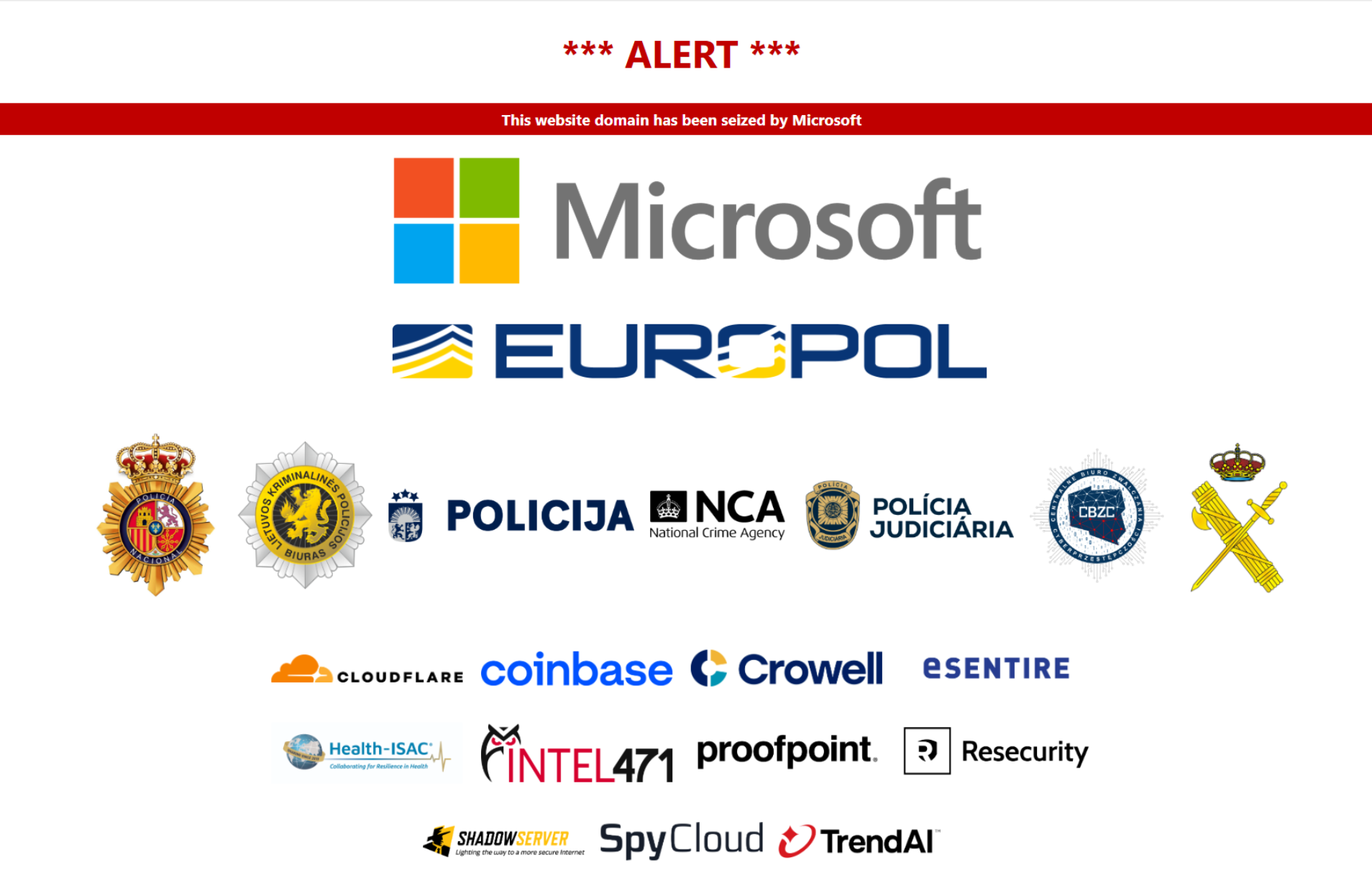
Europol and Microsoft led a coordinated takedown of Tycoon 2FA, a phishing-as-a-service platform responsible for 62% of phishing attempts blocked by Microsoft and affecting 96,000 victims worldwide.

Privacy technologies
fromSecurityWeek
1 month agoTycoon 2FA Phishing Platform Dismantled in Global Takedown
Europol and Microsoft led a coordinated takedown of Tycoon 2FA, a phishing-as-a-service platform responsible for 62% of phishing attempts blocked by Microsoft and affecting 96,000 victims worldwide.
fromFast Company
1 month agoScanning that QR code can leave you vulnerable. Here's how to protect yourself
QR codes are two-dimensional images with glyphs of various sizes that store not just numbers, but text. When scanned, your phone extracts the encoded information and can act on it. For example, QR codes often embed URLs, allowing you to scan, say, a parking meter to launch a webpage where you can pay online.
Privacy technologies
fromwww.bbc.com
2 months ago'Thieves broke into my car - to take parcel shelf'
She said people "just couldn't believe" cars were being broken into just for the shelves. The Met Police opened an investigation following a number of parcel shelves being stolen from cars in Hampstead and Highgate, the force said. Sam Phipps Phipps told BBC Radio London her car was targeted despite only having her gym bag, out of sight, in the boot.
London
#phishing-attack
Information security
fromSecurityWeek
2 weeks agoSecurity Firm Executive Targeted in Sophisticated Phishing Attack
A C-level executive at Outpost24 was targeted by a sophisticated phishing attack using the Kratos phishing-as-a-service kit that exploited legitimate services like Cisco and Nylas to bypass security defenses.
Information security
fromSecuritymagazine
3 weeks agoTargeted Phishing Attack Breaches Biotech Company Data
Intuitive Surgical suffered a phishing attack compromising employee credentials, exposing customer and corporate data, though operational systems and customer networks remained unaffected due to network segmentation.
Information security
fromSecurityWeek
3 weeks agoSIM Swaps Expose a Critical Flaw in Identity Security
SIM swap attacks exploit structural weaknesses in mobile-based identity verification, allowing criminals to intercept authentication codes and take over accounts by transferring victims' phone numbers to attacker-controlled SIM cards.
Information security
fromSecuritymagazine
3 weeks agoObject-Specific Protection: The Non-Negotiable Foundation of Art and Asset Security
Object-specific protection is essential as a primary security layer to prevent art theft, as comprehensive facility-wide systems fail when adversaries physically interact with high-value objects without triggering alarms.
Intellectual property law
fromIPWatchdog.com | Patents & Intellectual Property Law
1 month agoOther Barks & Bites for Friday, February 6: Counterfeit Study Shows 41% Fail Product Safety Standards; USPTO De-Designates PTAB Precedentials on RPI Amendments
41% of counterfeit apparel and footwear tested failed U.S. safety standards for hazardous chemicals, indicating significant consumer health risks and regulatory gaps.
fromPCWorld
4 weeks agoPhishing scammers weaponize ICE ragebait
The email seen by at least some customers of the Emma email platform was a phishing scam. Hackers hoped to inspire instant panic with the words, 'As part of our commitment to supporting U.S. Immigration and Customs Enforcement (ICE), we will be adding a Support ICE donation button to the footer of every email sent through our platform.'
Information security
Information security
fromForbes
1 month agoAdapting Brand Protection Strategies In The Age Of AI And Deepfakes
AI and automation have industrialized brand abuse at scale, requiring brands to move beyond manual enforcement to technology-driven defense strategies that match attacker velocity and economics.
fromMashable
1 month agoHackers use this tool to bypass fraud detection and weaponize Google ads
The service, referred to as 1Campaign, provides hackers with a one-stop-shop for running malicious ads and enabling fraud "at scale," a recent report by cybersecurity company Varonis uncovered. Using just a single dashboard, hackers can cloak malicious content from security researchers, ad platform reviewers, and automated scanners - who instead see a benign white page - and target general users with phishing or scam attempts.
Information security
fromTechzine Global
1 month agoInfostealer steals identity of AI agent OpenClaw
Security researchers have discovered a live infection in which an infostealer has stolen the configuration files of an OpenClaw AI agent. The attack was carried out through a broad file-theft routine that automatically searched for sensitive file extensions and specific folder names, including .openclaw. The malware was not specifically designed for OpenClaw; it arose by chance from capturing the operational context of the victim's AI assistant. What makes the attack particularly serious is the combination of stolen data.
Information security
Information security
fromTechCrunch
1 month agoFormer Tesla product manager wants to make luxury goods impossible to fake, starting with a chip | TechCrunch
A solution combining hack-proof chips and digital certificates uses integrated hardware and software to authenticate luxury goods and protect brands and buyers.
[ Load more ]