#cowos-advanced-packaging
#cowos-advanced-packaging
[ follow ]
#semiconductors #tsmc #ai-demand #nvidia #ai #investment #semiconductor-manufacturing #stock-market #intel
fromSilicon Canals
7 hours agoJapan is deploying robots not to replace workers but because there's no one left to hire - Silicon Canals
Japan's push into AI-powered robotics is driven less by competitive ambition than by demographic arithmetic. The country's population declined for a 14th consecutive year in 2024, with working-age citizens comprising just 59.6% of the total population.
Artificial intelligence
Science
fromSilicon Canals
1 day agoSpaceX, Amazon, and Google want orbital data centers - four engineering barriers reveal who really benefits - Silicon Canals
Orbital data centers will concentrate AI infrastructure power among a few dominant companies, limiting access for smaller competitors and national regulators.


fromFast Company
4 days agoChina is moving faster on next-gen tech. The U.S. is trying to keep up
In recent weeks, China approved the world's first commercial brain-computer interface medical device and unveiled a five-ton class electric vertical takeoff and landing aircraft that has already completed a public flight.
Science
#semiconductors
World politics
fromSilicon Canals
2 weeks agoInside the quiet restructuring of global semiconductor supply chains: how TSMC, Samsung, and Intel's subsidy race is creating three separate technological civilisations - Silicon Canals
Governments are investing heavily in semiconductor production, leading to the creation of three distinct technological ecosystems.

World politics
fromSilicon Canals
2 weeks agoInside the quiet restructuring of global semiconductor supply chains: how TSMC, Samsung, and Intel's subsidy race is creating three separate technological civilisations - Silicon Canals
Governments are investing heavily in semiconductor production, leading to the creation of three distinct technological ecosystems.
#euv-lithography
European startups
fromTechzine Global
1 month agoCalls for a 'Chinese ASML' are growing louder, but it is still a long way off
Chinese chip executives advocate for developing domestic EUV lithography technology as a central priority, proposing a national integrator model to reduce dependence on ASML amid export restrictions.
fromTNW | China
4 days agoChina's Nexchip files for Hong Kong listing as $5 billion chip expansion accelerates
Nexchip Semiconductor is seeking a dual listing alongside its existing Shanghai shares, a move designed to tap international capital for what amounts to an industrial expansion of extraordinary scale.
European startups
fromTechCrunch
5 days agoToyota's Woven Capital appoints new CIO and COO in push for finding the 'future of mobility' | TechCrunch
Kato officially assumes her greatest challenge yet - CIO of Toyota's Woven Capital and CEO of Toyota Invention Partners. The latter appointment makes her the first female CEO of a wholly owned Toyota subsidiary.
Venture

from24/7 Wall St.
6 days agoHelium "Tsunami" to Hit Chipmakers -- The Surprising Winner to Profit From the Coming Shortage
Global helium consumption runs about 6 billion cubic feet per year. Qatar supplied a big slice until this month. With one-third of output sidelined, prices have already soared.
Business


Business
from24/7 Wall St.
2 weeks agoACMR vs KLIC: Battle of the Semiconductor Equipment Stocks
ACM Research achieved record revenue but faced margin collapse, while Kulicke & Soffa posted strong earnings with stable margins after strategic restructuring, revealing divergent momentum in semiconductor tools.
from24/7 Wall St.
3 weeks agoRetirees Are Using EWT to Ride Taiwan's Semiconductor Dominance
Taiwan Semiconductor Manufacturing (NYSE:TSM) sits at the center of this fund, representing 22.3% of the portfolio - a concentration that reflects TSMC's irreplaceable role in global chip supply chains. It manufactures chips for Apple, Nvidia, AMD, and virtually every other major technology company, and that dominance shows up in its financials: 45% profit margin and 35% return on equity that few industrial companies anywhere in the world can match.
Business
European startups
fromTheregister
4 weeks agoBeijing warns of more chip supply worries amid Nexperia mess
China's Ministry of Commerce warns of semiconductor supply chain disruption following Nexperia's restriction of Chinese staff access to critical systems, while Indonesia bans social media for children under 16 to combat cyberbullying and addiction.
European startups
fromTechzine Global
1 month ago"AI chips will remain in America unless foreign countries invest in the US"
The US government is implementing strict export controls on AI chips, requiring foreign customers to invest in US AI infrastructure or provide security guarantees, with ongoing monitoring of chip distribution and usage.
fromThe Verge
1 month agoThe RAM shortage is coming for everything you care about
Do you have a phone in your pocket you'd like to upgrade in the next few years? Fancy a game console or handheld? A laptop, perhaps? Will you need a new router, whether you're purchasing outright or renting from your ISP? Each of these devices is expected to have shortages, price hikes, or both in 2026. And even if you don't plan to buy, you depend on goods and services from others who'll be paying more to upgrade their devices.
Gadgets
fromThe Nation
2 months agoHow Taiwan Became the Chipmaker for the World
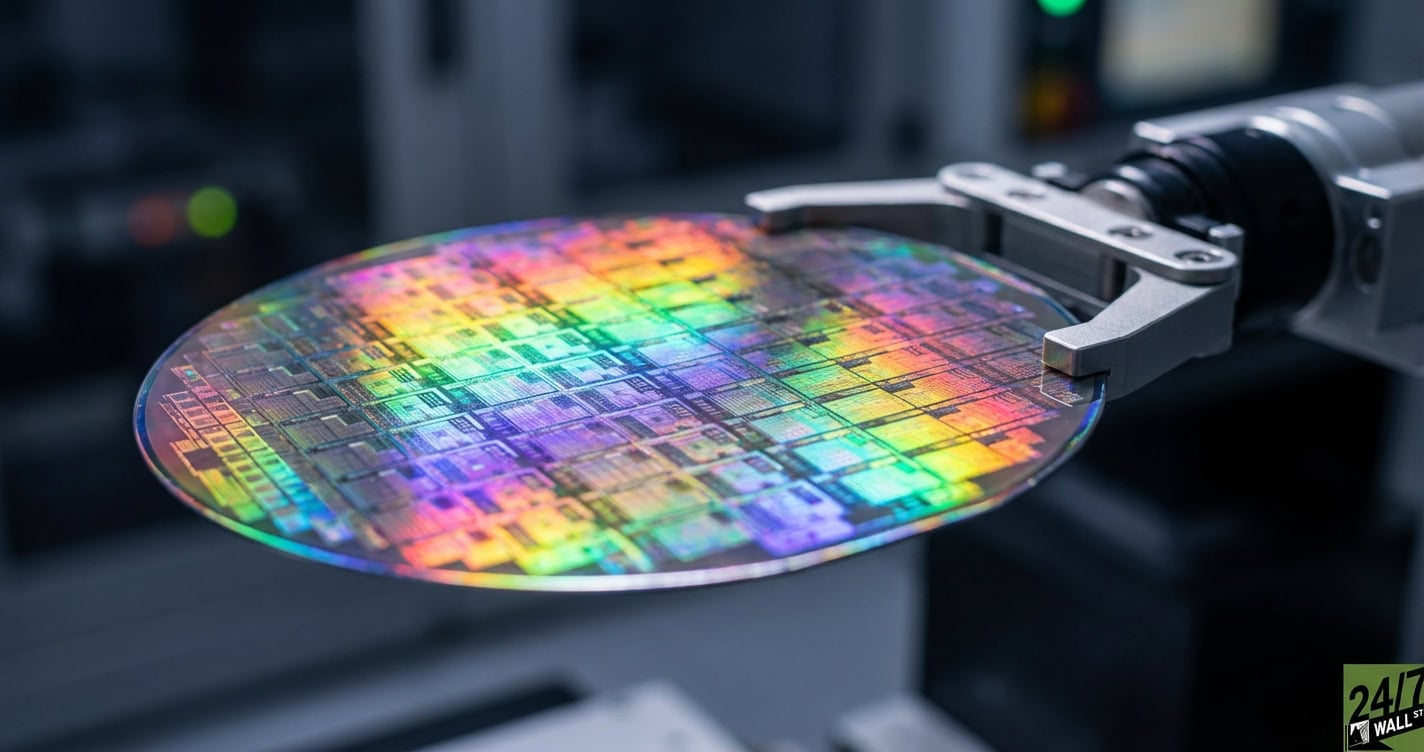
When Donald Trump nominated Elbridge Colby as the undersecretary of defense for policy, the news stirred headlines in Taiwan. Colby, who has since been confirmed, had repeatedly stated on social media that if China ever invaded Taiwan, the US military should destroy TSMC, the world's most important chip manufacturer, to prevent it from falling into Chinese hands. The provocative suggestion has been echoed by Democratic Representative Seth Moulton,
World news

fromTechCrunch
1 month agoUS reportedly considering sweeping new chip export controls | TechCrunch
U.S. regulators have allegedly drafted rules that would require U.S. government approval to ship AI chips anywhere outside the U.S., according to Bloomberg, citing sources. This would give the U.S. significantly more control over companies like AMD and Nvidia.
European startups
fromComputerworld
2 months agoApple Silicon: As demand grows, is TSMC driving a harder bargain?
The gold rush across the high-end processor market might help Apple's processor manufacturing partner, TSMC, drive harder bargains than in the past. That's because Apple's huge appetite for processors is being met by fast-growing demand for chips for servers. As a result, the cost of the chips used inside Macs, iPads, and iPhones will likely increase, putting even more inflationary pressure on Cupertino's bottom line.
Apple
fromThe Cipher Brief
2 months agoExport Controls Backfire: The China Innovation Paradox
Instead of paralyzing China's AI sector, these controls have promoted domestic self-reliance. With no choice but to develop indigenous workarounds and architectural innovations, Chinese businesses are decoupling AI progress from sheer hardware volume. U.S. policies have undoubtedly bought time, but they have also ushered in a parallel innovation ecosystem totally independent of Western influence.
Artificial intelligence
[ Load more ]