#creative-capital
#creative-capital
[ follow ]
#creativity #innovation #architecture #art #ai #sustainability #intellectual-property #community-engagement

#art
Arts
fromIrish Independent
4 days ago'You have to step in and experience it' - artists on the rise of AI-generated art and the 'essential' gallery visit
Miriam Fitzgerald Juskova's exhibit combines paper quilling with mathematics, showcasing intricate art that engages viewers and emphasizes the value of handmade creations.


fromFast Company
6 days ago'Leverage the local': The fashion trend that explains why everyone around you is channeling their inner tourist
Clothing that bears the name of a city near or far has become a closet staple for many consumers in recent years, evolving from impulse purchases to mainstream fashion.
Fashion & style
fromArchDaily
4 days agoThe Illusion of Lightness: Designing Civic Voids for Public Life
The original intent of pilotis was to create a sense of lightness that would allow circulation and light to flow beneath a structure, but contemporary requirements render thin columns insufficient for large-scale civic projects.
Renovation
Real estate
fromInc
2 weeks agoWhy Connectivity Is the New 'Location' in Commercial Real Estate
Digital infrastructure and connectivity now rival or surpass traditional location as the primary factor determining real estate value for business properties, with 96% of U.S. business leaders willing to pay premium prices for reliable connectivity.
Design
fromdesignboom | architecture & design magazine
3 days agoreversible cultural pavilion activates public space in frankfurt 2026
Spain's pavilion for World Design Capital 2026 emphasizes reversible cultural infrastructure and sustainable design through innovative materials and construction methods.
Media industry
fromVariety
2 weeks agoArte President Bruno Patino Issues Industry-Wide Alert: AI Has Now Pushed Us Into a 'Relationship Economy,' the Only Way Forward Is 'Coalition'
Media sovereignty faces existential threats from conglomeration, AI-driven fragmentation, and loss of shared information commons, requiring urgent industry rethinking.
Women in technology
fromPsychology Today
3 weeks agoCreative Potential Is Equal; Recognition Is Not
Research demonstrates no gender differences in creative thinking ability, yet women receive significantly less recognition and support for creativity across industries, creating unequal outcomes despite equal potential.
Artificial intelligence
fromBusiness Insider
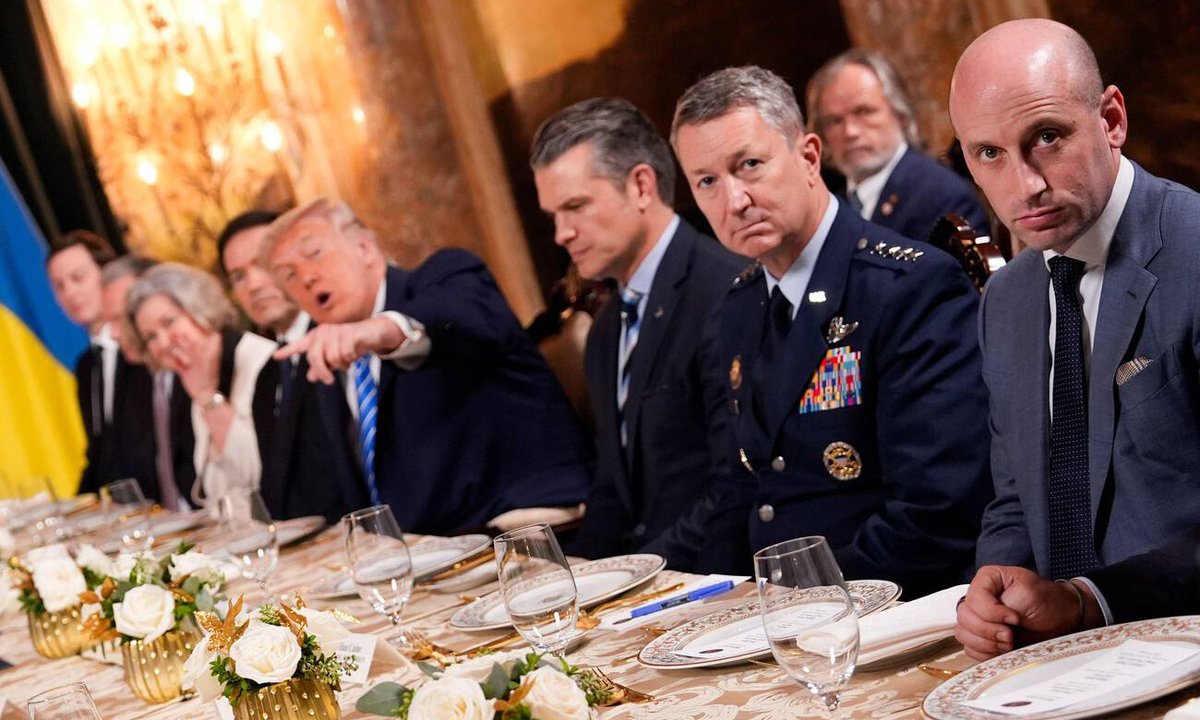
3 weeks agoHow to use AI without getting dumber, according to a serial entrepreneur
Overreliance on AI risks dulling workers' critical-thinking skills; a 10-80-10 rule balances human judgment with AI efficiency by requiring original human thought at task start and end.
fromdesignboom | architecture & design magazine
2 weeks agocritical futures: how superflux draws upon speculative designs to transform our present
The most effective way to change what people do today is to make them experience what tomorrow can look like. They illustrate details backed by data, science, and facts, allowing their imagined futures to no longer stand as theories but as actionable methods. Where forecasting extends from data, speculative design builds from imagination, supported by research.
Graphic design
Intellectual property law
fromIPWatchdog.com | Patents & Intellectual Property Law
3 weeks agoA Response to Opposition of the 'Stealing Isn't Innovation' Campaign
The Human Artistry Campaign advocates for licensing copyrighted works to train AI models, while tech industry responses lack precision and credibility despite claiming otherwise.
fromItsnicethat
1 month agoHow does a creative residency impact your practice? Quite a lot, according to these artists
Her practice uses clay to bring people together with the "therapeutic aspects of tactile making". She first came to ceramics during university, where access to the department allowed her to fall in love with the practice. And so, Ciara is deeply cognisant of the importance of supporting those who struggle to access a ceramics studio due to various social factors.
Online Community Development
fromIndieWire
1 month agoThe Creator Economy Builds Its Own Lot
Creators truly are creatives, but they're also entrepreneurs. They're also technology-savvy and they understand audiences. And I don't think there's ever been a generation of creatives who've been able to do all four of those things. The Lighthouse CEO Jon Goss highlights the unique skill set of modern creators who must balance artistic vision with business acumen, technical proficiency, and audience engagement.
Startup companies
Marketing
fromItsnicethat
3 weeks agoPOV: The creative agency model is dead - that's why I shut mine down
The traditional creative agency model is unsustainable due to inflated overhead, broken economics, and market pressures from AI and economic shifts, prompting successful agency leaders to pursue alternative business structures.
fromVogue
1 month agoHow a New Generation of Designers Are Promoting, and Protecting, Their Names
What if I took my design lens and built out my essentials capsule for the Everlane customer? I felt like that would be a really amazing opportunity for me to introduce myself as a designer to an audience outside of EB Denim.
Fashion & style
fromThe Art Newspaper - International art news and events
2 weeks agoReimagining communities: inside the Hong Kong International Cultural Summit
Communities make museums and museums make communities. Part of the establishment of M+ was a public consultation where people were asked what kind of museums they wanted. The recommendation was not to build lots of little museums, but to create a big museum that was cross-disciplinary, unburdened by labels like "modern" or "contemporary". It was to be a museum plus more, and that was how we became M+.
Arts
Environment
fromThe Art Newspaper - International art news and events
2 months agoComment | In worrying times for politics and the environment, art can still provide hope
Olafur Eliasson confronts the climate emergency through art and action, urging practical engagement over passive hope while remaining committed to idealism.
Business
fromBusiness Matters
1 month agoDevelopment of the "Creative Hub" Model as a Factor of Sustainable Development and the Enhancement of Ethical Standards in the International Tattoo Business
Creative hub model supports sustainable development in the tattoo business by fostering professionalization, artist growth, brand-building, ethical standards, and commercial success.
fromItsnicethat
1 month ago"Try reaching out to some founders"
Search beyond major job engines by using niche job boards, Google X‑ray searches, industry trade directories, company filings, supplier and client lists, local business registers, conference speaker lists, and professional association directories; cross-reference these sources, build a prioritized spreadsheet, and set email or RSS alerts to track when small employers post trainee or entry-level opportunities, and monitor sector-specific hashtags and community Slack/Discord channels for unadvertised roles.
Careers
fromMedium
2 months agoAI and Creativity: Why Human Imagination Still Matters in an Algorithmic World
As AI systems become more capable, more accessible, and more embedded in everyday workflows, creativity is emerging as one of the most important human skills in AI development and deployment. Not creativity as decoration or aesthetics, but creativity as problem framing, decision-making, and human judgment. In an era where many organizations are using the same models, tools, and platforms, creative thinking is what separates meaningful outcomes from generic ones.
Artificial intelligence
fromItsnicethat
1 month ago"The content is king"
I'm a midweight designer looking to step into another job elsewhere but I keep hearing so many conflicting things about portfolio formats and I don't want to have to recreate three versions all on different platforms just to apply for a job. I can't find any solid advice on what agencies are looking to see regarding format and if sending a PDF makes you look dated.
Graphic design
fromElectronic Frontier Foundation
2 months agoCopyright Should Not Enable Monopoly
There's a crisis of creativity in mainstream American culture. We have fewer and fewer studios and record labels fewer and fewer platforms online that serve independent artists and creators. At its core, copyright is a monopoly right on creative output and expression. It's intended to allow people who make things to make a living through those things, to incentivize creativity. To square the circle that is "exclusive control over expression" and "free speech," we have fair use.
Intellectual property law
Marketing
fromLondon Business News | Londonlovesbusiness.com
2 months agoHow animation is becoming London's secret weapon for business growth - London Business News | Londonlovesbusiness.com
Animation enables London businesses to communicate complex ideas efficiently, engage audiences, and offer creative control, cost-effectiveness, and adaptability across sectors.
fromThe Art Newspaper - International art news and events
1 month agoClub for working class art professionals expands from London to Manchester
"Working Arts Club was always going to exist outside of London because class issues in the art world are systemic not geographic," founder Meg Molloy, who works in London as a freelance communications consultant for the art world. "The need for what our network can do is widespread and going to Northern England felt like a natural next step in our operations."
Arts
[ Load more ]