#csiro
#csiro
[ follow ]
fromwww.theguardian.com
19 hours agoIt's official: scientists aren't funny. But it doesn't have to be this way | Helen Pilcher
The findings confirm research that I conducted more than 20 years ago. Under the guise of the Comedy Research Project, Timandra Harkness and I performed a randomised clinical trial to assess whether or not science can be funny.
Humor
#ai
Artificial intelligence
fromThe Nation
1 day agoThe AI Boom Is a Climate Bust
AI is increasingly being used to spread climate change disinformation, complicating efforts to combat the climate crisis.


#fuel-crisis
World news
fromYahoo Finance
3 weeks agoCountries ordered to work from home as fears grow for Aussie supplies: 'It's happening'
Multiple Asian countries implement work-from-home mandates, travel restrictions, and energy conservation measures to reduce fuel demand amid escalating Iran conflict and supply concerns.
fromNature
6 days agoNow is the time for scientific societies to guide global research
Modern scientific societies are increasingly vulnerable due to their dependence on membership fees and journal subscriptions, which are being challenged by the rise of virtual networking and open-access publishing.
Science
European startups
fromenglish.elpais.com
1 week agoWelcome, American scientists: Europe, a haven for researchers struggling under Trump
Safe Place for Science initiative successfully attracted U.S. researchers to Europe amid restrictive policies, receiving over 900 applications shortly after its launch.
fromNextgov.com
4 days agoCitizen Science Month 2026 is about more than just stargazing
Citizen Science Month is built around a goal of 2.5 million 'Acts of Science,' tying the annual event to America's 250th birthday through a simple but powerful idea: lots of small contributions can add up to something really meaningful.
OMG science
Science
fromwww.theguardian.com
2 weeks agoIs this the world's first quantum battery? Australian scientists say so
Australian scientists created the first quantum battery prototype that completes a full charge-discharge cycle, demonstrating that larger quantum batteries charge faster due to collective quantum effects.
Artificial intelligence
fromwww.theguardian.com
3 weeks agoWill AI take Australian jobs, or is it just an excuse for corporate restructure?
AI-generated voice technology threatens voice actors and other workers in Australia, with over 1,000 job cuts reported recently and no legal protections currently in place.
fromTechCrunch
3 weeks agoGoogle is using old news reports and AI to predict flash floods | TechCrunch
While humans have assembled a lot of weather data, flash floods are too short-lived and localized to be measured comprehensively, the way the temperature or even river flows are monitored over time. That data gap means that deep learning models, which are increasingly capable of forecasting the weather, aren't able to predict flash floods.
Science
Agriculture
fromwww.theguardian.com
1 month agoTech firms and AI farming tools playing with the food system', warns thinktank
Tech companies use AI and algorithms with industrial agriculture to control global food systems, pushing farmers toward five profitable crops while undermining locally adapted varieties and food security.
fromComputerWeekly.com
1 month agoIT Sustainability Think Tank: Building the backbone of the UK's AI economy | Computer Weekly
The UK is entering a pivotal phase in the evolution of its digital economy as artificial intelligence (AI) shifts from experimental innovation to mainstream dependency. Platforms such as ChatGPT now attract hundreds of millions of weekly active users worldwide, while Microsoft 365 Copilot has been rapidly adopted across the enterprise landscape, with nearly 70% of Fortune 500 companies integrating it into daily workflows.
Tech industry
Environment
fromIrish Independent
3 weeks ago'There are crocodiles everywhere' - thousands are evacuated after major floods in northern Australia
Flooding in Australia's Northern Territory has displaced crocodiles, increasing human danger as police warn against water contact due to aggressive saltwater crocodiles and fast-flowing rivers.
OMG science
fromArs Technica
1 month agoResearch roundup: Six cool science stories we almost missed
Scientists revived Edison's nickel-iron battery design using protein scaffolding and graphene oxide, creating an aerogel structure for improved renewable energy storage with extended range and longevity.
Artificial intelligence
fromEntrepreneur
1 month agoAI Is Driving the Water Crisis-And Powering the Solution
AI-driven water intelligence using sensors and predictive analytics enables companies to reduce freshwater intake by 18% and increase reuse rates to 90%, transforming water from an unmeasured utility into a competitive advantage.
Gadgets
fromComputerWeekly.com
1 month agoMyriota introduces satellite-based scalable global asset tracking | Computer Weekly
AssetHawk combines native 5G NTN satellite connectivity with HyperPulse to deliver affordable, rapid-deploy satellite asset tracking for global visibility beyond cellular networks.
Environment
fromwww.theguardian.com
1 month agoAustralian wildlife in harm's way' with volunteers left to pick up the pieces' amid climate crisis, fires and floods
Labor is urged to establish national wildlife protection standards for disaster response, with advocates warning biodiversity risks could become irreversible without coordinated government-funded rescue and rehabilitation services.
fromNature
1 month agoWhat my cave stay taught me about sensors
To capture the biological impact of this extreme environment, I used a comprehensive suite of sensors and biomarker analyses. I wore a wireless electroencephalograph (EEG) system to monitor brain activity, sleep stages and neural signatures of stress and adaptation; the Oura Ring to continuously track sleep patterns, heart-rate variability and circadian-rhythm shifts; and the glucose monitor to follow metabolic responses in real time.
Wearables
Public health
fromwww.theguardian.com
2 months agoAs a climate scientist, I know heatwaves in Australia will only get worse. We need to start preparing now | Sarah Perkins-Kirkpatrick
Southeastern Australia faces an extreme heatwave with dangerous fire-weather conditions, heightened fire risk, and serious health impacts requiring preparedness and vigilance.
Environment
fromwww.mercurynews.com
1 month agoOpinion: AI is destroying our planet. We must act to check its growth and save ourselves.
AI's environmental impact is severe, with 2025 freshwater consumption exceeding global bottled water use and projected energy demands by 2034 matching India's entire consumption, requiring immediate action.
fromwww.theguardian.com
2 months agoAustralia's heatwaves are getting deadlier and renters are paying the price | Maiy Azize
Australians are struggling through one of the most brutal heatwaves and hottest summers on record. Day after day, temperatures into the high 30s are turning homes into ovens, workplaces into hazards, and everyday tasks into endurance tests. All of us are feeling it. But spare a thought for the millions of renters trying to survive this heat in homes that were never designed to cope with it.
Public health
Environment
fromABC7 San Francisco
1 month agoTracking fisherman to track fish: The new technological approach to better understand ocean life
Global Fishing Watch uses AIS transponder data and artificial intelligence to track fishing vessels worldwide, providing unprecedented visibility into global fishing fleet movements and activities.
World news
fromwww.theguardian.com
2 months agoKilling of K'gari dingoes in wake of backpacker's death could create extinction vortex', expert says
Killing a 10-strong dingo pack linked to Piper James' death risks pushing K'gari's dingo population toward extinction while offering limited human-safety benefits.
fromBig Think
2 months agoThe four paths forward for US scientists in 2026
For nearly 100 years, the United States has been the world's leader in a wide variety of scientific fields. No other country has: invested as much in fundamental scientific research, has made more scientific breakthroughs and scientific advances, has attracted more scientific researchers to move there to conduct their research, or has conducted more projects and been home to more scientists that have won Nobel Prizes.
Science
Environment
fromwww.theguardian.com
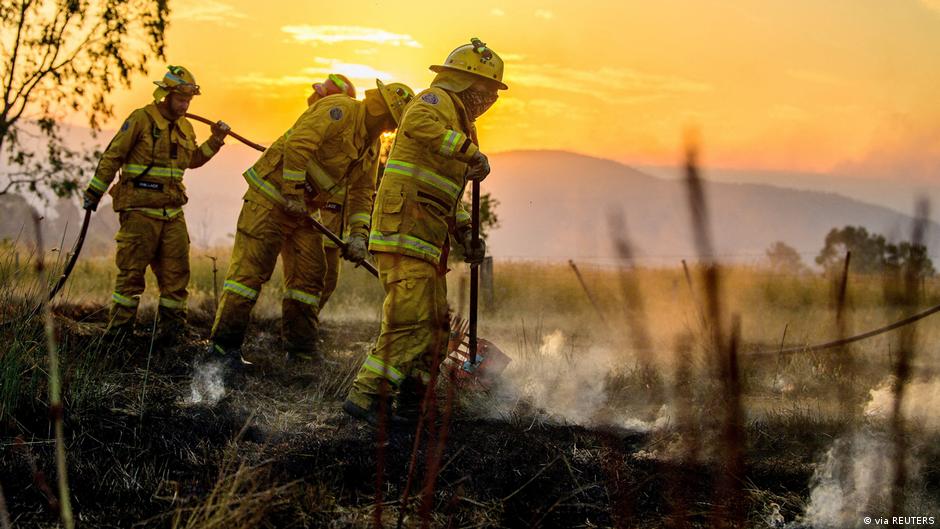
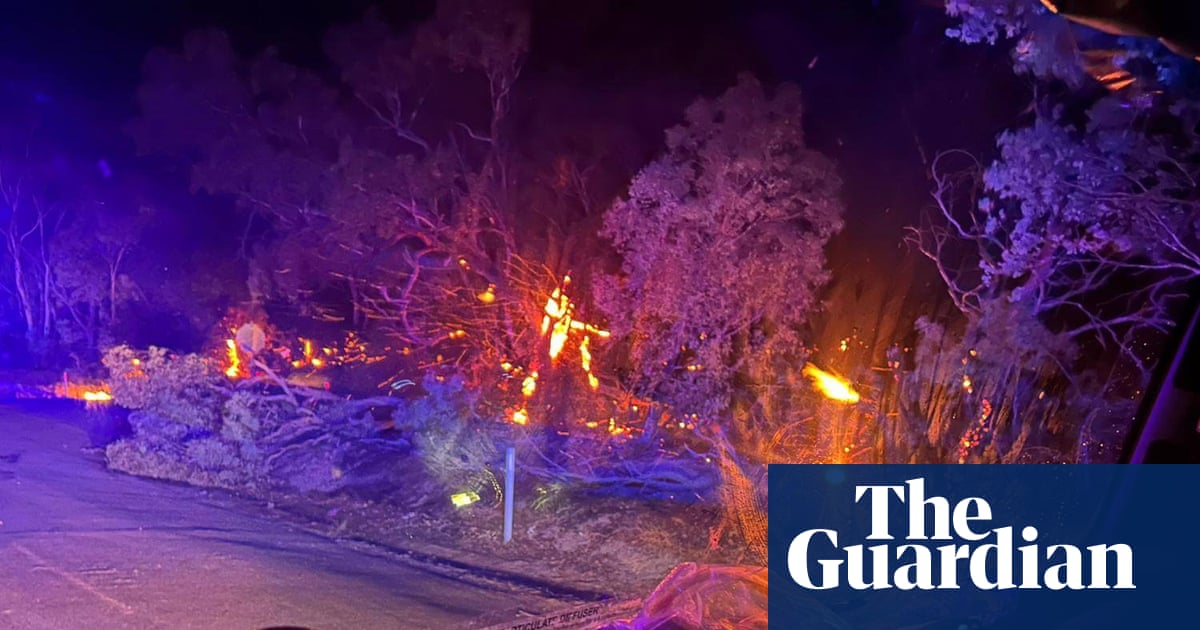
1 month agoThe heat suffocates, the fires rage even by Australian standards, this summer is brutal
Record-breaking heatwaves and catastrophic fires in Australia intensified by greenhouse gas warming have produced unprecedented temperatures, widespread blazes, and profound environmental and community impacts.
fromThe Verge
1 month agoAnthropic says it'll try to keep its data centers from raising electricity costs
Anthropic is the latest AI company promising to limit the impact its data centers have on nearby residents' electricity bills. The company said it would pay higher monthly electricity charges in order to cover 100 percent of the upgrades needed to connect its data centers to power grids. "This includes the shares of these costs that would otherwise be passed onto consumers," the announcement says. Anthropic didn't provide details today about any agreements it has inked with energy companies in order to accomplish these goals.
Artificial intelligence
fromNature
1 month ago'It means I can sleep at night': how sensors are helping to solve scientists' problems
In fact, Stawicki was on a mission to save the lives of around 1,000 zebrafish ( Danio rerio) in her laboratory. Similarities between lines of hair cells on the fish's flanks and those in the mammalian inner ear enable her to use them as a model to study hearing problems in humans caused by some antibiotics and chemotherapy drugs. A sensor had picked up that the lab's heating system had been knocked out by a power fault.
Science
Science
fromNature
2 months agoGreenland is important for global research: what's next for the island's science?
Greenland's scientific research is expanding and globally important, driven by strengthened infrastructure, international collaboration, and critical climate studies amid rising geopolitical interest.
fromTechRepublic
1 month agoAI Labour Costs in Australia: Has It Paid Off?
In Australia, AI has largely been positioned as a way to stretch limited skills capacity in high-cost specialist roles, rather than as a headcount reduction tool. Despite widespread tech layoffs globally and locally over the past few years, Australia's skills shortage has remained largely unchanged. Cuts at large technology firms have often weakened the broader ecosystem, impacting smaller suppliers and subcontractors alongside the firms making redundancies. Rather than releasing excess capacity into the market, layoffs have tended to redistribute pressure across an already constrained talent
Artificial intelligence
fromwww.theguardian.com
1 month agoAustralia's long, complicated energy transition is finally working and not a moment too soon | Tony Wood for the Conversation
Ten years ago, if a heatwave as intense as last week's record-breaker had hit the east coast, Australia's power supply may well have buckled. But this time, the system largely operated as we needed, despite some outages. On Australia's main grid last quarter, renewables and energy storage contributed more than 50% of supplied electricity for the first time, while wholesale power prices were more than 40% lower than a year earlier.
Environment
fromNature
2 months agoI know science can't fix the world - here's why I do it anyway
His message is clear: our world is built on abundant energy, around 80% of which has come from fossil fuels over the past 50 years. Because supplies are limited, energy consumption will peak in decades - sooner if humans attempt to limit climate change. To keep global warming below 1.5 °C by 2100, the use of fossil fuels must fall by 5-8% each year - a pace that is too fast for low-carbon energy to keep up with.
Environment
fromwww.theguardian.com
2 months agoSome want to ban geoengineering research. This would be a catastrophic mistake for our planet | Craig Segall and Baroness Bryony Worthington
A few months ago, Marjorie Taylor Greene, then a Georgia representative, held a hearing on her bill to ban research on geoengineering, which refers to technological climate interventions, such as using reflective particles to reflect away sunlight. The hearing represented something of a first a Republican raising alarm bells about human activity altering the health of the planet. Of course, for centuries, people have burned fossil fuels to power and feed society, emitting greenhouse gases that now overheat the planet.
Environment
fromNature
1 month agoBiodiversity conservation has an evidence problem - it's time to fix it
Biodiversity loss is continuing at an unprecedented rate, with species becoming extinct at between 100 and 1,000 times the average pre-human, or 'background', rate. Human activities are the main cause. Although there are hundreds of local, regional and international initiatives to conserve and sustainably use species and ecosystems, many conservation scientists worry that measures such as interventions to conserve individual species or incentives to create protected areas are not supported by strong evidence from research.
Environment

[ Load more ]