#cultural-arts-grants
#cultural-arts-grants
[ follow ]
#arts-funding #grants #community-engagement #san-francisco #nonprofit #museums #cultural-centers #philanthropy
Higher education
fromOregon ArtsWatch * Arts & Culture News
20 hours agoPortland State University eliminates dance programming, faces uncertain future amid budget cuts * Oregon ArtsWatch
Portland State University is cutting 19 academic departments to address a $35 million budget deficit, impacting courses and faculty positions.

Media industry
fromNonprofit Quarterly | Civic News. Empowering Nonprofits. Advancing Justice.
4 days agoPolitics in an Attention Economy | Nonprofit Quarterly | Civic News. Empowering Nonprofits. Advancing Justice.
Candidates must be cultural figures to succeed in today's American politics, navigating an attention economy shaped by algorithms.
fromWashingtonian - The website that Washington lives by.
4 days agoTrump's Interference With DC Arts Is a Boon to Baltimore
The Baltimore Museum of Art landed her highly anticipated exhibition, 'Amy Sherald: American Sublime,' after the painter pulled her show from the National Portrait Gallery due to concerns over censorship. The exhibit has been a significant hit at the BMA: It was completely sold out by late February.
Washington DC
#nonprofit
Fundraising
fromNonprofit Quarterly | Civic News. Empowering Nonprofits. Advancing Justice.
2 days agoUsing AI for Fundraising Still Requires Human Strategy | Nonprofit Quarterly | Civic News. Empowering Nonprofits. Advancing Justice.
AI should support strategy in nonprofit fundraising, not replace the essential human elements of trust and relationship building.
Non-profit organizations
fromNonprofit Quarterly | Civic News. Empowering Nonprofits. Advancing Justice.
2 days agoHow Dissolving Your Nonprofit Can Strengthen the Sector | Nonprofit Quarterly | Civic News. Empowering Nonprofits. Advancing Justice.
Nonprofit leaders must sometimes choose to dissolve organizations intentionally rather than forcing survival in a weakened state.
Non-profit organizations
fromNonprofit Quarterly | Civic News. Empowering Nonprofits. Advancing Justice.
3 days agoAI in the Nonprofit Sector Is a Question of Governance, Not Just Technology | Nonprofit Quarterly | Civic News. Empowering Nonprofits. Advancing Justice.
Nonprofits face a critical choice in shaping AI governance or risk external control over its implementation and impact.
fromOregon ArtsWatch * Arts & Culture News
2 weeks agoArts & Business Alliance of Eugene: Advocates for the arts * Oregon ArtsWatch
WolfBrown found that Eugene had an abundance of art; however, the town needed more support from the business sector. The results showed that "we punched above our weight for a community our size," said Kelly Johnson, executive director of the nonprofit Arts & Business Alliance of Eugene, which the city created in 2008 to link the arts and business communities.
Portland
#arts-funding



Non-profit organizations
fromOregon ArtsWatch * Arts & Culture News
3 weeks agoPortland art organizations ask for unspent Arts Tax funds, more public support * Oregon ArtsWatch
Over 50 Portland arts organizations request $8.5 million in unspent Art Tax funds to stabilize the sector after a 44% funding reduction and federal cuts.
Portland
fromOregon ArtsWatch * Arts & Culture News
3 weeks ago'Love Letter' No. 2: Oregon Community Foundation gives $7 million for Oregon arts * Oregon ArtsWatch
The Oregon Community Foundation awarded $7,048,300 in grants to 277 arts and cultural organizations across all 36 Oregon counties as part of a $51.8 million three-year funding initiative.
fromThe Art Newspaper - International art news and events
1 week agoComment | Museums must be the leaders in a moral revolution
Bregman claims, 'Today the whole of Europe risks turning into one big Venice, a beautiful open-air museum. A great destination for Chinese and American tourists. A place to admire what was once the centre of the world.' This statement encapsulates the concern that Europe is losing its cultural significance.
Arts
fromOregon ArtsWatch * Arts & Culture News
3 weeks agoPortland facing $1 billion-plus in arts, culture and entertainment infrastructure requests * Oregon ArtsWatch
We can find a middle ground. PSU could reduce the size of its planned theater to between 800 and 1,200 seats, clearing the way for the Keller to be remodeled as a mid-size 1,500 to 1,800 seat venue.
Portland
fromHyperallergic
2 weeks agoVilcek Foundation to Award $200,000 in Grants to Nonprofits Uplifting Immigrant Contributions
"A primary goal of this grantmaking is to diversify our funding impact and make ourselves accessible, while developing partnerships with institutions in all 50 states, American Samoa, Guam, the Northern Mariana Islands, Puerto Rico, and the US Virgin Islands."
Arts
fromNew York Amsterdam News
1 month agoBlack churches in Harlem, Brooklyn receive preservation grant money
No pillar of the African American community has been more central to its history, identity, and social justice vision than the Black Church. The grant is a blessing that will help us to make sure that it will be here for another 120 years and more.
Fundraising
Arts
fromHyperallergic
2 weeks agoMeet the Woman Who Made Museums More Accessible
Lorena Bradford, the National Gallery of Art's first head of Accessible Programs, transformed museum accessibility by creating intentional programs for disabled visitors, including ASL tours, memory loss programs, and medical student training initiatives.
fromPortland Mercury
1 month agoUpdate: Supporters to Rally Thursday Over Funding Cuts to Innovative PCC Music Program
The Music and Sonic Arts (MSA) program is an industry-shaping program focused on music recording, production, audio programming, interactivity, and composition using contemporary tools including Ableton or Max MSP software. Offered at the Portland Community College (PCC) Cascade campus in North Portland, the program includes pathways for two-year associate's degrees in music, or one-year certificates that can be useful in music and other tech jobs.
Education
Portland
fromOregon ArtsWatch * Arts & Culture News
1 month agoDowntown Portland arts centers need $336 million in deferred maintenance * Oregon ArtsWatch
Portland's three downtown performing arts buildings require approximately $336 million in deferred maintenance over the next 10-30 years, with Metro transferring management to the city.
Portland
fromOregon ArtsWatch * Arts & Culture News
1 month agoOregon Arts Commission names new leaders * Oregon ArtsWatch
Jason Holland and Jenny Stadler elected to lead Oregon Arts Commission, bringing arts administration and accessibility expertise to state board during period of reduced federal arts funding.
Arts
fromThe Art Newspaper - International art news and events
3 weeks agoComment | Why museum leadership needs to decentralise
Traditional museum leadership models are failing under contemporary pressures, requiring a fundamental shift from centralized, individual authority to distributed, collaborative leadership structures.


fromOregon ArtsWatch * Arts & Culture News
3 weeks agoArts advocates praise 2026 Oregon Legislature but face challenges before 2027 session * Oregon ArtsWatch
These cuts threaten shovel-ready projects, major employers, and rural and urban communities across the state. And they come at a time when [Oregon] arts funding is already among the lowest in the nation. Legislators had been considering cutting nearly $900,000 in arts and culture funding when the session started on Feb. 2.
Arts
Mental health
fromInside Higher Ed | Higher Education News, Events and Jobs
2 months agoHow Colleges Are Tackling Loneliness With the Arts
Art Pharmacy applies social prescribing—referrals to arts and community activities—to improve college students' mental health, reduce loneliness, and integrate community resources into care pathways.
Social justice
fromNonprofit Quarterly | Civic News. Empowering Nonprofits. Advancing Justice.
2 months agoFor Every $100 Foundations Give, Only 19 Cents Go to Volunteer Support | Nonprofit Quarterly | Civic News. Empowering Nonprofits. Advancing Justice.
Volunteers are essential to nonprofit capacity and social change, deserving transformative investment rather than being dismissed as merely "nice".
fromOregon ArtsWatch * Arts & Culture News
1 month agoA third round of grants opportunities announced for America 250 Oregon projects * Oregon ArtsWatch
The 15-member commission, which was created by the Oregon Legislature, has already awarded $125,000 in community grants to 38 eligible organizations for projects focusing on how the 250 years since the signing of the Declaration of Independence in 1776 has shaped the state. The funding, which was approved in two rounds, has flowed to both urban and rural parts of Oregon. Now the commission has announced that a third round of grants totaling $50,000 will be available starting on Wednesday, March 4. The maximum grant is $3,000 and no match is required. Fifty percent of the grants will be dedicated to rural communities.
US politics
Education
fromOregon ArtsWatch * Arts & Culture News
2 months agoPortland Art Museum's Bold New Vision for Youth and Community Education and Engagement * Oregon ArtsWatch
Portland Art Museum transformed spaces to prioritize K–12 education with transparent, tech-enabled learning studios and youth galleries integrated visibly into the museum.


Higher education
fromInside Higher Ed | Higher Education News, Events and Jobs
1 month agoGreat Grants Need Far Away Deadlines
Unreasonably tight grant timelines and limited grant-writing capacity disadvantage community colleges, reducing their ability to compete for Workforce Pell and civil discourse funding.
fromHyperallergic
1 month agoOpportunities in March 2026
Hyperallergic's monthly Opportunities Listings provide a resource to artists and creatives looking for funding and community support to further their work. Residencies, Workshops, & Fellowships, Center for Craft - 2026 Craft Archive Fellowship Four $5,000 awards will be offered to fellows conducting research on underrepresented craft histories.
Arts
fromOregon ArtsWatch * Arts & Culture News
2 months agoWelcome news: U.S. House approves future NEA, NEH funding * Oregon ArtsWatch
The U.S. House of Representatives passed a Fiscal Year 2026 ominibus appropriations bill by a vote of 397 to 28 on Jan. 8 that included $207 million each for the NEA and NEH. It includes funding for multiple other federal agencies, too, including the Department of Commerce, the Department of Justice, and the Department of the Interior. The bill now moves to the U.S. Senate, which is expected to take up the legislation during the week of Jan. 12-16.
US politics
fromNonprofit Quarterly | Civic News. Empowering Nonprofits. Advancing Justice.
2 months agoNonprofits Devise Creative Solutions to Address Federal Funding Cuts | Nonprofit Quarterly | Civic News. Empowering Nonprofits. Advancing Justice.
Over the years, I've worked as a consultant on numerous federal grant projects from the US Department of Agriculture and elsewhere that focused on local economic development and were granted to nonprofits serving their communities. But since the 2024 elections, the focus of my work-and that of the small New Mexico-based consulting firm, Prospera Partners, that I lead-has shifted to help nonprofits develop strategies to sustain themselves despite federal cuts in funding and to programs that once supported their work.
Non-profit organizations
Arts
fromColossal
1 month agoMarch 2026 Opportunities: Open Calls, Residencies, and Grants for Artists
Multiple international art opportunities are available including juried exhibitions, grants, and residencies with deadlines in March 2026, offering selected artists exhibition, publication, promotion, and financial awards.
Fundraising
fromOregon ArtsWatch * Arts & Culture News
2 months agoArtsWatch Insider: We met the end-of-year fund-raising goal! * Oregon ArtsWatch
The community donated $27,827 during the Nov. 1–Dec. 31, 2025 campaign, surpassing the $25,000 goal and demonstrating strong support for local arts journalism.

fromOregon ArtsWatch * Arts & Culture News
1 month agoArts and culture supporters urged to lobby for funding at 2026 Oregon Legislature * Oregon ArtsWatch
The day after Whitelaw testified, the state economist said that Oregon now has about $300 million more to spend than previously expected. The new revenue forecast does not mean the budget is in the black, however. There are new demands for the available dollars, including $600 million in upgrades to the Moda Center to retain the Portland Trail Blazers, a recently announced $50 million shortfall in Portland Public School funding,
Arts
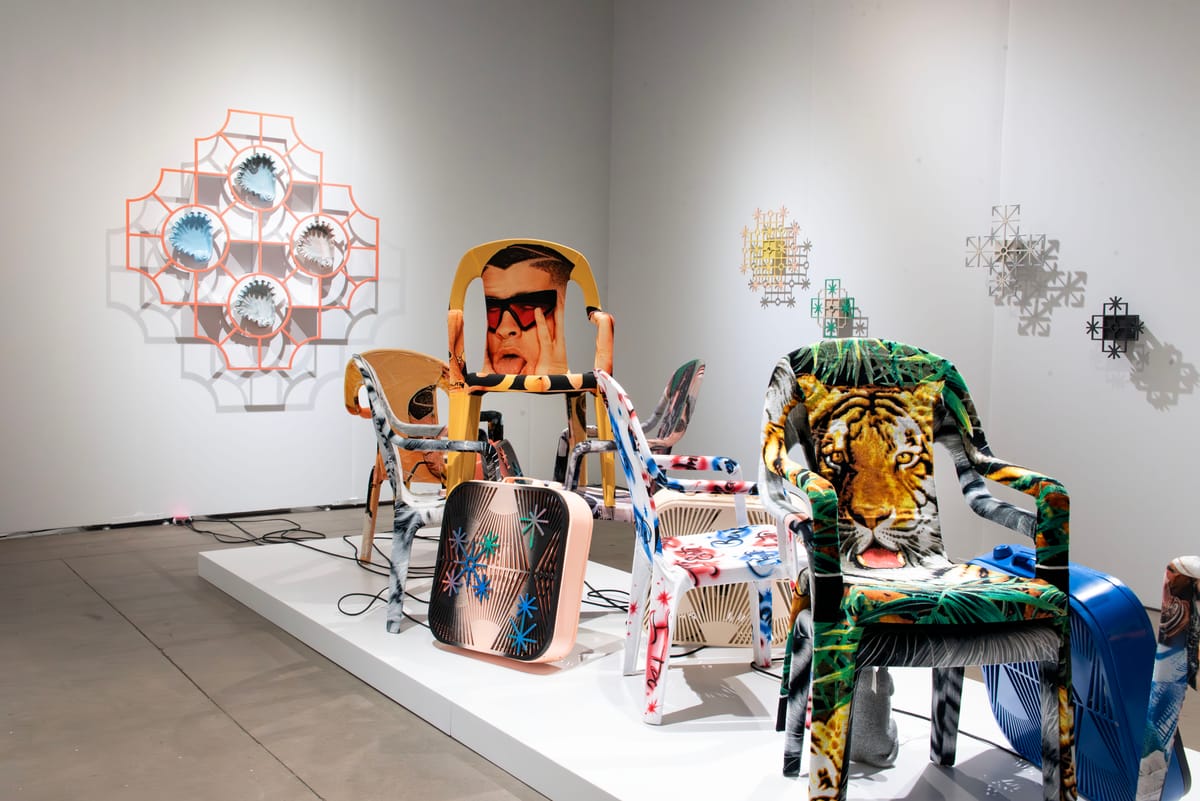

fromSan Jose Spotlight
1 month agoUrbanowski: The arts need more investment from the state - San Jose Spotlight
Artists make California vibrant, innovative and culturally rich, yet our state ranks 35th nationally in per capita arts funding. When the state budget allocates just 53 cents per person to the arts, it's clear how little we're investing in the creative workers who shape the state's identity and economy. California's artists are delivering extraordinary value with minimal investment. Imagine what a stronger commitment to the arts could do for our communities, our economy and our future.
Arts
Arts
fromThe Art Newspaper - International art news and events
2 months agoNational Endowment for the Humanities awards $75.1m to 84 projects across the US
NEH awarded $75.1m to 84 projects emphasizing semiquincentennial programming, higher-education initiatives, and arts and museum funding, including controversial recipients.
fromHyperallergic
2 months agoArt for Dignity
As if demolishing the East Wing, gutting arts agencies, and slapping his name and face on several federal buildings weren't enough, the US president now wants to do away with a DC building known as the "Sistine Chapel of New Deal art." This week, we reported on a burgeoning campaign to save the Wilbur J. Cohen Federal Building, which houses murals by Ben Shahn, Philip Guston, Seymour Fogel, and other major American artists. We will continue to follow this story.
Arts
fromHyperallergic
1 month agoFrankenthaler Climate Initiative Opens Applications for Sixth Grant Cycle
Since its launch in 2021, the program has become the largest private national grantmaking initiative of its kind, supporting visual arts organizations in the United States through assessment, planning, and implementation of efforts to reduce their environmental impact through clean energy generation and energy efficiency measures. Overseen by the Helen Frankenthaler Foundation in association with Environment & Culture Partners and Green Design Collaborative, FCI has awarded more than $17.5 million to 249 institutions across 40 states to date.
Arts
fromOregon ArtsWatch * Arts & Culture News
2 months agoFields Artist Fellowships award $150,000 each to four Oregon artists * Oregon ArtsWatch
"For over a decade," the news release states, "he has developed and led arts-based programs with marginalized youth, including co-founding Ascending Flow in East Portland and helping develop Keys, Beats, Bars at MacLaren Youth Correctional Facility in partnership with the Oregon Health Authority. He is the founder of Peer Tribe Foundation, which supports artists and leaders creating measurable impact in their communities. ... The grant will support cultural exchange in the Philippines, sustain hip-hop workshops for youth in correctional facilities, and launch a portable recording studio project in Oregon."
Arts
fromHyperallergic
1 month agoThe Commissioner We Need
It's impossible to imagine New York City without art, or contemporary art without New York City. This is where you come to see the best of the best, or to take part in making it. This country's international standing is down in the gutter, thanks to Trump, but this city is still a living, rolling dream. Right now, we're waiting to see who's going to be Mayor Mamdani's pick for cultural affairs commissioner. It's an important role that determines where the city's budget priorities will lie and who'll get a seat at the table. Gonzalo Casals, who served as culture commissioner under Mayor de Blasio, and Mauricio Delfín, who co-directs the Culture & Arts Policy Institute with Casals, have some urgent thoughts on the matter. It's a must-read not just for Zohran (send him a link if you're on texting terms), but for everyone who cares about art in this city.
Arts
Arts
fromOregon ArtsWatch * Arts & Culture News
2 months agoBy sponsoring arts events, Arts@Clark Presents aims to promote Clark College, departments, students * Oregon ArtsWatch
Clark College Foundation launched Arts@Clark Presents to host touring artists, performances, workshops, and campus-community events integrating student educational and fundraising partnerships.
[ Load more ]