#culture-as-infrastructure
#culture-as-infrastructure
[ follow ]
#architecture #public-space #sustainability #heritage #belonging #resilience #urban-development #urban-design
fromThe Atlantic
2 hours agoHow Some People Became So Averse to Hype
Anna Holmes defines 'hype aversion' as a reflex against being told what to like, suggesting that popularity can create pressure rather than signal quality. This feeling can lead to a deliberate choice to resist mainstream culture.
Media industry
#social-networks
Psychology
fromSilicon Canals
4 days agoPeople who keep their circle small aren't antisocial. They genuinely learned that intimacy and popularity are opposing forces, even though loneliness occasionally shows up as the cost of admission - Silicon Canals
Intimacy and popularity are competing pursuits; small social circles reflect a natural structure of human relationships, not a failure of social development.
#belonging
Relationships
fromSilicon Canals
9 hours agoThe most painful version of not belonging isn't being rejected by strangers. It's sitting at your own family's dinner table, surrounded by people who share your last name, and feeling like you're watching the evening through glass. - Silicon Canals
Belonging can exist alongside profound loneliness, where one feels unseen even in the presence of family and friends.
fromArchDaily
3 days agoThe Illusion of Lightness: Designing Civic Voids for Public Life
The original intent of pilotis was to create a sense of lightness that would allow circulation and light to flow beneath a structure, but contemporary requirements render thin columns insufficient for large-scale civic projects.
Renovation
UK politics
fromwww.theguardian.com
3 days agoThe Guardian view on Welsh language learning: cultural shifts can deliver a bright future for Cymraeg | Editorial
Plaid Cymru aims to promote the Welsh language and culture, reflecting a significant shift in societal attitudes towards bilingualism since devolution.
fromwww.theguardian.com
3 days agoA moment that changed me: for the first time in my life, a stranger pronounced my name correctly
I would squirm in my chair as my new teacher worked their way through the class register, and my stomach would drop as they attempted to say my full name: Priti Ubhayakar.
Writing
fromFast Company
4 days agoHow Paris redesigned itself to be a city of bikes-not cars
"This project is symbolic of what we've done over the last 12 years, reshaping the streets and the city," Christophe Najovski, the city's deputy mayor in charge of green spaces, stated during the opening ceremony.
Paris food
#urban-development
Business intelligence
fromLondon Business News | Londonlovesbusiness.com
5 days agoWhy GIS matters in modern infrastructure and urban planning: Building smarter, future-ready cities - London Business News | Londonlovesbusiness.com
GIS is essential for effective urban planning, enabling data-driven decisions that enhance infrastructure and quality of life in rapidly growing cities.
Education
fromSilicon Canals
5 days agoThe class divide that nobody maps is the one between people who were taught to call authorities when something goes wrong and people who were taught that calling authorities makes everything worse. Both groups are navigating the same systems with completely opposite instruction manuals. - Silicon Canals
Childhood experiences shape how individuals interact with authority and systems, influencing their responses to crises throughout life.
Mental health
fromSilicon Canals
5 days agoThe person who always has headphones in - even when nothing is playing - isn't ignoring you, they built a portable wall years ago because somewhere along the way they learned that being available to everyone meant being known by no one - Silicon Canals
Creating boundaries in a culture of constant availability is essential for personal well-being and deep thinking.
fromFast Company
6 days ago'Leverage the local': The fashion trend that explains why everyone around you is channeling their inner tourist
Clothing that bears the name of a city near or far has become a closet staple for many consumers in recent years, evolving from impulse purchases to mainstream fashion.
Fashion & style
fromwww.theguardian.com
6 days agoThe UK's free-to-access museums are the envy of the world. Charging for entry would be a big mistake | Karin Hindsbo
Twenty-five years ago, the UK made the bold and generous gesture of making its national museums free to all. Suddenly, anyone from anywhere in the world could gaze at iconic works of art by the greatest artists in history without having to pay a penny.
London


fromStreetsblog New York City
5 days agoTo Save Lives - And The Theater - Let's Ban Cars From Broadway - Streetsblog New York City
In that small 30-block zone last year, there were 486 reported crashes, injuring 76 cyclists, 108 pedestrians (one fatally) and 67 motorists, according to city stats. That's more than a crash every day, injuring more than 250 people.
London politics
Real estate
fromLondon Business News | Londonlovesbusiness.com
2 weeks agoHousing as social infrastructure: What Vision 2030 got right - London Business News | Londonlovesbusiness.com
Saudi Arabia's Jood Eskan programme redefines philanthropy as primary housing policy rather than supplementary gap-filling, achieving scale and governance standards exceeding typical public housing programmes.
fromdesignboom | architecture & design magazine
2 weeks agocritical futures: how superflux draws upon speculative designs to transform our present
The most effective way to change what people do today is to make them experience what tomorrow can look like. They illustrate details backed by data, science, and facts, allowing their imagined futures to no longer stand as theories but as actionable methods. Where forecasting extends from data, speculative design builds from imagination, supported by research.
Graphic design
fromThe Art Newspaper - International art news and events
1 week agoComment | Museums must be the leaders in a moral revolution
Bregman claims, 'Today the whole of Europe risks turning into one big Venice, a beautiful open-air museum. A great destination for Chinese and American tourists. A place to admire what was once the centre of the world.' This statement encapsulates the concern that Europe is losing its cultural significance.
Arts
Design
fromdesignboom | architecture & design magazine
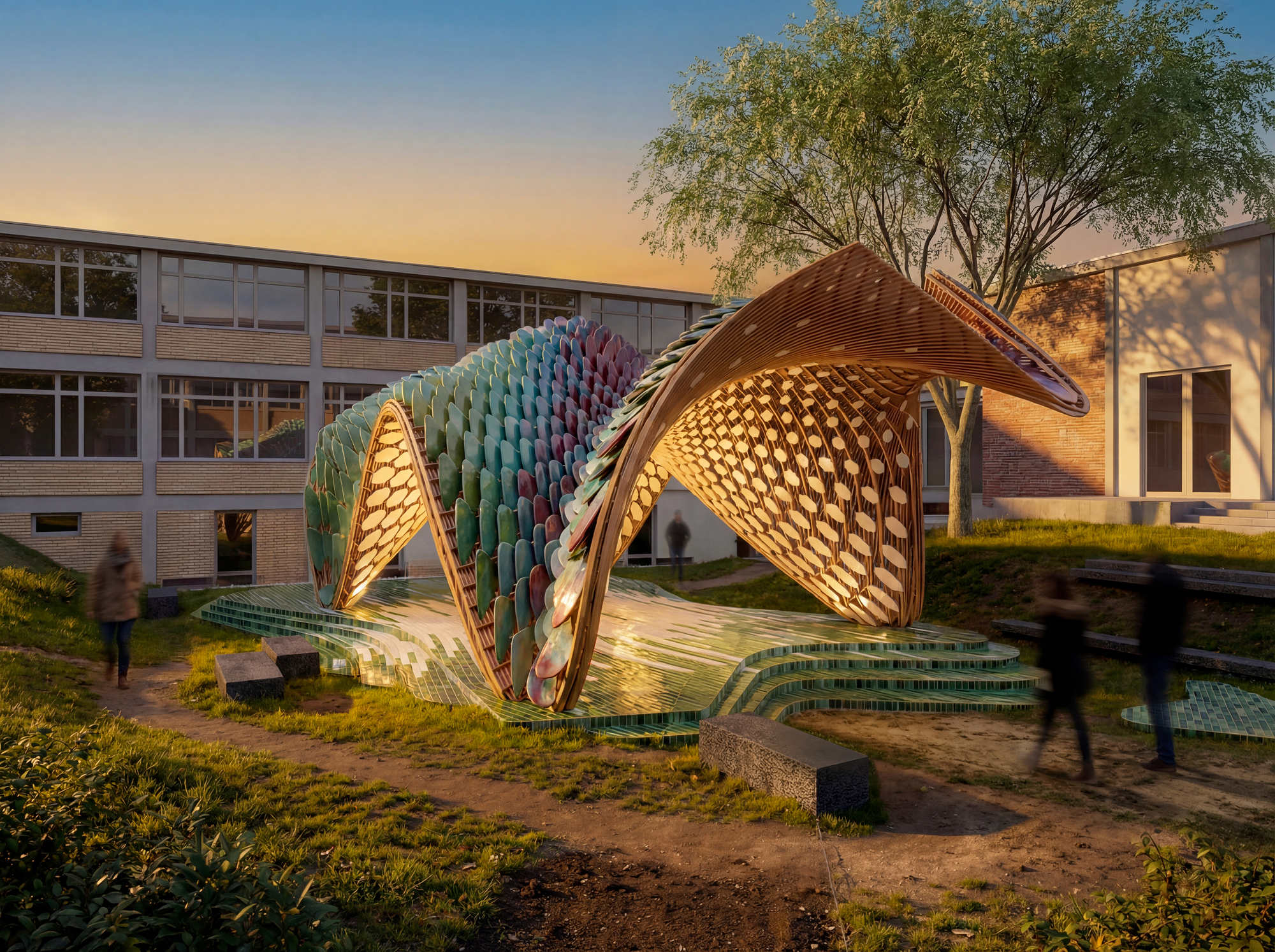
2 days agoreversible cultural pavilion activates public space in frankfurt 2026
Spain's pavilion for World Design Capital 2026 emphasizes reversible cultural infrastructure and sustainable design through innovative materials and construction methods.
fromArchDaily
3 weeks agoMobility Justice: Urban Equity in an Era of Innovation
Every city contains two transportation systems. One is the visible network of roads, rail lines, sidewalks, and bus routes mapped in planning documents. The other is the invisible geography of privilege and exclusion embedded within it: the neighborhoods that received highways instead of parks, the communities whose bus routes were cut, the sidewalks that abruptly end at the edge of a district.
Alternative transportation
Graphic design
fromdesignboom | architecture & design magazine
2 weeks agoutopia, applied, or, why we have to change to stay the same
Utopia functions as a thinking tool for imagining and reshaping present reality, not as an unreachable destination, driving progress through critique and radical imagination.
fromwww.bbc.com
1 week agoCampaigners celebrate after new town plans dropped
Campaigner Aysha Hawcutt stated that residents were 'not anti-homes', but believed the Adlington plan was 'the wrong proposal in the wrong place'. She expressed pride in the community's resilience against the development threats.
London politics
fromArchDaily
4 weeks agoArchiving the Technosphere: How Museum Architecture Mediates Human-Made Systems
The contemporary technology museum has emerged as a performative participant in the systems it seeks to document. The architecture of these institutions has become increasingly fluid and bold, often mirroring the velocity and complexity of the systems it houses. They operate as mediators between the human, the ecological, and the technological realms, transforming from encyclopedic warehouses into active educational engines.
Science
fromwww.theguardian.com
4 weeks agoCampaign seeks 50 objects to take the heat' out of Englishness debate
A new campaign is aiming to collect 50 objects that sum up Englishness in an effort to move the conversation away from reductive arguments over whether to hang a St George's flag or not. Supported by the Green party politician Caroline Lucas, the musician and campaigner Billy Bragg, and Kojo Koram, a law professor, the A Very English Chat campaign hopes to tackle England's growing social divisions and political polarisation.
UK politics
fromArchDaily
2 weeks agoSpaces That Feel Back: How Buildings Respond to Human Behavior
Decades of research in environmental psychology and building science reveal that indoor conditions can profoundly affect human health and behavior. Lighting influences circadian rhythms and sleep patterns. Air quality impacts cognitive performance and respiratory health. Temperature and acoustics shape comfort and concentration.
Renovation
fromThe Art Newspaper - International art news and events
2 weeks agoReimagining communities: inside the Hong Kong International Cultural Summit
Communities make museums and museums make communities. Part of the establishment of M+ was a public consultation where people were asked what kind of museums they wanted. The recommendation was not to build lots of little museums, but to create a big museum that was cross-disciplinary, unburdened by labels like "modern" or "contemporary". It was to be a museum plus more, and that was how we became M+.
Arts
Education
fromArchDaily
1 month agoWhen the School Becomes the City: Community-Centered Projects in the Global South
School architecture functions as a catalyst for social transformation by creating multifunctional civic spaces that integrate education, culture, sports, and community engagement within urban territories.
fromwww.theguardian.com
3 weeks agoIs Glasgow losing the spaces that made it an arts powerhouse?
The event was the following day: we had 250 tickets sold, we'd done so many rehearsals, and inside there were lighting rigs, performers' equipment, shop stock. It was truly heartbreaking. So many businesses lost so much money and time, and now the loss of the space itself is having a huge impact on the wider community.
London politics
fromFast Company
2 months agoOur embrace of individuals over institutions isn't serving us well
In the early 20th century, sociologist Max Weber noted that sweeping industrialization would transform how societies worked. As small, informal operations gave way to large, complex organizations with clearly defined roles and responsibilities, leaders would need to rely less on tradition and charisma, and more on organization and rationality. He also foresaw that jobs would need to be broken down into specialized tasks and governed by a system of hierarchy,
History
fromThe Nation
1 month agoAt the Doorstep of Tomorrow
The war began the week of my 26th birthday. There was a lightness on that day, something born from what remained of our childhood. Sparks like candy, crackling in our mouths: colorful letters; laughter leaking out through voice notes; hearts adorning our text chats; an abundance of cake. But the days that followed are laid out like burnt matchsticks; once the first one was lit, the flames consumed the rest. The war spared nothing on the calendar; I have had no other birthdays since.
World news
fromwww.dw.com
2 months agoThe city that swapped parking for green space
Though they're individually tiny, parking spots quietly play a dominant role in shaping urban landscapes. Most US cities dedicate at least 25% of their developable land to them. Some, even more. That land usage doesn't only determine the way a city looks. It also means covering large swathes of urban areas in heat-absorbing asphalt, which contributes to making summers hotter and heightens the risk of flooding since it prevents drainage during storms and heavy rainfall.
Miscellaneous
fromArchDaily
2 months agoWho Owns Public Space? Three Active Models of Shared Management Shaping Urban Commons in Europe and New York
Public space is often understood as belonging to no one in particular, collectively accessible yet institutionally maintained, yet a growing number of initiatives are challenging this assumption by testing shared management and distributed ownership models. In Paris, Adoptez un banc introduces a sponsorship-based approach, allowing individuals and groups to support temporarily and symbolically claim responsibility for historic public furniture without compromising its collective use.
France news
fromwww.theguardian.com
2 months agoThe Guardian view on the class crisis in the arts: the UK's culture must not become the preserve of the elite | Editorial
A socioeconomic duty on public bodies was included in 2010's Equality Act, but has never been enacted. Now Class Ceiling, a review from Manchester University, co-chaired by the former chief prosecutor Nazir Afzal, is calling for change. It wants class to be made a legally protected characteristic like race and sex (and several others), to address the class crisis in the arts not just in the north-west but across the UK.
Social justice
fromArchDaily
1 month agoThe Machine in the Age of Collective Practice
Every architectural epoch has been defined by its instruments. The compass, the drawing board, the camera, and the computer have each altered how architects think and produce. Yet the current moment feels qualitatively different.
Design
fromwww.npr.org
2 months agoWant to be part of a village? You might need to get out of your comfort zone
People say it takes a village to do difficult things: raise a child, sustain a community, build a barn. But we don't often talk a lot about what it takes to be a villager. What does it mean to not just be in a community, but to help create one? Priya Parker, author of The Art of Gathering: How We Meet and Why It Matters, says the key is to put yourself out there, even if it's scary.
Relationships
fromArchDaily
1 month agoHealth, Habitat, and Civic Infrastructure: Designing the City as a National Park
Cities around the world share a common goal: to become healthier and greener, supported by civic infrastructure that restores ecosystems and strengthens public life. The question is how to reach this. Global climate targets, local building codes, and municipal standards increasingly guide designers and planners toward better choices. Still, many cities struggle to translate these frameworks into everyday, street-level comfort and long-term ecological protection.
Environment

fromArchDaily
2 months agoDesigning Streets Through the Lens of Care
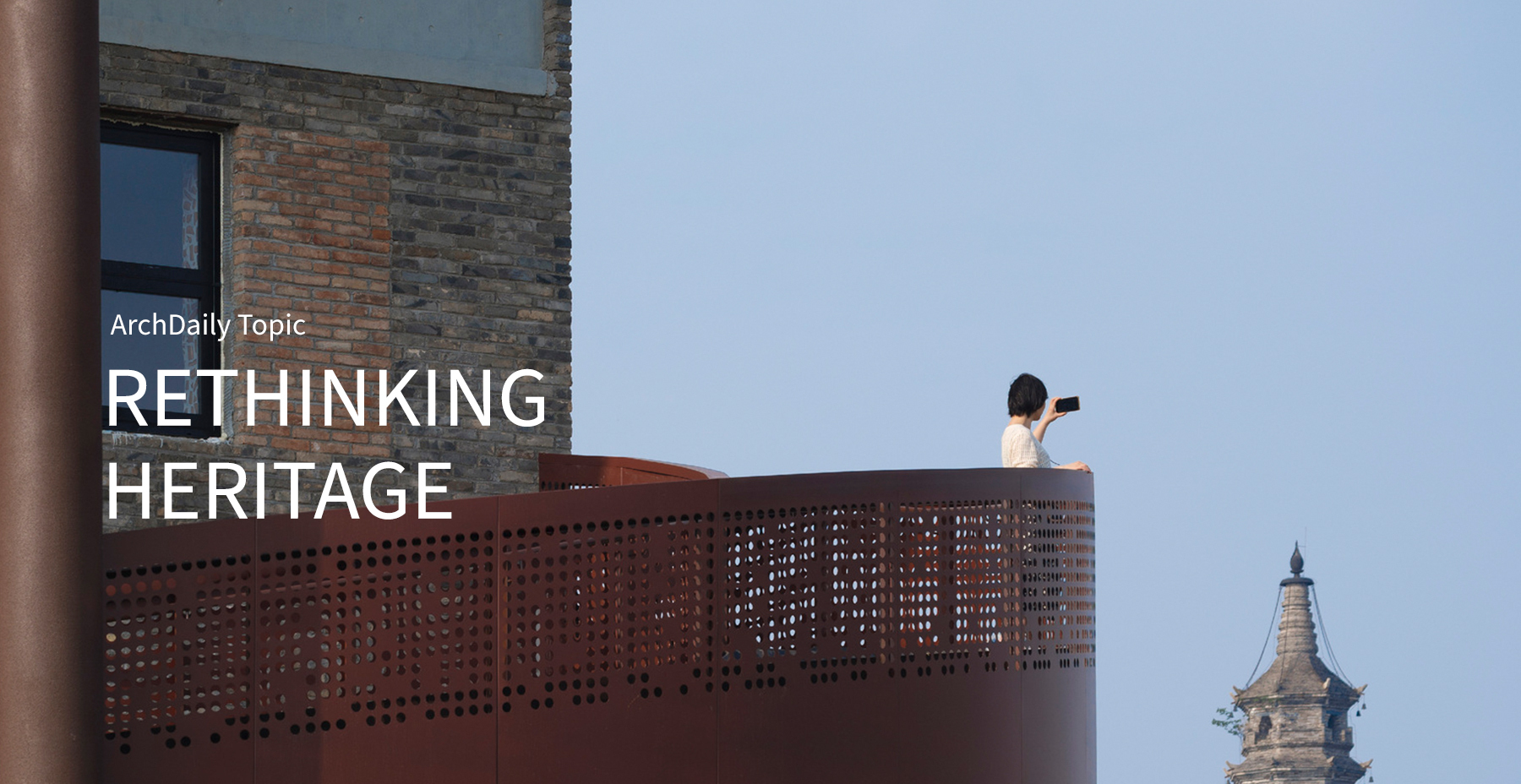
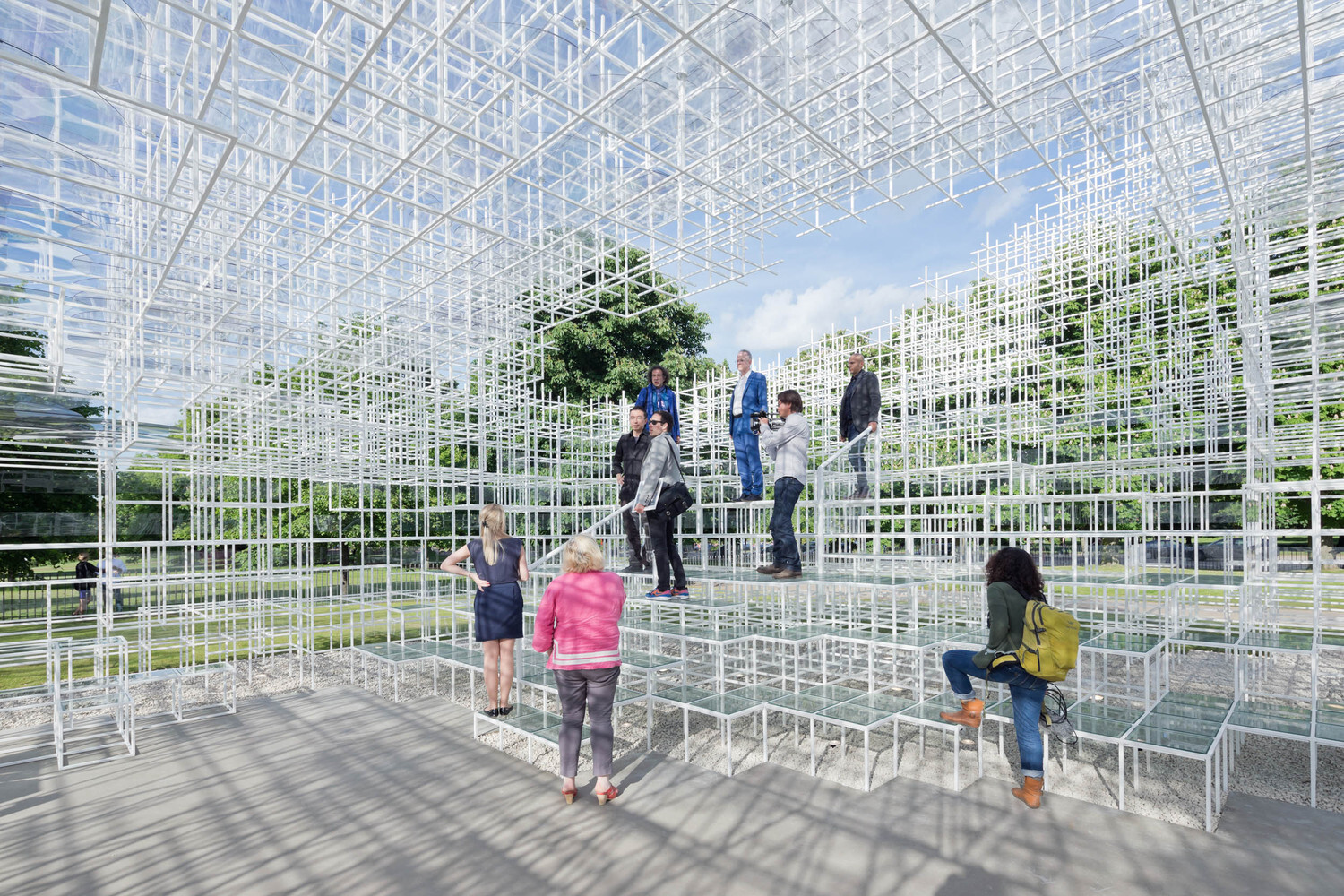
Jane Jacobs was also one of the voices that challenged this predominantly rationalist logic, arguing that truly vibrant streets are those capable of sustaining the diversity of everyday life, its informal exchanges, and the forms of care and natural surveillance that emerge from them. What these authors share is a fundamental insight: streets are not merely infrastructures for circulation, but social ecosystems, shaped by the relationships, uses, and encounters that take place within them.
Design
Arts
fromThe Art Newspaper - International art news and events
3 months agoHow UK museums are embracing citizens' assemblies to help frame their futures
UK museums are using citizens' assemblies to involve the public in shaping institutional policy, priorities and funding decisions, leveraging museums' public trust.
fromArchDaily
2 months agoComing Together and the Making of Place: ArchDaily's January Editorial Focus
Long before architecture took the form of walls, roofs, or cities, it gathered people around fire. The simple fire pit was one of humanity's earliest spatial devices: a place for warmth, food, storytelling, and ritual. Around it, space took shape through proximity rather than enclosure, through shared presence rather than prescribed use. The fire organized bodies in a circle, fostered alliances, and turned survival into collective life.
Design
fromThe Art Newspaper - International art news and events
1 month agoClub for working class art professionals expands from London to Manchester
"Working Arts Club was always going to exist outside of London because class issues in the art world are systemic not geographic," founder Meg Molloy, who works in London as a freelance communications consultant for the art world. "The need for what our network can do is widespread and going to Northern England felt like a natural next step in our operations."
Arts
fromArchitectural Digest
2 months agoDesigning When Your City Is Under Siege
Life doesn't pause for grief or fear. You might be going through something devastating but you're still packing lunches, still driving your kids to baseball practice, still showing up to work. One minute I find myself prepping for a whole home presentation and the next minute I'm checking the news, hoping and praying that no one has been killed on the streets today.
Design
fromArchDaily
2 months agoLeisure Architecture: 13 Projects Shaping Togetherness Across Generations
Leisure spaces are often where different generations cross paths. Without formal programs or assigned roles, they allow people to move, pause, and remain together, each engaging space in their own way. In a built environment increasingly shaped by specialization and separation, these shared spatial grounds have become less common, giving leisure-oriented architecture a renewed relevance. Discussions around public space have repeatedly pointed to the value of openness and flexibility in supporting collective life.
Design
Design
fromArchDaily
1 month agoHeritage Transformations, New Capital Cities, and Residential Innovations: This Week's Review
Adaptive reuse, landscape integration, and conservation strategies extend the life and cultural relevance of built environments amid material, infrastructural, and geopolitical challenges.
fromArchDaily
2 months agoUnearthing the Ground: Architecture and the Politics of the Subterranean
Beneath the visible surface of cities lies an invisible architecture. Subways, tunnels, water systems, data cables, and bunkers form a dense network that sustains urban life while remaining largely unseen. The ground beneath our feet is not a void but a complex territory that holds the infrastructures, memories, and anxieties of our age. In recent years, as land becomes scarce and climate pressures intensify, architects and urbanists have turned their gaze downward, rediscovering the subterranean as both a physical and conceptual frontier.
Design
fromArchDaily
2 months agoWhen Eating Becomes Spatial: 14 Projects Built Around Shared Meals
In recent years, food has taken on a renewed role within architecture, not simply as a program or typology, but as a shared spatial practice. Beyond restaurants or dining design, communal eating spaces are increasingly understood as environments where presence, ritual, and time intersect, allowing people to gather, stay, and coexist. In these settings, eating does not just happen within space; it actively shapes it, temporarily transforming ordinary, borrowed, or improvised environments into places of exchange.
Design
fromArchDaily
1 month agoThe Kitchen as a Social Space: Everyday Rituals and the Making of Place
Can architecture be built from food? Between the fire that warms, the smells that spread, and the bodies that gather around the table, the apparent banality of cooking and eating reveals itself as a choreographed dance of spatial appropriation and belonging. These gestures organize routines, produce bonds, and transform the built environment into lived place. The kitchen- domestic, communal, or urban -thus ceases to be merely a functional space and affirms itself as a territory of encounter.
Design
[ Load more ]