#curatorial-change
#curatorial-change
[ follow ]
#contemporary-art #art #architecture #brooklyn-museum #cultural-institutions #art-exhibition #whitney-biennial



#art
fromIrish Independent
4 days agoArts
'You have to step in and experience it' - artists on the rise of AI-generated art and the 'essential' gallery visit
Miriam Fitzgerald Juskova's exhibit combines paper quilling with mathematics, showcasing intricate art that engages viewers and emphasizes the value of handmade creations.
Arts
fromIrish Independent
4 days ago'You have to step in and experience it' - artists on the rise of AI-generated art and the 'essential' gallery visit
Miriam Fitzgerald Juskova's exhibit combines paper quilling with mathematics, showcasing intricate art that engages viewers and emphasizes the value of handmade creations.

fromArchDaily
1 week agoArchitectures of the Gaze: 25 Viewpoints for Experiencing the Landscape
Viewpoints are structures designed for observing the landscape from elevated positions. They act as devices that organize the gaze and establish a direct relationship between the body and the territory.
Philosophy
fromThe Art Newspaper - International art news and events
1 day agoThe Louvre's new director is inheriting a troubled, traumatised museum-can he repair the damage?
The Louvre accumulated considerable delays in the deployment of its security equipment, in favour of an event-driven policy, a judgment Des Cars said was unfair.
Arts
Music
fromPsychology Today
3 weeks agoArt as a Biological Bedrock of Shared Humanity
Humans are biologically wired for shared artistic experiences, which serve as essential connective tissue for our nervous systems and cultural identity, transcending the perceived obsolescence of performing arts in the digital age.
fromArchDaily
4 weeks agoArchiving the Technosphere: How Museum Architecture Mediates Human-Made Systems
The contemporary technology museum has emerged as a performative participant in the systems it seeks to document. The architecture of these institutions has become increasingly fluid and bold, often mirroring the velocity and complexity of the systems it houses. They operate as mediators between the human, the ecological, and the technological realms, transforming from encyclopedic warehouses into active educational engines.
Science
Graphic design
fromItsnicethat
3 weeks agoLydia Chodosh probes design rules through archiving and cataloguing
Designer Lydia Chodosh interrogates how knowledge is acquired and transmitted through language, archival systems, and interdisciplinary design practice informed by literature, publishing, and visual communication.
Washington DC
fromThe Art Newspaper - International art news and events
1 month ago'Haters will say this urn is mid': US National Gallery of Art curator is Insta hit with Gen Z
A 77-year-old National Gallery curator uses Gen Z slang in viral social media videos about artworks, reaching nearly nine million viewers and successfully engaging younger audiences with art history.
fromHyperallergic
2 days agoThe Art World Is a Joke
Kamrooz Aram is everywhere this year, from Mumbai Art Week to the Whitney Biennial, and critic Aruna D'Souza is grateful. She pens a beautiful meditation on his work, reading his abstract paintings as not simply a denunciation of Western modernism nor a reassertion of Islamic visual motifs, but something else entirely - something gestural, exuberant, riotous, and incomparably his own.
Arts
Miscellaneous
fromThe Art Newspaper - International art news and events
1 month agoComment | Art is more than its original context
Understanding art's original context enriches appreciation, yet modern viewing conditions and lost contexts require adapting how we engage with artworks across different settings and time periods.
fromThe Art Newspaper - International art news and events
1 week agoComment | Museums must be the leaders in a moral revolution
Bregman claims, 'Today the whole of Europe risks turning into one big Venice, a beautiful open-air museum. A great destination for Chinese and American tourists. A place to admire what was once the centre of the world.' This statement encapsulates the concern that Europe is losing its cultural significance.
Arts
fromArchDaily
1 month agoThe Machine in the Age of Collective Practice
Every architectural epoch has been defined by its instruments. The compass, the drawing board, the camera, and the computer have each altered how architects think and produce. Yet the current moment feels qualitatively different.
Design
fromApartment Therapy
1 month agoThe Clever Way to Turn Your Home into a Curated Art Gallery
LG Gallery+ is a new visual curation service for LG TVs - and a brilliant way to make your home more unique and personalized. It lets you express your ever-changing creativity with a massive library of classic art, digital and 3D artwork, scenery, games, and more. With more than 4,500 options to choose from, you can turn your LG TV into a world-class art gallery, a peaceful forest, or an homage to your favorite video game - all in the same day.
Gadgets
fromForbes
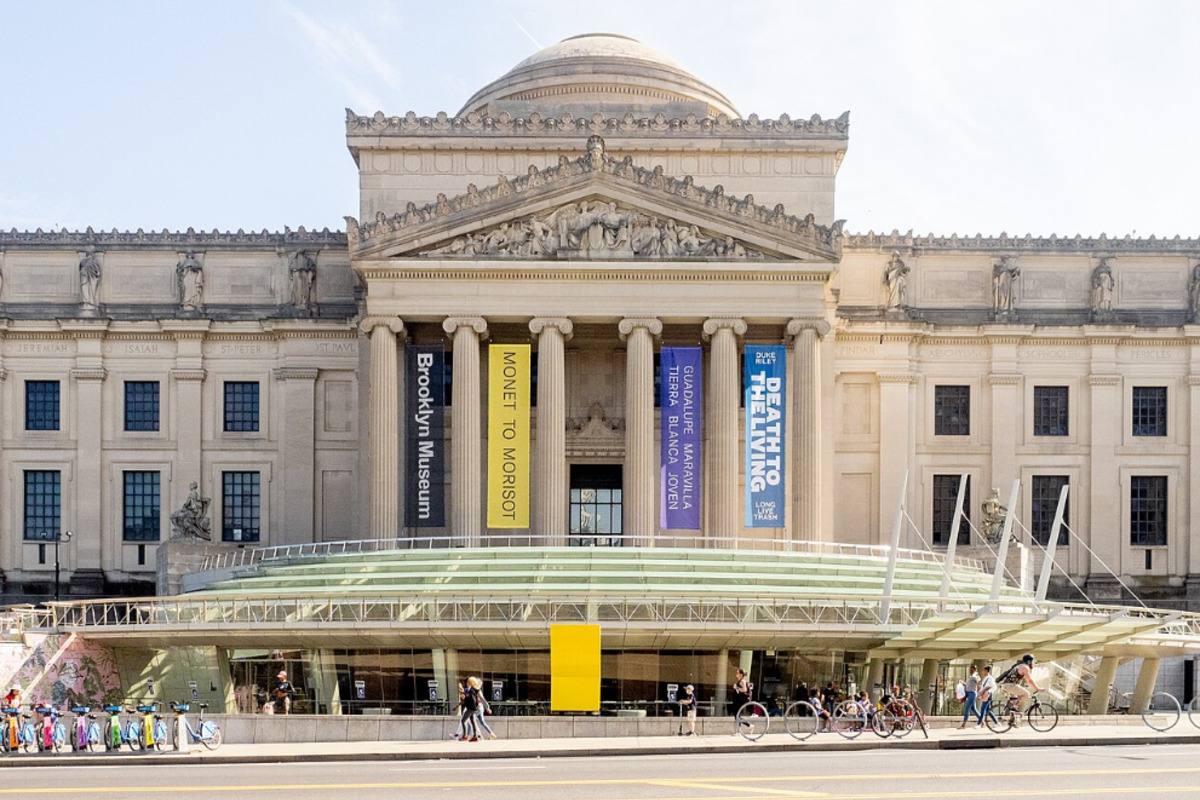
2 months agoBrooklyn Museum's Latest Exhibition Blends Art, Fashion And Science
On May 16, 2026,Iris van Herpen: Sculpting the Senseswill make its North American debut at the museum, showcasing more than 140 haute couture creations alongside contemporary art from artists such as Philip Beesley, Rogan Brown, Casey Curran, Kim Keever, and Nick Knight, in addition to unique design and scientific artifacts. The much-anticipated exhibit, which will run through December 6, 2026, will explore how renowned Dutch fashion designer Iris van Herpen fuses various mediums of expression.
fromArtforum
2 months agoFatima Hellberg
Small, nimble cameras occupy perspectives inaccessible to human perception, creating images that are more visceral and embodied than the purely retinal. In the absence of verbal narration, we witness an interconnected logic of violence: The camerawork lets us see the brutal working conditions, but also the brutality toward other sentient beings and the sea, all unfolding as part of the same process.
Film
fromArchDaily
2 months agoRethinking Museums: A Conversation with Beatrice Grenier on Architecture as Cultural Policy
As cultural institutions continue to proliferate worldwide in this digital era, the museum itself appears increasingly in need of redefinition. Rather than offering a single model or solution, Architecture for Culture: Rethinking Museums, written by architectural historian and curator Béatrice Grenier, argues for a more contextual and plural understanding of what a museum can be: an institution shaped by its environment, its public, and the specific cultural questions it seeks to address.
Remodel
fromHyperallergic
2 weeks agoWhat Do We Really Think of the New New Museum?
The new New Museum is many things: contemporary, perhaps, but also a science, history, anthropology, and many other museums in one. It echoes the desire of its patron class to own the world and its affiliated courtier class to deliver it to them on a silver platter, or encased in perforated metal, in this case.
Arts
Arts
fromHyperallergic
2 weeks agoMeet the Woman Who Made Museums More Accessible
Lorena Bradford, the National Gallery of Art's first head of Accessible Programs, transformed museum accessibility by creating intentional programs for disabled visitors, including ASL tours, memory loss programs, and medical student training initiatives.
fromHyperallergic
3 weeks agoEmbracing Friction in the Art World
On Franklin Street in Brooklyn's Greenpoint neighborhood, one non-commercial gallery fosters 'a small, stubbornly human space for friction.' Friction—the ubiquitous buzzword that captures the simultaneous delight and discomfort of doing things the slow way—is at the heart of artists Pap Souleye Fall and Char Jeré's current show at Subtitled NYC. It also reflects the overall spirit of this little exhibition space and of a burgeoning movement to reject our culture of optimization in favor of a bumpier, more intimate, less alienating experience.
Arts
Arts
fromThe Art Newspaper - International art news and events
3 weeks agoComment | Why museum leadership needs to decentralise
Traditional museum leadership models are failing under contemporary pressures, requiring a fundamental shift from centralized, individual authority to distributed, collaborative leadership structures.
Arts
fromHyperallergic
3 weeks agoMerging Craft Practices and New Media at the Museum of Craft and Design
Video Craft exhibition explores how video, film, and early moving image technologies share formal and technical properties with traditional craft media like ceramics, textiles, and glass through encoding, looping, and sampling.
Arts
fromThe Art Newspaper - International art news and events
3 weeks agoArtists agonise over when a work is finished-but should we viewers care?
Artists determine completion when they have successfully transformed visual memory and emotion into a physical object, at which point further work becomes unnecessary.
Arts
fromwww.theguardian.com
1 month agoThe Guardian view on an explosion of solo exhibitions by women: move over old masters | Editorial
Major UK art institutions are finally increasing exhibitions of female artists after decades of severe underrepresentation, marking a significant shift from historical gender disparities in museum programming.
Arts
fromThe Art Newspaper - International art news and events
2 months agoMuseum wall texts are an art in their own right-but will they survive the digital age?
Museums should balance providing contextual wall text and inviting wordless, personal interpretation to make art accessible and meaningful to diverse visitors.
fromHyperallergic
1 month agoThe Sticky Politics of Wall Texts
In 2024, I made a vow to never base my art criticism on wall labels. My decision came after reading reactions to that year's Whitney Biennial. "If every label in 'Even Better Than the Real Thing,' the 81st installment of the Whitney Biennial, were peeled off the walls and tossed into the Hudson, what would happen?" asked Jackson Arn in the New Yorker. (He went on to suggest that the overall show would have been much better.)
Arts


fromHyperallergic
2 months agoArt Movements: The Brooklyn Museum's New Top Contemporary Art Curator
Brooklyn Museum Fills Its Top Contemporary Curator Spot Robert Wiesenberger was named senior curator of contemporary art at the Brooklyn Museum, a post that has been vacant since the departure of Eugenie Tsai in 2023. He comes from the Clark Art Institute in Williamstown, Massachusetts, where he was curator of contemporary projects, and was previously a curatorial fellow at the Harvard Art Museums.
Arts
fromHyperallergic
1 month agoArt Movements: Another Artforum Editor-in-Chief Is Out
I take no pleasure in saying "I told you so." Really, I don't. But I was hardly shocked by this week's news that Tina Rivers Ryan, who was named editor-in-chief of Artforum in 2024 after the dumpster fire that was the magazine's handling of an open letter in support of Gaza, was stepping down (Daniel Wenger and Rachel Wetzler will step in as co-editors, scrapping the editor-in-chief title altogether).
Arts
fromHyperallergic
1 month agoThe Biennale Certificate in Philosophy and Art
designed by the Institute for Doctoral Studies in the Visual Arts (IDSVA) and philosopher Giovanbattista Tusa (Visiting Faculty, Independent Study and Dissertation director) for curators, artists, researchers, and cultural practitioners seeking to engage with the living context of the Venice Biennale. Over four days, participants will move through a sequence of philosophical orientations - Rooting, Growing, Branching, and Cultivating Futures- that frame art as a mode of world-disclosure and situated intervention.
Arts
fromThe Art Newspaper - International art news and events
2 months agoIn the age of AI, can art expertise be digitised?
Recently, AI decided that a painting long thought to be a copy of Caravaggio's The Lute Player is actually by the master, while another version of the same subject, previously thought to be authentic, is not. Both conclusions were disputed by the former Metropolitan Museum of Art curator Keith Christiansen. A similar debate erupted in March 2025 when AI declared that portions of The Bath of Diana, also long believed to be a copy, could have been painted by Peter Paul Rubens.
Arts
fromHyperallergic
2 months agoRequired Reading
Marah Al-Za'anin, an 18-year-old Palestinian artist, has transformed a tent in Gaza City's Al-Rimal neighborhood into a studio. Al-Za'anin can't have been more than 15 or 16 years old when the genocide began, but she continues to pursue her passion for art and uses her brother's phone as a light source while she paints and draws late into the night. (photo by Saeed Jaras/Middle East Images/AFP via Getty Images)
Arts
fromThe Art Newspaper - International art news and events
2 months agoA brush with... curator James Lingwood
One of Vija Celmins's wonderful Night Sky works. Maybe one of her charcoal drawings of the cosmos, with a comet flaring across the surface. She conjures up such immensity, and such intimacy, with countless tiny points of light shining out of the darkness. Which cultural experience changed the way you see the world? In a word, Paris. After I left school, I spent several weeks working in Paris and discovered the pleasures of looking, on my own, for myself.
Arts
Arts
fromSilicon Canals
1 month ago8 signs you appreciate art, music, and culture on a deeper level than most people - Silicon Canals
Some people experience art deeply, reacting emotionally and perceiving subtle artistic cues that reveal heightened sensitivity and meaningful connections to creative expression.
[ Load more ]