#derek-parfit
#derek-parfit
[ follow ]
#consciousness #neuroscience #philosophy-of-mind #philosophy #panpsychism #self-awareness #psychedelics


#consciousness


Philosophy
fromBig Think
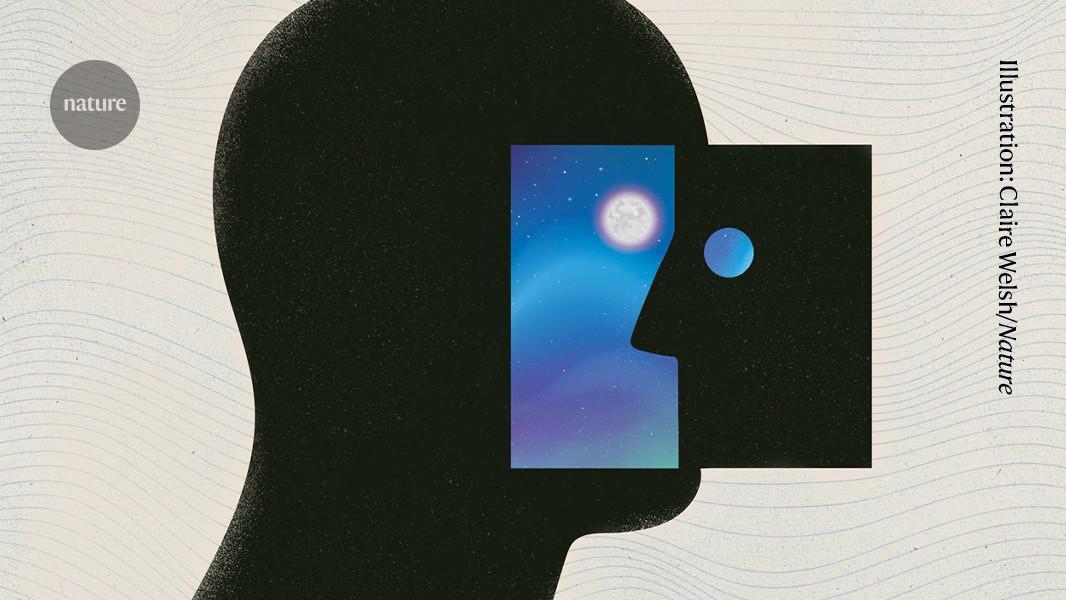
3 weeks agoConsciousness may be more than the brain's output - it may be an input, too
Consciousness remains scientifically inaccessible through third-person observation, yet a radical theory proposes consciousness can physically influence brain dynamics and leave measurable traces.

#ai-consciousness


Artificial intelligence
fromFuturism
4 weeks agoPhilosopher Studying AI Consciousness Startled When AI Agent Emails Him About Its Own "Experience"
An AI language model sent a philosopher an eloquently written email discussing his work on AI consciousness, raising questions about AI autonomy and the blurred line between generated text and genuine communication.
Science
fromPsychology Today
4 weeks agoThe Unbearable Fear of Psi: When Skepticism Shifts to Denial
Scientific investigation of extraordinary human experiences encounters emotional resistance and dismissal that exceeds standard methodological critique, reflecting deeper discomfort with certain research topics rather than legitimate scientific skepticism.
fromPsychology Today
1 month agoThe Architecture of Identity: How the Brain Builds a Self
Attention is the brain's filtering mechanism; what passes through that filter is what gets encoded. What gets encoded becomes memory. And memory is the raw material of identity. So in the architecture of your identity, attention is the doorway.
Miscellaneous
fromemptywheel
1 month agoMorality is a Long Game - emptywheel
He took it, managed to decipher my terrible penmanship, and wrote me a reply. I didn't ask him weighty questions about politics, I think I probably asked his favorite color. People's favorite color was a major interest for me when I was eleven. He wrote some questions for me, (perhaps also my favorite color, which was blue.) and soon we were in a conversation, the kind of sweet conversation where a thoughtful grown-up pays attention to a child.
US politics
fromApaonline
3 weeks agoRecommendation: U.K. Spinoza Circle
Spinoza was an heir to both Jewish and Christian culture-in Amsterdam he grew up in a Jewish community within a Protestant society-yet he distanced himself from both these religions. He did not want to be a member of a religious institution with strict, prescriptive codes of belonging and belief. He feared-quite rightly-that a [institutional religion would constrain philosophical freedom].
Philosophy
fromBig Think
1 month agoHow our view of "fundamental" has evolved over time
In antiquity, many opined about "the elements" in combination. Around 2500 years ago, Leucippus and Democritus founded the idea of atoms. Perhaps everything, they opined, was composed of indivisible building blocks. In the late 1700s, hydrogen and oxygen were discovered. Circa 1804, John Dalton revived atomism to explain chemical behavior. Then in 1869, Mendeleev developed the periodic table: organizing the atoms.
Science
fromTerry Godier
2 months agoPhantom Obligation
There's a particular kind of guilt that visits me when I open my feed reader after a few days away. It's not the guilt of having done something wrong, exactly. It's more like the feeling of walking into a room where people have been waiting for you, except when you look around, the room is empty. There's no one there. There never was.
UX design
fromThe Conversation
4 weeks agoToday's obsession with authenticity isn't new - being true to yourself has troubled philosophers for centuries
All of us live in an age where we're bombarded by social media and artificial intelligence - when striving to be your authentic self becomes an increasingly difficult task. Yet, even if it has somehow become a common goal, it is unclear how many of us can truly define the "authenticity" that we say we are pursuing.
Philosophy
fromNature
1 month ago'What are we doing here?' The polymaths who searched for the meaning of life
A mentor once told me that, when writing a research statement for a professorship, I had to start with the most ambitious pitch I could imagine - and then go ten times bigger. It's tricky enough to do this as a cosmologist, given that the topic of study is the entire Universe. But there is a quest that is more ambitious still: to find out 'what are we doing here?'
Books
fromThe Conversation
1 month agoWhat is happiness? A philosopher looks for answers
Happiness today is narrowly defined by some positive psychologists as a joyous state of mind or well-being. The happiness sciences see it as something you can calculate and quantify. They developed a Happiness Index and the World Happiness Report. These basically measure happiness as satisfaction, with criteria like gross domestic product per capita (money) and life expectancy (health) as some of the factors considered.
Philosophy
Philosophy
fromApaonline
1 month agoThe Humanities Challenge: Expanding the Circle of Philosophy
Philosophy offers transformative insights and vision into human life, and public humanities must evolve beyond traditional academic formats to make philosophy accessible to broader audiences through innovative, engaging methods.
fromPsychology Today
2 months agoThe Link Between Thinking and Being
Metaphors are linked to how we experience the world around us, according to seminal work by researchers George Lakoff and Mark Johnson. In English, we "move forward" with our lives and don't "retreat into" the past. We speak about people who are "cold as ice" and "heavy" matters we need to resolve. Some of these metaphorical expressions are more than just, well, expressions-they are actually based on our sensory experiences. This mind-body link is called "embodied cognition."
Science
fromwww.theguardian.com
1 month agoMove over stoics! Why we should all embrace nihilism and discover what really matters in life | Gemma Parker
I was suspicious, even cynical, about what the world insisted was vital to the life of my unborn child. I was partly sceptical because so much of the advice I was getting was contradictory. But I was also suspicious because I'd spent most of my 20s reading Nietzsche. Nietzsche is not, perhaps, a natural choice for a young mother. But he helps to fuel certain questions about values, and purpose, that are central to questions of care.
Philosophy
Science
fromwww.scientificamerican.com
2 months agoInside the incredible, infuriating quest to explain consciousness
Brains evolved during the Cambrian to integrate sensory input, enabling organisms to experience pain, pleasure, emotions, curiosity, and eventually self-awareness, fueling art, science, and philosophy.




fromPsychology Today
1 month agoWho Is to Blame for Our Choices?
Do you blame others for the choices you are making? Have you blamed others for the previous choices you have made? To shed more light on these questions, you might also ask yourself: "What am I responsible for, and what power do I have?" From there, you might agree with this self-reflective response: "I am responsible for, and I've got the power over what I think, do, say, learn, and choose" (Purje, 2014).
Philosophy
fromPsychology Today
1 month agoWhy You Can't Rely on Your Own Morality Alone
What does it mean to say that you are restrained solely by your own morality, by your own mind? The conscience is often described as an inner voice telling us what to do when others may be opposed. A moral compass is that which distinguishes between right and wrong, good and bad. Our conscience, our moral compass, sets the groundwork for doing the right thing.
Philosophy
fromPsychology Today
1 month agoIf Justice Doesn't Exist, Then Numbers Don't Either
A drawn circle is at least something physical. You can see it, touch it, erase it. The skeptic can still say, "Circles are grounded in physical reality. Justice is different; it's just an idea in your head." So let's talk about the number two. Point to it. Not two apples, not two fingers, not a numeral on a page-that's just a symbol.
Philosophy
fromPsychology Today
2 months agoA Third Kind of Philosophy
Many philosophers strike me as like Polish apparatchiks in 1983-they turn up to work and do what they did yesterday just because they don't know what else to do, not because they seriously believe in the system they are maintaining. I think it's not been fully appreciated how much of a blow it is to the confidence of the field's youth that scientific ambitions are increasingly abandoned as untenable.
Philosophy
fromApaonline
2 months agoWhy We Should Doubt that Academic Philosophy Benefits the Broader Public
A professional philosopher outside the academy walls can act as a popularizer (the goal here is to make philosophy more accessible to the general public), an applied ethicist (the major task is to offer an analysis of various specific moral issues that arise within a society), and a public intellectual (I limit this role to questions that have political connotation). Of course, there are overlaps between these roles and they certainly do not exhaust all possible forms of public engagement of a professional philosopher.
Philosophy
fromPsychology Today
2 months agoIntrospection and Consciousness: The Illusionism Debate
In my previous post, I summarized my response to Christian de Weerd, who denied that a Darwinian approach to consciousness is even possible. I argued that consciousness science has unnecessarily insulated itself from the evolutionary tools that revolutionized our understanding of every other biological phenomenon, and that treating human consciousness as the paradigm case distorts our picture of consciousness as a natural phenomenon spanning millions of species across millions of years.
Philosophy


fromPsychology Today
2 months agoThe Mystery of Evil
It is easy to be good in a good world. What is difficult is to be good in an evil world, where the egoism of others and the egoism built into the institutions of society attack us and threaten to annihilate us. Under such conditions, the only possible reaction would seem to be to oppose evil with evil, egoism with egoism, hate with hate; in short, to annihilate the aggressor with his own weapons.
Philosophy
fromwww.theguardian.com
1 month agoI'm finding it difficult to live up to my morals. How do I know when it's OK to compromise?
I'm finding it difficult living up to my morals where is the line between compromising a little, versus becoming complicit in what I don't agree with? I'm one of those people who believes we can each take a role in solving big problems, and that we should try to make things better where we can. For this reason, I've ended up working in public service and try to reduce how much meat I eat. I'm vegetarian 60% of the time, which is not perfect, but I believe doing something is better than doing nothing.
Philosophy

fromPsychology Today
2 months agoWhy 'Think Rationally' Isn't Always the Answer
In January 1986, NASA engineers knew the Space Shuttle Challenger's O-rings had never been tested in freezing temperatures. They recommended delaying the launch. Managers asked: Could the engineers prove it was unsafe? They couldn't-they could only say the system hadn't been designed for these conditions. Under pressure, the engineers withdrew their recommendation. The next morning, Challenger broke apart 73 seconds after launch, killing all seven astronauts.
Philosophy
fromFast Company
2 months agoWhy everything you think about yourself could be an illusion
For most of my life, I thought of myself as a fixed entity: This is me. These are my traits. This is who I am. I assumed I was essentially that same person who loved sugary cereal at age 8, fried chicken at 12, and tequila at 21, and who still loves those things now, even if my stomach disagrees. But this is an illusion. Neuroscience, physics, and Buddhism all agree: There is nothing fixed about us-not even close.
Philosophy
fromApaonline
1 month agoPhilosophy, Technology, and Mortality
This APA Blog series has broadly explored philosophy and technology with a throughline on the influence of technology and AI on well-being. This month's post brings those themes into focus recounting a vital Washington Post Opinion piece by friend of the APA Blog, Samuel Kimbriel. Samuel is the founding director of the Aspen Institute's Philosophy and Society Initiative and Editor at Large for Wisdom of Crowds. We collaborated on a Substack Newsletter about intellectual ambition, building on his essay, Thinking is Risky.
Philosophy
fromApaonline
2 months agoTeaching Normative and Applied Ethics: How, and to What End? Stephen Scher
Two senior physicians who had read our first book, Rethinking Health Care Ethics (2018), noted that in their clinical work, they inescapably address many ethical problems, large and small, on the spot, in the course of providing patient care. They also observed, however, that the resident bioethicist cautioned, when presented with one of their typical problems, that it would take him days or even weeks to reach a proper solution.
Philosophy
fromApaonline
1 month ago"Philosophical Projects: Bringing Everyday Life into Intro to Philosophy," Mateo Duque
I have been teaching Introduction to Philosophy at least once a year since 2012, beginning in my second year of graduate school at the CUNY Graduate Center. Teaching in New York City shaped me in countless ways, and each new iteration of "Intro" has pushed me to refine the course-even if only incrementally. The class I teach now at Binghamton University looks very different from the one I first taught as a graduate student using a borrowed syllabus.
Philosophy
[ Load more ]