#neuroscience
#neuroscience
[ follow ]
fromNature
3 days agoDopaminergic mechanisms of dynamical social specialization - Nature
Social foraging strategies illustrate the balance between competition and cooperation, where individuals either produce resources or exploit the efforts of others, navigating ecological and social constraints.
Psychology
Psychology
fromSilicon Canals
2 days agoI'm 34 and I just realized I've been performing competence at work for seven years because somewhere along the way I confused being impressive with being safe, and the exhaustion I thought was burnout was actually the weight of never once letting anyone see me learn something for the first time. - Silicon Canals
Performing competence can lead to self-erasure and social rewards, masking genuine capability with a polished exterior.
Psychology
fromSilicon Canals
2 days agoI'm 34 and I recently caught myself apologizing to a chair I bumped into, and my colleague laughed, but I didn't because I understood exactly where that reflex came from. When you grow up in a house where taking up space was a problem, you spend the rest of your life negotiating with furniture. - Silicon Canals
Emotional neglect in childhood leads to lifelong issues with self-worth, boundaries, and the need to apologize excessively.
fromWIRED
4 days agoMeet the Man Making Music With His Brain Implant
Galen Buckwalter, a 69-year-old research psychologist and quadriplegic, participated in a brain implant study to contribute to science that aids those with paralysis. The six chips in his brain decode movement intention, allowing him to operate a computer and feel sensations in his fingers again.
Music production
#introversion
Psychology
fromSilicon Canals
6 days agoThere's a specific kind of introvert who is warm, funny, and genuinely interested in people, and who is also completely depleted by them, and who has spent decades trying to explain this distinction to extroverts who hear it as rejection - Silicon Canals
Introversion is not shyness; it reflects a unique relationship between stimulation and energy, not a dislike for social interaction.


Psychology
fromSilicon Canals
6 days agoThere's a specific kind of introvert who is warm, funny, and genuinely interested in people, and who is also completely depleted by them, and who has spent decades trying to explain this distinction to extroverts who hear it as rejection - Silicon Canals
Introversion is not shyness; it reflects a unique relationship between stimulation and energy, not a dislike for social interaction.
#trauma
Psychology
fromSilicon Canals
1 week ago9 signs your brain is wired for pattern recognition in a way most people never develop, and it almost always traces back to how unpredictable your childhood environment was - Silicon Canals
Heightened pattern recognition often stems from childhood adversity, not genetic gifts, as the brain adapts to unstable environments for survival.
Psychology
fromSilicon Canals
1 week ago9 signs your brain is wired for pattern recognition in a way most people never develop, and it almost always traces back to how unpredictable your childhood environment was - Silicon Canals
Heightened pattern recognition often stems from childhood adversity, not genetic gifts, as the brain adapts to unstable environments for survival.
Mental health
fromSilicon Canals
2 weeks agoI grew up lower middle class and the thing nobody understands is that we didn't budget because we were disciplined. We budgeted because we'd already done the math on what happens when the car breaks down in the same month the insurance is due, and that math never leaves your body even after the numbers change. - Silicon Canals
Financial scarcity rewires the body and mind, creating lasting effects on budgeting and spending behaviors rooted in stress and dread.
Psychology
fromSilicon Canals
2 weeks agoBehavioral scientists say the reason people cry when they see someone else reunited with a loved one - at airports, in films, in real life - isn't sentimentality. The brain's mirror neuron system fires a complete emotional simulation of the experience, and the tears aren't about the strangers, they're about every reunion your own body has stored and every one it's still waiting for. - Silicon Canals
Observing emotional reunions activates mirror neurons, creating an embodied response that connects us to the feelings of others.
Psychology
fromSilicon Canals
2 weeks agoBehavioral scientists found that the human brain doesn't actually crave constant novelty. It craves pattern recognition and mastery, which means the person who finds genuine pleasure in their morning walk along the same route is neurologically closer to fulfillment than the person who needs every weekend to feel like an event - Silicon Canals
The brain's reward circuits respond more strongly to mastery and pattern recognition within familiar structures than to constant novelty-seeking.
Mindfulness
fromSilicon Canals
2 weeks agoI used to think I was bad at relaxing until I realized I was actually excellent at scanning for what might go wrong next, and those two things cannot occupy the same body at the same time. - Silicon Canals
Relaxation failure stems from continuous threat assessment in the nervous system, not lack of discipline; the body cannot simultaneously scan for danger and rest due to competing neurological states.


fromMail Online
3 weeks agoIncredible map reveals how the brain processes different emotions
They created an artificial 'mental map', with pleasantness along one axis and bodily reactions along the other, and charted how the brain responded while watching clips from films. The results revealed clear groupings in the way that our brains represent emotion - with guilt, anger and disgust in one corner and happiness, satisfaction and pride in the other.
Science
#consciousness



Philosophy
fromBig Think
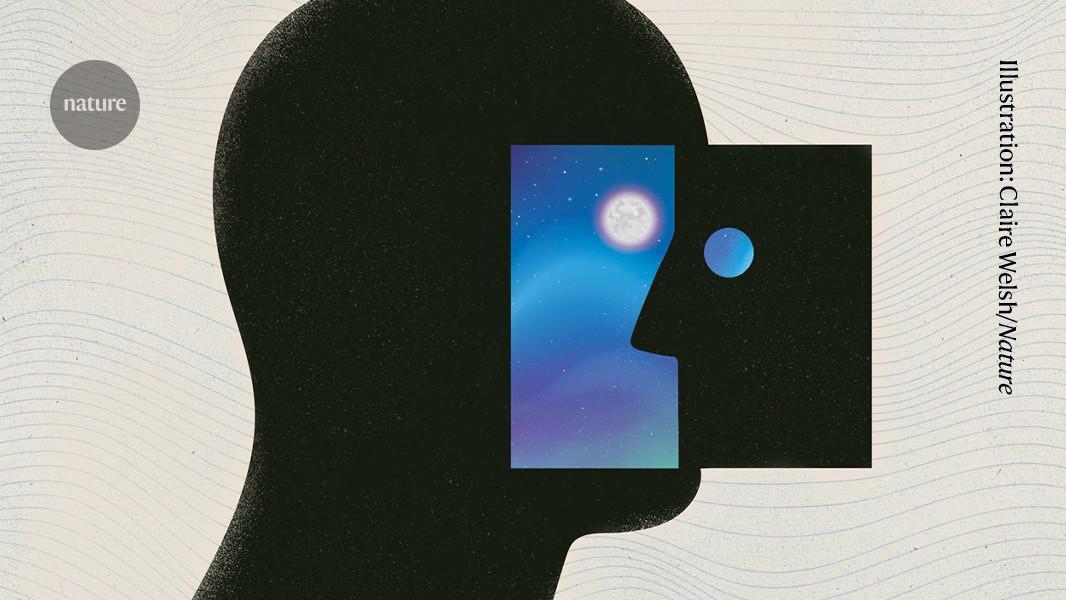
3 weeks agoConsciousness may be more than the brain's output - it may be an input, too
Consciousness remains scientifically inaccessible through third-person observation, yet a radical theory proposes consciousness can physically influence brain dynamics and leave measurable traces.
fromwww.theguardian.com
3 weeks agoI spent a day trying the 90-second rule and it didn't make me less angry | Emma Beddington
That's how long our physiological response to emotions such as anger lasts, from the time we formulate a thought to the point at which our blood is completely clean of the noradrenaline released in response to it. If you're still experiencing emotional reactions after 90 seconds, you're rethinking the thoughts.
Psychology
Mindfulness
fromSilicon Canals
3 weeks agoPeople who do their best thinking while driving or walking usually display these 7 cognitive traits that reveal how their mind actually works - Silicon Canals
Movement-based thinking activates diffuse cognitive mode, enabling creative problem-solving and unexpected mental connections outside focused work environments.
fromPsychology Today
4 weeks agoPrediction, Survival, and the Origins of Feeling
According to the Free Energy Principle (FEP), developed by theoretical neuroscientist Karl Friston and colleagues, much of what the brain does can be understood as minimizing such mismatches—a technical form of 'surprise' defined as the improbability of sensory input given an internal model. The proposal brings perception, action, learning, and decision-making under a single framework.
Science
Psychology
fromSilicon Canals
1 month agoPsychology says people who feel a wave of sadness at dusk even on good days are experiencing these 5 patterns - and it connects to something so ancient in the human brain that psychologists say the feeling predates language itself - Silicon Canals
Twilight melancholy is a real neurochemical phenomenon where serotonin, dopamine, and cortisol levels shift as daylight fades, creating evening sadness rooted in evolutionary biology rather than psychological choice.
fromwww.theguardian.com
1 month agoLiving with hyperphantasia: I remember the clothes people wore the day we met, the things they said word-for-word'
Hyperphantasia is a cognitive trait characterised by an abundance of vivid mental imagery. In an area of developing science (the term was only coined a decade ago), those who identify with this experience have an imagination of lifelike quality and can create detailed images and scenarios in their minds. It can also extend to multiple senses.
Psychology
Mental health
fromSilicon Canals
1 month agoNeuroscience is beginning to explain why people who spend their workday on video calls feel a specific kind of loneliness that is different from actual isolation - Silicon Canals
Loneliness stems from absent felt connection, a neurological event, not proximity; video calls create appearance of connection while failing to deliver neural synchrony required for genuine social bonding.
Digital life
fromSilicon Canals
1 month agoWhat neuroscience reveals about people who check their phone within three seconds of feeling any discomfort and why it's quietly rewiring how they handle conflict in real life - Silicon Canals
Constant phone use to escape discomfort is rewiring the brain's ability to tolerate tension, ambiguity, and conflict by creating automatic escape loops that narrow the gap between feeling discomfort and reaching for devices.


fromSilicon Canals
1 month agoPsychology says people who still handwrite thank-you notes instead of texting don't just have good manners - they process gratitude at a neurological depth that changes how they experience relationships - Silicon Canals
When we handwrite, especially something as emotionally loaded as a thank-you note, our brains engage in what neuroscientists call "embodied cognition"-the physical act of writing actually shapes how we think and feel about what we're expressing. The people I wrote to started responding differently. Not just polite acknowledgments, but genuine, heartfelt replies that often led to deeper conversations.
Mindfulness
Privacy professionals
fromSilicon Canals
1 month agoNeuroscience is starting to explain why people who work in open-plan offices slowly stop having original ideas and it has to do with a surveillance response most of us don't even notice - Silicon Canals
Being observed activates threat-detection brain regions, redirecting neural resources away from creative thinking toward self-monitoring and social performance.
Mental health
fromSilicon Canals
1 month agoNeuroscience reveals that people who overthink at night often have brains that refuse to file away unresolved emotional experiences during the day - Silicon Canals
Unprocessed emotional experiences from daytime accumulate and resurface at night when the brain attempts consolidation, particularly in people with insufficient cognitive bandwidth during waking hours.
Business intelligence
fromSilicon Canals
1 month agoThe science behind decision fatigue explains why CEOs make worse calls after lunch - Silicon Canals
Decision quality deteriorates throughout the day as the brain depletes glucose reserves, causing the prefrontal cortex to default to easier options rather than optimal choices.
fromSilicon Canals
1 month agoWhat neuroscience reveals about people who lie awake replaying conversations from six hours ago - Silicon Canals
Rumination activates the default mode network (DMN) - the brain's self-referential processing system. This is the neural circuitry that fires when you're thinking about yourself in relation to others: your identity, your social standing, your mistakes. It's the brain asking, over and over, What does this say about me?
Psychology
fromSilicon Canals
1 month agoWhat neuroscience reveals about people who replay conversations in their head for hours after they happen - Silicon Canals
Neuroscientists have a name for the brain network that fires up when you're not focused on an external task: the default mode network, or DMN. It's the constellation of regions - the medial prefrontal cortex, posterior cingulate cortex, and angular gyrus among them - that hums to life when you daydream, reflect on yourself, or think about other people's mental states.
Psychology
fromSilicon Canals
1 month agoWhat neuroscience reveals about people who need to be alone after socializing: it's not introversion, it's a nervous system recovering from performance - Silicon Canals
When you enter a social situation - especially one with more than two or three people - your brain doesn't just "engage." It activates a staggeringly complex monitoring system. You're tracking facial microexpressions, calibrating your tone, predicting how your words will land, adjusting posture, managing silence, interpreting ambiguity. All of it simultaneously. All of it unconsciously.
Psychology
fromPsychology Today
1 month agoHow AI Is Rewiring Winemaking and Wine Collecting
The Brain Science Here's where neuropsychology enters the vineyard. The human brain's relationship with wine is deeply emotional and multisensory. When we taste wine, our orbitofrontal cortex integrates sensory information with memory and emotion; it's why a particular bottle might remind us of our grandmother's kitchen or that study-abroad summer in Tuscany. This neural complexity is what makes wine special, and it's also what makes AI's role in the industry controversial.
Wine
fromFast Company
1 month agoHow hesitation is a fundamental brain feature, according to neuroscientists
At the Winter Olympics, skiers, bobsledders, speedskaters, and many other athletes all have to master one critical moment: when to start. That split second is paramount during competition because when everyone is strong and skilled, a moment of hesitation can separate gold from silver. A competitor who hesitates too much will be left behind -but moving too early will get them disqualified.
Science

fromTNW | Startups-Technology
1 month agoStanhope AI raises $8M to build adaptive AI for robotics and defence
London-based deep tech startup Stanhope AI has closed a €6.7 million ($8 million) Seed funding round to advance what it calls a new class of adaptive artificial intelligence designed to power autonomous systems in the physical world. The round was led by Frontline Ventures, with participation from Paladin Capital Group, Auxxo Female Catalyst Fund, UCL Technology Fund, and MMC Ventures. The company says its approach moves beyond the pattern-matching strengths of large language models, aiming instead for systems that can perceive, reason, and act with a degree of context awareness in uncertain environments.
Artificial intelligence
fromArs Technica
1 month agoUnique structure of elephant whiskers give them built-in sensing "intelligence"
An elephant's trunk is a marvelous thing, flexible enough to bend and stretch as it forages for food, but also stiff enough to grasp and maneuver even delicate objects like peanuts or a tortilla chip. That's because the trunk is highly sensitive when it comes to sensing touch. Scientists have determined that the whiskers lining the trunk are crucial for that sensitivity thanks to their unique structure, amounting to a kind of innate "material intelligence, according to a new paper published in the journal Science.
Science
fromThe New Yorker
1 month agoWhat Ozempic Reveals About the Human Brain
Could he be right? I think so, but partly because it doesn't take much to clear a low bar-there haven't been many exciting drugs for alcohol addiction. The last one was approved twenty years ago, and it was really just an injectable version of a medication that first came on the market during the Reagan Administration. Meanwhile, alcohol-related deaths in the U.S. have roughly doubled in those decades.
Medicine
fromSilicon Canals
1 month agoThe daily habit 76% of millionaires have in common-it's not what you think - Silicon Canals
According to Thomas C. Corley's research, 76% of millionaires exercised for at least 30 minutes a day, four days a week. Yeah, exercise. Not exactly the secret formula you were expecting, right? Why movement matters more than you think I used to think successful people were too busy for the gym. Turns out, I had it backwards. They're successful partly because they make time for it.
Wellness
fromMail Online
1 month agoExpert reveals the least intelligent generation in history
Dr Jared Cooney Horvath, a former teacher-turned-neuroscientist, revealed that the generation born between 1997 and the early 2010s has been cognitively stunted by their over-reliance on digital technology in school. Since records have been kept on cognitive development in the late 1800s, Gen Z is now officially the first group to ever score lower than the generation before them, declining in attention, memory, reading and math skills, problem-solving abilities, and overall IQ.
Education
Mindfulness
fromSilicon Canals
1 month agoQuote of the day by Oprah: "Be thankful for what you have; you'll end up having more. If you concentrate on what you don't have, you will never, ever have enough" - Silicon Canals
Regular gratitude practice shifts mindset from scarcity to abundance, reduces stress, reveals opportunities, and improves relationships and wellbeing.
fromwww.theguardian.com
2 months agoWhy you should embrace rejection
If you have ever experienced proper rejection and that would be most of us it may stand out in your mind for a long time, like a boulder lodged in the landscape of memory. And it can hurt literally. The late anthropologist Helen Fisher, who studied human behaviour in the context of romantic love, showed that rejection and physical injury have much in common.
Psychology


fromPsychology Today
2 months agoWhy It's Worth Exploring Your Dreams
In a recent talk in Zurich, German psychoanalyst Konstantin Roessler surveyed the current state of dream research. Tracing some of the earlier scientific studies on dreams, he made a renewed case for the importance of dreams. Even formerly skeptical neuroscientists have now begun to see the meaning, purpose, and value of dreams for everyday life and overall psychic health. Dreams as Meaningless "Content"
Science
[ Load more ]