#digital-broadcast
#digital-broadcast
[ follow ]
#advertising #podcasting #programmatic-advertising #streaming #podcast-growth #ai #creator-economy #openai

fromLondon Business News | Londonlovesbusiness.com
6 days agoDigital entertainment grew 7x faster than the UK economy - London Business News | Londonlovesbusiness.com
The UK digital entertainment sector hit £13.5 billion in revenue in 2025, reflecting a 7.1% year-over-year growth, significantly outpacing the general economy's growth rate of 1.3%.
Digital life



#programmatic-advertising


Television
fromNative News Online
3 weeks agoWho's Watching What? How Broadcasters Use ACR to Fight for Ad Dollars in the Streaming Era
Automatic content recognition technology embedded in smart TVs enables precise, continuous measurement of what viewers actually watch, replacing outdated sampling methods that advertisers relied on for decades.


fromTelecompetitor
2 months agoSurvey: Is the streaming infrastructure ready for some football?
Content delivery network provider Netskrt's "State of the ISP Survey" found that live sporting events are the global infrastructure's most daunting streaming challenge and that the biggest worry is traffic generated by American football. The long-term study - conducted between May and August 2025 - includes input from 55 global internet service providers (ISPs). Almost eight in ten survey respondents (78%) said sports cause them the most concern related to streaming reliability. Of these, 70% pointed to American football as the most challenging sport to deliver. International football (soccer) is quickly approaching similar levels.
Soccer (FIFA)
fromAdExchanger
2 months agoCan I Help You Find Something?; The Streaming Fortress Prison | AdExchanger
Last October, PayPal an integration with OpenAI so that ChatGPT users could transact within the app. Apparently, PayPal is now ready to take that idea to other retailer chatbots. Of course, now that ChatGPT is making its foray into advertising , other LLMs and chatbots are bound to follow suit, if they haven't already done so. Walmart, for instance, rolled out ads in its generative AI agent Sparky earlier this month.
Artificial intelligence


fromAdExchanger
2 months agoThe Three-Letter Acronym From Hell; Streaming The Hits | AdExchanger
The agency is flush with cash; it now has a larger budget than the FBI. To the point that ICE has, in fact, acquired two mobile data-capture companies, including Penlink, a longtime Department of Homeland Security vendor. The company tracks and maps purchasable or scrapable data from data brokers, pictures or videos posted on social media and geo-fencing, to name a few. Penlink's tech can even delve into or extract info from someone's phone, such as contacts, calendar events, chat messages and more.
Privacy technologies
fromThe Drum
2 months agoHow entertainment is becoming a 'connected, intelligent ecosystem' for commerce media
At some point, the industry stopped arguing about whether content drives commerce and started living in the reality where the two are indistinguishable. "Content, commerce and technology are really coming forward in a special way and recognition that there aren't disparate separate systems any longer," says Cara Pratt, president of global retail and media at Circana. "There really is one connected, cohesive, intelligent ecosystem that is fueling discovery, fueling conversion and purchase."
E-Commerce
fromAdExchanger
1 month agoHitting Pause On FAST; Hate Ads? Why Not Turn Your TV Into A Botnet | AdExchanger
FAST channels have immense appeal. Not only are they free for viewers, but they have huge libraries for everything from "Judge Judy" and "Westworld" to "Portlandia" and "Peppa Pig" powering ad-supported channels that simply run all day long. Many streaming services and TV manufacturers are happy to carry these channels and share in the ad revenue.
Television
fromThe Drum
2 months agoPodcast: the future of platforms and marketing
Social platforms like TikTok, Instagram and Facebook offer huge opportunities for marketers. They are the new de facto gatekeepers to huge audiences, and there are very few other means to reach younger audiences at scale with ease. But that access comes with trade-offs, and different platforms emerge and disappear rapidly. As part of our Predictions season, The Drum Network seeks to examine where brands and agencies fit into that environment.
Marketing
fromThe Drum
2 months agoBroadcasters finally prove that ad campaigns across linear and BVOD are more effective
That's a line that will drive the linear hardcore into testing the more addressable medium. Easing these concerns, the study compared the reliability of each platform in delivering what was paid for. BVOD was found to be the least risky of all video channels, delivering 20% variance compared with the median return. This was closely followed by linear TV with a variability of 24%.
Marketing
Podcast
fromFast Company
1 month agoThe surge of video podcasts raises an awkward question for the industry: Why do we still call them 'podcasts'?
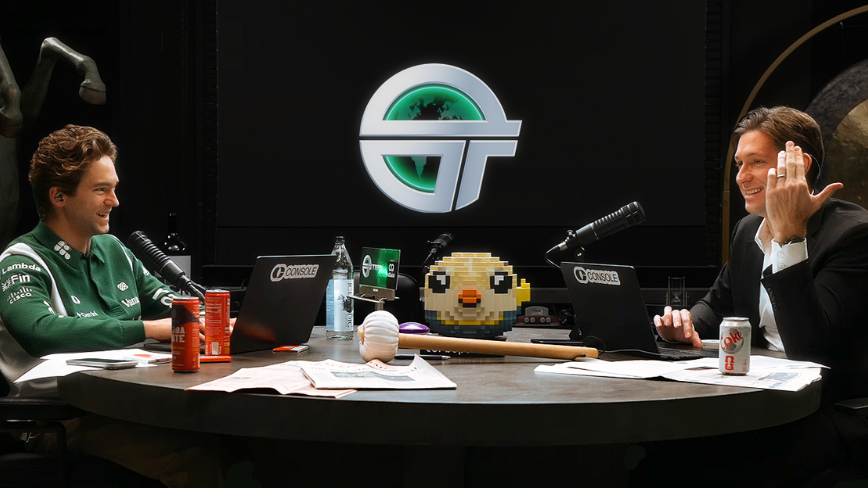
The definition of 'podcast' has expanded from asynchronous talk radio to any episodic audio or video content with people speaking, making the original term increasingly obsolete as consumption shifts toward video-based formats.
fromwww.mercurynews.com
2 months agoThe best DVR for recording your favorite shows
In today's hectic and fast-paced world, technology has made it possible to be in multiple places at once and greatly increased our productivity. However, missing out on a limited-time showing or live broadcast can still cause anger and frustration. There's a simple and obvious solution in the form of DVRs or Digital Video Recorders, so you can enjoy all the thrill of watching your favorite sports team without the annoying commercials.
Gadgets
Podcast
fromRAIN News
1 month agoiHeartMedia partners with Middle East State of Qatar for new podcast effort
iHeartMedia and Qatar's Government Communications Office partnered to develop podcasting infrastructure and establish the MENA region as a global podcasting hub through studios, original content, and industry events.


Marketing tech
fromVariety
2 months agoRadio.com, Mark Cuban's Fireside Acquired by Consumable as Ad Tech Company Plans New Streamer for 'AI-Driven, Creator-First Media Landscape' (EXCLUSIVE)
Consumable Inc. acquired Radio.com and Fireside to build an AI-driven, creator-first streaming platform integrating monetization, audience ownership, and a creator investment studio.
fromThedrum
2 months agoTo Compete With Walled Gardens, TV Must Become A Platform: 605's Levine
"Until maybe eight years ago, television in and of itself was a very clean and tidy well-lit marketplace. It was very clear and easy to understand this television universe. "What's happened is, with the rise of streaming, particularly through the pandemic, we're seeing streaming begin to rival and sometimes exceed linear viewership. "And that has created a massive amount of fragmentation for the television universe."
Television
Television
fromAdExchanger
1 month agoTV And Video Convergence Is 'Fair' At Best: Here's What 10 Execs Want Fixed In 2026 | AdExchanger
TV and video convergence is a transitional work-in-progress with siloed ad technology, evolving measurement, and need for standardized measurement, transparency, outcomes, and interoperability.
[ Load more ]