#diverse-owned-publishers
#diverse-owned-publishers
[ follow ]
#diversity #publishing-industry #black-history-month #higher-education #public-libraries #book-challenges


fromPinkNews | Latest lesbian, gay, bi and trans news | LGBTQ+ news
4 weeks agoNew LGBTQ+ publisher to 'put queer writers first' after Heated Rivalry success
Our mission is to bring queer books by queer authors to all readers, both from within the queer community and our allies. And we'll achieve this without compromising the authenticity or integrity of our queer books and authors.
LGBT
Media industry
fromNieman Lab
3 weeks agoA new report looks at 559 funding proposals to determine local journalism's biggest problems
Local journalism funding suffers from too many competing nonprofit solutions, inefficient intermediaries, and philanthropic institutions failing to select viable winners or allow unsuccessful projects to fail.
#independent-bookstore
Arts
fromEast Bay Express | Oakland, Berkeley & Alameda
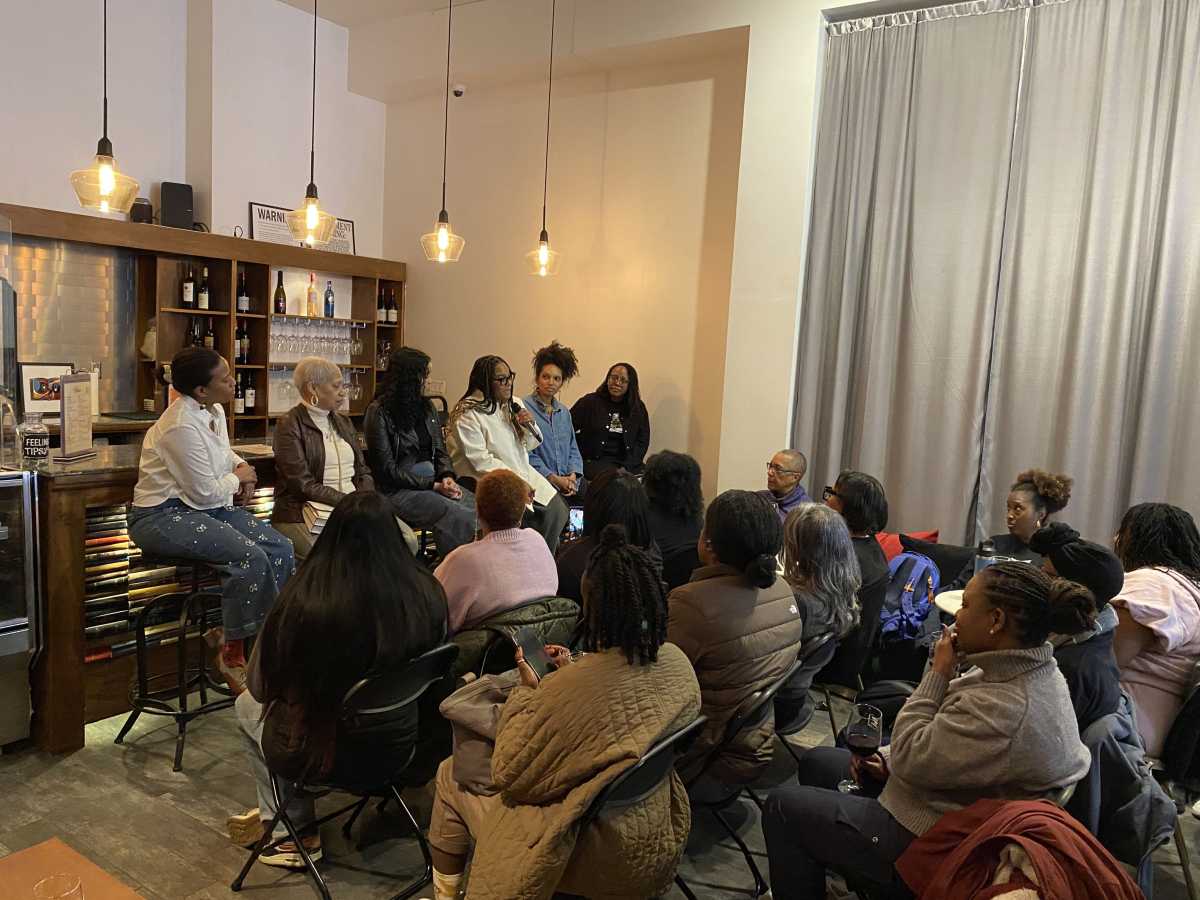
3 weeks agoNomadic Bookshop centers collective imaginings
Nomadic Bookshop, a community-empowered bookstore in Oakland's Uptown, opened with nearly 400 guests and offers free or pay-what-you-can events including readings, workshops, and open-mic conversations.

Social justice
fromwww.theguardian.com
3 weeks agoWho decides what's news these days? For all the diversity talk, it certainly isn't Black journalists | Omega Douglas
British journalism fails to reflect societal diversity, with Black journalists significantly underrepresented in major awards and newsrooms, despite ethical requirements for inclusive representation.
Higher education
fromInside Higher Ed | Higher Education News, Events and Jobs
1 month agoDiversity, Equity, Inclusion and Access in the Real World
Higher education should focus on doing one thing well for a specific community rather than attempting to serve everyone, mirroring successful niche business models.
fromAdvocate.com
1 week agoHeated Rivalry's success may reignite LGBTQ+ publishing
"I've heard some people say, 'Oh, I've watched the show,' or 'I've read the series, and that was the first queer romance I ever read,' says Stacy Boyd, executive editor at Harlequin Books, who works directly with Reid. 'So it's opening doors that haven't been opened.'"
Books

Books
fromwww.7x7.com
3 weeks ago13 New Books by Local Authors to Break for This Spring
Three new books explore pivotal moments in cultural history: a 1960s San Francisco novel about reproductive rights, a contemporary suburban thriller involving a Chinese American family, and Rolling Stone Magazine's counterculture origins in 1967.
Books
fromNonprofit Quarterly | Civic News. Empowering Nonprofits. Advancing Justice.
3 weeks agoThe End of Mass-Market Paperbacks Is an Issue of Justice | Nonprofit Quarterly | Civic News. Empowering Nonprofits. Advancing Justice.
Mass-market paperbacks, affordable books designed for portability and accessibility, are being discontinued due to declining sales, representing a significant loss for readers and writers.
fromThe Washington Post
1 month agoColleges quietly cut ties with organizations that help people of color
Since last year, more than 100 schools have ended partnerships with the PhD Project, a group founded in 1994 to diversify the pipeline of students who aspire to become business school professors. That came after the U.S. Department of Education last March announced probes into 45 universities that partnered with the group. More than a dozen of those schools have quietly reached agreements with the administration to resolve the investigations.
US news
fromNonprofit Quarterly | Civic News. Empowering Nonprofits. Advancing Justice.
1 month agoWho Holds Narrative Authority? Reflections from "Reframing Resistance" | Nonprofit Quarterly | Civic News. Empowering Nonprofits. Advancing Justice.
In the environmental nonprofit sector, "centering frontline voices" has become a familiar slogan, often detached from how decisions are made or resources allocated. It appears in grant proposals, conference agendas, and organizational values statements. And yet, too often, those voices are still positioned as illustrative rather than authoritative-invited to animate strategies already decided, asked to translate lived experience into language legible to funders, or flattened into narratives that travel more easily than the truths they carry.
Environment
fromwww.theguardian.com
2 months agoBernardine Evaristo renews call to diversify school curriculum in England
There has been progress in the diversity of texts on offer in the GCSE English literature curriculum, but uptake in schools is still low with just 1.9% of GCSE pupils in England studying books by authors of colour, up from 0.7% five years ago, according to a report. Compiled by the campaign group Lit in Colour, the report says progress is too slow and that
Education


Film
fromLGBTQ Nation
2 months agoThese 10 essential movies about Black people with HIV will open your heart & mind - LGBTQ Nation
On-screen representation of people living with HIV remains extremely limited across platforms, with especially poor representation of Black people and few meaningful portrayals.
fromwww.npr.org
2 months agoA 200-year-old book distributor is closing. Here's what that means for public libraries
Now, the nation's largest distributor of print books to public libraries Baker & Taylor is set for imminent closure. For nearly 200 years, Baker & Taylor has played a key role in getting books from manufacturers to warehouses to library patrons' hands. Partnering with more than 5,000 U.S. libraries, the company has been a staple in the industry, selling books at wholesale prices and providing them with labels and lamination so libraries don't have to.
Arts
Books
fromwww.theguardian.com
1 month agoThese books are pushing boundaries': winners of 30,000 Inclusive Books for Children awards announced
Six female authors won the 2026 Inclusive Books for Children awards, with winning titles featuring diverse representation in children's literature across multiple age categories.
fromFast Company
1 month agoCan 2026 finally be the year Black-owned businesses are covered for their accomplishments, not just DEI?
What should be stories about innovation, resilience, market disruption, and leadership have increasingly been flattened into a single, repetitive narrative: DEI. Not the company's business model. Not the founder's vision or entrepreneur journey. Not the problem being solved or the customers being served. Just DEI. And it's often framed through the lens of rollbacks, political backlash, or cultural controversy.
Social justice
fromFast Company
2 months agoWhy inclusion is the new standard for economic growth
In places where inclusion is part of the infrastructure of their economy-supply chains, procurement processes, capital access, or business ownership-people thrive. Inclusive economies create more resilience by expanding the base of potential business owners who can build, own, innovate, and hire. They allow more opportunities for homeownership and investing in the longevity of communities. As our economy becomes increasingly stratified and volatile, we need as much resiliency as we can get.
Social justice
Books
fromOregon ArtsWatch * Arts & Culture News
1 month agoBuckman Journal: 'We print stuff that we enjoy' * Oregon ArtsWatch
Buckman Journal is a Portland-based independent press and biannual anthology publisher fostering a collaborative, inclusive local literary community from a hybrid neighborhood workspace.
fromPublishersWeekly.com
1 month agoWI2026: PW Talks with Xochitl Gonzalez
In addition to writing fiction, you're a staff writer for the and a screenwriter. How do you think of your career? I think of myself as a storyteller. I'm nosy, so once I'm telling a story, I want to know what happens. I do find, with fiction, I can't toggle in and out of it. It's like acting, where you have to stay with that character, in that world.
Books
fromwww.theguardian.com
1 month agoMost Indians don't read for pleasure so why does the country have 100 literature festivals?
Sounding amused, publisher Pramod Kapoor recalls the reaction of the Indian cricketing legend Bishen Singh Bedi when he learned Kapoor was printing 3,000 copies of his autobiography. Only 3,000? he protested. I fill stadiums with 50-60,000 people coming to see me play and you think that's all my book is going to sell? Kapoor, the founder of Roli Books, explains that Bedi's legions of admirers were unlikely to translate into book buyers. That was in 2021.
Books
[ Load more ]