#dna-database-comparison
#dna-database-comparison
[ follow ]
#dna-evidence #human-remains #missing-person #ancient-dna #genomics #missing-persons #human-evolution #dna-testing
fromLos Angeles Times
4 days agoHuman remains found on a Bay Area beach in 1999 and 2023 have been identified
Human remains found on Bay Area beaches in 1999 and 2023 have been identified as those of Walter Karl Kinney, a banker who disappeared in 1999. The remains were discovered by a family searching for sea shells in 2022, leading to an investigation that linked the remains to Kinney's family through DNA analysis.
California
Data science
fromNational Institute of Mental Health (NIMH)
4 weeks agoBrain Cell Atlas: From Data to Knowledge Base
CUBIE will coordinate the BRAIN Initiative Cell Atlas Network by enabling exploration of brain cell data, supporting research rigor through FAIR principles, and establishing consensus taxonomies and data standards for comprehensive brain cell atlases.
fromThe Washington Post
2 weeks agoHe died a convicted murderer. Can a DNA test clear his name?
Every state now has a legal avenue where people can request DNA testing of evidence after being convicted. But in many cases, it's not clear if those statutes apply once convicts have died, said Brandon Garrett, a law professor at Duke University.
US news
Medicine
fromNature
1 month agoIdentical twins on trial: can DNA testing tell them apart?
Identical twins share identical DNA, making standard forensic DNA testing unable to distinguish which twin committed a crime, though whole-genome sequencing can identify rare post-birth mutations to differentiate them.
Science
fromThe Washington Post
1 month agoNeanderthal males and human females had babies together, ancient DNA reveals
Neanderthal-human interbreeding consistently followed a pattern of Neanderthal males with human females across 200,000 years, suggesting possible mate preferences or social behaviors in ancient populations.
EU data protection
fromwww.bbc.com
1 month agoMet DNA database missing nearly half of officers
The Metropolitan Police lacks DNA records for 46% of officers and fingerprint records for 20%, potentially compromising their ability to identify contamination at crime scenes and investigate internal misconduct.
UK news
fromwww.independent.co.uk
1 month agoAlmost half of officers' DNA still missing from Met Police database
Nearly half of Metropolitan Police officers' DNA and over a fifth of their fingerprints are missing from elimination databases, potentially hindering criminal investigations and internal misconduct detection.
fromwww.theguardian.com
1 month agoI clicked on a button and everything changed': how a DNA test turned my life upside-down
It was another detail that the rest of the family apparently knew but had never told me; they thought I already knew. The biology mattered less to me than the secret. Dad had been adopted, it turned out. A classic affliction of the 1950s, in which young, unmarried couples were forced to give away their newborn babies.
Books
Science
fromNature
1 month agoDaily briefing: How DNA testing can tell identical twins apart
Advanced forensic techniques including whole-genome sequencing and epigenetic analysis can differentiate between identical twins in criminal investigations, while GLP-1 drugs show potential in reducing addiction across multiple substances, and researchers have successfully synthesized hexagonal diamond.
fromwww.scientificamerican.com
1 month agoScientists gave the same sample to seven at-home microbiome tests. The results were dramatically different
Scientists have long known that vast colonies of bacteria, viruses and other microorganisms—a population collectively called the microbiome—live on and inside the human body. But how they influenced our health was long a mystery. In just the past few years, we've learned that myriad factors, from the food that we consume to the amount of time that we spend sleeping to our genes to our home, all affect our microbiome.
Health

US news
fromwww.mercurynews.com
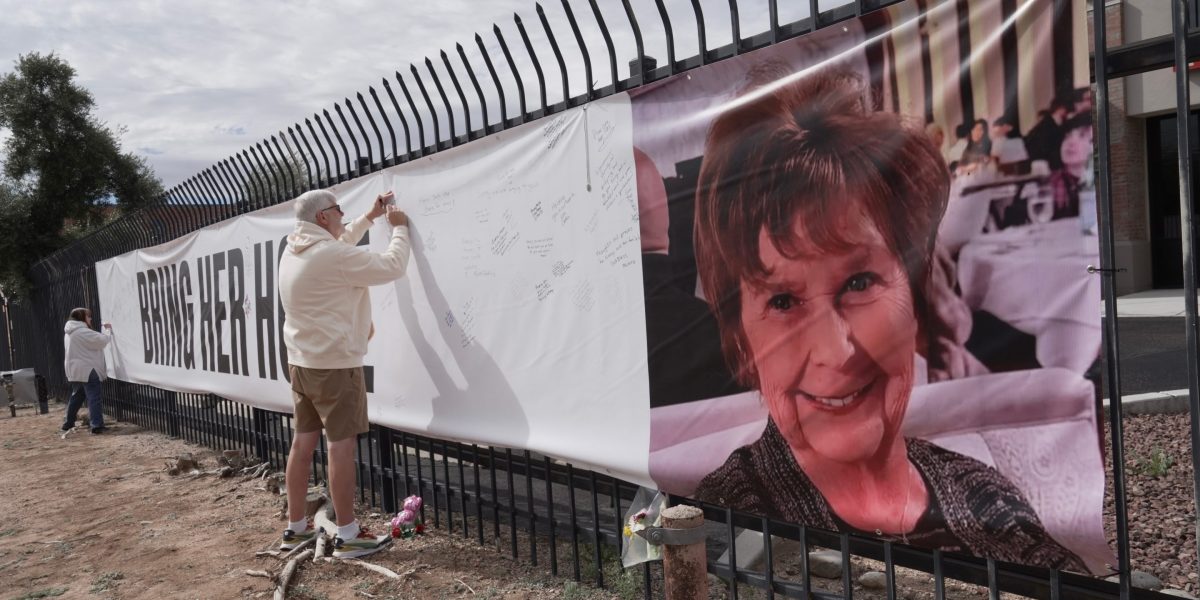
1 month agoGenealogical sites have helped solve major crimes. Police in Nancy Guthrie's case might turn to them
Investigators may use DNA genealogy databases to match DNA from Nancy Guthrie's case and potentially identify suspects or relatives when CODIS yields no matches.

Science
fromwww.scientificamerican.com
1 month agoSex between Neandertals and anatomically modern humans tended to follow a specific pattern
Neandertal-human interbreeding was primarily between male Neandertals and female humans, evidenced by the absence of Neandertal DNA on modern human X chromosomes.
fromSlate Magazine
2 months agoHelp! I Thought I Knew an Important Part of My Family's History. Turns Out, I've Been Living a Lie.
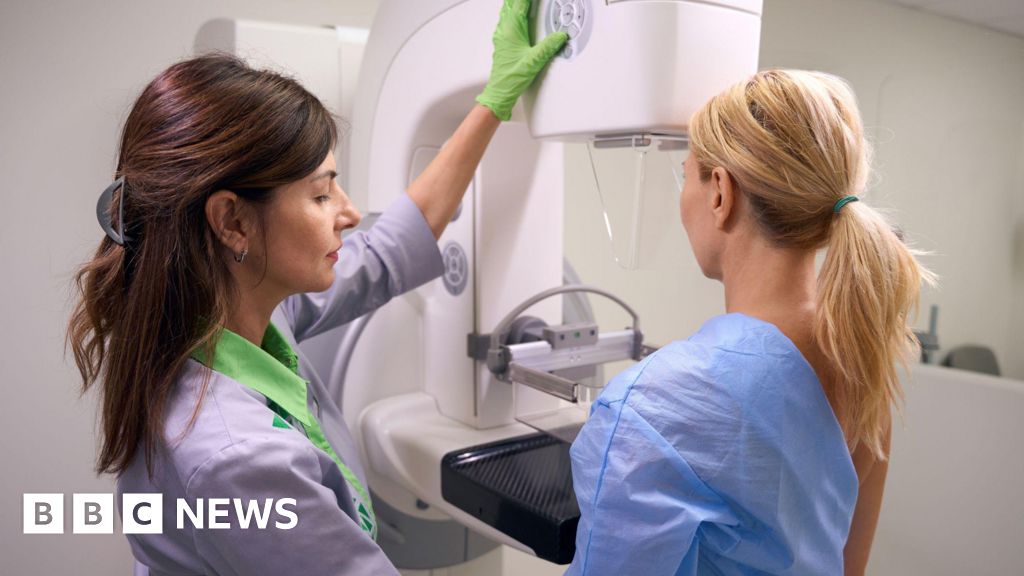
When I was 4 years old, my parents divorced, and my father moved away. I grew up thinking that my biological father was "John," but recently discovered that my mother had an affair with another man, "Allen." Allen is my biological father. This was a surprise and filled with a lot of drama, but it's gotten weirder than you'd imagine.
Psychology
fromIndependent
2 months agoGardai investigating murder of Kerry farmer Mike Gaine hope for breakthrough from US DNA experts
Gardaí investigating the murder of Michael Gaine on his farm in Co Kerry almost a year ago are putting "enormous effort" into solving the crime, with hopes pinned on crime scene analysis by US forensic experts returning positive leads.
Miscellaneous
fromNews Center
1 month agoAI Model May Improve RNA Sequencing Research - News Center
Scientists in the laboratory of Rendong Yang, PhD, associate professor of Urology, have developed a new large language model that can interpret transcriptomic data in cancer cell lines more accurately than conventional approaches, as detailed in a recent study published in Nature Communications. Long-read RNA sequencing technologies have transformed transcriptomics research by detecting complex RNA splicing and gene fusion events that have often been missed by conventional short-read RNA-sequencing methods.
Cancer
fromIrish Independent
1 month agoRisk of carrying the 'Celtic curse' gene varies across Ireland, new study finds
Targeting genetic screening for the condition to priority areas could help identify at-risk individuals earlier and avoid future health complications, experts say. Haemochromatosis symptoms can evolve over decades as high iron levels in the body cause damage to organs. Early diagnosis and treatment - such as regular blood donation to reduce iron levels - is key to prevent liver damage, liver cancer and arthritis.
Public health
fromNature
1 month agoAI tools can design genomes. Will they upend how life evolves?
Biology is undergoing a transformation. After centuries of studying life as it evolves naturally, researchers are now using a combination of computation and genome engineering to intervene, generating new proteins and even whole bacteria from scratch. The use of artificial-intelligence tools to design biological components, an approach known as generative biology, is set to turbocharge this area of research. Just last year, scientists used AI-assisted design to produce artificial genes that can be expressed in mammalian cells.
Science
fromSFGATE
2 months agoBody found halfway across country ties back to horrific Calif. criminal
Ronald Joseph Cole was a 19-year-old with a shy smile and a buzz cut in 1965, the year he moved from San Diego to Fillmore, a town about 25 miles from Santa Clarita. He was just starting out in life and, hoping to find a job, moved in with his older half-brother David LaFever. By May 1965, Cole had stopped contacting relatives. He had disappeared.
fromArs Technica
1 month agoHave we leapt into commercial genetic testing without understanding it?
Martschenko's argument is largely that genetic research and data have almost always been used thus far as a justification to further entrench extant social inequalities. But we know the solutions to many of the injustices in our world-trying to lift people out of poverty, for example-and we certainly don't need more genetic research to implement them. Trejo's point is largely that more information is generally better than less.
Science
fromBoston.com
2 months agoGenealogists release image in attempt to identify child's skull found in N.H. store in the 1990s
Investigative genetic genealogists are asking for the public's help to identify a child whose skull was seized from a Seabrook, N.H., business more than 30 years ago. The DNA Doe Project, a California-based nonprofit that builds DNA profiles from unidentified human remains, released a new facial reconstruction on Monday. The group also announced that the skull - believed to belong to a girl between the ages of 7 and 9 - has ancestral roots on the Greek island of Chios.
US news


fromwww.scientificamerican.com
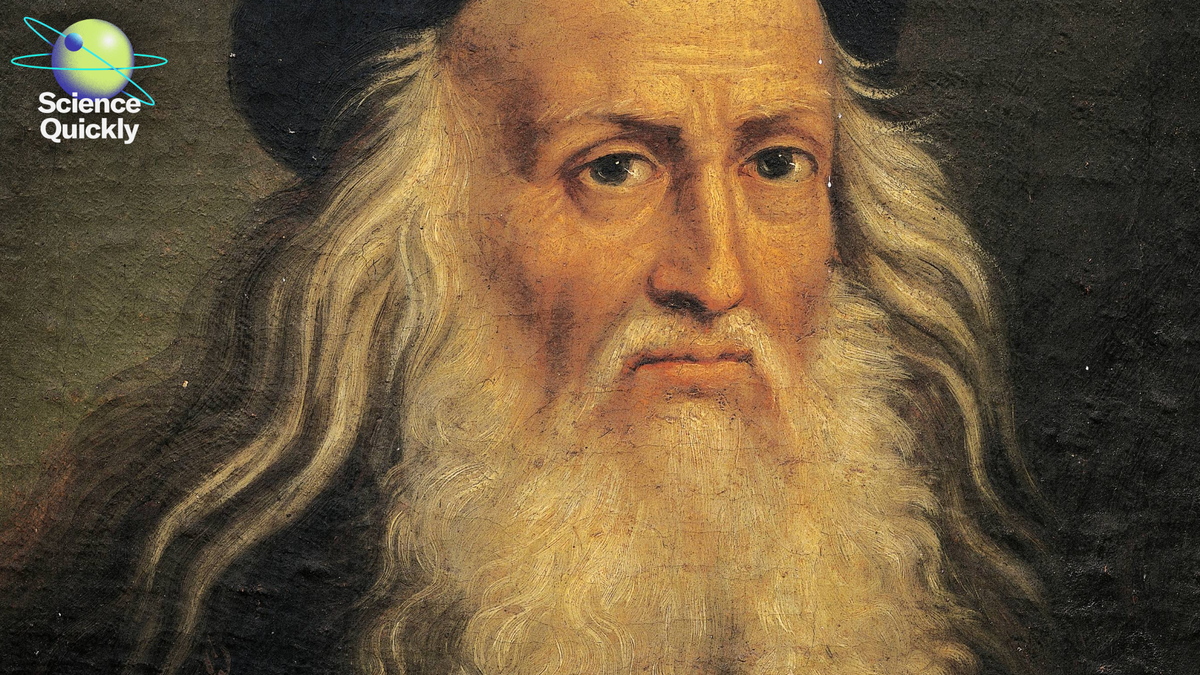
2 months agoMeet the Ancestor That Connects Us to Neandertals and Denisovans
New research published today in Nature dates the boneschipped out from a cave called Grotte a Hominides and nearby it over decadesto about 773,000 years ago, during the era of the last common ancestor of Homo sapiens, Homo neanderthalensis and Denisovans (a group of humans that ranged across Asia and that does not have an agreed-upon species name). We can say that the shared ancestry between these three species is perhaps in Grotte a Hominides in Casablanca, says study co-author Abderrahim Mohib, a prehistorian at the National Institute of Archaeology and Heritage Sciences in Rabat, Morocco.
Science
fromwww.bbc.com
2 months agoAI model from Google's DeepMind reads recipe for life in DNA
Called AlphaGenome, the model could help scientists discover why subtle differences in our DNA put us at risk of conditions such as high blood pressure, dementia and obesity. It could also dramatically accelerate our understanding of genetic diseases and cancer. The developers of the model acknowledge it's not perfect, but experts have described it as "an incredible feat" and "a major milestone".
Science
[ Load more ]