#donor-transparency
#donor-transparency
[ follow ]
#philanthropy #transparency #fundraising #leadership #accountability #nonprofit-leadership #compliance #nonprofits

#nonprofit-leadership
Non-profit organizations
fromNonprofit Quarterly | Civic News. Empowering Nonprofits. Advancing Justice.
2 days agoHow Dissolving Your Nonprofit Can Strengthen the Sector | Nonprofit Quarterly | Civic News. Empowering Nonprofits. Advancing Justice.
Nonprofit leaders must sometimes choose to dissolve organizations intentionally rather than forcing survival in a weakened state.


Non-profit organizations
fromNonprofit Quarterly | Civic News. Empowering Nonprofits. Advancing Justice.
2 days agoHow Dissolving Your Nonprofit Can Strengthen the Sector | Nonprofit Quarterly | Civic News. Empowering Nonprofits. Advancing Justice.
Nonprofit leaders must sometimes choose to dissolve organizations intentionally rather than forcing survival in a weakened state.


#democracy
Left-wing politics
fromNonprofit Quarterly | Civic News. Empowering Nonprofits. Advancing Justice.
4 days agoHow to Undermine Authoritarian Control: On Empowering Parallel Institutions | Nonprofit Quarterly | Civic News. Empowering Nonprofits. Advancing Justice.
Civil society must demonstrate the necessity of democratic institutions and social services to protect them from dismantling efforts by ultra-elites.
Social justice
fromNonprofit Quarterly | Civic News. Empowering Nonprofits. Advancing Justice.
1 week agoHope in the Dark: Four Tests for the Pro-Democracy Movement in 2026 | Nonprofit Quarterly | Civic News. Empowering Nonprofits. Advancing Justice.
Active hope is essential for shaping a brighter future for democracy amidst current challenges.
Media industry
fromNonprofit Quarterly | Civic News. Empowering Nonprofits. Advancing Justice.
4 days agoPolitics in an Attention Economy | Nonprofit Quarterly | Civic News. Empowering Nonprofits. Advancing Justice.
Candidates must be cultural figures to succeed in today's American politics, navigating an attention economy shaped by algorithms.
Fundraising
fromNonprofit Quarterly | Civic News. Empowering Nonprofits. Advancing Justice.
2 days agoUsing AI for Fundraising Still Requires Human Strategy | Nonprofit Quarterly | Civic News. Empowering Nonprofits. Advancing Justice.
AI should support strategy in nonprofit fundraising, not replace the essential human elements of trust and relationship building.
#nonprofits
Non-profit organizations
fromNonprofit Quarterly | Civic News. Empowering Nonprofits. Advancing Justice.
3 days agoAI in the Nonprofit Sector Is a Question of Governance, Not Just Technology | Nonprofit Quarterly | Civic News. Empowering Nonprofits. Advancing Justice.
Nonprofits face a critical choice in shaping AI governance or risk external control over its implementation and impact.

fromwww.theguardian.com
1 week agoCharity Commission warns Alan Turing Institute of its legal duties after complaints
The Charity Commission has issued formal regulatory advice and guidance to trustees at the Alan Turing Institute after it was contacted by a group of staff with a list of concerns.
EU data protection

Law
fromMuse by Clios | Discover the latest creative marketing and advertising news. Muse by Clio is the premier news site covering creativity in advertising and beyond.
3 days ago2 Rough Social Media Rulings Could Actually Improve the Platforms | Muse by Clios
Recent jury verdicts against Meta and YouTube signal a shift in accountability for social media platforms regarding child safety and mental health.
fromHarvard Business Review
1 week agoTreat Nonprofits as Strategic Partners, Not Just Philanthropic Recipients
Most for-profit companies still confine nonprofit relationships to corporate philanthropy. Donations flow through foundations, annual reports highlight community contributions, and nonprofit engagement is framed as evidence of corporate responsibility.
Non-profit organizations
fromwww.cbc.ca
2 weeks ago'We've had enough secrets': First Nations group opposes Ontario move to limit freedom-of-information laws | CBC News
Provincial decisions affect First Nations' rights, lands and environments, and FOI requests are one of the few mechanisms available to First Nations and the public to understand how those decisions were made. Having access to this information, particularly if it's a decision made by the premier or other cabinet ministers, or just understanding how those decisions came to be, is just part of good governance.
Canada news
NYC politics
fromNBC New York
3 weeks agoMamdani pledged a 'culture of transparency.' But he's not ready to hand over these gov't records.
Mayor Mamdani promised transparency and accountability but delayed releasing AI program records, citing FOIL request backlogs similar to his predecessor's approach.
#epstein-accountability
Social justice
fromwww.theguardian.com
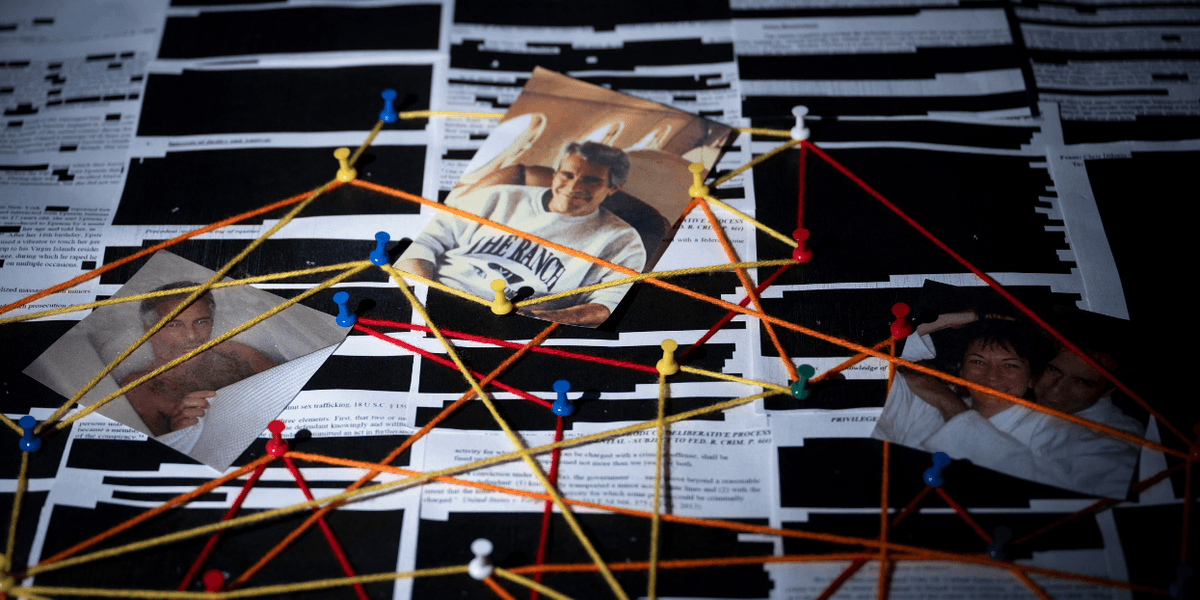
2 weeks agoI work with human trafficking survivors. Rich men like Bill Gates can do more to make amends for their Epstein ties | Bridgette Carr
Wealthy individuals' apologies for associating with Epstein are necessary but insufficient without accountability and action to address the systemic exploitation they enabled through their power and resources.
Social justice
fromwww.theguardian.com
2 weeks agoI work with human trafficking survivors. Rich men like Bill Gates can do more to make amends for their Epstein ties | Bridgette Carr
Wealthy individuals' apologies for associating with Epstein are necessary but insufficient without accountability and action to address the systemic exploitation they enabled through their power and resources.
Marketing
fromForbes
3 weeks agoMarketing 'Best Practices' That May Be Holding Your Nonprofit Back
Nonprofits should challenge outdated marketing practices by prioritizing leader visibility, impact-focused messaging, and relationship-building over transactional approaches to build stronger audience connections and sustainable growth.
Non-profit organizations
fromNonprofit Quarterly | Civic News. Empowering Nonprofits. Advancing Justice.
2 weeks agoDisability Inclusion Isn't "Special Needs"-It's Smart Philanthropy | Nonprofit Quarterly | Civic News. Empowering Nonprofits. Advancing Justice.
Cuts to special education oversight threaten funding and services for millions of children with disabilities, risking progress in disability inclusion.
Fundraising
fromwww.theguardian.com
2 weeks agoThe Guardian view on falling donations to charity: rising living costs are part of the problem, but not all of it | Editorial
UK charitable donations fell from 15.4 billion to 14 billion, marking the first overall drop since 2021, with fewer donors giving smaller amounts despite high-profile fundraising campaigns.
Artificial intelligence
fromIPWatchdog.com | Patents & Intellectual Property Law
3 weeks agoThe AI Ethics Waterfall: Disclosure, Governance, and Who's Really Responsible
AI integration in patent practice is now ubiquitous across all stages, from invention harvesting to litigation, with much of it operating invisibly within existing tools and platforms.
Careers
fromEntrepreneur
1 month agoPay Transparency Is Changing the Rules for Employers - Here's What You Need to Know
Pay transparency laws are expanding across states and cities, requiring employers to disclose compensation ranges in job postings and promotions to combat wage discrimination and create equitable hiring practices.
Law
fromIPWatchdog.com | Patents & Intellectual Property Law
3 weeks agoLegal Groups Push for Mandatory Disclosure of Litigation Funders
Third-party litigation funders must disclose their involvement in federal civil cases through a proposed amendment to Federal Rule of Civil Procedure 26(a)(1)(A) to establish uniform disclosure requirements across inconsistent federal courts.


US politics
fromFlowingData
4 weeks agoDatabase to explore conflicts of interest through financial disclosures
ProPublica created a searchable database of financial disclosure documents from the president and 1,573 executive branch appointees, revealing their assets, outside positions, and compensation.
fromNonprofit Quarterly | Civic News. Empowering Nonprofits. Advancing Justice.
3 weeks agoRotating the Clipboard Built Our Workplace Democracy | Nonprofit Quarterly | Civic News. Empowering Nonprofits. Advancing Justice.
Losing staff could be detrimental to the projects we worked on, and there was a growing dissatisfaction with how meetings were run. These mostly one-sided discussions left the quieter half of us feeling pushed aside, like our thoughts didn't matter much. If things stayed this way, I worried the good people on our team would start quitting one by one.
Non-profit organizations
Philosophy
fromNonprofit Quarterly | Civic News. Empowering Nonprofits. Advancing Justice.
1 month agoCupcakes, Crisis, and the Cost of Compliance | Nonprofit Quarterly | Civic News. Empowering Nonprofits. Advancing Justice.
Rigid institutional rules often fail vulnerable populations by prioritizing compliance over human need, revealing systemic disconnects between policy design and lived reality.
Higher education
fromNature
1 month agoThe Epstein scandal is a wake-up call - new rules are needed on links with rich donors
Academic institutions failed to implement proper oversight of faculty donor relationships, allowing Jeffrey Epstein to influence research despite having no scientific expertise and a criminal history.
Fundraising
fromFortune
3 weeks agoAsia's family offices and corporations must step up to replace a cash-strapped UN and fill the SDG funding gap | Fortune
Asia's wealthy families and corporations must replace declining UN funding through coordinated philanthropic efforts and strategic partnerships to address regional development challenges.
fromFast Company
1 month agoHow leaders can make ethical choices when the rules fall short
Research finds that relying on regulations to determine your policies and procedures can result in ethical blindspots, or situations where people might think if there is not a rule for something, that it's permissible. After years of shifting towards values and culture-based compliance, leadership might be heading the opposite direction.
Philosophy
fromwww.theguardian.com
1 month agoReaders reply: what would be the most socially useful way to spend a billion dollars?
I've always thought it would be good to acquire an old warehouse in every town throughout the land and convert it into low-rent community workspaces for artists, local charities and small businesses getting off the ground. A kind of people's WeWork. What would others do with a humungous, but not unlimited, pile of dosh to benefit society? Roland Freeman, West Yorkshire Send new questions to nq@theguardian.com.
Left-wing politics
Fundraising
fromNonprofit Quarterly | Civic News. Empowering Nonprofits. Advancing Justice.
1 month agoInformation as Civic Infrastructure-and How Philanthropy Can Support the Ecosystem | Nonprofit Quarterly | Civic News. Empowering Nonprofits. Advancing Justice.
Philanthropy should prioritize funding the information ecosystem as foundational infrastructure, since well-designed programs fail without reliable, trusted information enabling public understanding and collective decision-making.


Social justice
fromNonprofit Quarterly | Civic News. Empowering Nonprofits. Advancing Justice.
2 months agoFor Every $100 Foundations Give, Only 19 Cents Go to Volunteer Support | Nonprofit Quarterly | Civic News. Empowering Nonprofits. Advancing Justice.
Volunteers are essential to nonprofit capacity and social change, deserving transformative investment rather than being dismissed as merely "nice".
fromNonprofit Quarterly | Civic News. Empowering Nonprofits. Advancing Justice.
1 month agoPhilanthropy Must Defend the Right to Bear Witness | Nonprofit Quarterly | Civic News. Empowering Nonprofits. Advancing Justice.
"Are you okay?" These were Alex Pretti's last words, said to a woman after ICE agents had tackled and pepper-sprayed her. Videos from bystanders show Pretti holding up a phone, attempting to document what was happening before he himself was pepper-sprayed, wrestled to the ground, and killed by those officers. He lost his life not for committing violence, but for documenting it, and stepping in to protect someone facing it.
US politics
US politics
fromNonprofit Quarterly | Civic News. Empowering Nonprofits. Advancing Justice.
2 months agoS.O.S.-Nonprofits Need Funding for "Staff Operating Support" | Nonprofit Quarterly | Civic News. Empowering Nonprofits. Advancing Justice.
Invest significantly in the nonprofit workforce through new funding to restore sector momentum, address chronic underinvestment, and recognize nonprofits as major employers.
fromNonprofit Quarterly | Civic News. Empowering Nonprofits. Advancing Justice.
1 month agoBalancing Transparency and Timeliness in Organizational Decision-Making | Nonprofit Quarterly | Civic News. Empowering Nonprofits. Advancing Justice.
Dear Transparency-Committed Reader, You're not alone. So many of us want decision-making to reflect our collective values (like transparency, care, and shared power), but it's hard to actually put those values into practice. That gap between what we believe and how we decide can be frustrating. And getting stuck in the process is a common concern I hear from groups. I am happy to share, though, that decision-making doesn't have to be a nightmare.
Fundraising
fromNonprofit Quarterly | Civic News. Empowering Nonprofits. Advancing Justice.
1 month agoThis Is Not a Retreat | Nonprofit Quarterly | Civic News. Empowering Nonprofits. Advancing Justice.
The change in the administration's tactics in Minneapolis is not a retreat. Instead, they are regrouping and planning another mode of attack, with the hopes that their repression might be met with resistance that is easier to control and contain. People who garner their relevancy and power through the dehumanization and oppression of others will do whatever it takes to cling to their soulless sense of self.
US politics
US politics
fromSan Jose Spotlight
1 month agoMountain View nonprofit forgoes federal funding on principle - San Jose Spotlight
Community Services Agency in Mountain View declined Community Development Block Grant funding to avoid enforcing immigration checks and bans on gender ideology and abortion referrals.
fromNonprofit Quarterly | Civic News. Empowering Nonprofits. Advancing Justice.
2 months agoDoes Personal Investment Hurt Fundraising? | Nonprofit Quarterly | Civic News. Empowering Nonprofits. Advancing Justice.
I've seen this before-many times, in fact. What you're describing is not unheard of in the nonprofit sector. Founder energy is one of the most powerful forces driving new missions into the world. It can also be one of the riskiest. Many organizations, especially those built from lived experience, passion, and necessity, begin with little more than a vision, a problem to solve.
Fundraising
US politics
fromNonprofit Quarterly | Civic News. Empowering Nonprofits. Advancing Justice.
2 months agoFunders Must Support Advocates Fighting Back Against Pronatalism | Nonprofit Quarterly | Civic News. Empowering Nonprofits. Advancing Justice.
The Trump administration prioritized pronatalist policies grounded in reproductive futurism, promoting heteronormative family ideals while eroding rights for transgender, queer, and marginalized people.
fromThe Mercury News
2 months agoFeeding the need: How to keep giving in 2026
While there are still January holidays on the horizon for Sikhs, Hindus and Muslims, today is the 12th of Christmas - and then the holly-jolly season will be quickly wrapped and done. But looming end of the winter holidays doesn't mean that you have to give up the spirit of giving. In fact, why not make it a new year's resolution to keep donating all year long? Food insecurity, unfortunately, doesn't stop, and nonprofit organizations tend to see a drop in donations at the beginning of the year.
Fundraising
fromwww.theguardian.com
2 months agoA mixed blessing': crowdfunding has changed the way we give, but is it fair and effective?
Within hours of the Bondi beach terror attack, the money had already begun to pour in. As images of the tragedy flooded social media, people from around the world donated tens of thousands of dollars to the victims, their families and first responders. Passing the hat around the neighbourhood or the local pub has always been a staple response in times of crisis. But today, that instinct to open your wallet has been exponentially supercharged via a digital simulacrum: online crowdfunding platforms.
Fundraising
Fundraising
fromLondon Business News | Londonlovesbusiness.com
1 month agoWhy charities should consider fundraising platforms - London Business News | Londonlovesbusiness.com
Fundraising platforms expand charities' reach, streamline donations and administration, and improve donor trust through transparency and social sharing.
[ Load more ]