#dry-mesa-dinosaur-quarry

[ follow ]
OMG science
fromwww.scientificamerican.com
2 days ago

Bizarre fossils reveal that complex life evolved far earlier on Earth than we thought

The Cambrian explosion may have occurred later than previously thought, as new fossils from the Ediacaran period suggest earlier complex life forms existed.
Portland food
fromTravel + Leisure
2 days ago

This Utah State Park Has Pink Sand Dunes That Look Otherworldly-Plus Massive Hills and Spectacular Sunsets

Coral Pink Sand Dunes State Park features unique pink dunes formed by wind erosion, offering stunning views and a rare beetle species.
OMG science
fromArs Technica
3 days ago

New fossil deposits show complex animal groups predating the Cambrian

Ediacaran species reveal early animal diversity, including cnidarians and ctenophores, pushing back the timeline of their origins.
Science
fromNature
1 week ago

Daily briefing: Tiny bones from Neanderthal fetus point to downfall of the species

A genetic bottleneck contributed to the Neanderthals' extinction, while AI-generated X-rays challenge radiologists' ability to discern real from fake.
#paleontology
Roam Research
fromwww.theguardian.com
1 week ago

I discovered three new geckos in Cambodia's limestone caves and that's not all we found

Caves host unique ecosystems, often isolated, leading to the evolution of distinct species over time.
London
fromianVisits
2 weeks ago

Early hours visits to see the Natural History Museum's dinosaurs

The Natural History Museum offers early-morning dinosaur gallery tours starting at 9am, one hour before public opening, providing exclusive access with a guide for £30 adults and £24 children.
LA real estate
fromLos Angeles Times
25 years ago

Desert History for Sale

Jack L. Warner's historic Palm Springs compound, once used to entertain Hollywood elite and President Eisenhower, is now listed for $3.2 million by current owners Steve and Betty Shagan.
Independent films
fromwww.theguardian.com
1 month ago

The Dinosaurs review Morgan Freeman's narration is so soothing, you could use this as a relaxation aid

Dinosaur documentaries increasingly rely on familiar narrative tropes and visual effects that have become clichéd, combining predictable animal behavior patterns with sensationalized predator encounters.
fromArs Technica
4 weeks ago

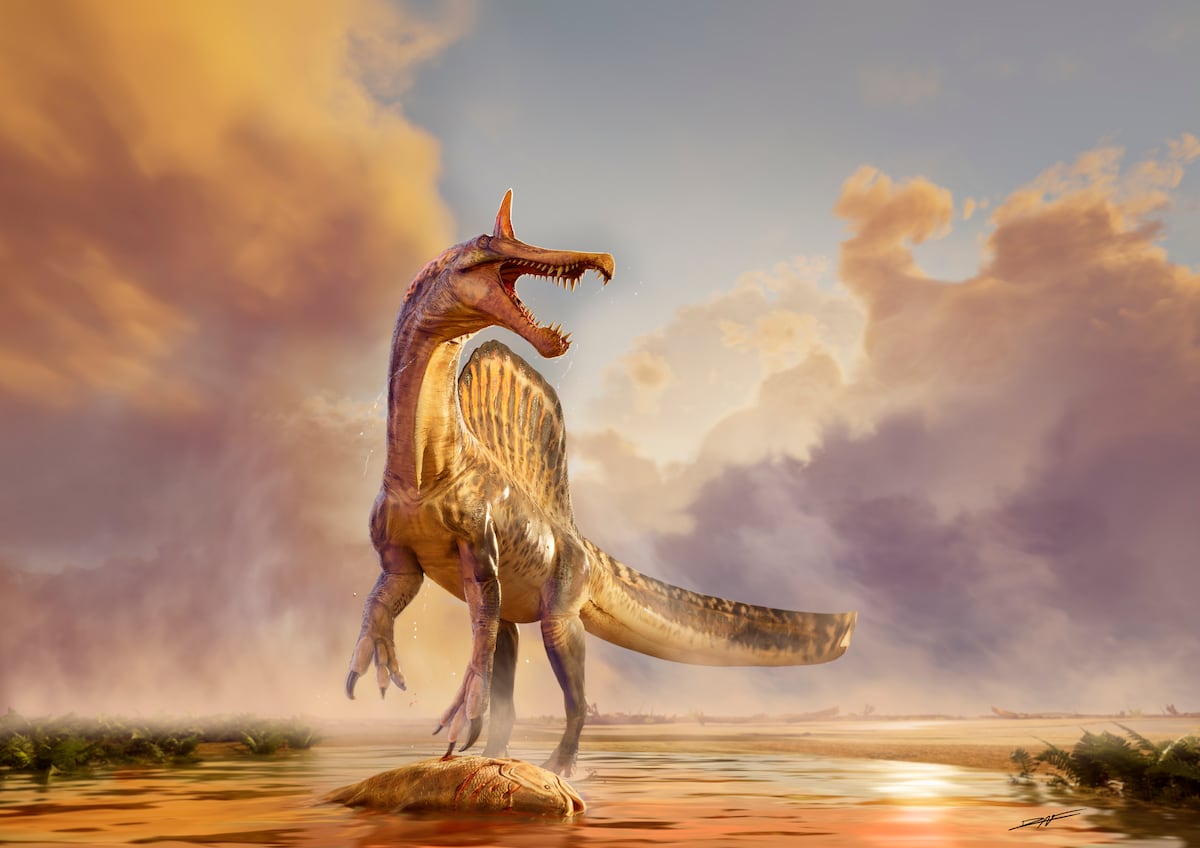
A unicorn-like Spinosaurus found in the Sahara

The Spinosaurus is a sail-backed, crocodile-snouted dinosaur that Hollywood depicted as a giant terrestrial predator capable of taking down a T. rex in Jurassic Park 3. Then they changed their mind and made it a fully aquatic diver in Jurassic World Rebirth—a rendering that was more in line with the latest paleontological knowledge. But now, deep in the Sahara Desert, a team of researchers led by Paul C. Sereno discovered new Spinosaurus fossils suggesting both scientists and filmmakers might have got it all wrong again.
Science
London
fromBusiness Matters
3 weeks ago

5 Hidden Details at Jurassic World Exhibition Bangkok Every Fan Must Discover

The Jurassic World Exhibition in Bangkok offers immersive dinosaur experiences through realistic animatronics, detailed settings, and interactive elements that reward careful observation of design details.
fromFuncheap
4 weeks ago

Free Admission Day at Santa Cruz Museum of Natural History

The Santa Cruz Museum of Natural History, a place for learning, exploration and building community located in a beautiful building right on the beach in Santa Cruz.
Portland food
Arts
fromColossal
4 weeks ago

Grant Garmezy Molds a Full-Size Dakotaraptor from Molten Glass

Artist Grant Garmezy created a life-size glass sculpture of Dakotaraptor, a 14-foot prehistoric predator with a distinctive 9.5-inch sickle claw, discovered in South Dakota 20 years ago.
OMG science
fromArs Technica
4 weeks ago

Tiny, long-armed dinosaur leads to rethink of dinosaur miniaturization

Alvarezsaurid miniaturization preceded dietary specialization on ants, challenging the theory that small body size evolved directly coupled to insectivory.
#dinosaur-auction
fromenglish.elpais.com
1 month ago

Ants trapped in amber reveal what diminutive life was like millions of years ago

Although there are many amber stones containing a single creature, there are fewer that include two or more, as is the case with a pair of mosquitoes trapped in amber 130 million years ago which tell us that, back then, males also sucked blood. Even more extraordinary is when several organisms can be seen interacting, either eating the other, acting as a parasite, or cooperating.
Science
US news
fromwww.npr.org
1 month ago

Newly discovered dinosaur species was a fish-eater with a huge horn

Spinosaurus mirabilis was a school-bus-length, fish-eating spinosaur with a foot-long curved horn that lived in Cretaceous marshes about 95 million years ago.
California
fromwww.mercurynews.com
1 month ago

Redwood forest once owned by the King Tut of Hoarders is added to famed Santa Cruz Mountains state park

California added a cleaned 153-acre NoraBella property adjacent to Saddle Mountain to Big Basin Redwoods State Park after a $2.4 million state purchase.
Science
fromenglish.elpais.com
1 month ago

A chicken-sized dinosaur related to T. rex debunks the hypothesis that its lineage shrank

A complete skeleton of Alnashetri cerropoliciensis, one of the smallest nonavian theropods ever recorded, was discovered in Argentina and published in Nature, revealing a chicken-sized carnivorous dinosaur from 95 million years ago.
fromTravel + Leisure
1 month ago

These Midwestern Ice Caves Opened This Week for the First Time Since 2015

Shouldered by sandstone cliffs, these caves in Bayfield, Wisconsin, form when water-and, notably, waves-that would normally flow through the sandstone freezes instead, birthing icicles, columns, and curtains. During the winter of 2015, the caves attracted just shy of 40,000 tourists within a nine-day period, the Associated Press reported at the time.
US news
#public-art
fromwww.scientificamerican.com
1 month ago

Surprise spinosaurid found, Moderna flu shot back on, multidisease vaxx shows promise

In a sudden turn of events last Wednesday the U.S. Food and Drug Administration agreed to review Moderna's new mRNA flu vaccine, according to the company. The announcement came roughly a week after Moderna revealed that the FDA had rejected its application. The company said the agency originally called the plan for the vaccine's phase 3 trials acceptable, But its position changed after top FDA official Vinay Prasad overruled the agency's reviewers, according to STAT.
Science
Travel
fromTravel + Leisure
1 month ago

This Is One of the Most Remote and Unique U.S. National Parks-With 120 Caves, a Bat Colony, and Pretty Desert Scenery

Carlsbad Caverns National Park contains 120 caves across 46,766 acres and features the largest cave chamber in North America, the Big Room.
fromHigh Country News
2 months ago

How pronghorn outran the Ice Age - High Country News

If they survived the summer and reached adulthood, they would become some of the fastest land animals on Earth. Adult pronghorn, a bit smaller than deer, can run seven miles in just 10 minutes, achieving short bursts of nearly 60 mph, much faster than horses or wolves. With their long thin legs and oversized hearts and lungs, they are built to cover ground in the wide-open sagebrush basins of Wyoming, my home state.
Environment
History
fromMail Online
2 months ago

Treasure hunter reveals exact location of America's El Dorado

A Lost Dutchman gold mine in Arizona's Superstition Mountains allegedly yielded vast wealth and clues; a modern treasure hunter traced its site.
#spinosaurus-mirabilis
fromwww.scientificamerican.com
1 month ago

Could aliens in another galaxy see dinosaurs on Earth?

For example, reader David Erickson had this on his mind: If there were aliens 66 million light-years from Earth, how big a telescope would they need to see dinosaurs? Ha! I love this question. I've thought of it myself but never worked out the mathexcept to think, Probably pretty big, which turns out to dramatically underestimate the actual answer.
Science
Science
fromArs Technica
1 month ago

"Million-year-old" fossil skulls from China are far older-and not Denisovans

Homo erectus fossils from Yunxian in China are dated to about 1.77 million years, making them the oldest hominins discovered in East Asia.
fromArs Technica
1 month ago

Scientists hunting mammoth fossils found whales 400 km inland

At first glance, it looked like Wooller and his colleagues might have found evidence that mammoths lived in central Alaska just 2,000 years ago. But ancient DNA revealed that two "mammoth" bones actually belonged to a North Pacific right whale and a minke whale-which raised a whole new set of questions. The team's hunt for Alaska's last mammoth had turned into an epic case of mistaken identity, starring two whale species and a mid-century fossil hunter.
Science
Science
fromwww.scientificamerican.com
1 month ago

These jaw-dropping photographs show a new Triassic Park' of dinosaur prints in the Italian Alps

An exceptionally rich Triassic dinosaur tracksite with about 2,000 well-preserved prints was discovered on vertical rock faces in the Fraele Valley, Italian Alps.
Science
fromwww.scientificamerican.com
2 months ago

T. rex Never Stopped Growing, Dinosaur Bone Study Suggests

Tyrannosaurus rex grew longer and larger than previously believed, typically reaching at least 8.8 tons and stopping growth between 35 and 40 years.
Science
fromwww.dw.com
1 month ago

Tiny dinosaur fossil could provide evolutionary clues: study

A newly discovered tiny ornithopod, Foskeia pelendonum, exhibits unusually complex anatomy that reshapes understanding of ornithopod evolution.
fromwww.dw.com
1 month ago

New dinosaur fossils could provide evolutionary clues: study

From the beginning, we knew these bones were exceptional because of their minute size. It is equally impressive how the study of this animal overturns global ideas on ornithopod dinosaur evolution,
Science
Science
fromwww.npr.org
1 month ago

Searching for dinosaur secrets in crocodile bones

Counting growth rings in fossil bones can overestimate dinosaur ages because rings may not form strictly once per year.
Science
fromwww.scientificamerican.com
2 months ago

New chicken-sized dinosaur baffles paleontologists

Foskeia pelendonum was a tiny, chicken-sized Early Cretaceous herbivorous dinosaur from northern Spain with unusual skull and teeth indicating novel feeding behavior and evolutionary implications.
Science
fromwww.aljazeera.com
1 month ago

Dinosaurs for sale: Is the global fossil market harming science?

Asia's wealthy collectors drive a booming multimillion-dollar dinosaur fossil market, producing record sales and profits while raising ethical and scientific concerns.
Science
fromwww.nature.com
2 months ago

Publisher Correction: A domed pachycephalosaur from the early Cretaceous of Mongolia

Copyright line amended to North Carolina Department of Natural and Cultural Resources with exclusive licence to Springer Nature Limited in the HTML and PDF versions.
fromwww.scientificamerican.com
2 months ago

For predatory dinosaurs, the Late Jurassic was an all-you-can-eat sauropod buffet

Sauropodshumongous reptiles with a long neck and tail and thick, elephantlike legsplayed a starring role in the dinosaur ecosystem, according to a new study. These massive dinosaurs are the largest creatures to ever walk on land. But they also played a crucial part in the food chain, the study authors write, acting as ecosystem engineers. The research was published on Friday in the New Mexico Museum of Natural History and Science Bulletin.
Science
#deep-time
fromMail Online
1 month ago

Historic discovery older than Egypt's Great Pyramid rewrites history

The oldest known pieces of sewn clothing have been discovered in a cave in Oregon, potentially rewriting all of human history. Researchers from the US uncovered pieces of animal hide stitched together from the end of the last Ice Age, approximately 12,000 years ago. That would mean that humans in North America had advanced skills, specifically for working with plants, animals, and wood, thousands of years before the Great Pyramid of Egypt was constructed.
Science
fromHigh Country News
2 months ago

The Grand Canyon and Meteor Crater have a surprising link - High Country News

Now, in a recent study published in Geology, retired University of New Mexico geologist Karl Karlstrom and his colleagues conclude that the asteroid's impact shook Marble Canyon hard enough to dislodge great chunks of stone and send a landslide tumbling into the river. The debris formed a natural dam that backed up the Colorado for over 50 miles to near present-day Lees Ferry.
Science
fromNew York Family
1 year ago

2026 Dinosaur Museum NYC Guide: Best Exhibits & Activities Near You

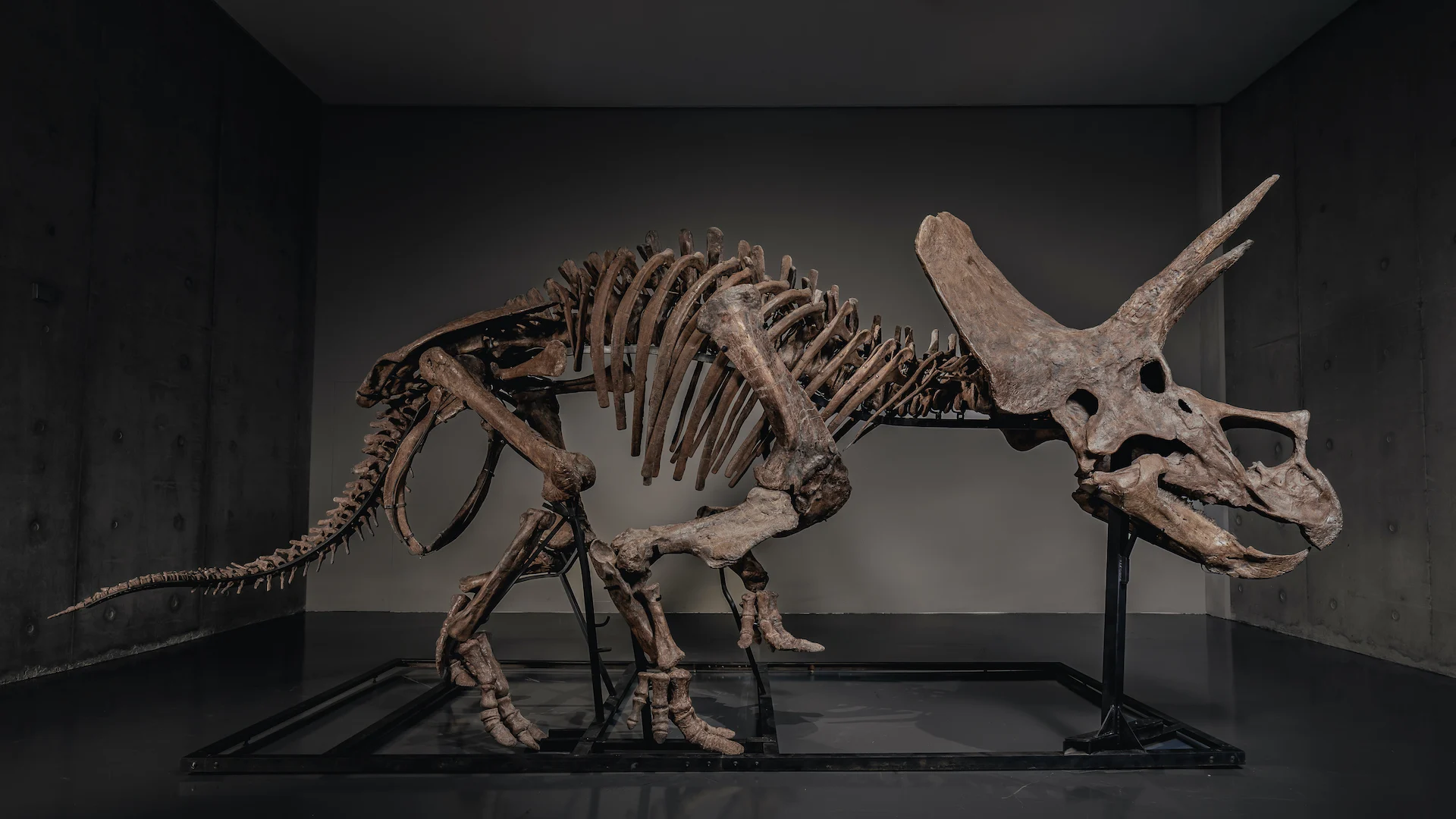
The AMNH has one of the biggest dinosaur halls and exhibits-and they're iconic for a reason! The nearly complete Stegosaurus skeleton nicknamed Apex (one of the most complete ever discovered) has been on display and continues to draw crowds with its massive plates and spikes.
Science
fromBig Think
2 months ago

The dinosaur that vanished twice: How WWII nearly erased Spinosaurus from history

Dinosaur fever gripped the Western world during the early 1900s, fueled by the discovery of new, ever larger and more spectacular dinosaurs in Europe and especially in North America. Interest in these fossils was not merely driven by academic curiosity. Dinosaur skeletons and research had become a status symbol for museums and their financiers, whether government or private, and colonial powers turned to their areas of influence to find new remains.
Science
fromwww.scientificamerican.com
2 months ago

A foraging teenager was mauled by a bear 27,000 years ago, skeleton shows

We have little physical evidence of these interactions turning violent, however, because burials were rare and carnivores were more likely to finish off their prey. That's why the embellished burial site of a 15-year-old from 27,000 years ago is an important window into the past: the teenager's bones indicate he was mauled by a bear. The finding represents some of the first evidence of its kind.
Science
Science
fromwww.scientificamerican.com
2 months ago

Mystery tower fossils may be a whole new kind of life

Prototaxites represents a previously unknown, distinct branch of life that dominated terrestrial landscapes before trees, separate from fungi and plants.
fromHigh Country News
2 months ago

How to find deep time in Seattle - High Country News

Specifically, I take people around downtown Seattle to explore the stone that makes up our buildings. On the corner of Second Avenue and Cherry Street is an elegant six-story structure built with two-foot-tall blocks of rough-hewn sandstone, about 44 million years old, quarried in Tenino, Washington. The building rose soon after much of downtown Seattle burned to the ground in 1889, and the jagged stone gives it a feeling of rugged permanence, certainly what the city needed after the great fire.
Science
fromwww.scientificamerican.com
2 months ago

Incredibly Well-Preserved Cheetah Mummies Show Big Cats Once Roamed Saudi Arabia

Researchers have discovered the naturally mummified and skeletal remains of 61 cheetahs, which were hidden deep inside caves in northern Saudi Arabia for hundreds, and in some cases thousands, of years. The find indicates that these big cats roamed the Arabian Peninsula for millennia before they disappeared from the landscape between 49 and 188 years agoevidence that bolsters an effort to rewild the region with modern-day cheetahs, according to Ahmed Boug, general director of the National Center for Wildlife in Riyadh.
Science
fromwww.nature.com
2 months ago

Publisher Correction: Nanotyrannus and Tyrannosaurus coexisted at the close of the Cretaceous

Since the version of the article initially published, the copyright line has been amended to North Carolina Department of Natural and Cultural Resources and James Napoli, under exclusive licence to Springer Nature Limited in the HTML and PDF versions of the article.
Science
fromwww.scientificamerican.com
2 months ago

Scientists Find Extinct Rhino DNA in Mummified Wolf Puppy's Stomach

Woolly rhinoceros genome was sequenced from tissue in a mummified Pleistocene wolf pup, showing genetically healthy, stable population around 14,400 years ago.
[ Load more ]