#e-commerce-returns
#e-commerce-returns
[ follow ]
#e-commerce #amazon #ecommerce #consumer-behavior #customer-experience #product-discovery #logistics
#amazon



European startups
fromSilicon Canals
12 hours agoQuick commerce has a $11.3B funding collapse and 40+ dead startups. Amazon is betting on it anyway. - Silicon Canals
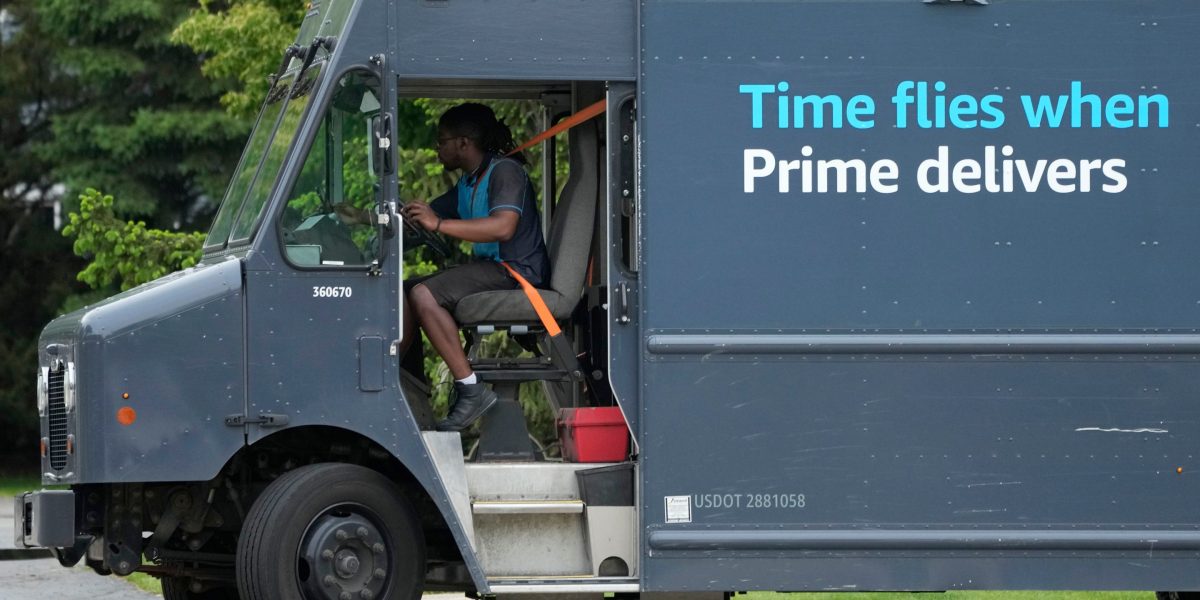
Amazon launched a 30-minute delivery service in select U.S. locations, expanding its quick commerce offerings amid challenges in the retail landscape.
fromArchitectural Digest
2 days agoI'm Done Sourcing So Much Online. Here's Why
The convenience of sourcing online is fraught with more pitfalls than most of us want to admit. Try finding adequate photos of a vintage piece's condition-close-ups of the fabric, video of damaged areas, any images of a piece's rear or underside!
UX design

#agentic-commerce
Marketing tech
fromForbes
3 days agoAI Is Deciding What Your Customers See - Most Brands Haven't Caught Up
AI agents are transforming e-commerce, projected to account for 25% of global sales by 2030, shifting traditional consumer engagement models.
Artificial intelligence
fromwww.customerexperiencedive.com
2 weeks agoE-commerce retailers plan hefty investments in agentic commerce, study finds
96% of enterprise e-commerce retailers have invested in AI capabilities, primarily for customer-facing applications like product discovery, chatbots, and personalized recommendations, with nearly half planning to invest $1 million or more in agentic commerce within 12 months.

Artificial intelligence
fromwww.customerexperiencedive.com
2 weeks agoE-commerce retailers plan hefty investments in agentic commerce, study finds
96% of enterprise e-commerce retailers have invested in AI capabilities, primarily for customer-facing applications like product discovery, chatbots, and personalized recommendations, with nearly half planning to invest $1 million or more in agentic commerce within 12 months.
Business intelligence
fromBusiness Matters
3 weeks agoBuilding a Successful Online Marketplace - Key Technology Decisions That Matter
Strategic technology decisions in marketplace development determine scalability, user experience, and regulatory compliance, with payment infrastructure, trust mechanisms, and seller verification being critical foundational elements.
Marketing tech
fromwww.emarketer.com
3 weeks agoamazon - Reports, Statistics & Marketing Trends
Fire TV integrates ads across screens using CTV reach and retail data, while AI emerges as a defining force in retail tech, with stablecoins moving into mainstream payments infrastructure and chatbots driving conversion rate increases.
fromFortune
3 days agoGen Z shoppers are actually more deliberate than baby boomers and agonize over their cart for days | Fortune
"Everything in today's e-commerce environment is being driven by increased intensity of the research phase and true generational divides during the current macroeconomic environment," said Jaysen Gillespie, VP of product marketing and analytics at RTB House.
E-Commerce


E-Commerce
fromBusiness Matters
3 weeks agoThe Hidden Costs of DIY Shipping: When to Switch to an Ecommerce Shipping Platform
DIY shipping becomes a business bottleneck as order volume grows, consuming excessive time and increasing errors while established shipping platforms automate processes and enable scalability.
E-Commerce
fromTechCrunch
3 weeks agoAmazon expands a program that lets customers shop from other retailers' sites | TechCrunch
Amazon expands Shop Direct program to direct customers to third-party merchant websites through search results and AI assistant when products aren't available on Amazon's platform.
E-Commerce
from24/7 Wall St.
3 weeks agoLook! Up In the Sky! It's Amazon's Flywheel in Action
Amazon's drone delivery service Prime Air exemplifies how the company's e-commerce, AWS cloud, and AI divisions create a self-reinforcing flywheel that generates data, optimizes operations, and drives competitive advantage.
fromPractical Ecommerce
1 month agoAI Revives Ecommerce DIY
A 2025 LinkedIn study found that 80% of C-suite executives believe AI adoption is important and will foster a more innovative workplace culture. Gartner reported in December 2025 that 65% of employees said they are excited to use AI at work. The trend suggests a convergence of three priorities: Management fears their companies will fall behind if they don't adopt AI and automation; Employees use AI because it makes their jobs easier, and the knowledge gained is an important career skill; The cost of off-the-shelf software and development makes AI an attractive alternative.
E-Commerce
fromwww.independent.co.uk
1 month agoDoes free shipping actually exist? Marketing ploys experts want to warn you about
You're scrolling through an online retailer, like Amazon, Shein or eBay, and spot a shirt on sale for $40. You add it to your cart, but at checkout, a $10 shipping fee suddenly appears. Frustrated, you close the tab. But what if that same shirt was priced at $50 with free shipping? The likelihood that you would have bought it without a second thought is much higher.
E-Commerce
fromwww.npr.org
1 month agoEvery business wants your review. What's with the feedback frenzy?
Customers want to read reviews and businesses need reviews to attract customers. But the constant demand for reviews could be creating a feedback backlash, experts say. What began as an innovative way to benefit consumers is increasingly an obligatory burden for shoppers and sellers alike.
E-Commerce
fromForbes
1 month agoFrom Click To Doorstep: Why Delivery Experience Is The Last Brand Impression
That's a problem. Without a doubt, a great website and top-level marketing will help generate new sales, but it's the delivery experience that warrants future ones. This is because today's consumer not only has options for where they'll buy but also a high set of expectations. What's more, they remember the way a product arrives at their doorstep more than how it was sold.
E-Commerce
E-Commerce
fromBusiness Insider
1 month agoI've been selling on Amazon for a year. After storage fees bled me dry, I'm pivoting my e-comm strategy away from it.
Aged-inventory surcharges on Amazon can rapidly deplete a small business's cash, turning a $10,000 launch into near insolvency without mastering Amazon selling and inventory management.
E-Commerce
fromSitePoint Forums | Web Development & Design Community
2 months agoHow to Choose Ecommerce Marketplace for your Online Business
Choosing between single-vendor and multi-vendor marketplaces balances control over operations and brand versus faster growth and greater product variety with added complexity.

fromBusiness Matters
2 months agoHow to Get the Most from Your Online Marketplace Listings
At a time when digital channels increasingly define commercial success, online marketplaces have become essential tools for small and medium-sized enterprises to reach customers and drive revenue. For many SMEs, marketplaces offer a ready-made audience without the significant acquisition costs of standalone ecommerce sites, but the simple act of listing product ranges isn't enough to guarantee results. To succeed, businesses must approach their marketplace presence strategically, optimising every element of their listings for discovery, relevance and conversion.
E-Commerce
fromThe Drum
2 months agoWhy brands still have a problem prioritising digital commerce
where I worked in the early 2000s in its rather pioneering e-commerce business (which launched, among other things, the first click and collect service). Argos was jostling with Tesco for first place at Christmas, and I've found myself reflecting on why DTC has become such a major issue for several sectors that have not traditionally had a direct path to purchase over the last few years.
E-Commerce
[ Load more ]