#earths-history

[ follow ]
fromwww.scientificamerican.com
1 day ago

Bizarre fossils reveal that complex life evolved far earlier on Earth than we thought

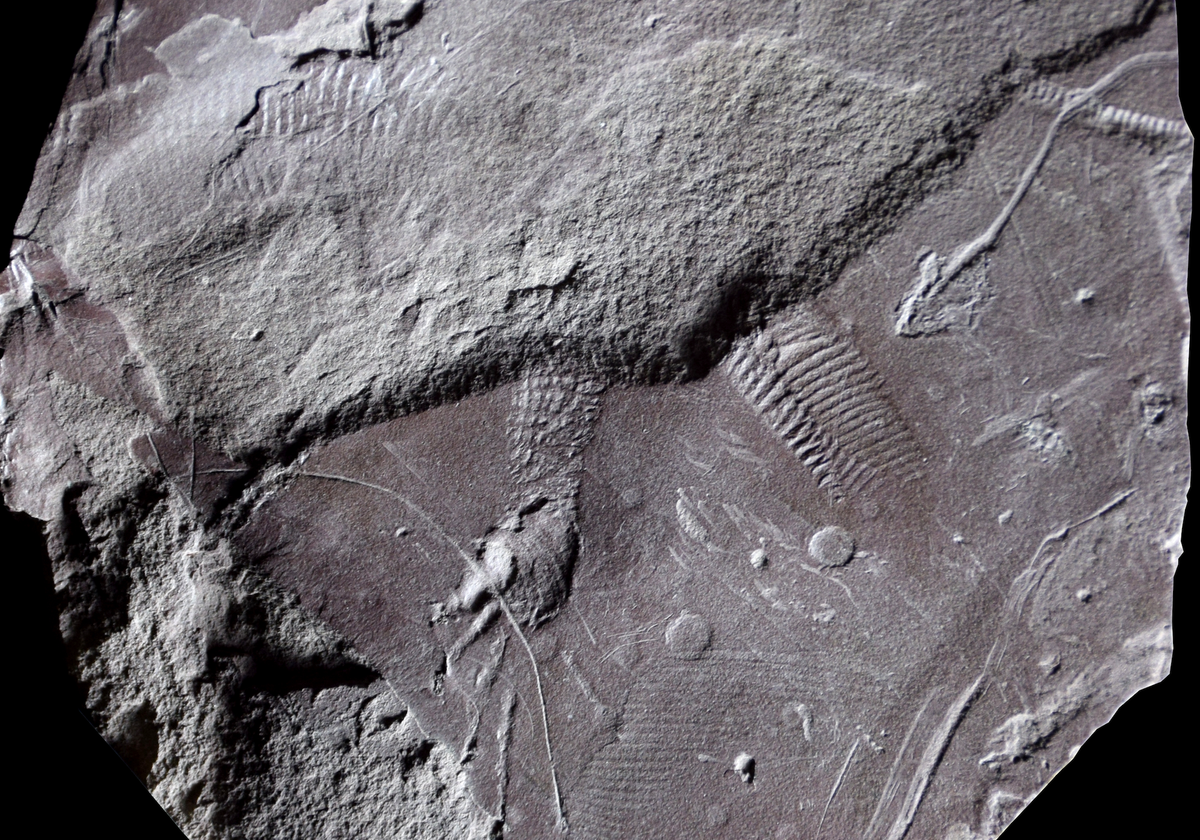
Hundreds of fossils uncovered in southern China's province of Yunnan reveal that at least some of the life-forms scientists had thought arose in the Cambrian period were alive and thriving millions of years earlier, in an era known as the Ediacaran period.
OMG science

fromArs Technica
2 days ago

New fossil deposits show complex animal groups predating the Cambrian

Four protrusions appear to be arranged in pairs, each consisting of two connected branches surrounding a central depression. We really don't understand what any of these features represent anatomically.
OMG science
Science
fromNature
1 week ago

Daily briefing: Tiny bones from Neanderthal fetus point to downfall of the species

A genetic bottleneck contributed to the Neanderthals' extinction, while AI-generated X-rays challenge radiologists' ability to discern real from fake.
#climate-change
Environment
fromwww.scientificamerican.com
1 week ago

There is no historical precedent for how badly out of balance the climate is now, U.N. warns

The past 11 years are the hottest on record, indicating severe climate imbalance and increasing greenhouse gas concentrations.
OMG science
fromwww.scientificamerican.com
3 weeks ago

Earth's days are getting longer at an unprecedented rate. Climate change is to blame

Rising sea levels from climate change are slowing Earth's rotation, adding 1.33 milliseconds per century to day length at an unprecedented rate for at least 3.6 million years.
OMG science
fromHarvard Gazette
2 days ago

Anthropologist traces split between Homo sapiens and Neanderthals - Harvard Gazette

The transition from multiple human forms to Homo sapiens dominance involved interactions and interbreeding with Neanderthals, not a clear-cut victory.
OMG science
fromArs Technica
1 week ago

Explanation for why we don't see two-foot-long dragonflies anymore fails

Breathing capacity may have allowed giant insects to thrive despite lower atmospheric oxygen levels.
London
fromianVisits
2 weeks ago

Early hours visits to see the Natural History Museum's dinosaurs

The Natural History Museum offers early-morning dinosaur gallery tours starting at 9am, one hour before public opening, providing exclusive access with a guide for £30 adults and £24 children.
OMG science
fromNature
1 week ago

How DNA in dirt is shaking up the study of human origins

Ancient DNA can be recovered from sediments, revolutionizing the study of extinct species and the history of ecosystems.
#plate-tectonics
OMG science
fromwww.scientificamerican.com
2 weeks ago

When did plate tectonics on Earth begin? New research finds some of the earliest clues

Magnetic evidence from ancient Western Australian crust reveals plate tectonics began at least 3.48 billion years ago, half a billion years earlier than previously documented.
fromwww.theguardian.com
4 weeks ago

Humanity heating planet faster than ever before, study finds

Climate breakdown is occurring more rapidly with the heating rate almost doubling, according to research that excludes the effect of natural factors behind the latest scorching temperatures. It found global heating accelerated from a steady rate of less than 0.2C per decade between 1970 and 2015 to about 0.35C per decade over the past 10 years.
Environment
Science
fromNature
3 weeks ago

How pollutants and poo paint a picture of past civilizations

Environmental archaeologists extract mud cores from swamps to analyze molecular biomarkers like coprostanol, revealing ancient human population trends and behaviors.
fromArs Technica
2 weeks ago

We keep finding the raw material of DNA in asteroids-what's it telling us?

The new work was less notable for showing that we had found these bases in Ryugu than for solving a previous mystery: earlier studies had failed to detect them there, despite their presence in many other asteroid samples.
OMG science
Science
fromwww.theguardian.com
3 weeks ago

A new start after 60: I'd had several careers but no degree then I became a palaeontologist at 62

Craig Munns pursued a degree in palaeontology at 62 while working at Geoscience Australia, focusing on invertebrate fossils and biostratigraphy analysis of drill cores from central Australia.
OMG science
fromJezebel
2 weeks ago

Non-Earth News: Fossil Stars, an Asteroid Dripping With DNA, and 2 Dueling Planets

Astronomy news offers a refreshing escape from overwhelming current events, inspiring curiosity about the universe's vastness and history.
OMG science
fromState of the Planet
3 weeks ago

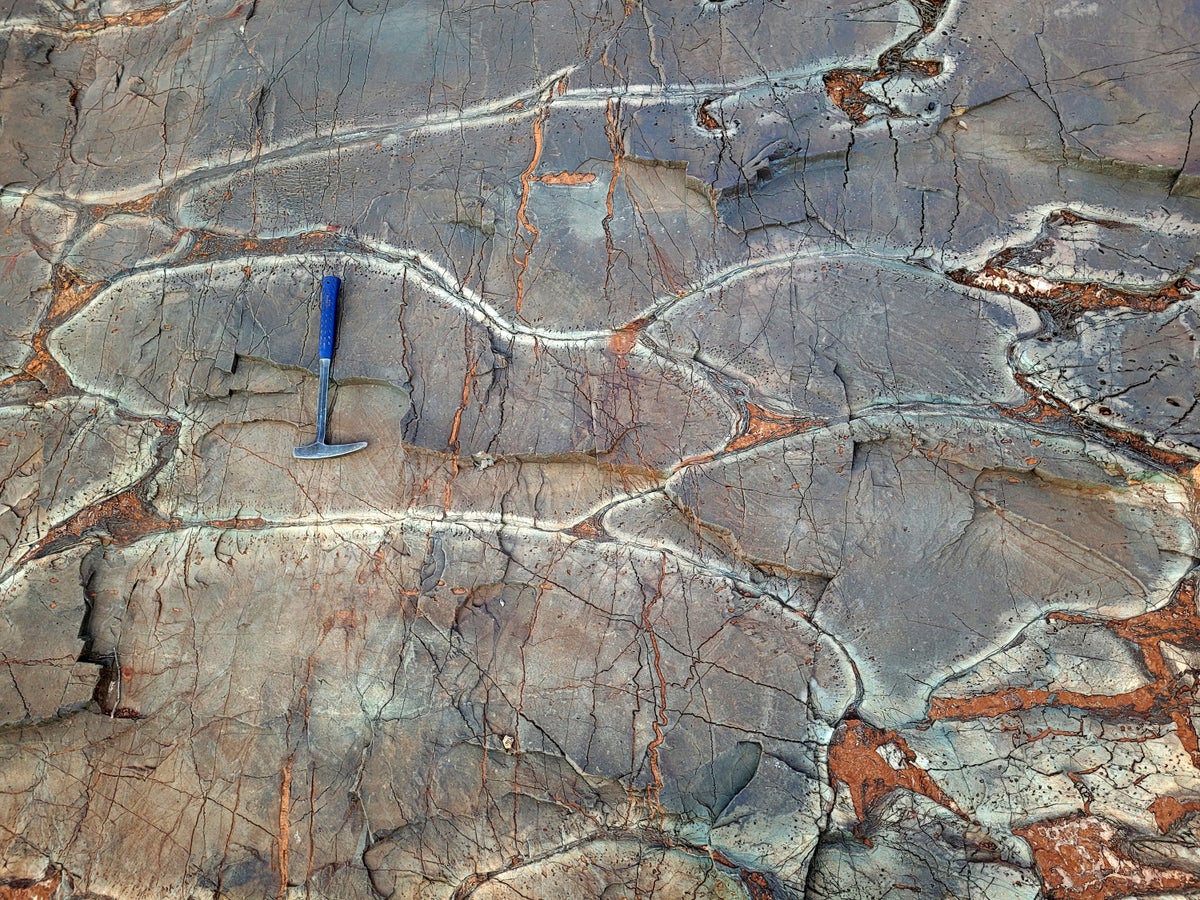
Earth's "Missing" Billion Years: Study Links the Great Unconformity to Early Tectonics

Tectonic forces from early supercontinent formation, rather than Snowball Earth glaciation, caused the Great Unconformity, a billion-year gap in Earth's geologic record.
fromenglish.elpais.com
1 month ago

Ants trapped in amber reveal what diminutive life was like millions of years ago

Although there are many amber stones containing a single creature, there are fewer that include two or more, as is the case with a pair of mosquitoes trapped in amber 130 million years ago which tell us that, back then, males also sucked blood. Even more extraordinary is when several organisms can be seen interacting, either eating the other, acting as a parasite, or cooperating.
Science
fromMail Online
3 weeks ago

Sea fossils atop world's mountains fuel claims of Noah's Great Flood

Marine fossils have been discovered on mountain ranges around the world, including the Himalayas, Andes and Rocky Mountains, which scientists say were once covered by ancient seas before being pushed upward as continents collided and mountains formed.
OMG science
#snowball-earth
fromAeon
1 month ago
Philosophy

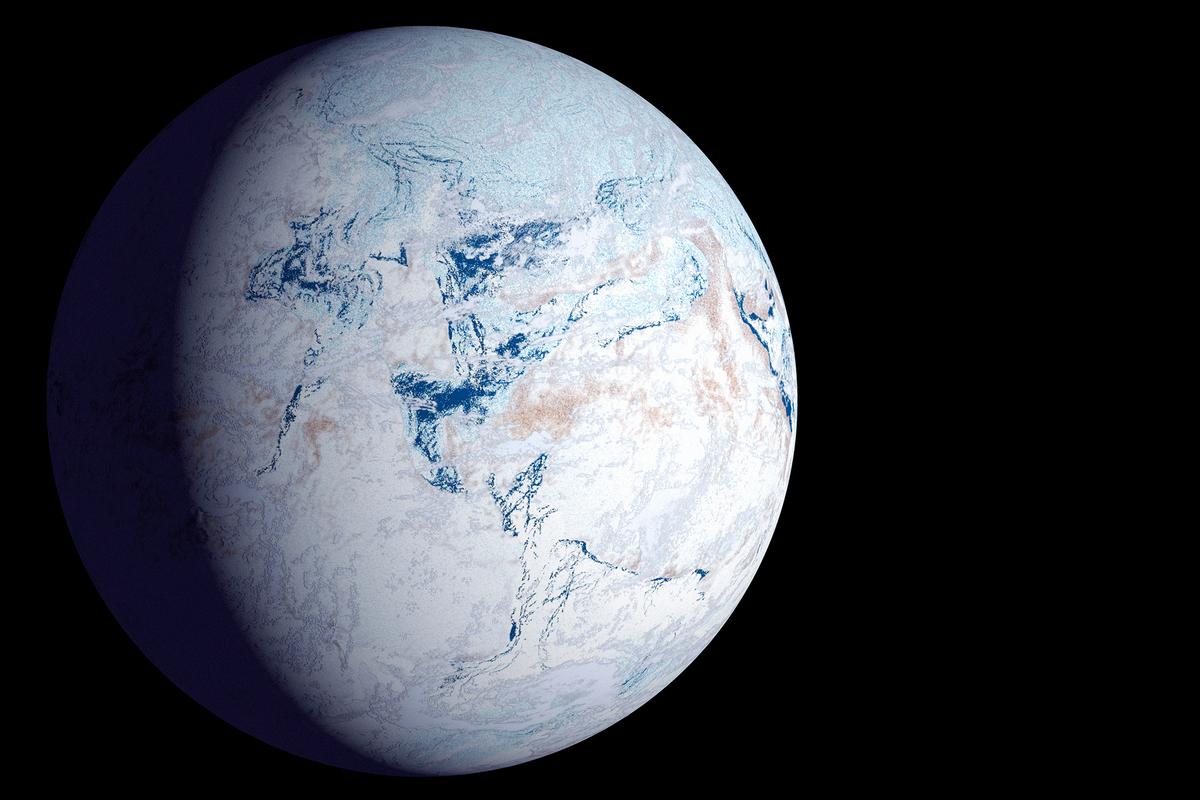
How the harsh, icy world of Snowball Earth shaped life today | Aeon Essays

fromAeon
1 month ago
Philosophy

How the harsh, icy world of Snowball Earth shaped life today | Aeon Essays

Artificial intelligence
fromEric Jang
1 month ago

As Rocks May Think

Modern coding agents can autonomously write, modify, and run experiments, transforming research workflows and enabling unconstrained code-space exploration, automated hypothesis generation, and hyperparameter optimization.
OMG science
fromMail Online
3 weeks ago

Scientists recreate the lost languages of ancient humans

Scientists reconstructed ancient human species languages by analyzing fossilized skeletal imprints of soft tissues like the larynx, tongue, and brain, revealing that Neanderthals likely spoke languages understandable to early Homo sapiens.
#paleontology
Science
fromNature
1 month ago

Neanderthal dad, human mum: study reveals ancient procreation pattern

Female Homo sapiens and male Neanderthals mated more frequently than the reverse pairing, shaping human genetic ancestry patterns revealed through analysis of female Neanderthal specimens.
Science
fromNature
1 month ago

The first ice-core record of historical atmospheric hydrogen levels

Atmospheric hydrogen levels fluctuate with climate changes and have increased significantly since pre-industrial times due to human activities, requiring consideration in projections of future emissions impacts.
Environment
fromNature
1 month ago

Tree rings and salt lakes give clues about ancient rainfall

Replace hazardous pesticides and apply diverse paleoclimate measurement methods to reconstruct past climate changes.
OMG science
fromNature
1 month ago

Earth's oldest crystals suggest an early start for plate tectonics

Ancient Australian zircon crystals reveal early Earth had more oxygen and water than expected, with tectonic plate movement occurring at least 3.3 billion years ago, suggesting conditions more favorable for life than previously believed.
Philosophy
fromThe Philosopher
1 month ago

A Genealogy for the End of the World

The Anthropocene frames humanity as a collective geological force reshaping Earth’s climate and biosphere, redefining history through shared catastrophe and human-driven planetary change.
Science
fromDefector
1 month ago

Finally! An Ancient Fish That Understood Life's Terrors | Defector

Haikouichthys, an early Cambrian fish, possessed four eyes and lacked jaws, reflecting distinctive sensory and feeding adaptations among early vertebrates.
fromThe Conversation
2 months ago

Some companies claim they can 'resurrect' species. Does that make people more comfortable with extinction?

Less than a year ago, United States company Colossal Biosciences announced it had "resurrected" the dire wolf, a megafauna-hunting wolf species that had been extinct for 10,000 years. Within two days of Colossal's announcement, the Interior Secretary of the US, Doug Burgum, used the idea of resurrection to justify weakening environmental protection laws: "pick your favourite species and call up Colossal". His reasoning appeared to confirm critics' fears about de-extinction technology. If we can bring any species back, why protect them to begin with?
Philosophy
fromwww.nature.com
1 month ago

Atmospheric H2 variability over the past 1,100 years

Warwick, N., Griffiths, P., Keeble, J., Archibald, A., & Pyle, J. Atmospheric implications of increased Hydrogen use. GOV.UK https://www.gov.uk/government/publications/atmospheric-implications-of-increased-hydrogen-use (2022).
Environment
fromwww.scientificamerican.com
1 month ago

Could aliens in another galaxy see dinosaurs on Earth?

For example, reader David Erickson had this on his mind: If there were aliens 66 million light-years from Earth, how big a telescope would they need to see dinosaurs? Ha! I love this question. I've thought of it myself but never worked out the mathexcept to think, Probably pretty big, which turns out to dramatically underestimate the actual answer.
Science
Environment
fromFuturism
1 month ago

Earth on Track to Become Uninhabitable, Scientists Say

Multiple Earth systems are approaching destabilization, risking cascading tipping points that could commit the planet to a high-temperature 'hothouse Earth' trajectory.
Science
fromArs Technica
1 month ago

"Million-year-old" fossil skulls from China are far older-and not Denisovans

Homo erectus fossils from Yunxian in China are dated to about 1.77 million years, making them the oldest hominins discovered in East Asia.
Environment
fromMail Online
1 month ago

Inside mysterious vault built to save life after planetary extinction

A Colossal Biosciences–UAE BioVault will cryogenically store genetic material from thousands of species using robotics and AI to preserve biodiversity and enable future restoration.
Science
fromenglish.elpais.com
1 month ago

A wonderful' new dinosaur species with a colorful crest is unearthed in the Sahara Desert

Spinosaurus mirabilis, discovered in Niger, was a 13-meter, piscivorous theropod with a scimitar-shaped skull crest and display sail.
fromFuturism
2 months ago

Scientists Scramble to Set Up Outpost on Rapidly Melting Glacier

During a rare break in the weather, the NYT says helicopters airlifted the researchers and their equipment 19 miles to their planned outpost site on top of the glacier. The two helicopters involved flew a dozen total loads of cargo from the icebreaker ship to the camp site, while glacial scientists and engineers erected a small tent city, complete with bathrooms, generators, and a mess hall.
Environment
fromArs Technica
1 month ago

Scientists hunting mammoth fossils found whales 400 km inland

At first glance, it looked like Wooller and his colleagues might have found evidence that mammoths lived in central Alaska just 2,000 years ago. But ancient DNA revealed that two "mammoth" bones actually belonged to a North Pacific right whale and a minke whale-which raised a whole new set of questions. The team's hunt for Alaska's last mammoth had turned into an epic case of mistaken identity, starring two whale species and a mid-century fossil hunter.
Science
#deep-time
Science
fromMail Online
1 month ago

Prehistoric killer superbug discovered in 5,000-year-old ice

An ancient Psychrobacter strain from Scarisoara Ice Cave, frozen about 5,000 years, is resistant to ten modern antibiotics and harbors over 100 resistance genes.
fromwww.dw.com
1 month ago

New dinosaur fossils could provide evolutionary clues: study

From the beginning, we knew these bones were exceptional because of their minute size. It is equally impressive how the study of this animal overturns global ideas on ornithopod dinosaur evolution,
Science
Science
fromArs Technica
2 months ago

We have a fossil closer to our split with Neanderthals and Denisovans

Casablanca fossils are North African counterparts to Homo antecessor, positioned near the split that led to Neanderthals/Denisovans and the lineage toward modern humans.
Science
fromwww.scientificamerican.com
1 month ago

These jaw-dropping photographs show a new Triassic Park' of dinosaur prints in the Italian Alps

An exceptionally rich Triassic dinosaur tracksite with about 2,000 well-preserved prints was discovered on vertical rock faces in the Fraele Valley, Italian Alps.
#urban-geology
fromwww.scientificamerican.com
2 months ago

Meet the Ancestor That Connects Us to Neandertals and Denisovans

New research published today in Nature dates the boneschipped out from a cave called Grotte a Hominides and nearby it over decadesto about 773,000 years ago, during the era of the last common ancestor of Homo sapiens, Homo neanderthalensis and Denisovans (a group of humans that ranged across Asia and that does not have an agreed-upon species name). We can say that the shared ancestry between these three species is perhaps in Grotte a Hominides in Casablanca, says study co-author Abderrahim Mohib, a prehistorian at the National Institute of Archaeology and Heritage Sciences in Rabat, Morocco.
Science
Science
fromwww.aljazeera.com
1 month ago

Dinosaurs for sale: Is the global fossil market harming science?

Asia's wealthy collectors drive a booming multimillion-dollar dinosaur fossil market, producing record sales and profits while raising ethical and scientific concerns.
fromNature
2 months ago

Wolf pup's stomach yields DNA from one of world's last surviving woolly rhinos

Roughly 14,400 years ago in what is now Russia, a wolf pup feasted on the meat of a woolly rhinoceros ( Coelodonta antiquitatis) that probably belonged to one of the last populations of the species. A genomic analysis of the woolly rhino tissue found inside the stomach of an ice age wolf ( Canis lupis) revealed that woolly rhino's extinction occurred rapidly soon after.
Science
fromwww.scientificamerican.com
2 months ago

A foraging teenager was mauled by a bear 27,000 years ago, skeleton shows

We have little physical evidence of these interactions turning violent, however, because burials were rare and carnivores were more likely to finish off their prey. That's why the embellished burial site of a 15-year-old from 27,000 years ago is an important window into the past: the teenager's bones indicate he was mauled by a bear. The finding represents some of the first evidence of its kind.
Science
Science
fromState of the Planet
2 months ago

Greenland Ice Cap Vanished Just 7,000 Years Ago

Prudhoe Dome in northwestern Greenland melted about 7,000 years ago, demonstrating high sensitivity of that ice to modest Holocene warming and potential future retreat.
Science
fromNature
2 months ago

A mysterious ancient fingerprint and a lemon-shaped planet - the stories you've missed

A 4,400-kilometre undersea fibre-optic cable can detect seismic waves by measuring light reflections from glass impurities along its length.
fromMail Online
1 month ago

Historic discovery older than Egypt's Great Pyramid rewrites history

The oldest known pieces of sewn clothing have been discovered in a cave in Oregon, potentially rewriting all of human history. Researchers from the US uncovered pieces of animal hide stitched together from the end of the last Ice Age, approximately 12,000 years ago. That would mean that humans in North America had advanced skills, specifically for working with plants, animals, and wood, thousands of years before the Great Pyramid of Egypt was constructed.
Science
Science
fromwww.scientificamerican.com
2 months ago

Mystery tower fossils may be a whole new kind of life

Prototaxites represents a previously unknown, distinct branch of life that dominated terrestrial landscapes before trees, separate from fungi and plants.
Science
fromwww.dw.com
1 month ago

Tiny dinosaur fossil could provide evolutionary clues: study

A newly discovered tiny ornithopod, Foskeia pelendonum, exhibits unusually complex anatomy that reshapes understanding of ornithopod evolution.
fromHigh Country News
2 months ago

How geology not only shapes the world, it shapes us - High Country News

My father was a petroleum geologist. A lot of my childhood, he was gone, away on oil rigs in the Powder River Basin and remote parts of Wyoming, living in man camps long before cellphones. We had to wait days to talk to him. When he went into the nearest town to shower, he'd find a payphone and call us. I was always breathless with news.
Science
Science
fromwww.nature.com
2 months ago

Author Correction: Relatively warm deep-water formation persisted in the Last Glacial Maximum

The Fig. 1b colour-scale label was corrected from 35.50 to 35.00 and updated in the HTML and PDF versions.
Science
fromArs Technica
2 months ago

Scientists sequence a woolly rhino genome from a 14,400-year-old wolf's stomach

Woolly rhino effective population fell from about 15,600 to 1,600 between 114,000–63,000 years ago, then stabilized around 1,600 breeding individuals.
fromNature
2 months ago

Volcanic personality: the man who recognized volcanoes as a planet-shaping force of nature

Remembering the life and work of the geologist George Poulett Scrope, and salmon stories in this week's pick from the Nature archive.
Science
fromNature
2 months ago

Daily briefing: The battle over the identity of the first animals

Wooden objects carrying the marks of carving and use could be the oldest wooden tools ever found. Researchers dated the artefacts, found in what is now Greece, to 430,000 years ago - and suggest they might have been made by early Neanderthals or their ancestors, Homo heidelbergensis. A separate study describes 480,000-old flint-knapping tools made from antler and elephant bone, from what is now the United Kingdom.
Science
Science
fromwww.npr.org
1 month ago

Searching for dinosaur secrets in crocodile bones

Counting growth rings in fossil bones can overestimate dinosaur ages because rings may not form strictly once per year.
fromWIRED
1 month ago

Two Titanic Structures Hidden Deep Within the Earth Have Altered the Magnetic Field for Millions of Years

A team of geologists has found for the first time evidence that two ancient, continent-sized, ultrahot structures hidden beneath the Earth have shaped the planet's magnetic field for the past 265 million years. These two masses, known as large low-shear-velocity provinces (LLSVPs), are part of the catalog of the planet's most enormous and enigmatic objects. Current estimates calculate that each one is comparable in size to the African continent, although they remain buried at a depth of 2,900 kilometers.
Science
Science
fromwww.nature.com
2 months ago

Afar fossil shows broad distribution and versatility of Paranthropus

Pliocene and Late Miocene East African fossil evidence reveals diverse early hominin taxa, varying dental and skeletal morphologies, and debates over taxic diversity.
Science
fromwww.scientificamerican.com
2 months ago

Life's evil twins, called mirror cells, could wipe us out if scientists don't stop them

Engineered mirror-image bacteria used to manufacture durable drugs can evade immune detection and cause uncontrollable infections and environmental spread.
Science
fromNature
2 months ago

How did birds evolve? The answer is wilder than anyone thought

Jurassic birds included diverse forms like Archaeopteryx and newly discovered Baminornis, revealing complex early avian evolution and questions about origins of powered flight.
fromwww.scientificamerican.com
2 months ago

Humans Made Poisoned Arrowheads Thousands of Years Earlier Than Previously Thought

Researchers have found traces of what appears to be plant-derived poison on tiny stone arrowheads from South Africa dated to 60,000 years ago. The finding pushes back the origin of this revolutionary hunting technology by tens of thousands of years. Scientists have long been fascinated by the development of poisoned hunting weapons. For one thing, they would have seriously leveled up our ancestors' foraging game.
Science
Science
fromwww.nature.com
2 months ago

Four camera-type eyes in the earliest vertebrates from the Cambrian Period

Vertebrate vision evolved via diversification of phototransduction components and eye structures, documented by molecular data and exceptional fossil evidence from Cambrian to mammalian ancestors.
fromNature
2 months ago

Dominant contribution of Asgard archaea to eukaryogenesis - Nature

Eukaryotes drastically differ from archaea and bacteria (collectively, prokaryotes) by the complex organization of eukaryotic cells. The signature features of this organizational complexity include the eponymous nucleus, the endomembrane system, the elaborate cytoskeleton and the energy-converting mitochondrion, which evolved from an alphaproteobacterial endosymbiont9. Thus, the last eukaryotic common ancestor (LECA) probably already possessed mitochondria along with the other signatures of the eukaryotic cellular organization.
Science
[ Load more ]