#eastern-north-pacific
#eastern-north-pacific
[ follow ]
#climate-change #marine-biology #environmental-impact #gray-whales #california #snowpack #conservation
fromSFGATE
1 day agoSeabirds are dying in large numbers along California beaches
"They didn't even try to fly away. They just feebly made noise," a woman told the Santa Barbara Independent on Saturday after spotting over two dozen dead or dying cormorants near Goleta Beach. "A few were on their stomachs, wings spread [and] gasping for breath.... Heartbreaking."
Miami Marlins
fromTravel + Leisure
1 day agoWhat Actually Makes Some Ocean Water Such a Vibrant Turquoise Color-the Science Behind That Dreamy Shade
When light shines through water, colors with longer wavelengths are absorbed by the water, with the longest wavelengths absorbed first. Blue and violet have the shortest wavelengths of visible light, so they are able to penetrate the deepest.
Travel
Miami food
fromTravel + Leisure
20 hours agoThe Remote Beach Town of Puerto Escondido Is Mexico's Best-kept Secret-With Sumptuous Hotels, a Vibrant Art Scene, and Incredible Beaches
Hurricane damage has enhanced the wave conditions at Zicatela Beach, attracting surfers to Puerto Escondido's powerful waves.
fromHigh Country News
4 days agoLetters to the Editor, April 2026 - High Country News
The fact that the Burns Paiute and Bannock Shoshone tribes are still battling our government and politicians for protection of the sagebrush steppe habitat and our native sage grouse isn't spiritually uplifting.
Social justice
SF politics
fromFortune
4 days agoWashington's 'God Squad' assembles to debate the fate of a rare endangered whale and drilling in the Gulf of Mexico | Fortune
A U.S. panel is considering exempting Gulf oil drilling from the Endangered Species Act, raising concerns for marine life and a rare whale species.


:max_bytes(150000):strip_icc()/TAL-dana-point-lead-image-CABEACHTOWNS0624-3484c5c50177464988af4549f8354758.jpg)
Environment
fromwww.theguardian.com
1 day agoIf they pollute our rivers, what will become of us?': the town divided between hope and fear in Brazil's Amazon oil rush
Oiapoque, Brazil, is poised for development through oil production, raising concerns about environmental impacts and Indigenous rights amid a global energy transition.
fromwww.scientificamerican.com
2 days agoSee these ziti-sized fish scale a 50-foot waterfall
During major floods, thousands of tiny fish convene at Luvilombo Falls in the upper Congo River Basin to undertake a peculiar vertical migration, described for the first time today in Scientific Reports.
OMG science

fromwww.theguardian.com
3 weeks agoMy ideas are a little revolutionary': ecologist Suzanne Simard on intelligent forests, the climate and her critics
Wildfires have become an ever bigger problem in Canada. The 2018 wildfires were the biggest in British Columbia's history, but this record was broken in 2021, and then again in 2023, when fires consumed an area three times the size of the Canadian province of Nova Scotia and the smoke travelled as far as New York City.
Canada news
fromwww.npr.org
3 weeks agoCountries are negotiating rules to mine the deep sea. The U.S. is pushing ahead alone
These polymetallic nodules, as they're known, take millions of years to form, slowly accumulating metals like nickel, cobalt and manganese. That's made them a target for mining companies, looking to feed the world's growing hunger for materials that go into advanced batteries and other technologies.
US news
fromNew York Post
2 weeks agoCalifornia plots return of 7.5 million acres of land and coastal waters to Indigenous tribes
When California became a state in 1850, officials signed 18 treaties setting aside millions of acres for tribal reservations. Congress killed the deals in secret after pressure from state leaders. Many tribes had already moved, trusting the promises. Now California wants to make good.
SF politics
fromThe Takeout
4 weeks agoYour Guide To The Types Of East Coast Oysters - The Takeout
Generally, East Coast oysters are brinier than West Coast oysters. Eastern oysters, raised either in the Atlantic Ocean or in its estuaries, live in a much saltier environment. West Coast oysters are mostly raised in protected bays, estuaries, and tidal rivers, where there is much less salt.
Silicon Valley food
Canada news
fromwww.theguardian.com
3 weeks agoWe thought we were doomed': Canadian fishers in dramatic rescue after ice shelf floats away
Unseasonably warm weather and strong winds detached a large ice sheet in Lake Huron, stranding 23 ice fishers who were rescued by helicopters after a two-hour operation.
Agriculture
fromwww.pressdemocrat.com
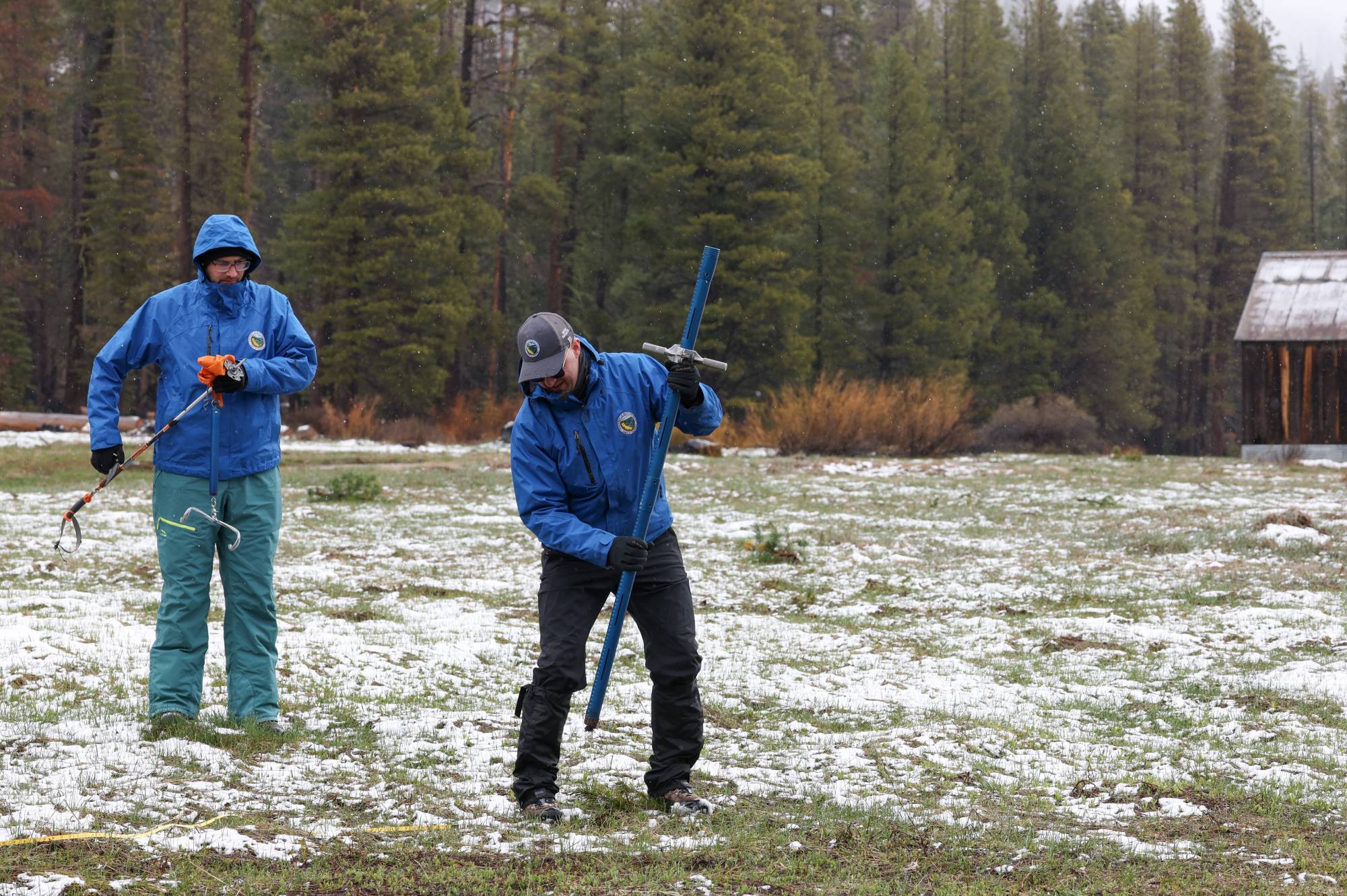
1 month agoLow snowpack, higher temperatures cause concern for Bay Area scientists, farmers
California needs significant March rain and snow to restore water resources after an unusually warm winter, despite February storms improving reservoir levels to 70-80% capacity.
Agriculture
fromEater
1 month agoHow One Farm Raises the Rarest, Most Expensive Mollusk in America
The Cultured Abalone Farm in Santa Barbara is the primary source of commercially farmed red abalone in the U.S., supplying restaurants nationwide while supporting conservation efforts for nearly extinct wild populations.
OMG science
fromHigh Country News
3 weeks agoHow federal cuts are reshaping Alaska's communities, research and species management - High Country News
Two USGS research biologists with 50+ years combined experience resigned in April 2025 due to the Trump administration's assault on federal science and hostile conditions at federal agencies.
fromThe Mercury News
1 month agoSpend an evening learning about oysters at this Alameda brewery
These oysters once existed in the millions here but were decimated by dredging, pollution and shoreline hardening. Now they're on the upswing, thanks to organizations like the Wild Oyster Project, which is working to build a "swimmable, edible Bay using the power of oysters."
East Bay (California)
California
fromwww.mercurynews.com
1 month ago5 fantastic Whale Festivals in Northern California for spring 2026
Northern California hosts multiple whale festivals in spring celebrating gray whale migration, featuring whale watching, food, music, and outdoor activities across Mendocino County and Monterey.
fromAeon
1 month agoOrcas haven't changed, but our view of the killer whale has | Aeon Essays
'Orcas are psychos,' quipped a close friend recently. He wasn't joking, nor was he ill-informed. In fact, he is probably the world's leading historian of whales and people. He had just watched a BBC Earth clip, narrated by David Attenborough, in which three killer whales separate a male humpback calf from his mother in the waters of Western Australia. The video's closing footage, with two of the orcas escorting the naive youngster to his imminent death, resembles nothing so much as a kidnapping:
Philosophy
fromwww.theguardian.com
2 months agoMy rookie era: I'm learning to swim in the ocean, braving the waves and marine life
I've wanted to be an ocean swimmer ever since I moved to Sydney. The idea of getting out past the waves and braving the elements excited me. I would tell anyone who would listen: Once I live closer to the beach, I'm going to be out there. Just you wait. I've lived walking distance to the beach for more than a year now. During this time, I've read a lot about ocean swimming: how swimmers overcame challenges or life-altering moments.
Mindfulness
fromwww.scientificamerican.com
1 month agoAncient seafarers helped shape Arctic ecosystems
In the pristine High Arctic sits the Kitsissut island cluster, also known as the Carey Islands, nestled between northwest Greenland and northeast Canada. The surrounding seas are perilous, and traveling there is difficult even with modern boats. But new archaeological evidence suggests ancient humans managed to sail to the islands, too. Early settlers lived on the islands between 4,500 and 2,700 years ago.
Science
Food & drink
fromTasting Table
2 months agoWhole Foods' Sockeye Salmon Comes From A Place Most Shoppers Never See - Tasting Table
Whole Foods sources salmon that is either responsibly farmed or sustainably wild-caught, emphasizing Bristol Bay sockeye conservation and community-centered fishing practices.
Environment
fromABC7 San Francisco
1 month agoTracking fisherman to track fish: The new technological approach to better understand ocean life
Global Fishing Watch uses AIS transponder data and artificial intelligence to track fishing vessels worldwide, providing unprecedented visibility into global fishing fleet movements and activities.
Environment
fromwww.theguardian.com
1 month agoChronic ocean heating fuels staggering' loss of marine life, study finds
Chronic ocean warming reduces fish biomass by 7.2% per 0.1°C of seabed warming per decade, with marine heatwaves masking long-term decline through temporary population booms in cold-water regions.
fromSFGATE
1 month agoBody of California fisher found days after he was lost at sea
Maximo Macanas, a McKinleyville resident, was discovered by a local sport vessel on Tuesday, according to a Facebook post by the Del Norte County Sheriff's Office. He was pronounced dead by the county coroner's office on Tuesday afternoon. Macanas was fishing with a friend and his children at the Klamath River near 4351 Klamath Beach Road when he was swept away Saturday afternoon by what the Del Norte County Sheriff's Office described as a sneaker wave,
California

Food & drink
fromTasting Table
2 months agoKeep An Eye Out For This Seafood-Label Red Flag At The Grocery Store - Tasting Table
Check seafood for off smell or color, suspicious price, unsanitary displays, additives like phosphates, mislabeling, and proper certifications to avoid poor-quality or fraudulent seafood.
fromEast Bay Express | Oakland, Berkeley & Alameda
2 months agoEdible ecosystems grow wildly from shoreline to forest
For Staller, foraging is a "precious" and "simple" activity that one can do to connect with nature. They can experience a sense of mindfulness from gathering together, looking for food and then cooking the bounty, she said. "We are returning to the most basic part of being a human, which is eating food and celebrating it," Staller said. "It's a lost artform."
Food & drink
Environment
fromwww.montereyherald.com
1 month agoFinding Sanctuary: Ranking the most wanted kelp forests
Northern California kelp forests have declined dramatically, central California shows patchy loss; small-scale restoration cannot offset losses, requiring prioritization and high-resolution monitoring.
fromwww.latimes.com
2 months agoCalifornia diver documents close encounter with lacy, undulating sea creature far from home
It looked like the silvery blade of a knife. Peering through his goggles, diver Ted Judah had laid eyes on a deep-sea creature rarely encountered by humans. He and wife Linda were diving off McAbee Beach in Monterey County in late December when, near the surface, he spotted the undulating thing. It was some kind of ribbon fish, he wrote in a post on the Facebook group Monterey County Dive Reports. Kevin Lewand solved the mystery.
Science
fromwww.mercurynews.com
2 months agoFrom fuzzy flowers to see-through sea slugs, here are some of the new species discovered last year by California scientists
But as he swept his flashlight through the dark waters, something unexpected emerged. Inching through the beam of light, an alien creature crawled across the surface of the sand, resembling an inch-long cluster of ghostly leaves fringed with silvery filigree and capped with a pair of antennae-like stalks. It immediately caught my eye, said Gosliner, Invertebrate Zoology Curator for the California Academy of Sciences. I've been diving there for 30 years and this one immediately struck me as different.
Science
fromBusiness Insider
1 month agoI'm spending 90 days living on a small, dreamy island in the Pacific Northwest to decide if I truly want to move there
I'd been on the island for less than a week when I opened my glove box looking for sunglasses, only to find the wrapper of my emergency granola bar torn open and the corner nibbled, right next to a neat little pile of mouse droppings. As I inspected the rest of the car, I was mortified to realize it was likely more than a single mouse. I texted the friend I was housesitting for in disbelief. "Ugh, I'm sorry! That's so island," she wrote back.
Environment
Environment
fromOregon ArtsWatch * Arts & Culture News
2 months agoAn Oregon tribal attorney's quest to save the Klamath River * Oregon ArtsWatch
Yurok tribal attorney led legal effort removing four Klamath River dams, restoring salmon runs and tribal rights; public talk at Ashland Public Library Jan. 10.
Environment
fromFortune
1 month agoTrump torpedoed Biden's $1 billion plan to save American salmon, leaving species 'on the brink of extinction' | Fortune
Courts are being asked to change operations at Columbia and Snake River dams to better protect endangered salmon and steelhead under the Endangered Species Act.
[ Load more ]