#economic-dependence
#economic-dependence
[ follow ]
#tariffs #trade-policy #middle-east-conflict #global-economy #inflation #us-dollar #economic-inequality


#tariffs



US politics
fromenglish.elpais.com
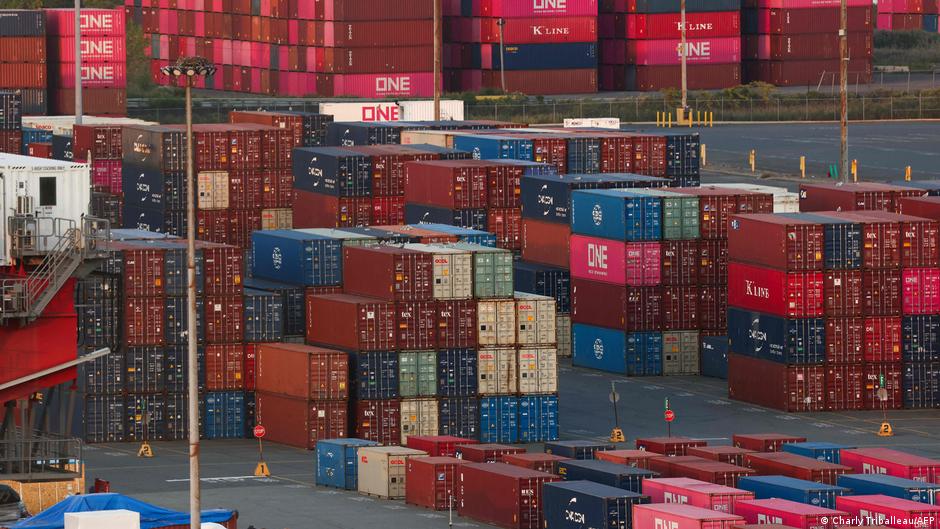
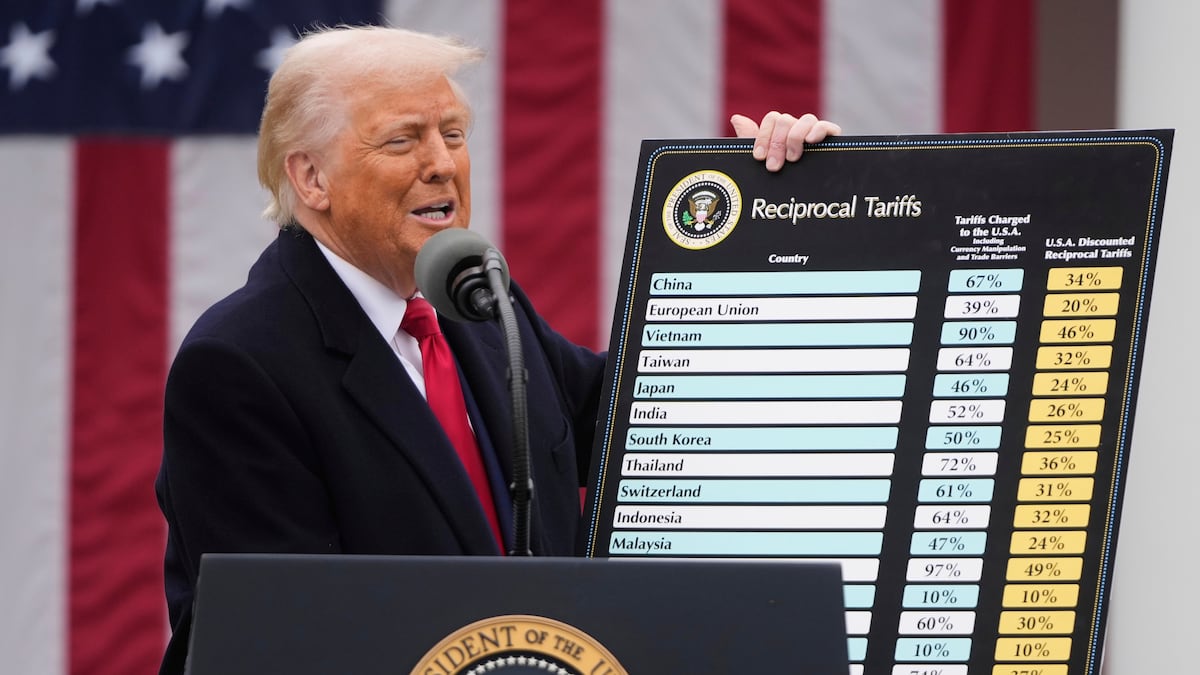
1 month agoThese are the (many) countries that stand to gain from the Supreme Court ruling overturning Trump's tariffs
Supreme Court struck down broad US reciprocal tariffs as unconstitutional; the president imposed a temporary global 10% tariff under Section 122 of the Trade Act.
fromwww.aljazeera.com
4 days agoG7 ready to take necessary measures' to ensure energy market stability
We stand ready to take all necessary measures in close coordination with our partners, including to preserve the stability and security of the energy market, said the G7 in a statement after a teleconference.
World news
fromThe Cipher Brief
2 days agoTaking a Stand on Adversaries' Influence in the Western Hemisphere
The January 3rd Operation Absolute Resolve ousted Venezuelan Dictator Nicholas Maduro, marking a significant shift in US policy towards countering adversarial influence in the western hemisphere.
World politics
fromwww.aljazeera.com
3 days agoMinerals for aid: Are new US health deals exploiting' African countries?
In late 2025, the United States shocked the world by suspending global health aid, leading experts to predict 700,000 additional deaths annually, primarily among children. This prompted the US to propose unusual bilateral health agreements with developing countries, which have drawn criticism for being exploitative.
Public health
fromLondon Business News | Londonlovesbusiness.com
5 days agoGlobal markets react to geopolitical tensions and rising energy costs - London Business News | Londonlovesbusiness.com
U.S. financial markets experienced a volatile week, largely influenced by geopolitical developments in the Middle East and fluctuations in energy prices. Investor sentiment was driven primarily by external events rather than domestic fundamentals.
Business
fromLondon Business News | Londonlovesbusiness.com
2 weeks agoThe significant events in the global economy over the past week - London Business News | Londonlovesbusiness.com
Weak performance in several service sectors offset gains in retail and wholesale trade, reinforcing concerns about the pace of economic recovery. Japan relies heavily on oil imports from the Middle East, making it particularly sensitive to disruptions in the region.
UK news
#us-dollar
US Elections
fromLondon Business News | Londonlovesbusiness.com
2 days agoUS dollar rose amid a rebound in geopolitical concerns - London Business News | Londonlovesbusiness.com
The US dollar strengthened due to geopolitical fears and better-than-expected economic data, while uncertainty keeps market volatility high.

US Elections
fromLondon Business News | Londonlovesbusiness.com
2 days agoUS dollar rose amid a rebound in geopolitical concerns - London Business News | Londonlovesbusiness.com
The US dollar strengthened due to geopolitical fears and better-than-expected economic data, while uncertainty keeps market volatility high.
#economic-inequality
Right-wing politics
fromFortune
2 weeks agoEconomists agree: You're not crazy for feeling like the rich get richer, and the poor are doing worse. Welcome to the 'K-shaped economy' | Fortune
The K recovery illustrates a growing economic divide where the wealthy prosper while the poor struggle, echoing historical patterns of inequality.
Agriculture
fromRealagriculture
3 weeks agoAg Policy Exchange: Finding common ag policy ground among countries in a divided world
Global agriculture faces interconnected geopolitical, economic, and environmental challenges requiring sustainable, resilient, and affordable food systems through coordinated international policy approaches.
UK politics
fromwww.theguardian.com
2 weeks agoLabour has weapons in its arsenal to cushion the poorest from Iran war economic fallout | Heather Stewart
Labour's scrapping of the two-child limit will provide £440 monthly to over half-a-million households from April, potentially lifting 480,000 children out of poverty by 2026 amid rising inflation concerns.
Canada news
fromFortune
4 weeks agoEconomist Eswar Prasad warns a 'motley group' of middle powers can't stop the 'doom loop' threatening the global economy | Fortune
The rules-based international order faces rupture as great powers weaponize economic integration, tariffs, and supply chains, forcing middle powers to form strategic alliances or risk marginalization.
fromwww.dw.com
5 days agoWTO talks end in stalemate over e-commerce
"We worked hard," WTO Director-General Ngozi Okonjo-Iweala said, adding that the US and Brazil in particular "need more time" to work out their differences over the agreement to impose levies on cross-border online orders.
World politics
European startups
fromwww.dw.com
3 weeks agoUS trade probes could lead to new tariffs for EU, China
The US launched two trade investigations targeting excess industrial capacity and forced labor imports, potentially leading to new tariffs on major trading partners after the Supreme Court limited Trump's tariff authority.
fromFortune
6 days agoDollar dominance is reinforced by the global oil trade, but the Iran war could give rise to the 'petroyuan' as U.S. security shield weakens | Fortune
The world saves in dollars in large part because it pays in dollars. The dollar's dominance in cross-border trade is arguably built on the petrodollar: globally traded oil is priced and invoiced in USD.
World politics
US politics
fromFortune
1 month agoTrump brags that America is 'winning so much.' Without tariffs, "we could have seen more of the good news," IMF director says. | Fortune
The U.S. economy shows strong growth and resilience, but chronic budget deficits and tariff-based trade policies threaten its long-term fiscal health.
fromThe Atlantic
2 weeks agoUS Elections
Will Small Businesses Get Their Money Back?
The Supreme Court ruled that President Trump lacked constitutional authority to impose tariffs without congressional approval, invalidating trade policies that cost American households $1,800 and harmed small businesses.
Business
fromHarvard Business Review
1 month agoRethinking Strategy in a Hyperpolitical World
Corporate decisions face intense public scrutiny for political implications, resulting in boycotts, revenue loss, reputational damage, and executive terminations, yet political engagement remains unavoidable for businesses.
US news
fromLondon Business News | Londonlovesbusiness.com
1 month agoThe Significant Events in the Global Economy Explained - London Business News | Londonlovesbusiness.com
Supreme Court tariff reversal lifted investor sentiment and stocks, while Fed division on rates, rising inflation, and slowing GDP kept markets cautious.
World politics
fromwww.theguardian.com
2 weeks agoWe can tell you who will really get rich from this oil crisis and how we can stop them | Isabella Weber and Gregor Semieniuk
Strait of Hormuz disruptions from Middle East conflict drive oil prices above $100 per barrel, generating record profits for oil and gas companies while governments struggle with economic fallout.
fromwww.aljazeera.com
1 month agoHas BRICS given up on challenging Western economic dominance?
Jim O'Neill, the economist who coined the term BRIC' 25 years ago, argues that the group is losing its relevance. At its peak, the BRICS coalition of economies Brazil, Russia, India, China and South Africa was seen as a serious attempt to move away from the United States dollar and the domination of Western economic institutions like the World Bank, Group of Seven (G7), and International Monetary Fund (IMF).
World news
World politics
fromNature
3 weeks agoNational statistics are in crisis around the world - and the impacts will be severe
Official statistics face a credibility crisis due to falling survey response rates and political undermining, threatening the data infrastructure that governments, businesses, and organizations rely on for decision-making.
Miscellaneous
fromFortune
1 month agoU.S. literally can't afford to lose superpower status as debt looms-so we're stuck in an 'increasingly loveless' marriage with Europe, analyst says | Fortune
The U.S. and Europe remain militarily and economically intertwined, making a trans-Atlantic split unlikely despite political tensions and efforts toward limited European autonomy.
World politics
fromwww.theguardian.com
4 weeks agoGlobalisation is under threat from Iran war and Britain is uniquely vulnerable
Iran's economic warfare and potential oil supply disruptions through critical global chokepoints threaten worldwide inflation and destabilize economies unprepared for deglobalization.
fromFast Company
2 months agoWhy inclusion is the new standard for economic growth
In places where inclusion is part of the infrastructure of their economy-supply chains, procurement processes, capital access, or business ownership-people thrive. Inclusive economies create more resilience by expanding the base of potential business owners who can build, own, innovate, and hire. They allow more opportunities for homeownership and investing in the longevity of communities. As our economy becomes increasingly stratified and volatile, we need as much resiliency as we can get.
Social justice


Business
fromLondon Business News | Londonlovesbusiness.com
1 month agoA look at the significant events in the global economy over the past week - London Business News | Londonlovesbusiness.com
U.S. markets rotated away from large-cap technology toward smaller and value stocks amid cooling labor-market signals, mixed economic activity, and falling bond yields.
fromLondon Business News | Londonlovesbusiness.com
2 months agoA look at the significant events in the global economy over the past week - London Business News | Londonlovesbusiness.com
Markets were closed on Monday for Martin Luther King Jr. Day, compressing the week's activity into four sessions. Early in the week, stocks fell sharply after renewed concerns about a potential global trade conflict. Investor sentiment weakened following comments from President Donald Trump about imposing tariffs on certain European nations in connection with negotiations over Greenland. However, midweek optimism returned when the president signalled a softer stance and postponed the planned tariffs.
US news
fromThe Globe and Mail
2 months agoBusiness Brief: Heralding the age of Western decline
U.S. President Donald Trump, with his lust for Greenland and hectoring of Europe, thinks the world is at his mercy,and thatthe U.S. is invincible. He's right on the first point. But he discovered this week that he's wrong about the second one. In Davos at the World Economic Forum, Trump climbed down on his Greenland threats after his actions caused chaos in the markets.
World news
Business
fromLondon Business News | Londonlovesbusiness.com
2 months agoStrategies for expanding your business internationally
Strategic, research-driven international expansion unlocks new markets and revenue while requiring cultural adaptation, regulatory compliance, and local partnerships to ensure sustainable growth without overextension.
World news
fromFortune
2 months agoTrump's tariffs 'woke the rest of the world up to the formula' of leveraging economic firepower against trade partners, says Morgan Stanley CIO | Fortune
After April 2, 2025, global trade rules shifted, prompting nations to deploy fiscal and monetary stimulus and reassess reliance on Chinese disinflation.
World news
fromFortune
2 months agoBRICS could become a new pillar of global governance-if its rapid growth doesn't erode its newfound clout | Fortune
BRICS' rapid expansion risks internal incohesion and failure to reform global governance despite its vast population, resources, and strategic potential.
World news
fromwww.theguardian.com
2 months agoAs US influence wanes, the Chinese trade surplus strangles manufacturing across the globe
China's massive trade surplus and export surge are destabilizing the global trading order and straining other countries' manufacturing and international economic institutions.
fromwww.dw.com
2 months agoChina stays resilient in first year of Trump 2.0
[The Trump administration] may have entered the office thinking that they could use their economic leverage to push China in certain policy directions," said Amanda Hsiao, a China studies director at the Eurasia Group consultancy.
World news
fromwww.eastbaytimes.com
2 months agoUS will exit dozens of international organizations as it further retreats from global cooperation
Most of the targets are U.N.-related agencies, commissions and advisory panels that focus on climate, labor and other issues that the Trump administration has categorized as catering to diversity and woke initiatives. The Trump Administration has found these institutions to be redundant in their scope, mismanaged, unnecessary, wasteful, poorly run, captured by the interests of actors advancing their own agendas contrary to our own, or a threat to our nation's sovereignty, freedoms, and general prosperity, the State Department said in a statement.
US politics
[ Load more ]