#edmund-gettier

[ follow ]
Psychology
fromPsychology Today
3 days ago

People Don't Just Update Beliefs, They Test Them

Understanding psychological change requires recognizing the role of control and mastery in actively pursuing change despite familiar limitations.
#jurgen-habermas
Psychology
fromLesswrong
5 days ago

A Mirror Test For LLMs - LessWrong

A new measure of LLM self-awareness is proposed, but current models ultimately fall short in demonstrating true self-awareness.
#artificial-intelligence
Philosophy
fromPhilosophynow
4 days ago

The Prayer the Machine Cannot Pray

Medieval Islamic philosophy provides insights into understanding consciousness and its relation to artificial intelligence.
Philosophy
fromPhilosophynow
4 days ago

The Prayer the Machine Cannot Pray

Medieval Islamic philosophy provides insights into understanding consciousness and its relation to artificial intelligence.
OMG science
fromBig Think
2 weeks ago

Ask Ethan: Does nature need to obey laws at all?

The Universe's fundamental laws and constants remain unchanged across space and time, despite the variety of structures formed throughout cosmic evolution.
Psychology
fromPsychology Today
1 week ago

Beyond Suspicion: Why We Doubt Greatness-and What It Says About Us

Mental mastery and team trust are crucial for success in cycling, transcending past performance and skepticism.
Philosophy
fromThe Atlantic
1 week ago

The People Who Think Introspection Is Dumb

William Shatner's space experience led him to reflect on humanity's insignificance and the need to cherish life on Earth.
Science
fromBig Think
3 weeks ago

The right way to be a scientific contrarian

Scientific advancement occurs through incremental improvements and revolutionary paradigm shifts that replace foundational understanding with entirely new conceptions of natural phenomena.
fromThe Atlantic
1 week ago

How to Believe in God

Witnessing the presence of God at a bus stop in 2011, I felt overwhelmed by something indescribably majestic, which bared my soul to a profound realization.
Philosophy
Writing
fromThe Atlantic
1 month ago

Don't Call It 'Intelligence'

AI threatens authentic voice development by offering effortless alternatives to the struggle that builds genuine writerly expression.
Science
fromPsychology Today
4 weeks ago

The Unbearable Fear of Psi: When Skepticism Shifts to Denial

Scientific investigation of extraordinary human experiences encounters emotional resistance and dismissal that exceeds standard methodological critique, reflecting deeper discomfort with certain research topics rather than legitimate scientific skepticism.
Artificial intelligence
fromFuturism
4 weeks ago

Philosopher Studying AI Consciousness Startled When AI Agent Emails Him About Its Own "Experience"

An AI language model sent a philosopher an eloquently written email discussing his work on AI consciousness, raising questions about AI autonomy and the blurred line between generated text and genuine communication.
#dunning-kruger-effect
Psychology
fromFuturism
3 weeks ago

Damning Political Research Finds That the People With the Least Understanding Have the Most Confidence

People with the least political knowledge and right-wing views demonstrate the greatest overconfidence in their political understanding, exemplifying the Dunning-Kruger effect.
Medicine
fromPsychology Today
1 month ago

Drs. Dunning and Kruger and 300 Million More Health Experts

Minimally informed individuals often overestimate their knowledge, leading to the spread of health misinformation through public platforms and rejection of expert consensus.
Psychology
fromFuturism
3 weeks ago

Damning Political Research Finds That the People With the Least Understanding Have the Most Confidence

People with the least political knowledge and right-wing views demonstrate the greatest overconfidence in their political understanding, exemplifying the Dunning-Kruger effect.
Medicine
fromPsychology Today
1 month ago

Drs. Dunning and Kruger and 300 Million More Health Experts

Minimally informed individuals often overestimate their knowledge, leading to the spread of health misinformation through public platforms and rejection of expert consensus.
fromwww.theguardian.com
2 weeks ago

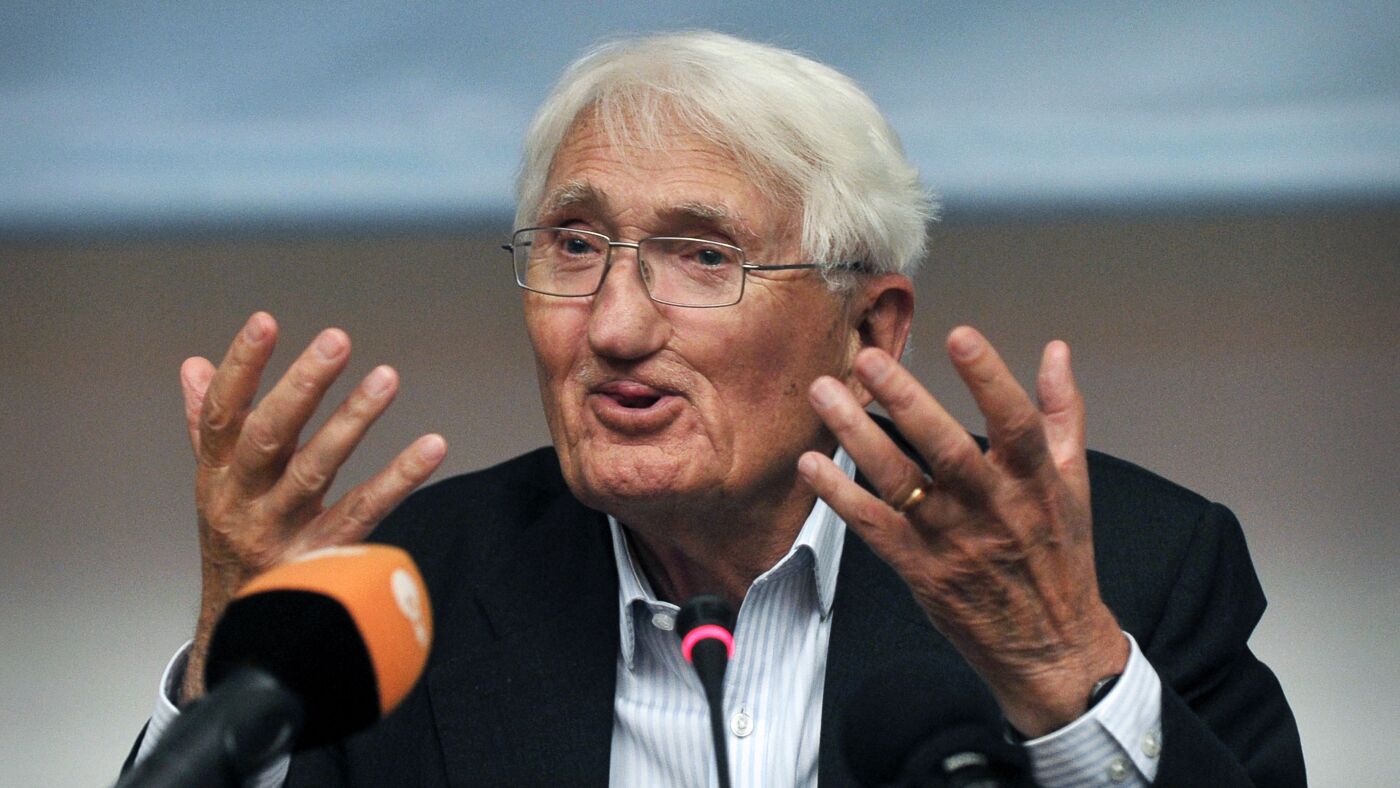
The Guardian view on the legacy of Jurgen Habermas: philosophical sustenance for illiberal times | Editorial

The Theory of Communicative Action, his 1980s magnum opus, was not (to put it mildly) as accessible as some of his newspaper opinion pieces. But its central idea—that our nature as linguistic beings puts reason and the search for consensus at the core of who we are—remains an antidote both to intellectual relativism and Trumpian realism, which elevates national or individual self-interest above all other sources of human motivation.
Philosophy
Philosophy
fromPsychology Today
2 weeks ago

What Is the 'Critical' in Critical Thinking?

Critical thinking is the ability to analyze, evaluate, and make judgments for decision-making, not merely critiquing or criticizing ideas.
Psychology
fromPsychology Today
4 weeks ago

The Feeling of Learning Can Be a Psychological Illusion

Cognitive fluency—the ease of processing information—creates an illusion of learning that often fails to translate into actual skill or long-term retention.
Philosophy
fromPsychology Today
2 weeks ago

Why Some Scientific Debates Never End

Complex questions involving values cannot be definitively settled by evidence alone, as different priorities lead experts to emphasize different findings from the same data.
fromPsychology Today
1 month ago

We Don't Know How Little We Know

This is a tough time for politics in America. But it's an extremely interesting time for those of us who wrestle with the nature of reality. As a psychiatrist who has treated people with psychosis for over 20 years, I have lived in the uncomfortable space between their experience of reality and mine and I have worked to change beliefs that are some of the most resistant to change: delusions.
US politics
fromBig Think
1 month ago

How our view of "fundamental" has evolved over time

In antiquity, many opined about "the elements" in combination. Around 2500 years ago, Leucippus and Democritus founded the idea of atoms. Perhaps everything, they opined, was composed of indivisible building blocks. In the late 1700s, hydrogen and oxygen were discovered. Circa 1804, John Dalton revived atomism to explain chemical behavior. Then in 1869, Mendeleev developed the periodic table: organizing the atoms.
Science
Education
fromPsychology Today
1 month ago

A True Believer in the Intellectual Spirit

Entrenched anti-intellectualism, market-driven educational priorities, and political pressures are undermining liberal arts, academic freedom, and intellectual life while religious movements retain transformative power.
fromApaonline
3 weeks ago

Recommendation: U.K. Spinoza Circle

Spinoza was an heir to both Jewish and Christian culture-in Amsterdam he grew up in a Jewish community within a Protestant society-yet he distanced himself from both these religions. He did not want to be a member of a religious institution with strict, prescriptive codes of belonging and belief. He feared-quite rightly-that a [institutional religion would constrain philosophical freedom].
Philosophy
Psychology
fromPsychology Today
1 month ago

Seeing Is Not Always Knowing: The Limits of Visual Authority

Humans' biological impulse to help others misfires when sighted people use mental shortcuts instead of listening to blind people's expert knowledge about navigating their own needs.
Philosophy
fromThe Conversation
3 weeks ago

Making good choices when life gets messy - practical wisdom relies on human judgment, not rules

Practical wisdom involves making sound judgments in complex situations where rules are unclear and competing values conflict.
Philosophy
fromHarvard Gazette
3 weeks ago

Where have all the public intellectuals gone? - Harvard Gazette

Public intellectuals are essential in democratic cultures to articulate unformed ideas and help citizens understand their values, but conditions supporting intellectual life in America are eroding due to social and economic shifts.
#consciousness
Philosophy
fromPsychology Today
1 month ago

Can Science Explain Consciousness?

Michael Pollan explores consciousness through examining plant sentience, AI potential consciousness, thought generation, and the nature of self, while acknowledging science may not definitively answer these fundamental questions.
Psychology
fromwww.theguardian.com
1 month ago

Inside voice: what can our thoughts reveal about the nature of consciousness?

Much of conscious thought is preverbal—images, sensations, and concepts—with words often trailing as afterthoughts, revealed by beeper-based descriptive experience sampling.
Science
fromwww.scientificamerican.com
2 months ago

What even is consciousness? Scientists still don't know

Consciousness is a central unresolved question in neuroscience involving subjective self, localized brain processes, split-brain effects, dreams, anesthesia, animal awareness, and AI.
Philosophy
fromBig Think
3 weeks ago

Consciousness may be more than the brain's output - it may be an input, too

Consciousness remains scientifically inaccessible through third-person observation, yet a radical theory proposes consciousness can physically influence brain dynamics and leave measurable traces.
Philosophy
fromPsychology Today
1 month ago

Can Science Explain Consciousness?

Michael Pollan explores consciousness through examining plant sentience, AI potential consciousness, thought generation, and the nature of self, while acknowledging science may not definitively answer these fundamental questions.
fromNature
2 months ago

Forget formalism: mathematics was built on infighting and emotional turmoil

In the weeks leading up to September 1891, mathematician Georg Cantor prepared an ambush. For years he had sparred - philosophically, mathematically and emotionally - with his formidable rival Leopold Kronecker, one of Germany's most influential mathematicians. Kronecker thought that mathematics should deal only with whole numbers and proofs built from them and therefore rejected Cantor's study of infinity. "God made the integers," Kronecker once said. "All else is the work of man."
History
fromClassic Yoga
5 months ago

Introduction to Nyaya Philosophy | The Path of Logical Inquiry - Classic Yoga

Nyaya Philosophy, one of the six classical schools of Indian philosophy ( Shad-Darshanas), is known for its systematic approach to logic and epistemology. Rooted in the idea that correct knowledge (pramā) is key to liberation (moksha), Nyaya provides a structured method of reasoning and critical thinking to uncover the truth. The sage Gautama (also known as Akṣapāda) was the founder of Nyaya philosophy. He contributed significantly to the development of logical reasoning in Indian intellectual traditions around the 2nd century BCE.
Yoga
Social justice
fromPsychology Today
1 month ago

Truth and Prejudice

Xenophobia in media and policy damages immigrant health and fuels prejudice; diversified news sources and cross-group social engagement help reduce stereotyping.
Law
fromwww.scientificamerican.com
2 months ago

Video evidence and eye witness accounts: The science behind why people see different things

The same police dashcam footage of a 2007 high-speed chase and collision produced sharply different interpretations, culminating in the Supreme Court ruling for the officer.
US politics
fromPsychology Today
1 month ago

When Everyone Agrees, Nobody Sees

A multicultural military harnesses immigrant experiences and diverse perspectives to strengthen national defense and improve collective decision-making.
Philosophy
fromApaonline
1 month ago

Why Engage with the Past? Philosophy and Its History

Philosophy departments distinguish between contemporary theoretical and practical philosophy addressing current issues, and history of philosophy studying outdated theories from past philosophers.
Mindfulness
fromPsychology Today
1 month ago

Securing the Sweet Spot for Effective Decision-Making

Missing crucial information in communication shapes outcomes; improving attention, metacognition, and deliberate pauses reduces errors and strengthens cooperation with smarter tools.
Science
fromwww.scientificamerican.com
2 months ago

Inside the incredible, infuriating quest to explain consciousness

Brains evolved during the Cambrian to integrate sensory input, enabling organisms to experience pain, pleasure, emotions, curiosity, and eventually self-awareness, fueling art, science, and philosophy.
Psychology
fromPsychology Today
1 month ago

The Psychology of Holding On to Beliefs

Beliefs tie to identity and belonging, resist direct challenge, and change slowly through emotionally safe relationships and education addressing emotion, meaning, and uncertainty.
fromPsychology Today
2 months ago

The Link Between Thinking and Being

Metaphors are linked to how we experience the world around us, according to seminal work by researchers George Lakoff and Mark Johnson. In English, we "move forward" with our lives and don't "retreat into" the past. We speak about people who are "cold as ice" and "heavy" matters we need to resolve. Some of these metaphorical expressions are more than just, well, expressions-they are actually based on our sensory experiences. This mind-body link is called "embodied cognition."
Science
Psychology
fromMedium
3 years ago

Draw Little Conclusions, Not Big Ones

Avoid drawing broad conclusions from single negative events because overgeneralizing can lead to unnecessary, lasting losses and missed opportunities.
fromPsychology Today
2 months ago

The Cause Illusion

Ever since our ancestors first stood upright and squinted at the horizon, we've been wired to notice patterns. A rustle in the grass might have meant a stalking predator. Dark clouds often meant rain. Those who made these connections and guessed that one thing caused another tended to survive. Over time, this ability to link events became one of our most significant evolutionary advantages. It's how we built tools, tamed fire, and eventually invented Wi-Fi.
Psychology
Philosophy
fromPsychology Today
1 month ago

A Commonsense Critique of A Priori Metaphysics

Claims that metaphysics, rather than science, is the necessary foundation for scientific knowledge are false and revive pre-Enlightenment mystic scholasticism.
Psychology
fromPsychology Today
2 months ago

Is What We Remember True?

Memories are dynamic reconstructions; each act of remembering alters them and new information, others' interpretations, and emotions can reshape past recollections.
#panpsychism
Philosophy
fromwww.theguardian.com
1 month ago

Time travel' and embracing emotions: five expert tips for making tough decisions

Emotions and personal values are essential information when choosing between meaningful options that are different in kind but similar in overall value.
Psychology
fromPsychology Today
1 month ago

Confirmation Bias and the Choices We Make

Confirmation bias leads people to interpret the same events differently, complicating truth-finding during misinformation while open-mindedness and better methods can improve accuracy.
Philosophy
fromPsychology Today
2 months ago

The End of Analytic Philosophy?

Analytic philosophy is degenerating, but naturalized philosophy offers a viable successor paradigm emphasizing empirical methods and interdisciplinary integration.
Philosophy
fromPhilosophynow
1 month ago

A Very Short History of Critical Thinking

Sophistry prioritizes winning and approval over truth, using deceptive, manipulative arguments that undermine ethics and honest critical thinking.
fromApaonline
2 months ago

Why We Should Doubt that Academic Philosophy Benefits the Broader Public

A professional philosopher outside the academy walls can act as a popularizer (the goal here is to make philosophy more accessible to the general public), an applied ethicist (the major task is to offer an analysis of various specific moral issues that arise within a society), and a public intellectual (I limit this role to questions that have political connotation). Of course, there are overlaps between these roles and they certainly do not exhaust all possible forms of public engagement of a professional philosopher.
Philosophy
fromPsychology Today
1 month ago

If Justice Doesn't Exist, Then Numbers Don't Either

A drawn circle is at least something physical. You can see it, touch it, erase it. The skeptic can still say, "Circles are grounded in physical reality. Justice is different; it's just an idea in your head." So let's talk about the number two. Point to it. Not two apples, not two fingers, not a numeral on a page-that's just a symbol.
Philosophy
fromPsychology Today
2 months ago

A Third Kind of Philosophy

Many philosophers strike me as like Polish apparatchiks in 1983-they turn up to work and do what they did yesterday just because they don't know what else to do, not because they seriously believe in the system they are maintaining. I think it's not been fully appreciated how much of a blow it is to the confidence of the field's youth that scientific ambitions are increasingly abandoned as untenable.
Philosophy
fromPsychology Today
2 months ago

Introspection and Consciousness: The Illusionism Debate

In my previous post, I summarized my response to Christian de Weerd, who denied that a Darwinian approach to consciousness is even possible. I argued that consciousness science has unnecessarily insulated itself from the evolutionary tools that revolutionized our understanding of every other biological phenomenon, and that treating human consciousness as the paradigm case distorts our picture of consciousness as a natural phenomenon spanning millions of species across millions of years.
Philosophy
Philosophy
fromBig Think
2 months ago

"Epistemic trespassing": Why brilliant people can say idiotic things

Experts can overreach beyond their expertise, making unreliable or harmful claims when they assume competence transfers across unrelated fields.
Philosophy
fromPhilosophynow
1 month ago

News: February/March 2026

A university review of race and gender course content led to removal of Plato passages from a syllabus, effectively banning Plato's Symposium and prompting protest and syllabus revision.
Philosophy
fromApaonline
1 month ago

Science Denial: From Post-Truth to Post-Trust

Many citizens adopt dangerous, willfully irrational beliefs—science denial and misinformation erode evidence-based decision-making in liberal democracies.
Philosophy
fromPsychology Today
2 months ago

Is Metaphysics Useful?

Analytic metaphysics often relies on armchair intuition and common sense, making it unreliable and potentially obstructive compared with empirically grounded science.
Philosophy
fromPsychology Today
2 months ago

Why Are We Having So Much Trouble Explaining Consciousness?

Consciousness research remains fragmented because prevailing conceptual contexts and blind spots prevent scientific convergence on an explanatory theory.
Philosophy
fromFast Company
2 months ago

Why AI can't automate science, according to a philosopher

AI aids scientific workflows yet cannot replace human scientists because it relies on human-curated data and lacks commonsense reasoning.
Philosophy
fromPsychology Today
1 month ago

Why Skeptics Can't See the Evidence They Demand

Skepticism can become a defended belief that biases perception and evidence evaluation rather than remaining a neutral scientific stance.
#philosophy
fromPsychology Today
2 months ago

Why 'Think Rationally' Isn't Always the Answer

In January 1986, NASA engineers knew the Space Shuttle Challenger's O-rings had never been tested in freezing temperatures. They recommended delaying the launch. Managers asked: Could the engineers prove it was unsafe? They couldn't-they could only say the system hadn't been designed for these conditions. Under pressure, the engineers withdrew their recommendation. The next morning, Challenger broke apart 73 seconds after launch, killing all seven astronauts.
Philosophy
fromFast Company
2 months ago

Why everything you think about yourself could be an illusion

For most of my life, I thought of myself as a fixed entity: This is me. These are my traits. This is who I am. I assumed I was essentially that same person who loved sugary cereal at age 8, fried chicken at 12, and tequila at 21, and who still loves those things now, even if my stomach disagrees. But this is an illusion. Neuroscience, physics, and Buddhism all agree: There is nothing fixed about us-not even close.
Philosophy
fromApaonline
1 month ago

Philosophy, Technology, and Mortality

This APA Blog series has broadly explored philosophy and technology with a throughline on the influence of technology and AI on well-being. This month's post brings those themes into focus recounting a vital Washington Post Opinion piece by friend of the APA Blog, Samuel Kimbriel. Samuel is the founding director of the Aspen Institute's Philosophy and Society Initiative and Editor at Large for Wisdom of Crowds. We collaborated on a Substack Newsletter about intellectual ambition, building on his essay, Thinking is Risky.
Philosophy
fromThe Conversation
2 months ago

AI cannot automate science - a philosopher explains the uniquely human aspects of doing research

Consistent with the general trend of incorporating artificial intelligence into nearly every field, researchers and politicians are increasingly using AI models trained on scientific data to infer answers to scientific questions. But can AI ultimately replace scientists? The Trump administration signed an executive order on Nov. 24, 2025, that announced the Genesis Mission, an initiative to build and train a series of AI agents on federal scientific datasets "to test new hypotheses, automate research workflows, and accelerate scientific breakthroughs."

Philosophy
Philosophy
fromPsychology Today
2 months ago

5 Traits of Wisdom

Wisdom is a domain-general, metacognitive capacity grounded in epistemological understanding and critical thinking, distinct from experience-based expertise, and includes awareness of one’s knowledge limits.
Philosophy
fromPsychology Today
1 month ago

How Ancient Philosophy Lost Its Mind-Twice

The shift from Classical Attic to Koine Greek correlated with a philosophical simplification from Plato's multipart psyche to the Stoics' unitary rational mind.
[ Load more ]