#emirhan-demircan
#emirhan-demircan
[ follow ]
#illustration

fromBOOOOOOOM!
1 month agoGraphic design
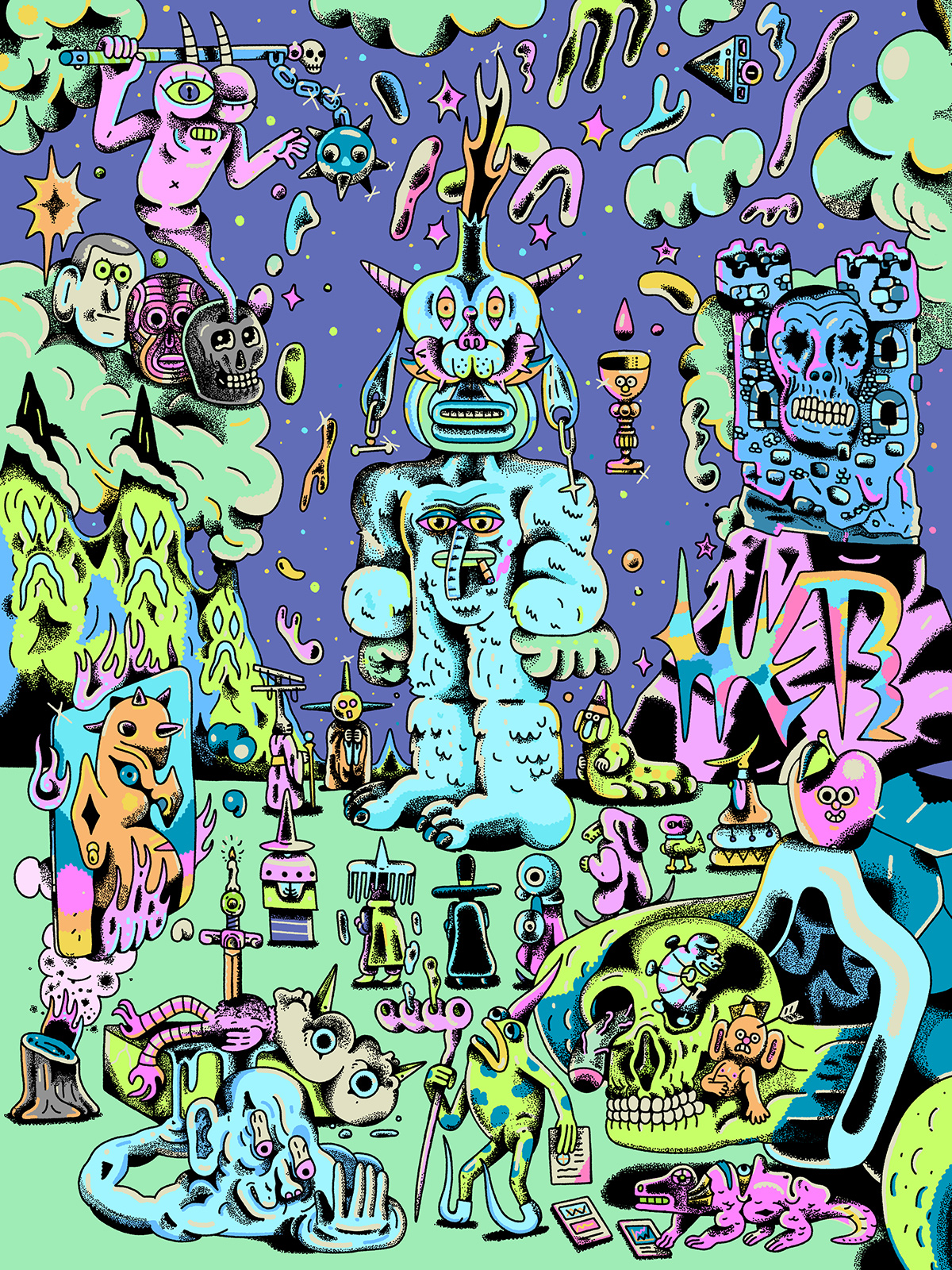
Illustrator Spotlight: Starrenco
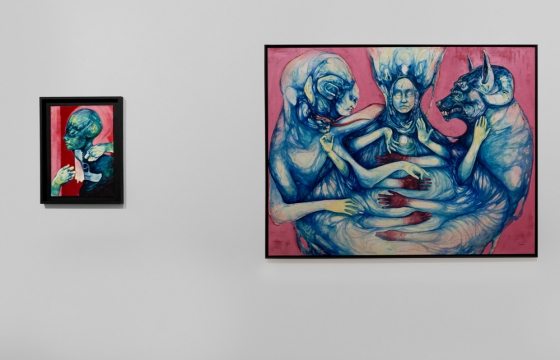
Italian illustrator Starrenco creates distorted, imaginative worlds grounded in reality, using drawing as a method of personal investigation to explore inner landscapes and reveal hidden meanings through intuitive creative processes.
Graphic design
fromBOOOOOOOM!
1 month agoIllustrator Spotlight: Starrenco
Italian illustrator Starrenco creates distorted, imaginative worlds grounded in reality, using drawing as a method of personal investigation to explore inner landscapes and reveal hidden meanings through intuitive creative processes.

fromwww.dw.com
2 weeks agoTurkey: Thousands of Imamoglu supporters rally in Istanbul
The aim of this case is not to seek the truth or to ensure justice, but to escape the anxiety of electoral defeat. The behind-closed-doors trial was the product of a corrupt mindset that is mortally afraid of free and fair elections and has taken refuge behind the judiciary to eliminate its political rival.
US Elections
fromwww.theguardian.com
3 weeks agoA new wave of defiance: the Turkish film-makers standing up to autocracy
Ilker Catak's Yellow Letters and Emin Alper's Salvation, two politically outspoken films that examine Turkish president Recep Tayyip Erdogan's autocratic regime, shared the top prizes at this year's Berlinale: the Golden Bear for Catak and Silver for Alper. These striking works share a lot more. Both titles are co-produced by Liman, an indie film company from Turkey.
Film
Arts
fromIrish Independent
5 days ago'You have to step in and experience it' - artists on the rise of AI-generated art and the 'essential' gallery visit
Miriam Fitzgerald Juskova's exhibit combines paper quilling with mathematics, showcasing intricate art that engages viewers and emphasizes the value of handmade creations.
Writing
fromKqed
1 month agoA Glimpse of Iran Through the Eyes of its Artists and Journalists
Iranian-American artists and writers explore diaspora, identity, and historical trauma through poetry, fiction, and documentary, examining the lasting impact of political upheaval and U.S. intervention on Iranian communities.
Arts
from48 hills
2 weeks agoFor Iranian artist Shiva Ahmadi, 'ornamentation becomes a form of resistance' - 48 hills
Shiva Ahmadi's interdisciplinary art practice channels personal experiences of displacement, political upheaval, and immigrant anxiety into visually seductive works that address brutal global issues affecting marginalized communities.
fromThe Art Newspaper - International art news and events
1 month agoTurkey's heritage power grab: new law threatens Istanbul's opposition-run cultural sites
A new law empowering Turkey's central government to seize historic properties from local authorities is raising fears that heritage sites are becoming the latest front in a wider campaign against opposition-led municipalities. Among the sites at stake are cultural venues run by the Istanbul municipality, whose mayor Ekrem İmamoğlu launched an ambitious conservation drive and expanded cultural programming before he was jailed last year after announcing plans to run for president.
Miscellaneous
Design
fromItsnicethat
1 month agoVisual communication that challenges convention: Phantasia on how graphic design can forge true collaboration
Phantasia, a Barcelona-based design studio founded in 2021, prioritizes meaningful projects that serve communities through intentional collaboration, diversity, and accessible communication.
fromHyperallergic
2 weeks agoWhen a Palestinian Artist Asserts Her Own Humanity
There is a scene in "Morgenkreis | Morning Circle" (2025), a 16-mm film by Berlin-based Palestinian artist Basma al-Sharif, that unfolds at the threshold of a daycare center. A young boy clings to his father, his fists locked into the fabric of his coat, his arms wrapped tightly around him. The father gently tries to pry himself free while a daycare worker crouches nearby, attempting to distract the child and coax him inside. It is an ordinary moment, one that anyone who has ever been a child - or cared for one - recognizes instantly, as well as the gut-wrenching feeling it provokes.
Arts
Arts
fromThe Art Newspaper - International art news and events
3 weeks agoArt communities and heritage in Iran, moderate recovery in the art market, Sydney Biennale-podcast
Cultural communities in Iran and Lebanon respond to Middle East conflict while heritage sites face damage, alongside global art market recovery and contemporary art installations addressing regional tragedies.
fromwww.thehistoryblog.com
1 month agoMosaics displayed under floor of new Istanbul museum
An intact mosaic from Late Antiquity discovered during restoration of a historic municipal building in Istanbul is now a floor again, covered in plexiglass and welcoming visitors to the new Zeytinburnu Mosaic Museum. Visitors of Turkey's newest museum move across elevated glass walkways, suspended right above the original floors themselves. The mosaics are not relocated fragments mounted on walls, but surfaces that remain exactly where they were first laid, preserving their context for all to see.
History
fromHyperallergic
3 weeks agoEmbracing Friction in the Art World
On Franklin Street in Brooklyn's Greenpoint neighborhood, one non-commercial gallery fosters 'a small, stubbornly human space for friction.' Friction—the ubiquitous buzzword that captures the simultaneous delight and discomfort of doing things the slow way—is at the heart of artists Pap Souleye Fall and Char Jeré's current show at Subtitled NYC. It also reflects the overall spirit of this little exhibition space and of a burgeoning movement to reject our culture of optimization in favor of a bumpier, more intimate, less alienating experience.
Arts
fromTravel + Leisure
1 month agoThis Middle Eastern Destination Is the Most Exciting Art City Right Now-With World-Class Museums and a New Art Fair
Five bronze towers soar 400 feet above Saadiyat Island, the ever-expanding cultural district just off the coast of Abu Dhabi. The structures-which recall the wings of a falcon, a highly prized symbol in the United Arab Emirates-are the architectural signature of the Zayed National Museum, which opened in December. Two weeks before, another vastinstitution, the Natural History Museum, debuted. They will be followed later this year by the most ambitious of all-the late Frank Gehry's Guggenheim Abu Dhabi.
World news

fromThe Art Newspaper - International art news and events
2 months agoNew London exhibition uses architecture to explore the experiences of Iran's American diaspora
In Arash Nassiri's new moving-image commission, an insect puppet drags itself across an empty marble floor, cast in eerie blue evening light. The scene is diffused through an enormous frosted-glass cubicle, refracting and distorting the images. That sense of distortion pervades the Tehran-born, Berlin-based Nassiri's first institutional solo exhibition, A Bug's Life, which opened last weekend at London's Chisenhale Gallery-and comprises a film set within a sculptural installation.
Film
fromHyperallergic
1 month agoPetrit Halilaj's Opera of Kosovan Memory and Myth
At the Hamburger Bahnhof, the props, costumes, and set pieces of the musical are staged in vignettes throughout a large hall: a life-sized horse sculpture in a pink clearing surrounded by dirt, a curtained cart set up as a stage with a figure on its steps, two life-sized human figures in animal masks perched in a high window, as if observing the events.
Arts
Design
fromThe Art Newspaper - International art news and events
2 months agoHow an artist's sketch was turned into a museum
A museum design translates a blue-house and white-tower sketch into a tiled architectural language reflecting regional materials, cultural markers, and historic South–West Asian trade links.
Arts
fromArtnet News
1 month agoThe Art Boom in the Middle East, Are Old Masters Cool Now?, and a Fresco Fracas in Italy | Artnet News
Art Basel Qatar raises questions about cultural power redistribution, while contemporary art's focus on Old Masters reflects market pressures, and a removed church fresco in Rome highlights tensions between restoration, iconography, and political imagery.
Arts
fromArtnet News
1 month agoIn Riyadh, Sweeping Survey Traces the Origins of the Saudi Art Movement
A comprehensive exhibition at the National Museum of Saudi Arabia documents the evolution of Saudi art from the 1960s-1980s, showcasing pioneering works and establishing the foundations of the modern Saudi art movement.
fromBerlin Art Link
1 month agoAn Interview with Monia Ben Hamouda | Berlin Art Link
Monia Ben Hamouda's work weaves calligraphy, material transformation and ancestral memory into sculptures and installations that oscillate between language and form. In conversation, we traced the conceptual and sensory threads of her practice, unfolding through key works that reflect on heritage, embodiment and translation. Using materials such as iron, stone and pigment, her installations become sites where history is not only referenced but physically felt.
Arts
fromJuxtapoz
1 month agoJuxtapoz Magazine - Hayv Kahraman: Libations @ Vielmetter, Los Angeles
the artist's newest body of work responds to an urgent question precipitated by the catastrophic events of the past year: What does one do when the world collapses? The works attempt to make sense of her experience of the fire and its enduring aftermath, while continuing her exploration of the poetics of loss, displacement, and migration. Kahraman views these works as an offering, a libation, to a burning world.
Arts
fromArtnet News
1 month agoThe Dutch Gallery Bringing Eyes to Armenia's Contemporary Art Scene
While Armenia has long been recognized for its rich and storied historical art and culture, the country's contemporary art scene is emerging as one to watch on a global scale. Armenian artists stand out for their ability to synthesize their own cultural heritage with avant-garde approaches to contemporary artmaking, bridging tradition with self-expression. Paralleling broader rising critical and market interest and investment in regions outside of the West, ARAR Gallery of Utrecht, the Netherlands, is at the forefront of Armenian art's mounting international presence.
Arts
Arts
fromThe Art Newspaper - International art news and events
2 months agoIranian galleries close amid protests and fears of war
Protests, internet shutdown and economic collapse prompted Iranian galleries to close or alter operations, joining a broader cross‑sector collective action amid severe shortages.
fromHyperallergic
2 months agoArt for Dignity
As if demolishing the East Wing, gutting arts agencies, and slapping his name and face on several federal buildings weren't enough, the US president now wants to do away with a DC building known as the "Sistine Chapel of New Deal art." This week, we reported on a burgeoning campaign to save the Wilbur J. Cohen Federal Building, which houses murals by Ben Shahn, Philip Guston, Seymour Fogel, and other major American artists. We will continue to follow this story.
Arts
fromThe Art Newspaper - International art news and events
1 month agoTracey Emin: 'I've done more in my last five years than in the whole rest of my life'
Tracey Emin is internationally renowned for her coruscatingly confessional art, which for over three decades has chronicled an often tumultuous life in various media, including painting, video, textiles, neon, writing, sculpture and installation. Born in Croydon, London, and raised in the seaside town of Margate, Emin first attracted widespread attention when, as a Turner Prize nominee in 1999, she exhibited the now notorious work My Bed (1998) provoking fierce critical debate on what art could-or should-be.
Arts
fromBerlin Art Link
2 months agoInterview with Rae-Yen Song | Berlin Art Link
For their most ambitious exhibition to date, Rae-Yen Song 宋瑞渊 transforms Tramway's vast exhibition hall into a submerged cosmology shaped by ancestral mythologies, Daoism, collective ritual and multispecies kinship. In this phantasmagoric aqueous environment-the most recent project in Song's ongoing world-building practice-life is understood as cyclical, relational and continuously in flux. Titled '*~TUA~* 大眼 *~MAK~*', the exhibition comprises newly commissioned works in sculpture, textiles, printmaking, sound, light and moving image,
Arts
Arts
fromThe Art Newspaper - International art news and events
2 months agoMuseum wall texts are an art in their own right-but will they survive the digital age?
Museums should balance providing contextual wall text and inviting wordless, personal interpretation to make art accessible and meaningful to diverse visitors.
Arts
fromdesignyoutrust.com
2 months agoArtist Paints Smoky Lounges And Quiet Strangers, Letting Halffinished Details Turn Viewers Into Coauthors Of The Scene
A wide-ranging visual roundup showcases creative reinterpretations, vintage design, activist art, photography, illustration, and humorous cultural works spanning contemporary and historical styles.
fromThe Art Newspaper - International art news and events
2 months agoIn post-'revolution' Bangladesh, a photography festival questions how to rebuild after ruin
The Mela comprises a series of themed and solo exhibitions, by international and Bangladeshi artists at venues across downtown Dhaka. Until 2024, Bangladeshi artists had to contend with the former prime minister Sheikh Hasina's authoritarian government, which monopolised access to funding and foreign collaboration. Many arts institutions were turned into propaganda machines, as Hasina's cultural officials 'just wanted to please the national leader,' one Bangladeshi artist told the Financial Times last year.
Arts
[ Load more ]