#eurusd-and-sovereign-spreads
#eurusd-and-sovereign-spreads
[ follow ]
#inflation #treasury-yields #geopolitical-tensions #us-dollar #federal-reserve #oil-prices #monetary-policy




fromLondon Business News | Londonlovesbusiness.com
5 days agoUS dollar stable near recent highs - London Business News | Londonlovesbusiness.com
Escalating geopolitical risk continued to dominate global markets' concerns, with safe-haven demand keeping the dollar index anchored near a multi-week high.
World politics
fromwww.npr.org
3 days agoHave Trump's tariffs worked? This is where things stand a year after 'Liberation Day'
Tariffs are generating tens of billions of dollars in revenue for the federal government. In the first five months of the fiscal year, the government raised $151 billion from tariffs, nearly four times as much as during the same period the previous year.
US news
fromwww.mediaite.com
6 days agoBad News All Around!' Fox Business Host Stunned By Highly Inflationary' Prices in Total Bummer of an Economic Analysis
High energy prices are kryptonite for the housing market. Affordability, especially for those first-time home buyers, is now an elusive dream until oil prices come down and interest rates come down.
SF real estate
Retirement
fromLondon Business News | Londonlovesbusiness.com
2 days agoEvery time you borrow from a bank, you're paying more than you think - London Business News | Londonlovesbusiness.com
Opportunity cost in loans includes lost potential earnings from repayment dollars, not just the interest rate paid.
Artificial intelligence
fromFortune
4 days ago'Inflationary surge': Fed economists warn AI hype is overheating the economy whether or not the technology ever delivers | Fortune
AI optimism may hinder productivity and contribute to short-term inflation as households and businesses react to perceived future gains.
World politics
fromLondon Business News | Londonlovesbusiness.com
6 days agoUS dollar stable after successive gains - London Business News | Londonlovesbusiness.com
Escalating Middle East tensions are influencing market sentiment, keeping the dollar stable and impacting US Treasury yields amid inflation concerns.
#us-dollar
US Elections
fromLondon Business News | Londonlovesbusiness.com
3 days agoUS dollar rose amid a rebound in geopolitical concerns - London Business News | Londonlovesbusiness.com
The US dollar strengthened due to geopolitical fears and better-than-expected economic data, while uncertainty keeps market volatility high.

US Elections
fromLondon Business News | Londonlovesbusiness.com
3 days agoUS dollar rose amid a rebound in geopolitical concerns - London Business News | Londonlovesbusiness.com
The US dollar strengthened due to geopolitical fears and better-than-expected economic data, while uncertainty keeps market volatility high.

from24/7 Wall St.
3 days agoUSHY Yields 6.58% While VIX Sits at the 96.5th Percentile, A Risky Tradeoff
USHY seeks to track the investment results of the ICE BofA US High Yield Constrained Index, composed of U.S. dollar-denominated, high yield corporate bonds, providing broad exposure in a low-cost wrapper.
Business
World politics
fromwww.theguardian.com
4 days agoA third inflationary shock in less than a decade is coming: who will pay the price this time around? | Aditya Chakrabortty
Daniel Yergin highlights the vulnerability of global oil supplies through the Strait of Hormuz and the consequences of military actions against Iran.
fromLondon Business News | Londonlovesbusiness.com
4 days agoMarkets remain nervous as Iran threatens to attack US blue-chip companies - London Business News | Londonlovesbusiness.com
Warning to the invading American ruling establishment and its affiliated spy companies. You ignored our repeated warnings about the necessity of halting terrorist operations, and today, in terrorist attacks carried out by you and your Israeli allies, a number of Iranian citizens were martyred.
World news
fromFortune
6 days agoBond yields are falling even as oil tops $102, showing that Wall Street fears recession more than inflation | Fortune
"Oil prices are higher again this morning, but Treasury yields are lower as the risks to economic growth begin to take precedence over the risks to inflation," Oxford Economics said in a note on Monday.
World news
#eurusd
Europe news
fromLondon Business News | Londonlovesbusiness.com
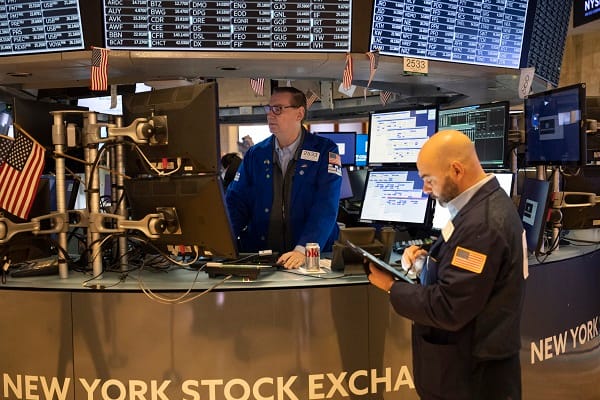
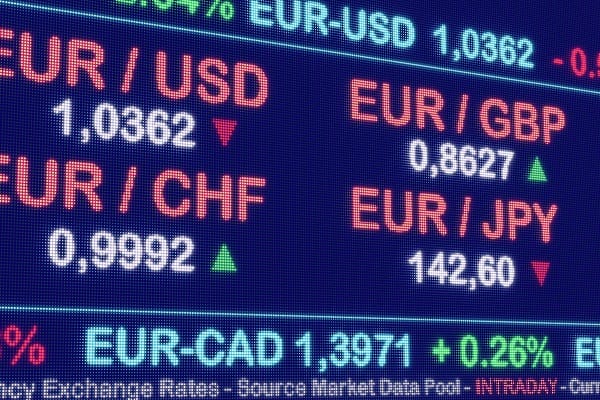
1 week agoEuro rally falters as dollar regains strength on 'higher for longer' rates - London Business News | Londonlovesbusiness.com
EURUSD recovery shows fading momentum, reflecting a corrective rally rather than a trend reversal amid complex macroeconomic conditions.

Europe news
fromLondon Business News | Londonlovesbusiness.com
1 week agoEuro rally falters as dollar regains strength on 'higher for longer' rates - London Business News | Londonlovesbusiness.com
EURUSD recovery shows fading momentum, reflecting a corrective rally rather than a trend reversal amid complex macroeconomic conditions.
from24/7 Wall St.
5 days agoXRP Price Prediction: What Happens to XRP If Oil Stays Above $100 and the Fed Doesn't Cut?
XRP has had the strongest fundamental setup of any altcoin in 2026—a commodity classification from both the SEC and CFTC, seven ETFs with $1.44 billion in inflows, and major partnerships with Mastercard and Deutsche Bank.
Cryptocurrency
fromLondon Business News | Londonlovesbusiness.com
6 days agoGlobal markets react to geopolitical tensions and rising energy costs - London Business News | Londonlovesbusiness.com
U.S. financial markets experienced a volatile week, largely influenced by geopolitical developments in the Middle East and fluctuations in energy prices. Investor sentiment was driven primarily by external events rather than domestic fundamentals.
Business
Europe news
fromLondon Business News | Londonlovesbusiness.com
1 week agoInflation concerns and geopolitical risks weigh on markets - London Business News | Londonlovesbusiness.com
U.S. equity markets declined due to geopolitical tensions, rising oil prices, and inflation concerns, while energy stocks outperformed amid supply uncertainties.
fromLondon Business News | Londonlovesbusiness.com
2 weeks agoEurozone inflation edges up as ECB prepares for key rate decision - London Business News | Londonlovesbusiness.com
Services experienced the highest annual increase at 3.4%, followed by food, alcohol, and tobacco at 2.5%. Non-energy industrial goods saw a more modest increase of 0.7%. Meanwhile, energy prices fell by 3.1% over the month, which helped to temper overall inflation pressures.
Europe news
fromLondon Business News | Londonlovesbusiness.com
2 weeks agoUS dollar sees volatility risks on geopolitical developments and ahead of Fed - London Business News | Londonlovesbusiness.com
The dollar stabilised to a certain extent today after retreating in the prior session, but could remain relatively volatile as markets react to geopolitical developments in the Middle East. Treasury yields were firmer following a pullback on Monday as well.
World news
#us-dollar-index
Business
fromLondon Business News | Londonlovesbusiness.com
2 weeks agoWhere is the US Dollar Index heading amid rising bond yields? - London Business News | Londonlovesbusiness.com
The US Dollar Index strengthens due to Federal Reserve's hawkish stance, elevated Treasury yields, and geopolitical tensions, with limited rate cuts expected through 2027.
Business
fromLondon Business News | Londonlovesbusiness.com
1 month agoUS dollar index (DXY) below 100 points - London Business News | Londonlovesbusiness.com
The US Dollar Index retreated below 100 to 98.90, indicating fading momentum from safe-haven flows as markets reprice geopolitical risks more calmly.
fromLondon Business News | Londonlovesbusiness.com
3 weeks agoDollar under pressure as geopolitical concerns ease - London Business News | Londonlovesbusiness.com
The expectations of a decrease in tensions triggered a pullback in oil prices, which in turn softened immediate concerns about inflation pressures. However, the broader geopolitical backdrop remains fragile, and any renewed escalation could quickly push oil prices, the dollar, and Treasury yields higher again.
World politics
fromLondon Business News | Londonlovesbusiness.com
2 weeks agoECB decision and high oil prices fuel caution - London Business News | Londonlovesbusiness.com
Markets remain fragile amid persistent geopolitical tensions in the Middle East, which have pushed oil prices higher and revived concerns about inflation in Europe. While interest rates are expected to remain unchanged, attention could turn to the ECB's forward guidance and assessment of energy-driven price risks.
Europe news
US news
fromLondon Business News | Londonlovesbusiness.com
1 month agoDollar Relatively Stable Amid Economic Uncertainty - London Business News | Londonlovesbusiness.com
The dollar remains stable within a consolidation range, with its direction dependent on monetary policy expectations, labor market data, and inflation trends.
Business
fromwww.housingwire.com
2 weeks agoFed holds rates, officials signal wait and see on inflation risks
Oil price resolution timing in the Strait of Hormuz will determine whether inflation stays elevated, delaying Fed rate cuts, or eases, allowing Treasury yields and mortgage rates to decline toward early-year levels.
World politics
fromLondon Business News | Londonlovesbusiness.com
1 month agoDollar set for weekly gain as geopolitics and resilient data lift yields - London Business News | Londonlovesbusiness.com
The dollar gains over 1% this week due to strong US economic data and Middle East tensions, with markets now pricing in only one Fed rate cut for the year instead of two.
fromThe Drum
2 months agoWhat happens when our common currency becomes uncommon?
This is not new news, of course, but many in the industry seem to be finally waking up to the hard truth that data-driven media buying, as we know it today, is severely under threat and has to change. Cookies power everything we do, from humble frequency capping through to complex multi-touch attribution models, ad personalisation and audience segmentation. They underpin most of the gains we've made in performance advertising, as well as brand advertising, over the past decade.
US news
fromLondon Business News | Londonlovesbusiness.com
2 months agoEURUSD: US labour data cool, but not enough to form a clear trend - London Business News | Londonlovesbusiness.com
The U.S. economy is cooling gradually, reducing dollar strength while leaving the Fed likely to delay immediate rate cuts amid elevated inflation expectations.
Business
fromLondon Business News | Londonlovesbusiness.com
1 month agoThe significant events in the global economy over the past week - London Business News | Londonlovesbusiness.com
U.S. equity markets declined amid AI disruption concerns and trade uncertainty, while European markets gained strength with solid earnings and diversification appeal.
Miscellaneous
fromLondon Business News | Londonlovesbusiness.com
2 months agoEuro under pressure as geopolitical risks and weak PMI data dent sentiment - London Business News | Londonlovesbusiness.com
Euro fell against major currencies as investors sought safe havens amid Latin American geopolitical escalation and weak euro-area macro data, risking ECB policy shifts.
US news
fromLondon Business News | Londonlovesbusiness.com
2 months agoDollar extends rebound on geopolitical risks - London Business News | Londonlovesbusiness.com
Geopolitical risks pushed the US dollar to two-week highs as safe-haven demand rises, while upcoming data and Fed remarks could change dollar and yield outlooks.
fromLondon Business News | Londonlovesbusiness.com
2 months agoDollar struggle and monetary policy shape the next phase - London Business News | Londonlovesbusiness.com
The resilience of gold above $4,800 per ounce at this stage reflects a delicate and complex balance between traditional supporting factors and emerging pressures-one that cannot be superficially interpreted or reduced to the movement of the dollar alone. It is true that the U.S. dollar's retreat from its recent peaks, after failing to sustain its recovery momentum from a four-year low, provided gold with a short-term breather and attracted some buyers.
Business
fromwww.aljazeera.com
1 month agoWhy are gold prices soaring and the dollar in decline?
Gold has been on a tear as the dollar is under pressure, raising questions about global confidence and market risk. The US economy and markets are unmatched in size. The dollar is the king of currencies, and US treasuries are often considered a safe-haven asset. But, investors appear to be reassessing that. This has weighed down on the greenback and cooled the stock markets.
World news
[ Load more ]