#facilities-development
#facilities-development
[ follow ]
#sustainability #architecture #infrastructure #urban-planning #transportation #new-york-city #climate-change
#urban-logistics

Alternative transportation
fromLondon Business News | Londonlovesbusiness.com
3 hours agoThe 2026 urban logistics challenge: Managing delivery hubs in the city - London Business News | Londonlovesbusiness.com
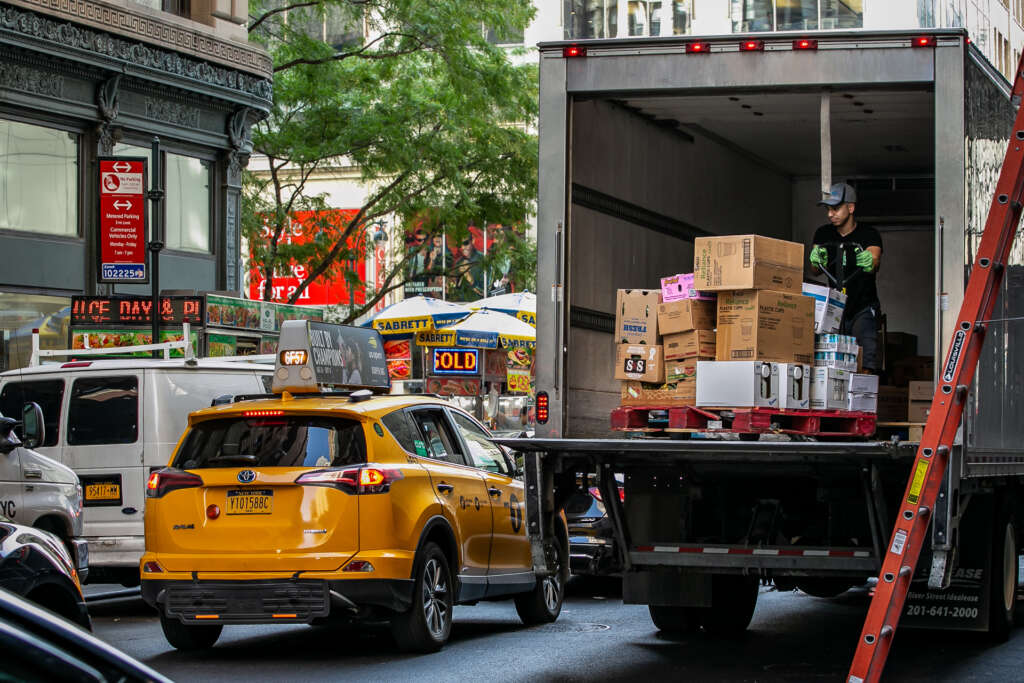
Cities are becoming critical for delivery management due to e-commerce growth, requiring innovative logistics solutions to meet consumer expectations.



Public health
fromStreetsblog New York City
12 hours agoNeed To Kill Cross Bronx Widening Plan Is Obvious Amid Slight Congestion Pricing Pollution Uptick - Streetsblog New York City
Gov. Hochul has delayed a decision on widening the Cross Bronx Expressway due to concerns over increased pollution in the Bronx.

fromwww.cbc.ca
16 hours agoToronto's streetlights to be converted to LED lighting by 2035, officials say | CBC News
We will convert every street light to modern LED light in the next 10 years, more than doubling our current pace. To keep the system going, we will also replace aging infrastructure below ground.
Canada news
fromwww.standard.co.uk
22 hours ago1,500 new homes on Greenwich peninsula set for green light
Galliard Homes reduced the amount of affordable housing in the project's housing stock from 35 per cent to just 10 per cent, citing increased construction costs and changing building regulations as key factors.
LA real estate
#climate-change

Online Community Development
fromInside Higher Ed | Higher Education News, Events and Jobs
3 days agoA Town-Gown Partnership Focused on Climate Resilience
Agnes Scott College collaborates with Decatur to address climate change through a joint Climate Resilience Plan, focusing on sustainability and community engagement.
fromThe Oaklandside
17 hours agoOakland public school buildings need $3.5 billion in upgrades
"OUSD's enrollment patterns reflect both student need and family choice and vary across Oakland, so facilities planning must go beyond utilization and attendance boundaries to account for equity, housing patterns, choice-driven enrollment flows, program location, facility quality, and capacity at local and regional scales."
Education
fromtherealdeal.com
1 day agoThe Daily Dirt: Meet the new head of City Planning
I understood at a very early age how much place matters and how impactful government services can be on one's life. The Mayor's Office of Equity and Racial Justice was really focused on working with agencies to think about how they're addressing inequity, whether it's through budget as a lever or personnel as a lever, procurement, policymaking. But land use is a lever as well.
NYC politics
World news
fromSilicon Canals
1 day agoThe Middle East's real vulnerability isn't oil - it's the desalination plants that supply 90% of its drinking water - Silicon Canals
The Middle East's reliance on desalinated water exposes significant vulnerabilities, particularly due to concentrated infrastructure and ongoing military conflicts.
US politics
fromFortune
1 day agoA councilmember backed a data center project. Then 13 bullets and a 'No Data Centers' note hit his home | Fortune
Violence erupted in Indianapolis over opposition to a proposed data center, highlighting growing tensions surrounding AI infrastructure development nationwide.
fromwww.businessinsider.com
2 days agoAfter a disappointing college experience, I was determined to make postgrad life better. Now I'm thriving.
Social anxiety and depression had other plans, leaving me in an ugly cycle of self-isolation and rumination. Terrified of rejection, I'd meet someone interesting during one of my English lectures and invite them out for frozen yogurt in my head.
Higher education
#transportation
New York City
fromwww.amny.com
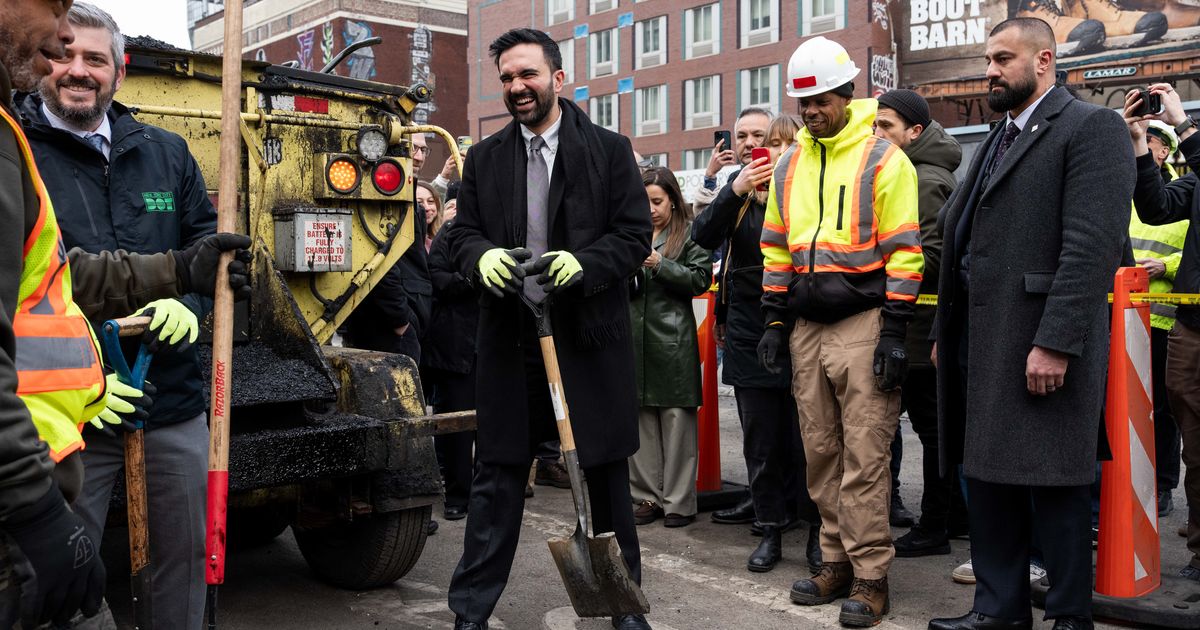
3 hours agoMAMDANI'S FIRST 100 DAYS: Transportation stakeholders give Mamdani high marks on streets agenda, but more work to be done on buses | amNewYork
Mayor Mamdani prioritizes transportation improvements, focusing on faster buses and safer streets, but faces challenges in implementing fare-free bus service.


New York City
fromwww.amny.com
3 hours agoMAMDANI'S FIRST 100 DAYS: Transportation stakeholders give Mamdani high marks on streets agenda, but more work to be done on buses | amNewYork
Mayor Mamdani prioritizes transportation improvements, focusing on faster buses and safer streets, but faces challenges in implementing fare-free bus service.
fromianVisits
1 hour agoTunnel to Heathrow could be privately funded under revived rail link plans
The study concludes that the rail link could deliver strong economic returns under both two-runway and three-runway expansion scenarios at Heathrow Airport, indicating its potential impact on regional connectivity.
UK politics
Environment
fromLondon Business News | Londonlovesbusiness.com
1 day agoHow are construction sites improving air quality? - London Business News | Londonlovesbusiness.com
Construction contributes significantly to air pollution, but improvements like on-tool extraction and water-based dust suppression are helping to mitigate these effects.
fromBrooklyn Paper
2 days agoWhere are Brooklyn's "recreation deserts," and what can be done to fix them? * Brooklyn Paper
"Brooklyn has always been a place where movement is part of daily life. But today, Brooklynites, like all New Yorkers, are moving less, feeling more isolated and dealing with elevated rates of chronic diseases."
Brooklyn
#urban-development
Business intelligence
fromLondon Business News | Londonlovesbusiness.com
1 week agoWhy GIS matters in modern infrastructure and urban planning: Building smarter, future-ready cities - London Business News | Londonlovesbusiness.com
GIS is essential for effective urban planning, enabling data-driven decisions that enhance infrastructure and quality of life in rapidly growing cities.

Business intelligence
fromLondon Business News | Londonlovesbusiness.com
1 week agoWhy GIS matters in modern infrastructure and urban planning: Building smarter, future-ready cities - London Business News | Londonlovesbusiness.com
GIS is essential for effective urban planning, enabling data-driven decisions that enhance infrastructure and quality of life in rapidly growing cities.
fromwww.bbc.com
2 weeks agoCampaigners celebrate after new town plans dropped
Campaigner Aysha Hawcutt stated that residents were 'not anti-homes', but believed the Adlington plan was 'the wrong proposal in the wrong place'. She expressed pride in the community's resilience against the development threats.
London politics
fromwww.housingwire.com
3 weeks agoHow Public Financing Wins Projects Before You Build
Through Community Facilities Districts (CFD), Municipal Utility Districts (MUD), Public Improvement Districts (PID), Community Development Districts (CDD) and reimbursement districts (RD), builders can potentially shift infrastructure costs off their balance sheets and onto special districts that homebuyers ultimately absorb through property taxes without potentially adding debt to the builder's books.
LA real estate
Miscellaneous
fromArchDaily
1 month ago7 Unbuilt Masterplans Reimagining Urban Futures Through Ecology and Collective Space
Unbuilt urban masterplans explore adaptive spatial frameworks that recalibrate mobility, ecology, and collective life through climate-responsive design and public space integration across diverse global contexts.
Alternative transportation
fromStreetsblog
3 weeks agoWhy Some Congresspeople Want to Go Big on Greenways - Streetsblog USA
The Parks to People Act proposes $300 million in federal funding for walking and biking infrastructure as essential transportation tools, despite political opposition dismissing them as distractions.
fromArchDaily
2 months agoMoving Capitals Across Global Contexts: From Strategic Planning to Environmental Necessity
Across history, the relocation of capital cities has often been associated with moments of political rupture, regime change, or symbolic nation-building. From Brasília to Islamabad, new capitals were frequently conceived as instruments of centralized power, territorial control, or ideological projection. In recent decades, however, a different set of drivers has begun to shape these decisions. Rather than security or representation alone, contemporary capital relocations are increasingly tied to structural pressures such as demographic concentration, infrastructural saturation, environmental risk, and long-term resource management.
World news
fromwww.dw.com
2 months agoThe city that swapped parking for green space
Though they're individually tiny, parking spots quietly play a dominant role in shaping urban landscapes. Most US cities dedicate at least 25% of their developable land to them. Some, even more. That land usage doesn't only determine the way a city looks. It also means covering large swathes of urban areas in heat-absorbing asphalt, which contributes to making summers hotter and heightens the risk of flooding since it prevents drainage during storms and heavy rainfall.
Miscellaneous
Alternative transportation
fromFast Company
1 month agoThe 'time is money' mantra is a terrible starting point for planning and designing infrastructure
Using productivity and time-as-money frameworks to justify transportation planning decisions is economically flawed and oversimplifies the complex nature of traffic congestion and urban mobility.
fromArchDaily
2 months agoDesigning Streets Through the Lens of Care
Jane Jacobs was also one of the voices that challenged this predominantly rationalist logic, arguing that truly vibrant streets are those capable of sustaining the diversity of everyday life, its informal exchanges, and the forms of care and natural surveillance that emerge from them. What these authors share is a fundamental insight: streets are not merely infrastructures for circulation, but social ecosystems, shaped by the relationships, uses, and encounters that take place within them.
Design
Environment
fromLondon Business News | Londonlovesbusiness.com
1 month agoBuilding a liveable capital by 2040 - the infrastructure, talent and sustainability trade-offs - London Business News | Londonlovesbusiness.com
Liveability depends on functioning infrastructure, a thriving talent ecosystem, and sustainable resilience, achieved through deliberate, transparent trade-offs focused on long-term outcomes.
fromArchDaily
2 months agoHealth, Habitat, and Civic Infrastructure: Designing the City as a National Park
Cities around the world share a common goal: to become healthier and greener, supported by civic infrastructure that restores ecosystems and strengthens public life. The question is how to reach this. Global climate targets, local building codes, and municipal standards increasingly guide designers and planners toward better choices. Still, many cities struggle to translate these frameworks into everyday, street-level comfort and long-term ecological protection.
Environment
[ Load more ]