Fundraising
fromFast Company
1 day agoHow giving starts progress and leadership scales it
Volatility and accountability are transforming philanthropy, requiring leadership to drive impactful change.
Anthropic's political activities have ramped up as the company continues to be enmeshed in a nasty legal battle with the Defense Department. The dispute erupted earlier this year over the government's use of Anthropic's AI models and what guidelines (if any) should exist for that usage.
Kordia was arrested in 2024 during the Gaza solidarity protests at Columbia University. The charges against her were dropped the next day, but she was detained in March 2025 by ICE during a routine immigration check-in.
Paula White stated, 'No one has paid the price like you have paid the price.' She emphasized that Trump faced betrayal and false accusations, similar to Jesus, and that his journey reflects a divine plan.
Leaders are expected to set clear direction while remaining open to challenge. To move quickly with decisive action while also taking people with them. To hold authority while fostering shared ownership and to deliver results without eroding trust.
Devon Hase states, 'People are trying desperately to fix, optimize, or escape their way out of relationship difficulty - and suffering more for the effort. Social media has made this worse! We're surrounded by images of perfect partnerships while quietly drowning in our own ordinary struggles.' This highlights the pressure couples feel in the age of social media.
Most for-profit companies still confine nonprofit relationships to corporate philanthropy. Donations flow through foundations, annual reports highlight community contributions, and nonprofit engagement is framed as evidence of corporate responsibility.
The labor of this kind of organizing was invisible and deeply exhausting. In a precarious workplace, where a so-called 'performance review' could amount to job loss, organizing meant building a bridge while standing on it.
Losing staff could be detrimental to the projects we worked on, and there was a growing dissatisfaction with how meetings were run. These mostly one-sided discussions left the quieter half of us feeling pushed aside, like our thoughts didn't matter much. If things stayed this way, I worried the good people on our team would start quitting one by one.
Catch up quick: President Trump created the White House Faith Office by executive order on Feb. 7, 2025, placing it within the Domestic Policy Council and moving it into the White House complex. The move was designed to signal a "direct line" between people of faith and the executive branch. Unlike the versions under prior administrations, which were often situated in agencies or outside the immediate West Wing orbit, this office is central to Trump's "religious freedom" agenda.
As if demolishing the East Wing, gutting arts agencies, and slapping his name and face on several federal buildings weren't enough, the US president now wants to do away with a DC building known as the "Sistine Chapel of New Deal art." This week, we reported on a burgeoning campaign to save the Wilbur J. Cohen Federal Building, which houses murals by Ben Shahn, Philip Guston, Seymour Fogel, and other major American artists. We will continue to follow this story.
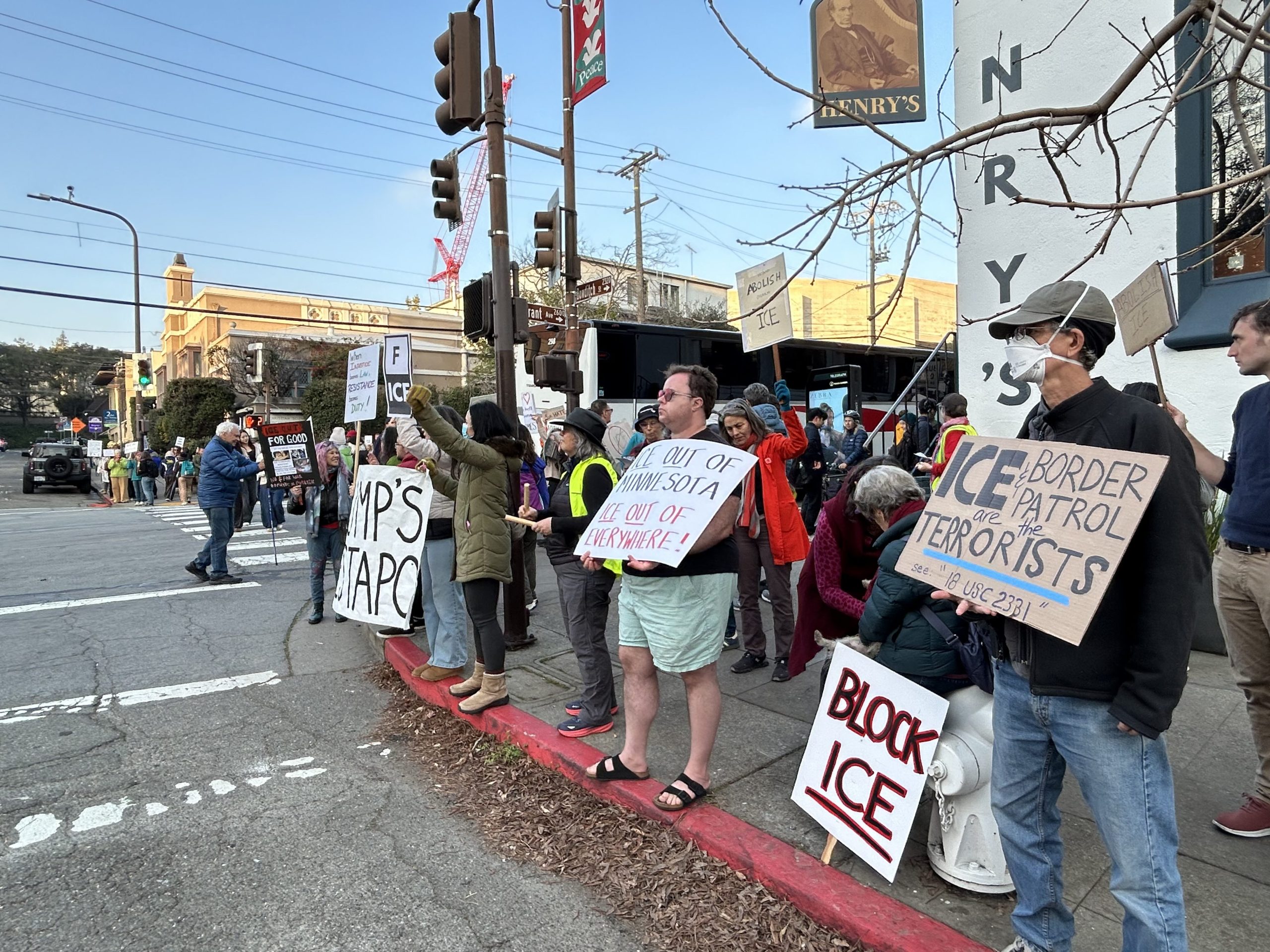
"Are you okay?" These were Alex Pretti's last words, said to a woman after ICE agents had tackled and pepper-sprayed her. Videos from bystanders show Pretti holding up a phone, attempting to document what was happening before he himself was pepper-sprayed, wrestled to the ground, and killed by those officers. He lost his life not for committing violence, but for documenting it, and stepping in to protect someone facing it.
He is not worthy of the presidency. He takes bribes blatantly. And now he's being a racist, blatantly. They were supposed to deport the dangerous criminals. They were not supposed to go after small children, storm schools, bring terror upon, you know, the little kids and the women and children, not just the immigrants in the school. All the children are scared.
In the aftermath of Alex Pretti's killing in Minneapolis, my Instagram algorithm served up a never-ending carousel of sizzling rage. Most of that rage was directed toward the country's immigration-enforcement agencies, while some, of course, was aimed at defending them. But I wasn't expecting the post from Blake Guichet. "There's a difference between compassion that is grounded and compassion that is hijacked," Guichet, a pro-Trump Christian influencer who posts on Instagram under the handle "thegirlnamedblake," had typed on butter-yellow slides.
There's a myth in our society that real change requires force, strength, and domination. We celebrate athletes, CEOs, and politicians who crush their opponents. But history tells a different story. Lasting social change has often been triggered by humble people whose weapons were passion, principle, and an unwavering commitment to justice and the truth - not the truth we see on TV or read in print media, but rather the truth that we feel deep inside ourselves.