#fang-morphology

[ follow ]
OMG science
fromwww.scientificamerican.com
3 days ago

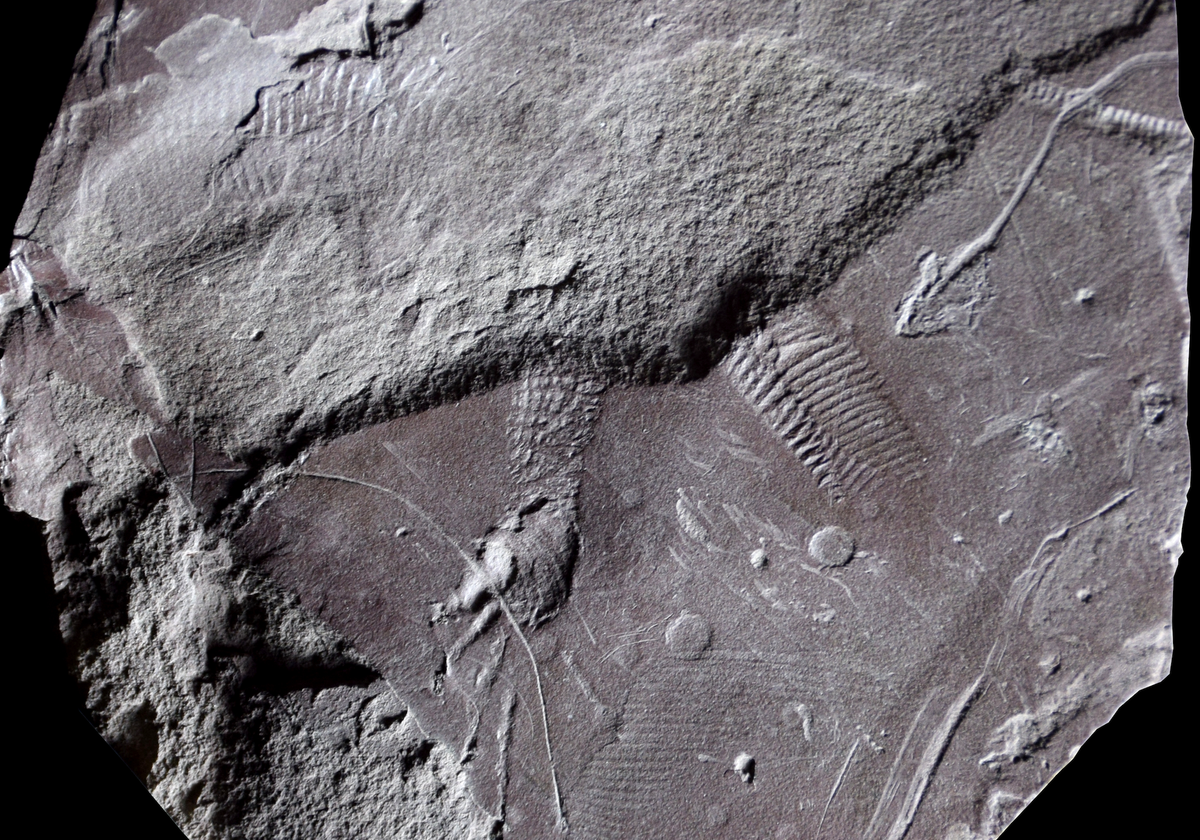
Bizarre fossils reveal that complex life evolved far earlier on Earth than we thought

The Cambrian explosion may have occurred later than previously thought, as new fossils from the Ediacaran period suggest earlier complex life forms existed.
OMG science
fromArs Technica
3 days ago

New fossil deposits show complex animal groups predating the Cambrian

Ediacaran species reveal early animal diversity, including cnidarians and ctenophores, pushing back the timeline of their origins.
#paleontology
Science
fromNature
1 week ago

Daily briefing: Tiny bones from Neanderthal fetus point to downfall of the species

A genetic bottleneck contributed to the Neanderthals' extinction, while AI-generated X-rays challenge radiologists' ability to discern real from fake.
OMG science
fromArs Technica
1 week ago

Explanation for why we don't see two-foot-long dragonflies anymore fails

Breathing capacity may have allowed giant insects to thrive despite lower atmospheric oxygen levels.
London
fromianVisits
2 weeks ago

Early hours visits to see the Natural History Museum's dinosaurs

The Natural History Museum offers early-morning dinosaur gallery tours starting at 9am, one hour before public opening, providing exclusive access with a guide for £30 adults and £24 children.
fromArs Technica
4 weeks ago

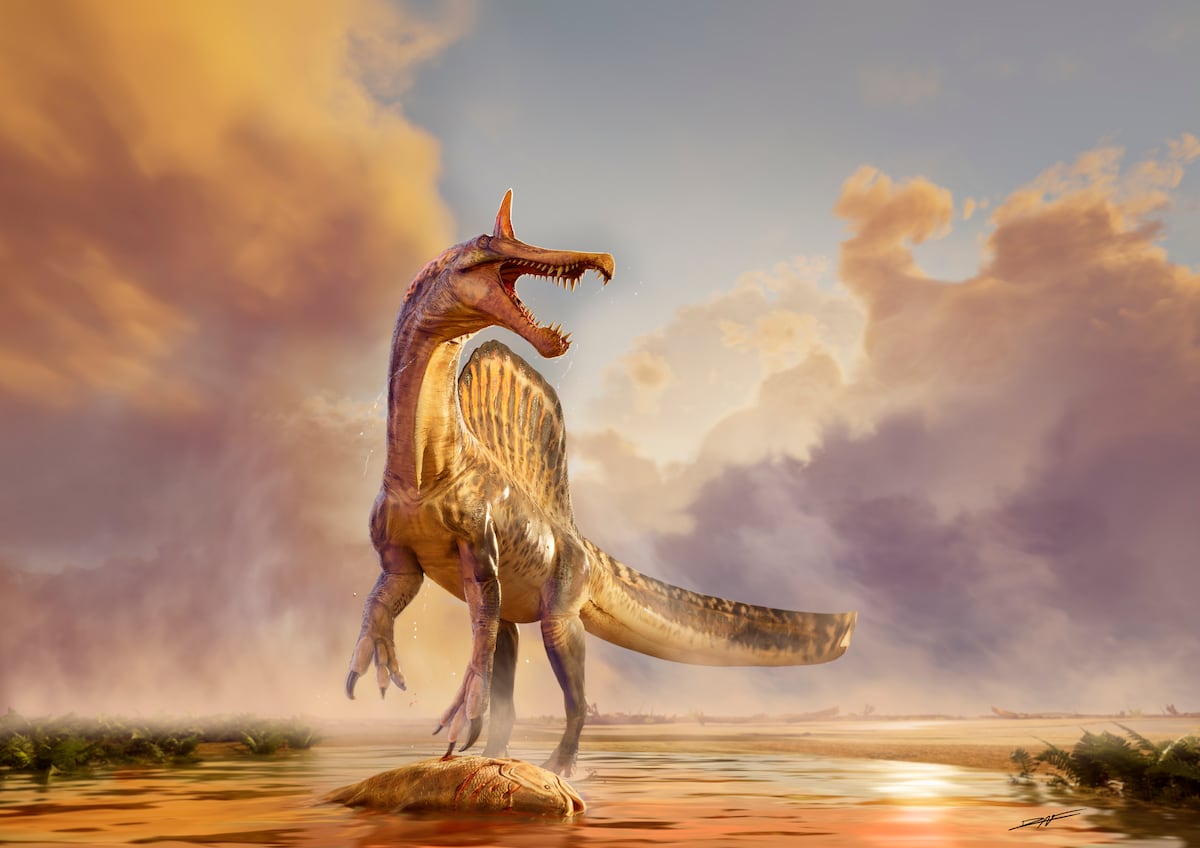
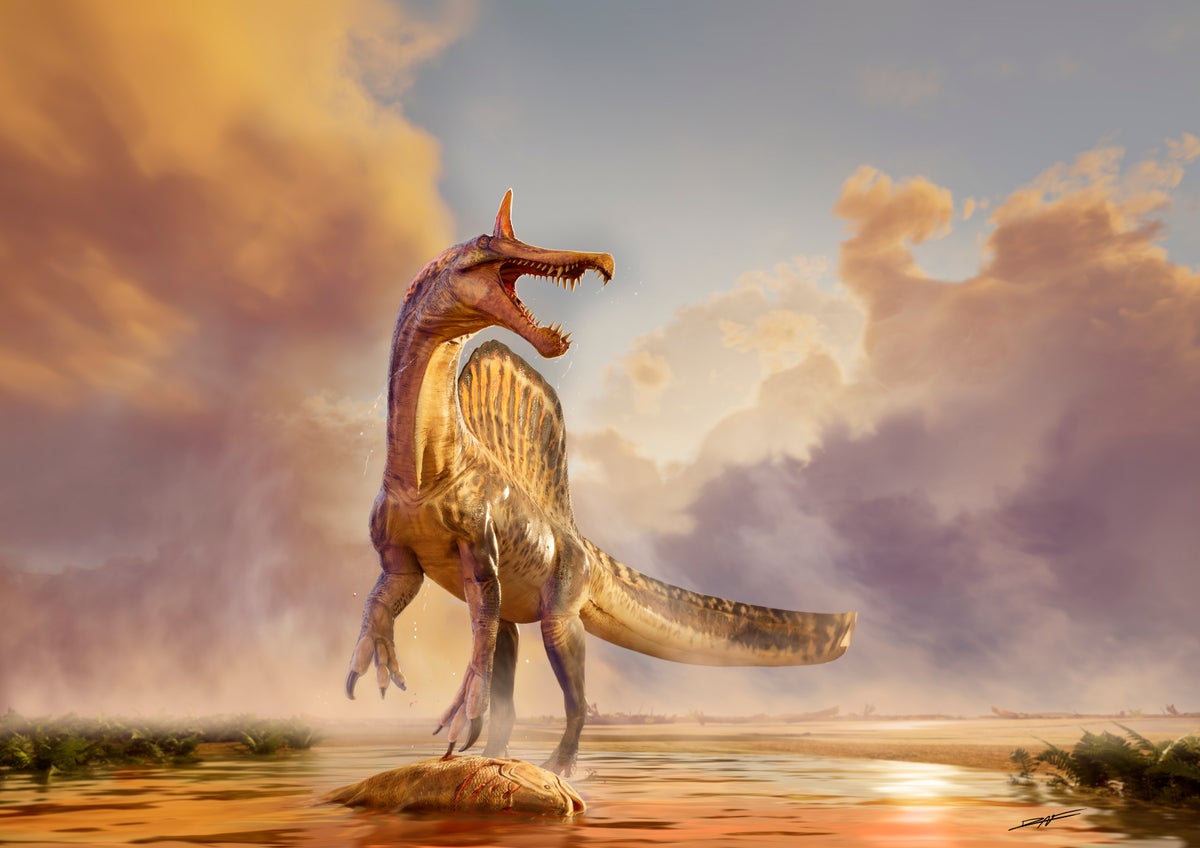
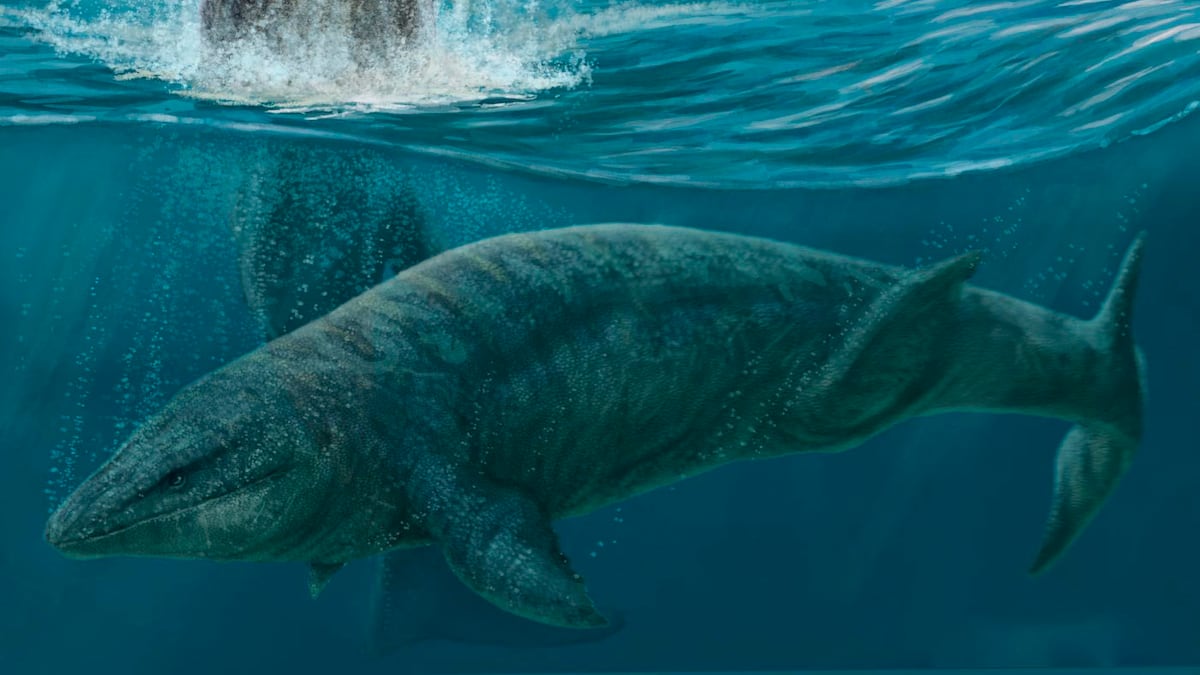
A unicorn-like Spinosaurus found in the Sahara

The Spinosaurus is a sail-backed, crocodile-snouted dinosaur that Hollywood depicted as a giant terrestrial predator capable of taking down a T. rex in Jurassic Park 3. Then they changed their mind and made it a fully aquatic diver in Jurassic World Rebirth—a rendering that was more in line with the latest paleontological knowledge. But now, deep in the Sahara Desert, a team of researchers led by Paul C. Sereno discovered new Spinosaurus fossils suggesting both scientists and filmmakers might have got it all wrong again.
Science
OMG science
fromArs Technica
4 weeks ago

Tiny, long-armed dinosaur leads to rethink of dinosaur miniaturization

Alvarezsaurid miniaturization preceded dietary specialization on ants, challenging the theory that small body size evolved directly coupled to insectivory.
#dinosaur-auction
US news
fromwww.npr.org
1 month ago

Newly discovered dinosaur species was a fish-eater with a huge horn

Spinosaurus mirabilis was a school-bus-length, fish-eating spinosaur with a foot-long curved horn that lived in Cretaceous marshes about 95 million years ago.
fromenglish.elpais.com
1 month ago

Ants trapped in amber reveal what diminutive life was like millions of years ago

Although there are many amber stones containing a single creature, there are fewer that include two or more, as is the case with a pair of mosquitoes trapped in amber 130 million years ago which tell us that, back then, males also sucked blood. Even more extraordinary is when several organisms can be seen interacting, either eating the other, acting as a parasite, or cooperating.
Science
OMG science
fromwww.scientificamerican.com
1 month ago

Face of ancient human ancestor Little Foot' reconstructed for the first time

Little Foot, the most complete Australopithecus skeleton ever found, now has a reconstructed face showing large eye sockets and resemblance to other Australopithecus fossils from Africa.
Science
fromenglish.elpais.com
1 month ago

A chicken-sized dinosaur related to T. rex debunks the hypothesis that its lineage shrank

A complete skeleton of Alnashetri cerropoliciensis, one of the smallest nonavian theropods ever recorded, was discovered in Argentina and published in Nature, revealing a chicken-sized carnivorous dinosaur from 95 million years ago.
fromwww.scientificamerican.com
1 month ago

Surprise spinosaurid found, Moderna flu shot back on, multidisease vaxx shows promise

In a sudden turn of events last Wednesday the U.S. Food and Drug Administration agreed to review Moderna's new mRNA flu vaccine, according to the company. The announcement came roughly a week after Moderna revealed that the FDA had rejected its application. The company said the agency originally called the plan for the vaccine's phase 3 trials acceptable, But its position changed after top FDA official Vinay Prasad overruled the agency's reviewers, according to STAT.
Science
Science
fromDefector
1 month ago

Finally! An Ancient Fish That Understood Life's Terrors | Defector

Haikouichthys, an early Cambrian fish, possessed four eyes and lacked jaws, reflecting distinctive sensory and feeding adaptations among early vertebrates.
#spinosaurus-mirabilis
Science
fromwww.dw.com
1 month ago

Tiny dinosaur fossil could provide evolutionary clues: study

A newly discovered tiny ornithopod, Foskeia pelendonum, exhibits unusually complex anatomy that reshapes understanding of ornithopod evolution.
fromwww.scientificamerican.com
1 month ago

Could aliens in another galaxy see dinosaurs on Earth?

For example, reader David Erickson had this on his mind: If there were aliens 66 million light-years from Earth, how big a telescope would they need to see dinosaurs? Ha! I love this question. I've thought of it myself but never worked out the mathexcept to think, Probably pretty big, which turns out to dramatically underestimate the actual answer.
Science
Science
fromArs Technica
1 month ago

"Million-year-old" fossil skulls from China are far older-and not Denisovans

Homo erectus fossils from Yunxian in China are dated to about 1.77 million years, making them the oldest hominins discovered in East Asia.
fromwww.scientificamerican.com
2 months ago

For predatory dinosaurs, the Late Jurassic was an all-you-can-eat sauropod buffet

Sauropodshumongous reptiles with a long neck and tail and thick, elephantlike legsplayed a starring role in the dinosaur ecosystem, according to a new study. These massive dinosaurs are the largest creatures to ever walk on land. But they also played a crucial part in the food chain, the study authors write, acting as ecosystem engineers. The research was published on Friday in the New Mexico Museum of Natural History and Science Bulletin.
Science
Science
fromwww.scientificamerican.com
2 months ago

New chicken-sized dinosaur baffles paleontologists

Foskeia pelendonum was a tiny, chicken-sized Early Cretaceous herbivorous dinosaur from northern Spain with unusual skull and teeth indicating novel feeding behavior and evolutionary implications.
fromwww.dw.com
1 month ago

New dinosaur fossils could provide evolutionary clues: study

From the beginning, we knew these bones were exceptional because of their minute size. It is equally impressive how the study of this animal overturns global ideas on ornithopod dinosaur evolution,
Science
Science
fromwww.npr.org
1 month ago

Searching for dinosaur secrets in crocodile bones

Counting growth rings in fossil bones can overestimate dinosaur ages because rings may not form strictly once per year.
Science
fromwww.scientificamerican.com
2 months ago

T. rex Never Stopped Growing, Dinosaur Bone Study Suggests

Tyrannosaurus rex grew longer and larger than previously believed, typically reaching at least 8.8 tons and stopping growth between 35 and 40 years.
Science
fromwww.nature.com
2 months ago

Publisher Correction: A domed pachycephalosaur from the early Cretaceous of Mongolia

Copyright line amended to North Carolina Department of Natural and Cultural Resources with exclusive licence to Springer Nature Limited in the HTML and PDF versions.
fromArs Technica
1 month ago

Scientists hunting mammoth fossils found whales 400 km inland

At first glance, it looked like Wooller and his colleagues might have found evidence that mammoths lived in central Alaska just 2,000 years ago. But ancient DNA revealed that two "mammoth" bones actually belonged to a North Pacific right whale and a minke whale-which raised a whole new set of questions. The team's hunt for Alaska's last mammoth had turned into an epic case of mistaken identity, starring two whale species and a mid-century fossil hunter.
Science
fromNature
2 months ago

Daily briefing: The battle over the identity of the first animals

Wooden objects carrying the marks of carving and use could be the oldest wooden tools ever found. Researchers dated the artefacts, found in what is now Greece, to 430,000 years ago - and suggest they might have been made by early Neanderthals or their ancestors, Homo heidelbergensis. A separate study describes 480,000-old flint-knapping tools made from antler and elephant bone, from what is now the United Kingdom.
Science
fromwww.nature.com
2 months ago

Publisher Correction: Nanotyrannus and Tyrannosaurus coexisted at the close of the Cretaceous

Since the version of the article initially published, the copyright line has been amended to North Carolina Department of Natural and Cultural Resources and James Napoli, under exclusive licence to Springer Nature Limited in the HTML and PDF versions of the article.
Science
fromNature
2 months ago

How did birds evolve? The answer is wilder than anyone thought

Jurassic birds included diverse forms like Archaeopteryx and newly discovered Baminornis, revealing complex early avian evolution and questions about origins of powered flight.
Science
fromwww.nature.com
2 months ago

Afar fossil shows broad distribution and versatility of Paranthropus

Pliocene and Late Miocene East African fossil evidence reveals diverse early hominin taxa, varying dental and skeletal morphologies, and debates over taxic diversity.
fromwww.scientificamerican.com
2 months ago

A foraging teenager was mauled by a bear 27,000 years ago, skeleton shows

We have little physical evidence of these interactions turning violent, however, because burials were rare and carnivores were more likely to finish off their prey. That's why the embellished burial site of a 15-year-old from 27,000 years ago is an important window into the past: the teenager's bones indicate he was mauled by a bear. The finding represents some of the first evidence of its kind.
Science
Science
fromwww.nature.com
2 months ago

Four camera-type eyes in the earliest vertebrates from the Cambrian Period

Vertebrate vision evolved via diversification of phototransduction components and eye structures, documented by molecular data and exceptional fossil evidence from Cambrian to mammalian ancestors.
fromwww.scientificamerican.com
2 months ago

Meet the Ancestor That Connects Us to Neandertals and Denisovans

New research published today in Nature dates the boneschipped out from a cave called Grotte a Hominides and nearby it over decadesto about 773,000 years ago, during the era of the last common ancestor of Homo sapiens, Homo neanderthalensis and Denisovans (a group of humans that ranged across Asia and that does not have an agreed-upon species name). We can say that the shared ancestry between these three species is perhaps in Grotte a Hominides in Casablanca, says study co-author Abderrahim Mohib, a prehistorian at the National Institute of Archaeology and Heritage Sciences in Rabat, Morocco.
Science
Science
fromwww.aljazeera.com
1 month ago

Dinosaurs for sale: Is the global fossil market harming science?

Asia's wealthy collectors drive a booming multimillion-dollar dinosaur fossil market, producing record sales and profits while raising ethical and scientific concerns.
Science
fromArs Technica
2 months ago

We have a fossil closer to our split with Neanderthals and Denisovans

Casablanca fossils are North African counterparts to Homo antecessor, positioned near the split that led to Neanderthals/Denisovans and the lineage toward modern humans.
fromBig Think
2 months ago

The dinosaur that vanished twice: How WWII nearly erased Spinosaurus from history

Dinosaur fever gripped the Western world during the early 1900s, fueled by the discovery of new, ever larger and more spectacular dinosaurs in Europe and especially in North America. Interest in these fossils was not merely driven by academic curiosity. Dinosaur skeletons and research had become a status symbol for museums and their financiers, whether government or private, and colonial powers turned to their areas of influence to find new remains.
Science
Science
fromwww.scientificamerican.com
2 months ago

Mystery tower fossils may be a whole new kind of life

Prototaxites represents a previously unknown, distinct branch of life that dominated terrestrial landscapes before trees, separate from fungi and plants.
Science
fromwww.scientificamerican.com
2 months ago

This is the most complete skeleton yet of our ancestor Homo habilis

A new, unusually complete Homo habilis skeleton from Lake Turkana shows a small, less modern body with long, ape-like arms and primitive proportions.
fromNature
2 months ago

What were the first animals? The fierce sponge-jelly battle that just won't end

Which animals came first? For more than a century, most evidence suggested that sponges, immobile filter-feeders that lack muscles, neurons and other specialized tissues, were the first animal lineages to emerge. Then, in 2008, a genomic study pointed to a head-scratching rival: dazzling, translucent predators called comb jellies, or ctenophores, with nerves, muscles and other sophisticated features. That single study ignited a debate that has raged for nearly 20 years, sparking fierce arguments about how complexity evolved in animals.
Science
[ Load more ]